The most effective rental counter queue management combines four elements working together: pre-visit messaging that sets expectations, a virtual-queue or counter-bypass option, fast digital check-in, and real-time analytics that let managers staff dynamically as demand shifts. Branches that layer these four tactics see shorter waits, fewer abandoned transactions, and measurably better customer satisfaction.
TL;DR:
- Counter bypass cuts pickup from roughly 22 minutes to about 14, saving nearly eight minutes on average, although most renters still choose the counter.
- Track waiting time separately from service time, then segment both by reservation status, time of day, and counter to expose hidden surges.
- Small branches should favor clear pickup messages and mobile arrival confirmation, while busy airport counters benefit from virtual queues when lines spill into shared terminal space.
- Branches that start with digital prearrival confirmation and live reservation syncing can see measurable service time gains within 30 to 90 days, before adding hardware.
Table of Contents
What queue management means for vehicle rental counters
Queue management at a rental counter is not the same problem a bank or a retail store solves. A bank line moves people through a single, repeatable transaction. A rental counter has to verify identity, confirm insurance and payment details, match a customer to an available vehicle, walk through a contract, and often coordinate a physical handoff at the curb. Each of those steps carries its own delay, and any one of them can stall the whole line.
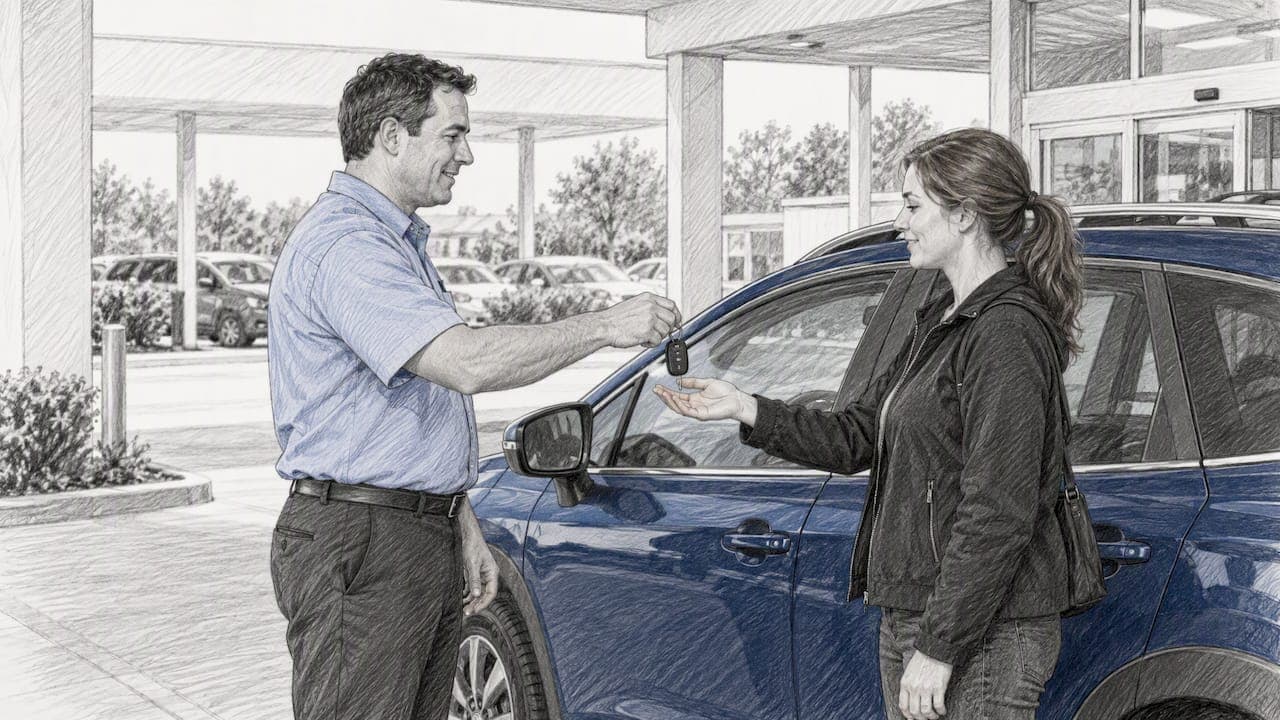
Arrival patterns add another layer of complexity. Reservation holders expect a fast, almost ceremonial pickup since they already provided their details online. Walk-in customers need a full needs assessment before anyone can quote a price. When both groups share the same line, the reservation holder's patience erodes quickly, which is part of why J.D. Power found that customers who bypass the counter report meaningfully higher satisfaction than those who wait at it, even though most renters still default to the counter first.
Rental counters also carry constraints that do not exist in most service queues:
- Document and identity checks that cannot be rushed without creating liability
- Vehicle inspection handoffs that tie a specific car to a specific contract before the customer can leave
- Return grace periods, like the 29-minute window Alamo documents for daily rentals in the US and Canada, which create a second wave of counter traffic late in the rental cycle
A useful planning shorthand for all of this is Little's Law, which states that the average number of people in a system equals the arrival rate multiplied by the average time each person spends there. For a rental counter, that means you can estimate how much you need to cut service time, or how much staffing you need to add, to hit a target average wait during a known arrival surge, such as a Friday afternoon airport rush.
Queue management methods: virtual queues, kiosks, appointments, sensors, and staffed lanes
Rental operators have five practical tools for managing counter flow, and most well-run branches use a combination rather than relying on just one.
- Virtual queueing and mobile ticketing let customers join a line remotely and receive a text or app alert when it's their turn, which removes the need to stand in a physical queue near the counter.
- Self-service kiosks handle standard, low-touch transactions like confirmed reservations with no add-ons, freeing staff to focus on walk-ins and exceptions.
- Appointment windows and pickup-slot scheduling work best at reservation-heavy branches, where customers select a pickup time in advance and staff can plan vehicle prep around it.
- Sensor-based counting tracks how many people are in line and on the floor in real time, feeding digital displays that redirect traffic before a single lane backs up.
- Staffed lane design separates traffic by purpose, with dedicated return lanes, pickup counters, and loyalty lanes that keep high-frequency renters moving without competing for the same agents as first-time customers.
A branch-level case study from Europcar's deployment with Wavetec illustrates how this works in practice: combining ticketing kiosks, visual counter lights, and analytics dashboards gave staff a clearer view of reservation versus walk-in traffic and produced a more predictable in-branch experience.
Each method fits a different volume pattern. Virtual queueing earns its keep at high-traffic airport counters where lines form outdoors or in shared terminal space. Kiosks pay off anywhere a meaningful share of transactions are simple confirmations with no exceptions. Appointment scheduling suits branches where most volume is pre-booked rather than walk-in. Sensor-driven displays matter most where multiple lines or lanes exist and customers need direction. Loyalty and staffed lane separation matters wherever a rental brand has a membership tier worth protecting.
Pro Tip: Pair any bypass option with a short, specific message about what the customer still needs to bring to the counter, since skipping the line only works if the hand-off at the vehicle is just as fast.
Metrics and analytics rental counters must track
Queue management only improves when it is measured. Four metrics matter more than the rest for rental counters.
- Average wait time: the time between a customer's arrival in line and the start of service, tracked separately from service time itself
- Average service time: how long it takes an agent to complete a transaction once it starts, which is often where reservation-heavy branches can cut the most
- Abandonment rate: the share of customers who leave the line before being served, a strong early warning sign of understaffing
- Throughput per counter: transactions completed per agent per hour, which reveals whether slow service or poor staffing is the real bottleneck
These numbers mean little as branch-wide averages. Segment wait time by reservation versus walk-in traffic, by hour of day, and by individual counter or agent, and patterns emerge that a single blended average hides, such as a specific hour where walk-in volume spikes while reservation traffic stays flat. Real-time alerts that flag when a line crosses a threshold let a manager pull a second agent to the floor before customers start leaving, and dashboards that track these patterns over weeks help forecast staffing needs for the next busy period rather than reacting to it.
Customers who bypass the rental counter entirely save close to eight minutes on average, cutting pickup time from roughly 22 minutes to about 14, according to J.D. Power's 2025 rental satisfaction study. That gap is the clearest evidence that reducing counter dependency, not just speeding up the counter itself, is where the largest wait-time gains sit.
Designing the customer flow at the rental counter
A rental transaction has five distinct stages, and each one offers a specific intervention point.
- Pre-visit: Confirm the customer's pickup option by text or email, nudge them toward digital check-in if your platform offers it, and state a clear pickup window rather than a vague arrival time.
- Arrival: Use clear signage to separate reservation, walk-in, and return traffic the moment someone walks in, place kiosks where they are visible from the entrance, and give staff a call button for when a line builds faster than expected.
- Waiting: Push live queue updates and estimated wait times to a screen or a customer's phone, and lean toward underpromising the wait, since Harvard Business Review's research found that underpromising and then beating the estimate builds more trust than an optimistic number that falls short.
- In-service: Run through a consistent documentation checklist, offer mobile contract signing where possible, and separate payment processing from vehicle release so one slow card swipe does not hold up the whole line behind it.
- Post-visit: Route departing customers away from the incoming line physically, and offer a short, optional feedback prompt that feeds directly into the next branch review rather than disappearing into an inbox.
Document and identity verification deserves particular attention since it is the step most prone to delay; a four-step verification approach built around consistent ID and license checks keeps this stage from becoming the line's bottleneck. Digital check-in, when adopted broadly, compresses the pre-visit and arrival stages into a single near-instant handoff, which is the biggest lever most branches have for cutting overall wait.
Technology and integration checklist for rental counters
Before buying anything, map what hardware, software, and integrations your branch actually needs against its traffic pattern.
- Kiosks for self-service check-in on standard transactions
- Digital signage and counter lights to direct and separate traffic flows
- Sensor or people-counting hardware for branches with multiple lines or lanes
- A queue-management or appointment-scheduling platform synced to live reservation data
- A payment gateway integrated into the queue flow so payment does not become a separate bottleneck
- Integrations connecting the queue system to your reservation engine, loyalty program, vehicle inspection app, and CRM
| Checklist item | Why it matters for rental counters |
|---|
| Kiosk or mobile check-in | Removes standard transactions from the staffed line |
| Reservation sync | Lets virtual queues and appointment slots reflect real vehicle availability |
| Payment integration | Prevents card processing from stalling the handoff |
| Loyalty program link | Enables dedicated fast lanes for repeat renters |
| Inspection app connection | Ties vehicle condition checks directly to the contract record |
One operational detail easy to overlook: any system collecting names, license numbers, or payment details for queue management needs clear opt-in messaging and sound data-handling practices, since this information is as sensitive as what goes into the rental contract itself.
Operational playbook using Nomora: configuration, quick wins, and metrics to track
A rental management platform functions as the central nervous system of the counter, connecting reservations, check-in, contracts, and payments so that no single step has to wait on information sitting in a separate system. That connection is what turns a queue-management checklist from a list of hardware purchases into an operational routine.
For an airport or high-volume off-airport counter, a practical starting configuration looks like this:
- Sync reservations in real time so the queue system always reflects which vehicles are actually available, not a stale count from the morning
- Turn on mobile check-in so reservation holders can confirm details before they reach the counter, a tactic detailed further in our digital check-in playbook
- Set up fast contract templates for common rental types so agents are not rebuilding the same agreement from scratch
- Route payment processing so it runs in parallel with final vehicle checks rather than blocking them
Most branches that follow this sequence see onboarding completed quickly, with the first measurable wins, like reduced average service time per transaction, visible within the first 30 to 90 days as staff settle into the new flow.
Pro Tip: Start with digital check-in and reservation sync before adding kiosks or sensors; the software changes pay off almost immediately, while hardware decisions are easier to make once you can see where the real bottlenecks sit.
Author perspective: where to invest first
Small branches with modest walk-in volume gain more from clear pre-visit messaging and a mobile check-in option than from kiosks or sensor hardware, since the volume rarely justifies the capital cost. Busy airport counters are the reverse: hardware and virtual queueing earn their cost quickly once lines routinely spill into shared terminal space. Whatever the branch size, roll out changes in phases rather than all at once, and never underestimate staff training and better signage as the cheapest, fastest wins available before any new technology arrives.
— Dizzy
How Nomora helps you put this playbook into action
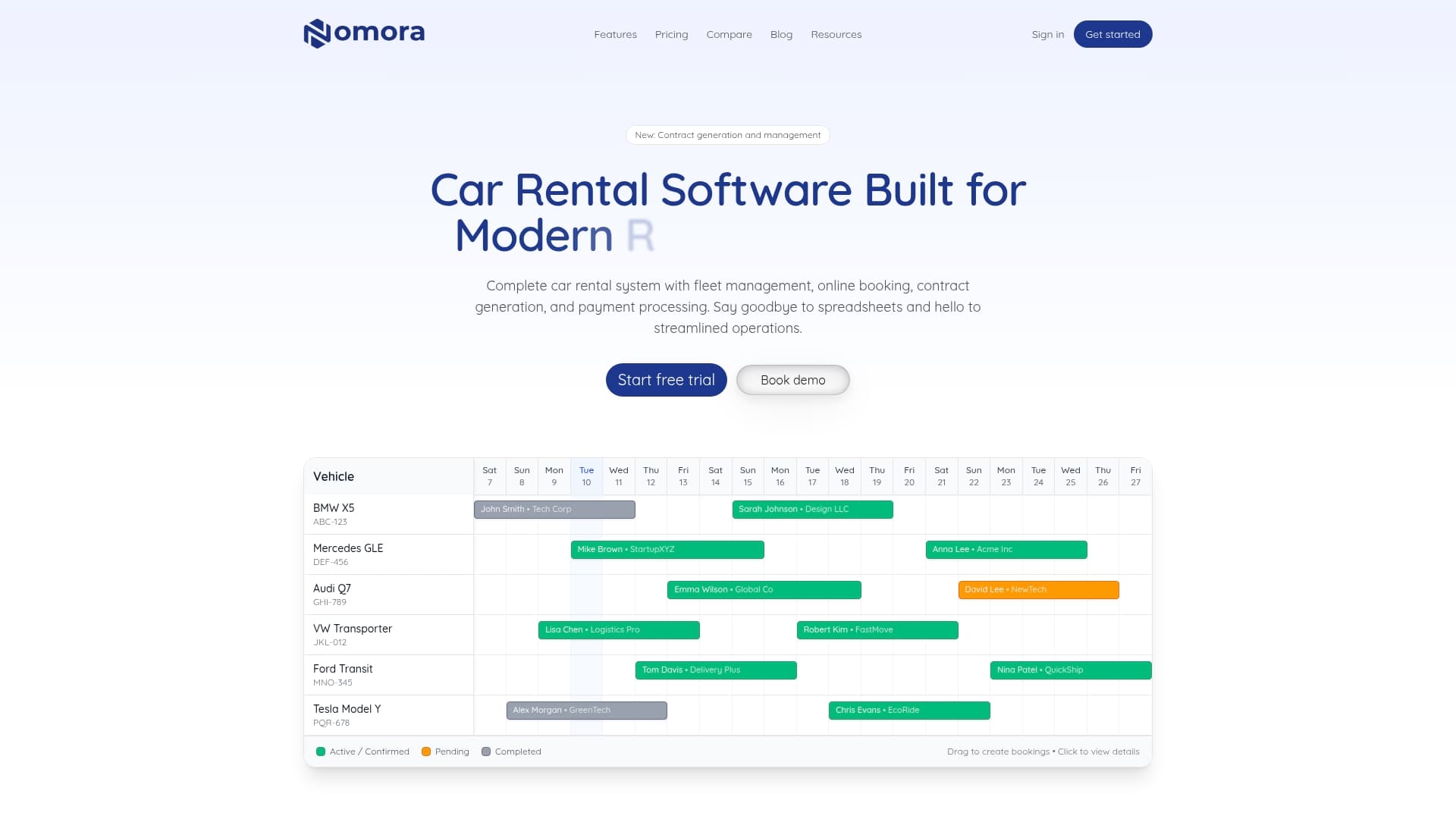
We built our platform around the same checklist we just walked through. Reservation data, digital check-in, contract generation, and payment processing all run in one system, so a customer's pickup window, document status, and vehicle assignment are visible to your staff the moment they need them, not scattered across three logins.
In practice, that means:
- Real-time reservation sync keeps your queue and your fleet availability in agreement, so no agent promises a car that is not ready
- Automated contract generation cuts the in-service stage down to a signature rather than a rebuild
- Integrated payment processing lets the money part run alongside the vehicle handoff instead of after it
- Onboarding that takes 24 to 48 hours rather than weeks, so queue improvements show up fast rather than months into a rollout
If you are a small independent counter, our Starter plan at €45 per month is a reasonable place to begin. Growing fleets typically move to Business at €2.80 per vehicle per month or Fleet at €2.20 per vehicle per month as vehicle count climbs, and larger operations can request an Enterprise quote directly. Browse our car rental software overview or check use cases by business type to see which setup matches your counter.
FAQ
What is the best queue management system for a rental counter?
The best system for a rental counter combines virtual queueing or mobile check-in with real-time analytics tied to your reservation data, rather than any single standalone tool. For car rental specifically, a platform that syncs reservations, check-in, and contracts in one place, like Nomora, tends to outperform generic ticketing tools built for retail lines.
What is a free queue management app, and is it enough for a rental counter?
Free queue apps typically handle basic ticket numbering and wait-time display, which can work for very low-volume counters. They generally lack reservation sync, contract automation, and the per-vehicle data a rental business needs, so most growing counters outgrow them quickly.
How do pickup and dropoff windows affect queue management?
Clear pickup and dropoff windows let staff anticipate volume surges before they happen rather than reacting to a line that has already formed. Return grace periods, such as the 29-minute window Alamo documents for daily rentals, also shape when return traffic peaks and should factor into staffing plans.
What metrics matter most for improving rental queue efficiency?
Average wait time, average service time, abandonment rate, and throughput per counter are the four core metrics worth tracking. Segmenting these by reservation versus walk-in traffic and by time of day reveals bottlenecks that a single branch-wide average hides.
How much time can bypassing the counter actually save customers?
Customers who skip the counter entirely save close to eight minutes on average, with pickup times dropping from about 22 minutes to roughly 14, according to J.D. Power's 2025 study. Despite that gap, most renters still visit the counter first, which is why clear bypass messaging matters as much as the technology itself.
Sources
Recommended
Ready to streamline your car rental business?
Book 30 minutes with the founder. We set up everything in this guide on your own vehicles, and migrate you out of Excel for free.