The most effective identity verification for car rentals combines OCR data extraction, document authentication, biometric liveness matching, and DMV or state license checks where those databases are accessible. Together, these four layers catch fake IDs, stolen identities, and impersonation attempts that any single check misses on its own. Most digital solutions complete this sequence in seconds, not minutes, and per-check pricing for mobility-focused providers often starts in the low single dollars.
TL;DR:
- Pre-pickup identity verification reduces wait times and fraud risk by confirming driver license details and liveness remotely at booking or 24 hours before pickup.
- Verification processes involve data extraction, fraud detection via AI, biometric matching, and DMV checks, with some components catching up to 95% of fake IDs within seconds.
- Integration must enable automatic data transfer into rental systems, support real-time updates, and include manual review procedures for low-confidence or complex cases.
- Automated checks typically take seconds for standard documents, but manual review can add up to 15 minutes for expired or foreign IDs, so workflows must balance speed and accuracy.
- Building an effective verification policy requires upfront planning for fallback procedures, clear policies on temporary IDs, and timely data transfer for seamless rental processing.
Table of Contents
What Does Identity Verification for Car Rentals Actually Check?
Every rental identity check breaks down into a handful of technical layers, and understanding what each one catches (and misses) determines how you build your verification policy.
OCR and data extraction pulls license number, name, address, date of birth, expiration date, and class or endorsements directly off the card. This is the part that saves counter time. Instead of an agent retyping a license number by hand, the field populates automatically into your rental management system, cutting transcription errors and speeding up contract generation.
Document authentication is where fraud actually gets caught. AI models compare the scanned document against known templates for that state or country, checking security features like UV patterns, holograms, microprint, and font consistency. Vendors in this space report catching up to 95% of fake IDs, with results returned in roughly 10 to 12 seconds. No system catches everything, and operators should treat that figure as a strong baseline, not a guarantee.
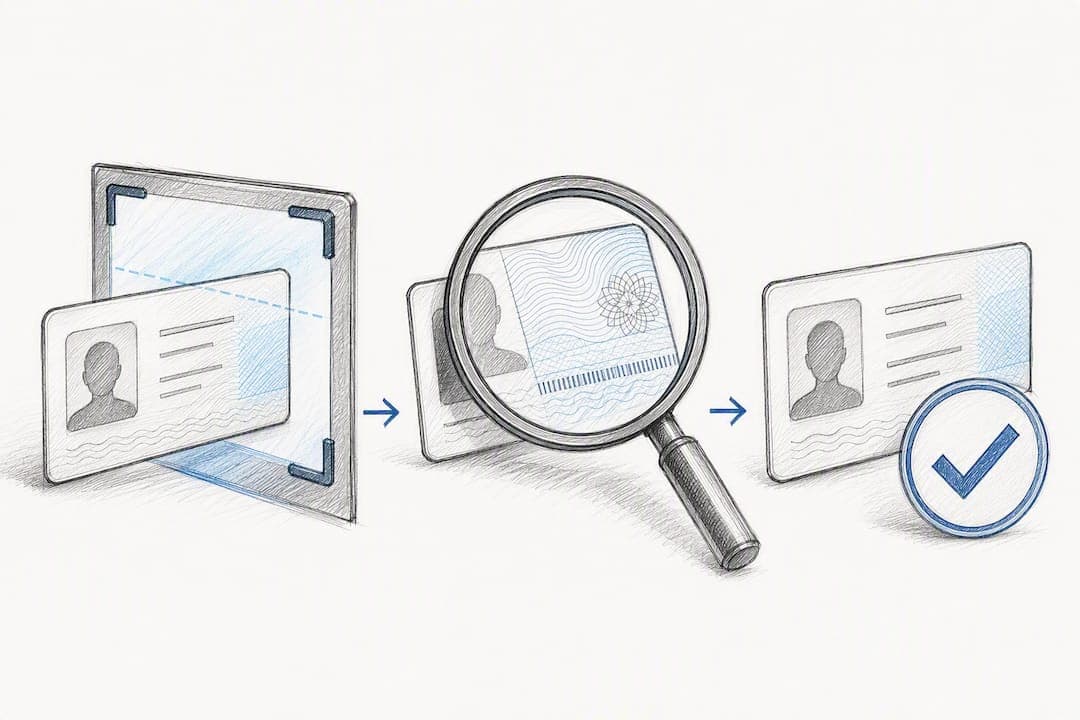
Biometric liveness and selfie matching compares a live photo against the license photo and confirms the person holding the phone is a real, present human rather than a printed photo or video replay. This layer specifically targets impersonation and shared-account fraud, where someone rents under a friend's or relative's license.
DMV and state checks confirm license status, expiration, and endorsements against government records, though coverage varies. Some vendor networks report DMV API access in more than 40 states, which still leaves gaps operators need to plan around.
Supplemental signals round out the picture:
- Phone number verification to confirm the renter controls the number tied to the reservation
- Email verification to flag disposable or newly created addresses
- Risk scoring that weighs reservation behavior, payment method, and rental history together
How Should Pre-Pickup Verification Work?
Moving identity checks before the counter is the single highest-impact change most operators can make. It cuts wait times and removes the in-person pressure that opportunistic fraudsters count on.
- Trigger the check at booking or 24 to 48 hours before pickup. Send a link that walks the customer through uploading their license and taking a selfie.
- Set a re-verification window. If the customer completes check-in more than a few days before pickup, require a quick re-confirmation to catch expired documents or canceled cards.
- Handle expired or temporary IDs explicitly. Decide in advance whether a temporary paper license paired with a state-issued ID number is acceptable, and say so in your policy.
- Route failures to a human, not a rejection screen. When automated checks come back inconclusive, the flow should offer an in-person fallback rather than canceling the reservation outright.
Europcar's online check-in is a useful reference point here: it collects ID, license, and a selfie ahead of arrival, with verification typically returning within an hour, though it can stretch closer to 24 hours during peak periods. That range matters for staffing. If your team promises instant pickup but your verification partner needs an hour, build the buffer into your customer messaging instead of letting it surprise the front desk.
The trade-off is real. Adding a pre-pickup step introduces friction that can cost you a small percentage of conversions from customers who abandon the flow. Most operators find that fraud reduction and shorter counter lines outweigh that cost, but it's worth tracking both numbers separately.
What Belongs on an Integration Checklist?
Before you sign with a verification partner, map out exactly how their output flows into your existing systems. A verification result that just sits in a separate dashboard defeats the purpose.
- Verification API or SDK: confirm it can push structured data (name, license number, photo, confidence score) directly into your rental management system rather than requiring manual copy-paste.
- Contract prefill: verified fields should auto-populate the rental agreement so staff review rather than retype.
- Payment hold integration: tie the deposit or hold to a successful verification, not a manual staff decision.
- Data retention and encryption: confirm how long ID images and biometric data are stored, and whether that storage meets your state's requirements.
- Audit logs: every verification decision, automated or manual, needs a timestamp and reviewer ID attached for dispute resolution.
- Throughput and retry logic: ask how the system handles a Friday afternoon rush of simultaneous checks, and what happens when a request times out.
Pro Tip: Place verification at reservation confirmation, not just at pickup. A second, lighter check at the counter (matching the person to the photo already on file) takes seconds and catches the rare case where a card gets passed to someone else after booking.
When Should a Human Review the File?
No automated system should have final say on every case. Build a manual review queue for anything that comes back with a low confidence score, a damaged or expired document, or a foreign identity document your system wasn't trained to read.
A workable reviewer checklist looks like this: confirm the document hasn't expired and the photo matches the person in front of you, look for visible signs of alteration or tampering, request a secondary form of ID or proof of address when anything feels inconsistent, and log the decision with a timestamp and reviewer ID attached. Set a response time target, typically under 15 minutes during business hours, so legitimate customers aren't left waiting at the counter while a file sits in a queue.
- Accepted temporary IDs: define this in writing, not case by case
- Escalation threshold: after two failed automated attempts, route straight to a supervisor
- International documents: flag for manual review by default rather than attempting automated matching against unfamiliar formats
Routing edge cases to a human reviewer rather than auto-rejecting them preserves revenue from legitimate renters with unusual but valid paperwork.
How Does Verification Data Flow Into a Rental Management System?
Once a check clears, that data needs somewhere useful to go. In a connected setup, a verified license feeds directly into contract generation, populating renter details without a staff member retyping anything, and can trigger an automatic payment hold the moment the identity clears. That single handoff is where a lot of manual rental workflows quietly break down: verification happens in one tool, and the contract gets built by hand in another.
What I Learned Balancing Speed and Fraud Prevention
Here's the trade-off nobody tells you about upfront: the fastest verification setup and the safest one are rarely the same setup. Pushing checks to pre-pickup cuts counter time dramatically, but it only works if your manual review queue can keep pace. A verification flow that flags 8% of files for human review is worthless if your review team takes two days to clear a backlog. The lesson that mattered most: write your reviewer scripts before you launch, not after the first dispute lands. A reviewer who knows exactly what to ask for, and how to phrase it to a nervous customer, resolves a flagged file in minutes instead of escalating it into a complaint.
— Dizzy
Running identity checks is only half the job. The other half is making sure a cleared verification actually moves the rental forward instead of sitting in a separate system your staff has to check manually. Nomora is built to pick up right where a verification partner leaves off: once a check clears, Nomora can pull that data into the rental contract, tie a payment hold to the verified renter, and skip the manual re-entry that slows most counters down. Nomora isn't the verification vendor itself. It's the operational layer that turns a verified identity into a signed contract and a processed deposit, without a staff member touching the same data twice.
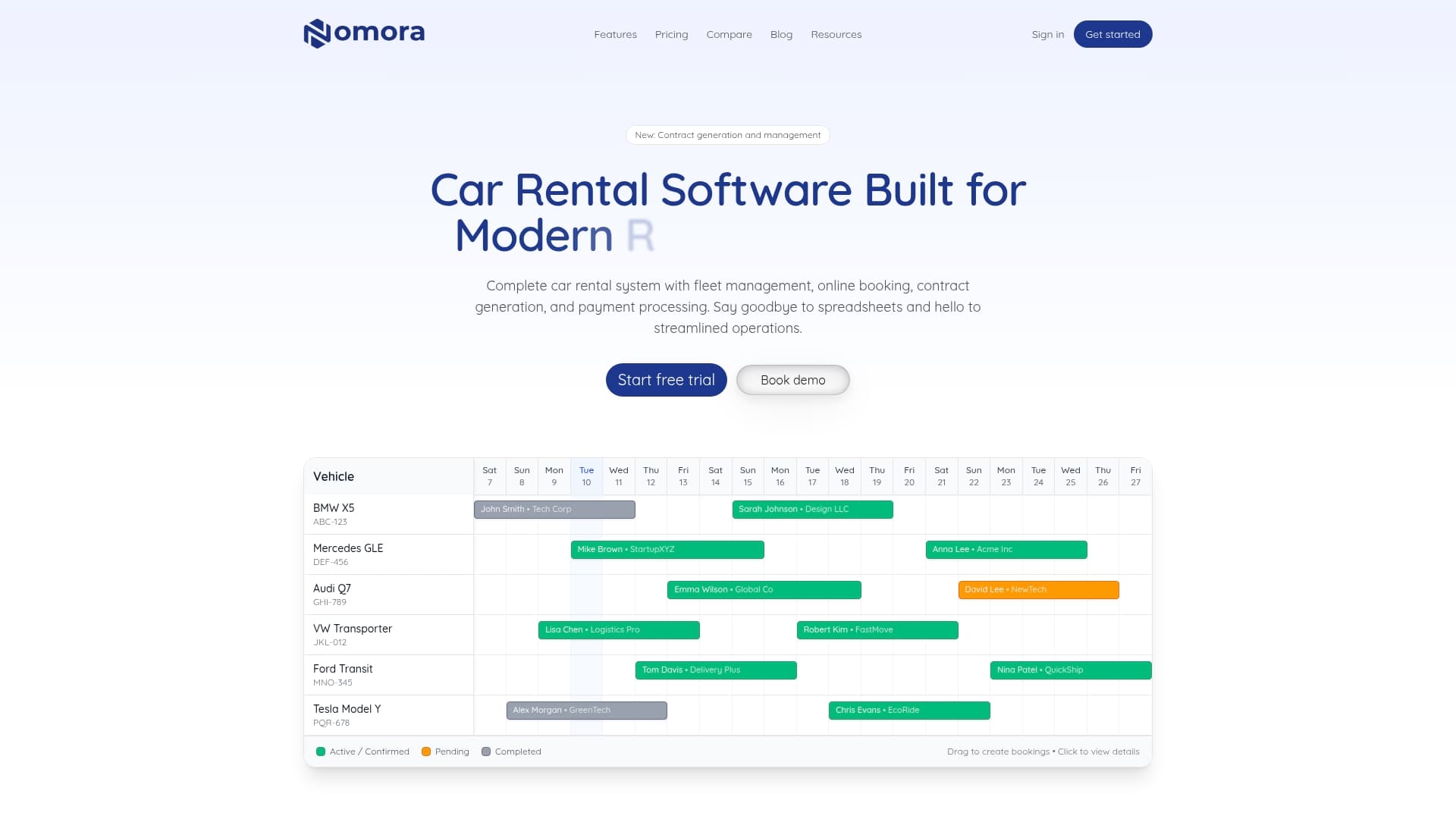
Onboarding typically runs 24 to 48 hours, which matters if you're trying to get a verification integration live before a busy season. Nomora's plans span Starter, Business, Fleet, and Enterprise, with pricing details available for each tier. If you're weighing which setup fits your fleet size, the use cases by business type page breaks down which plan matches independent operators versus multi-location franchises. Check current pricing and request a demo to see how verification results flow into contracts and automated payment holds.
Sources
For deeper policy and technical planning, review Sumsub's mobility verification documentation for stack design, IDScan.net's automotive page for DMV coverage details, and Nomora's driver license verification playbook for policy templates. Content teams documenting these workflows can also check draft guides against the AI Overview Checker for search visibility.
FAQ
Do Rental Companies Check Your ID When You Rent a Car?
Yes, every legitimate rental company verifies a renter's identity, typically requiring a valid driver's license and matching it to the name on the reservation and payment method. Many operators now run this check digitally before pickup rather than only at the counter, using OCR, document authentication, and sometimes a selfie match.
What Disqualifies You From Getting a Rental Car?
An expired or invalid driver's license is the most common disqualifier, along with a name mismatch between the ID, reservation, and payment card. Suspended licenses, insufficient age for the vehicle class, and failed document authentication checks (signs of tampering or a fake ID) also result in denial.
What Documents Do I Need To Rent a Car in Florida?
Florida rental companies generally require a valid driver's license, a major credit or debit card in the renter's name, and proof of insurance or a rental company's insurance option. International renters typically need a valid passport alongside their home country's driver's license or an International Driving Permit.
Will Rental Companies Accept a Temporary ID?
Policies vary by company, and many rental operators do not accept a temporary paper license as a sole form of identification without a secondary government-issued ID. Confirm your specific policy in writing and communicate accepted temporary ID formats clearly during online check-in to avoid pickup delays.
How Long Does Identity Verification Take at a Car Rental Counter?
Automated checks combining OCR, document authentication, and liveness matching typically complete in seconds, while pre-pickup online check-in flows can take anywhere from a few minutes to under 24 hours depending on volume and whether manual review is triggered.
Recommended
Ready to streamline your car rental business?
Book 30 minutes with the founder. We set up everything in this guide on your own vehicles, and migrate you out of Excel for free.