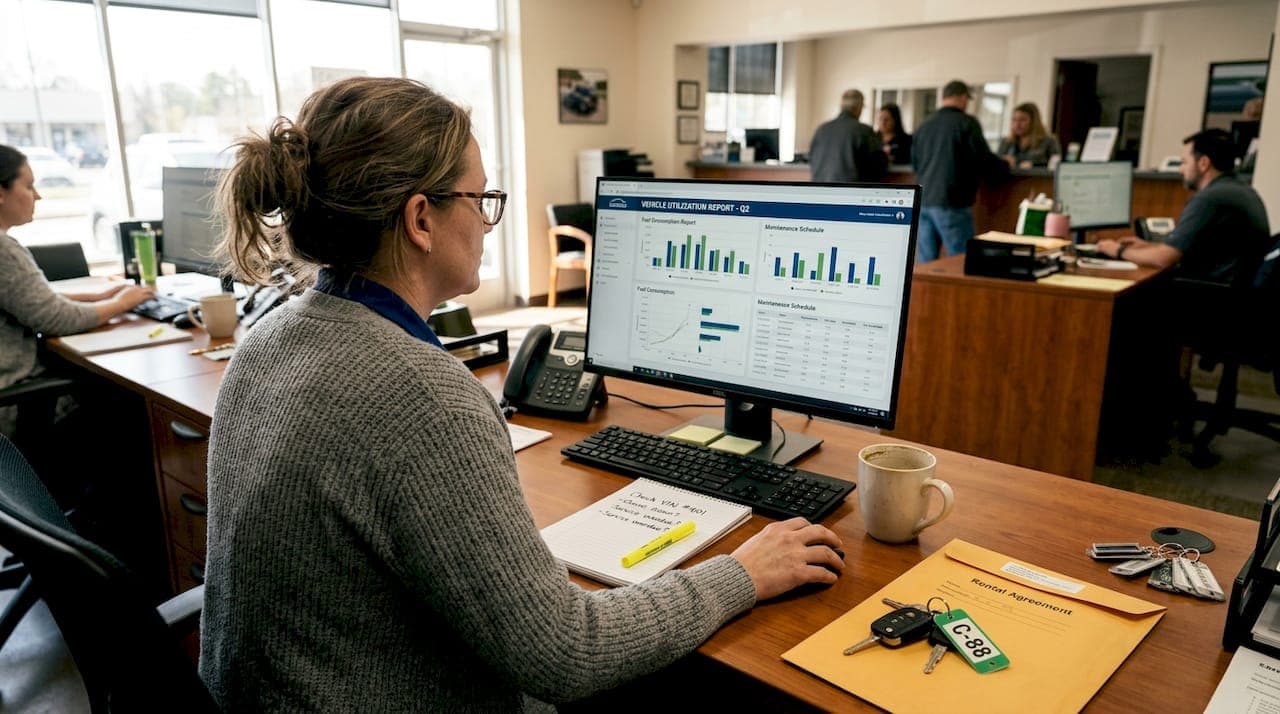
Most car rental operators assume their spreadsheets are "good enough." They track vehicles, log returns, and note maintenance dates. But that assumption quietly costs money every single month. Predictive maintenance alone can cut fleet costs by 18% and reduce downtime by 22%, while dynamic pricing and utilization tracking measurably boost both revenue and customer satisfaction. This guide walks you through what modern fleet reporting actually looks like, which metrics move the needle, how to solve real operational problems with data, and which tools deliver the best return for small to medium rental businesses.
Table of Contents
Key Takeaways
| Point | Details |
|---|
| Focus on utilization rate | Keeping fleet utilization above 70% directly improves profitability and efficiency. |
| Embrace modern reporting | Real-time, integrated tools outperform spreadsheets with better insight and cost savings. |
| Track actionable KPIs | Monitor utilization, RevPACD, maintenance cost percentage, and cost per mile to drive results. |
| Solve operational pain points | Effective fleet reporting prevents double bookings, billing errors, and maintenance gaps. |
Why fleet reporting matters for car rental businesses
Fleet reporting is the continuous process of tracking, measuring, and optimizing every asset and activity in your rental operation. Think of it as the central nervous system of your business. Without it, decisions get made on gut feel rather than facts, and that gap between instinct and reality is where profit disappears.
Poor reporting creates a chain reaction of problems. Vehicles sit idle when they could be generating revenue. Maintenance gets delayed until a breakdown forces your hand. Billing errors slip through unnoticed. Customers experience friction that damages your reputation. Every one of these issues has a measurable cost.
Utilization rates below 70% are a clear signal of profit loss. Yet 40% of operators still rely on spreadsheets instead of centralized, real-time fleet data, leaving significant efficiencies on the table. The operators who close that gap gain a real competitive edge.
Data-driven fleet reporting delivers tangible business impact across every function:
- Reduced idle time through real-time vehicle availability tracking
- Lower maintenance costs by catching issues before they escalate
- Higher revenue from optimized pricing and utilization
- Fewer billing disputes with automated, accurate invoicing
- Better customer satisfaction through reliable vehicle availability and faster service
- Smarter purchasing decisions based on actual demand patterns
"Operators who move from spreadsheets to integrated fleet reporting platforms consistently report faster decision-making, fewer operational surprises, and stronger margins."
For a deeper look at how fleet data connects to overall operations, the fleet management guide covers the full operational picture. You can also explore the specific real-time tracking benefits that modern platforms deliver.
Core methodologies: How modern fleet reporting works
Knowing why reporting matters is one thing. Understanding how it actually works in practice is where most operators get stuck. The gap between legacy methods and modern platforms is wider than many realize.
| Feature | Legacy (spreadsheets/manual) | Modern (cloud/telematics/AI) |
|---|
| Data entry | Manual, error-prone | Automated, real-time |
| Reporting speed | Hours or days | Instant dashboards |
| Anomaly detection | Reactive (after the fact) | Proactive alerts |
| Maintenance scheduling | Calendar-based guesswork | Predictive, mileage-triggered |
| Multi-location visibility | Fragmented, siloed | Unified, centralized |
| Integration | None or limited | GPS, payments, reservations |
| Cost for SMBs | Low upfront, high hidden cost | Scalable SaaS pricing |
Modern platforms combine real-time telematics, AI-powered anomaly detection, predictive maintenance, utilization tracking by vehicle or branch, and KPI dashboards into a single interface. That integration is what separates operators who react to problems from those who prevent them.
Real-time dashboards give you a live view of every vehicle: where it is, its current status, upcoming maintenance needs, and revenue performance. Anomaly alerts flag unusual patterns automatically, like a vehicle logging unexpected mileage or a reservation gap that signals a missed booking opportunity. Predictive analytics take historical data and surface actionable forecasts before problems develop.
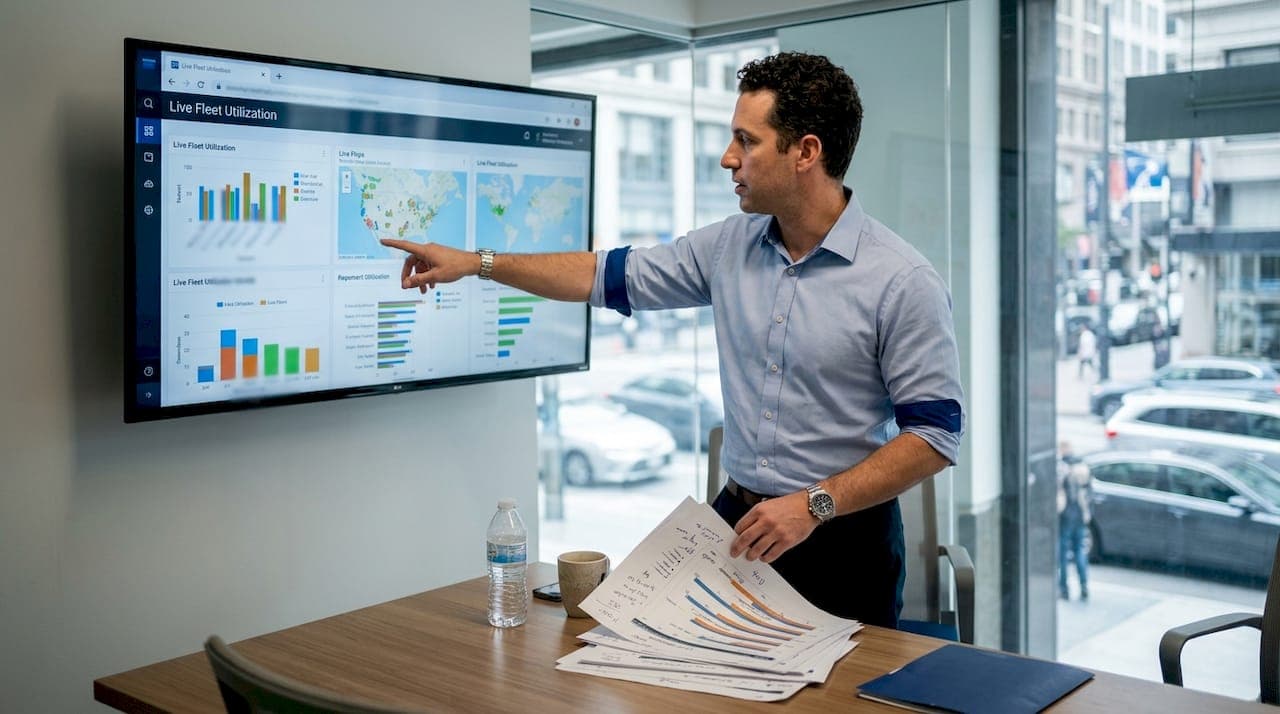
Cloud-based integrated platforms that combine telematics, maintenance, and reservations yield the highest ROI for small to medium rental businesses. The reason is simple: when all your data lives in one place, you stop wasting time reconciling systems and start making faster, better decisions.
For more on how analytics translate into operational gains, the rental data analytics guide is worth reviewing. You can also see how real-time tracking transforms day-to-day operations in practice.
Pro Tip: Data silos are the silent killer of fleet efficiency. If your reservation system, maintenance logs, and GPS data live in separate tools that don't talk to each other, you're making decisions with incomplete information. Prioritize platforms that integrate all three.
Key metrics: What you should track (and why)
Once your reporting methodology is in place, the next step is knowing which numbers actually matter. Not every metric deserves equal attention. Focus on the ones with direct revenue and cost implications.
Key KPIs for profitable rental operations include:
- Utilization rate: The percentage of available vehicles actively rented. Target: 70 to 85%.
- RevPACD (Revenue Per Available Car Day): Total revenue divided by total available car days. Tracks revenue efficiency across your fleet.
- ADR (Average Daily Rate): Average revenue earned per vehicle per rental day. Reflects pricing effectiveness.
- Maintenance cost %: Maintenance spend as a percentage of total revenue. Target: 5 to 15%.
- Cost per mile: Total operating cost divided by miles driven. Industry range: $0.23 to $0.51.
| KPI | Target / industry average | Action if outside range |
|---|
| Utilization rate | 70 to 85% | Below 70%: review pricing, adjust inventory mix |
| RevPACD | Varies by market | Declining: audit pricing strategy and demand patterns |
| ADR | Market-dependent | Low: test dynamic pricing; high: monitor booking volume |
| Maintenance cost % | 5 to 15% of revenue | Above 15%: audit maintenance schedule and vendor costs |
| Cost per mile | $0.23 to $0.51 | Above $0.51: review fuel, tire, and repair spend |
Utilization rate is the single most watched number in fleet management. Most profitable operators land between 70 and 79%, with top performers pushing above 80%. Falling below 70% consistently means you either have too many vehicles for your demand, or your pricing and availability management needs work.
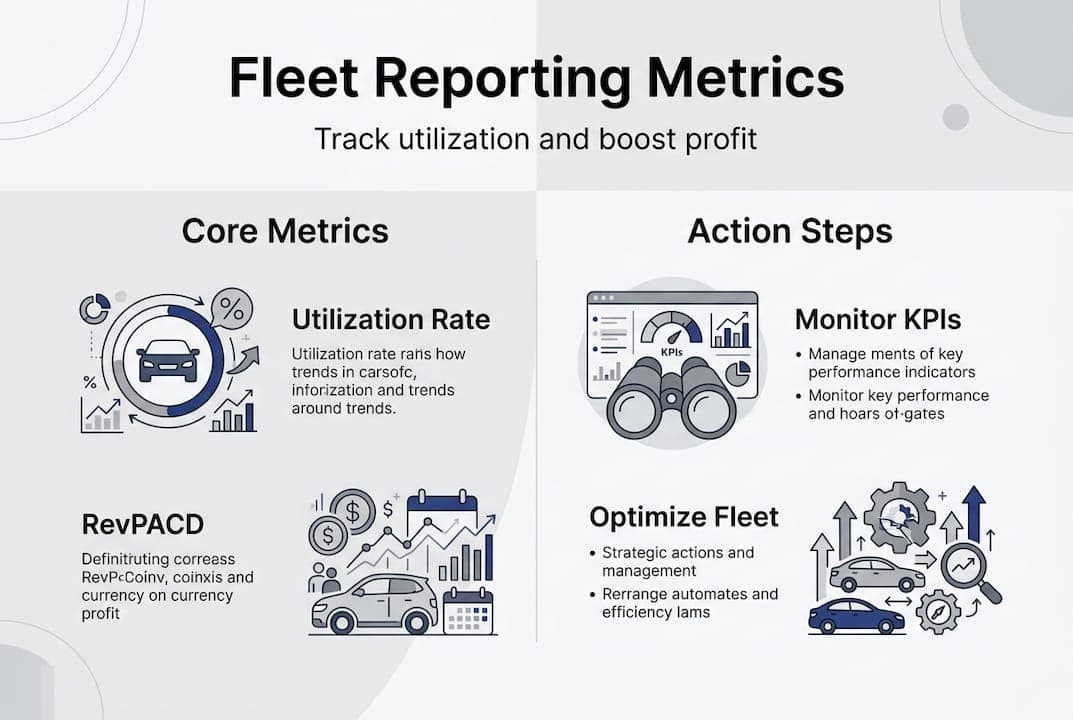
Tracking RevPACD alongside ADR gives you a more complete picture than either metric alone. A high ADR with low RevPACD often signals availability gaps or booking friction. Fixing those gaps directly increases revenue without adding a single vehicle to your fleet.
For a practical breakdown of how utilization connects to profitability, the fleet utilization management guide provides actionable detail. The rental software features overview also covers how the right tools surface these metrics automatically.
Solving real-world challenges with effective fleet reporting
Metrics and methodologies only deliver value when they solve actual problems. Here are the most common operational challenges rental businesses face, and how modern reporting addresses each one.
-
One-way rental imbalances: Vehicles accumulate at drop-off locations while pickup locations run short. Real-time fleet visibility lets you spot imbalances early and reposition vehicles before they create booking gaps or customer complaints.
-
Seasonal and geographic mismatches: Demand spikes at one location while another sits underutilized. Edge cases like seasonal mismatches directly impact margins. Reporting tools that segment data by location and season let you shift inventory proactively.
-
Double bookings: Manual systems create conflicts when two reservations are assigned the same vehicle. Integrated platforms with real-time availability checks prevent double bookings automatically, protecting both revenue and customer trust.
-
Maintenance backlogs: Vehicles go out of service unexpectedly because maintenance was tracked on a calendar rather than actual usage. Predictive maintenance tools trigger service alerts based on mileage and condition data, keeping vehicles on the road longer.
-
Billing errors and damage claim disputes: Manual invoicing creates gaps between what was charged and what was owed. Automated billing tied to real-time rental data eliminates most errors before they reach the customer.
-
Data silos across locations: When each branch runs its own spreadsheet, head office has no consolidated view. Centralized reporting gives managers a single source of truth across every location.
"Enterprise data shows predictive maintenance and smart utilization tools cut downtime by 22% and boost customer satisfaction scores by 42%."
Pro Tip: Audit your reports for accuracy at least once a month. A single data entry error in a utilization report can cascade into bad pricing decisions, missed maintenance, and inaccurate revenue forecasts. Catching errors early keeps your entire operation calibrated.
For more on managing rental inventory across locations and seasons, the linked guide covers practical strategies in detail.
Best practices and setting up for long-term success
Implementing fleet reporting is not a one-time project. It is an ongoing operational discipline. The businesses that get the most value from their reporting systems treat it as a continuous process, not a setup task.
Here is a practical framework for building a reporting system that actually sticks:
- Map your business goals first. Define what success looks like before choosing any tool. Are you trying to increase utilization, reduce maintenance costs, or improve multi-location visibility? Your goals determine which metrics matter most.
- Define your KPIs. Select five to seven core metrics aligned with your goals. Avoid tracking everything. Focus creates action.
- Select the right technology. Centralized, integrated fleet data is the foundation. Prioritize platforms that eliminate manual re-entry and connect reservations, maintenance, and GPS in one system.
- Implement automated alerts and audits. Set thresholds for key metrics and let the system notify you when something falls outside the normal range. Don't wait for monthly reviews to catch problems.
- Segment your analysis. Segment KPIs by vehicle class, location, and season to surface insights that aggregate data hides. A vehicle class that underperforms in winter may be your top earner in summer.
- Run ongoing reviews. Data without review is just storage. Schedule regular check-ins to act on what the reports are telling you.
Change management is often the biggest obstacle. Staff who are used to spreadsheets may resist new systems. The fastest way to overcome that resistance is to show quick wins early. Pick one metric, improve it visibly in the first 30 days, and let the results make the case.
Pro Tip: Schedule a monthly reporting review with all key stakeholders. Use automated dashboards to distribute the same data to everyone at the same time. Shared visibility creates shared accountability, and that alignment is what drives consistent improvement.
For operators running small business fleets, the right platform makes this entire framework manageable without a dedicated analytics team. Businesses with multi-location operations benefit especially from centralized dashboards that replace fragmented branch-level reporting.
Explore fleet management solutions tailored for your business
Everything covered in this guide, from utilization tracking and predictive maintenance to multi-location visibility and automated billing, points to one practical conclusion: the right software makes all of it manageable.
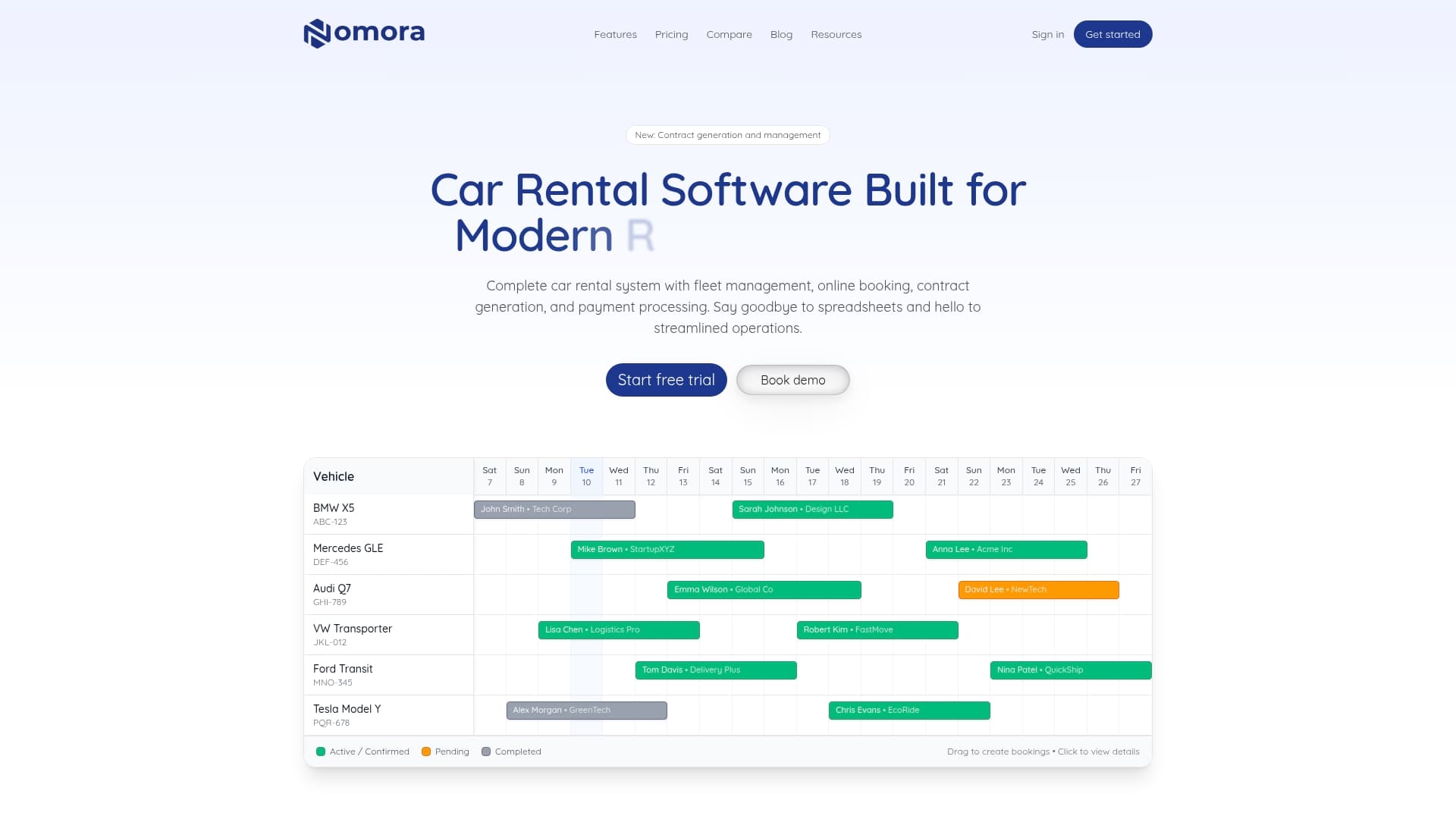
Nomora is built specifically for car rental businesses that want to replace manual processes with a system that works in real time. The platform connects reservations, fleet management, GPS tracking, payments, and reporting into a single cloud-based interface. You get the KPI dashboards, automated alerts, and segment-level analysis described throughout this guide, without needing a dedicated IT team to run it. Setup takes 24 to 48 hours, and the platform scales as your fleet grows. Explore rental software use cases to see how operators like you are using it, review the full fleet management software feature set, or visit Nomora to request a demo and see the platform in action.
Frequently asked questions
What is the most important fleet reporting metric for rental car companies?
Utilization rate is the top metric to watch, with industry targets sitting between 70 and 85%. Falling below 70% consistently is a direct signal of revenue loss that requires immediate attention.
How does predictive maintenance impact car rental fleet costs?
Predictive maintenance reduces costs by 18% and cuts downtime by 22%, making it one of the highest-ROI investments a rental operator can make in fleet technology.
How can reporting systems help prevent double bookings and billing errors?
Unified fleet reporting platforms detect reservation conflicts in real time and automate billing based on actual rental data, eliminating most errors before they reach the customer.
Cloud-based integrated platforms that combine telematics, reservations, and maintenance tracking deliver the strongest return for growing rental businesses, primarily because they eliminate data silos and reduce manual work across every function.
Recommended
Ready to streamline your car rental business?
Book 30 minutes with the founder. We set up everything in this guide on your own vehicles, and migrate you out of Excel for free.