Managing a vehicle fleet for a small to medium car rental business means juggling utilization rates, maintenance costs, and unpredictable seasonal demand. Many fleet managers watch profits erode through inefficient scheduling, reactive repairs, and static pricing that misses revenue opportunities. This guide reveals proven strategies to optimize your fleet operations using cloud-based tools, predictive maintenance, and dynamic pricing. You'll discover how to achieve 75-85% utilization without expanding your fleet, reduce downtime through AI-driven insights, and maximize revenue per vehicle day with data-backed methods that work for resource-conscious rental businesses.
Table of Contents
Key takeaways
| Point | Details |
|---|
| Optimize utilization to 75-85% | Use AI-driven demand forecasting to match fleet size with actual rental patterns and eliminate idle vehicles. |
| Leverage predictive maintenance | Telematics and data analytics reduce breakdowns by scheduling repairs before failures occur, cutting costs significantly. |
| Apply Lean-TPM for SMEs | Simplified Total Productive Maintenance increases fleet availability by 10-20% without complex overhead. |
| Implement dynamic pricing | Real-time rate adjustments based on demand fluctuations boost revenue and improve vehicle turnover. |
| Rebalance fleet strategically | Geographic and seasonal redistribution ensures vehicles meet demand where and when customers need them most. |
Before you can optimize fleet performance, you need visibility into how your vehicles actually perform. Cloud-based telematics systems provide the foundation by tracking GPS location, fuel consumption, engine diagnostics, and maintenance alerts in real time. These systems replace guesswork with concrete data about which vehicles sit idle, which routes consume excessive fuel, and which maintenance issues emerge before they cause breakdowns. For small to medium rental businesses, prioritize cloud telematics for real-time insights and AI-driven forecasting to achieve optimal utilization without fleet expansion.
Establishing clear performance benchmarks guides your optimization efforts. Target utilization rates between 75-85% to balance revenue generation with vehicle longevity. Set maintenance cost goals at 5-15% of total revenue to ensure you're investing appropriately in vehicle health without overspending. Track revenue per available car day (RevPACD) as your primary profitability metric, comparing it against industry standards for your vehicle classes and market segments. These KPIs create measurable targets that reveal whether your optimization strategies actually work.
Your data ecosystem should integrate several critical sources. AI demand forecasting tools analyze historical booking patterns, local events, seasonal trends, and market conditions to predict rental demand weeks in advance. Real-time fleet status dashboards show which vehicles are rented, available, in maintenance, or in transit between locations. Comprehensive maintenance logs document every service event, repair cost, and vehicle downtime incident to identify patterns and predict future needs. A vehicle rental checklist ensures consistent data capture across your operation.
Essential fleet optimization tools:
- Cloud telematics platforms for GPS tracking and vehicle diagnostics
- AI demand forecasting software for predictive booking analysis
- Maintenance management systems with automated scheduling alerts
- Dynamic pricing engines that adjust rates based on real-time demand
- Fleet rebalancing tools for geographic distribution optimization
| Tool Category | Primary Function | Impact on Operations |
|---|
| Telematics | Real-time vehicle monitoring | Reduces breakdowns by 25-30% through early detection |
| AI Forecasting | Demand prediction | Improves utilization by 15-20% through accurate planning |
| Maintenance Software | Preventive scheduling | Cuts maintenance costs by 10-15% via proactive repairs |
| Dynamic Pricing | Rate optimization | Increases revenue by 8-12% through demand-based adjustments |
Pro Tip: Start with one cloud-based tool that integrates easily with your existing systems rather than attempting a complete technology overhaul. Small rental businesses see faster ROI by mastering telematics and demand forecasting before adding complexity.
Executing optimization strategies: predictive maintenance, dynamic pricing, and fleet rebalancing
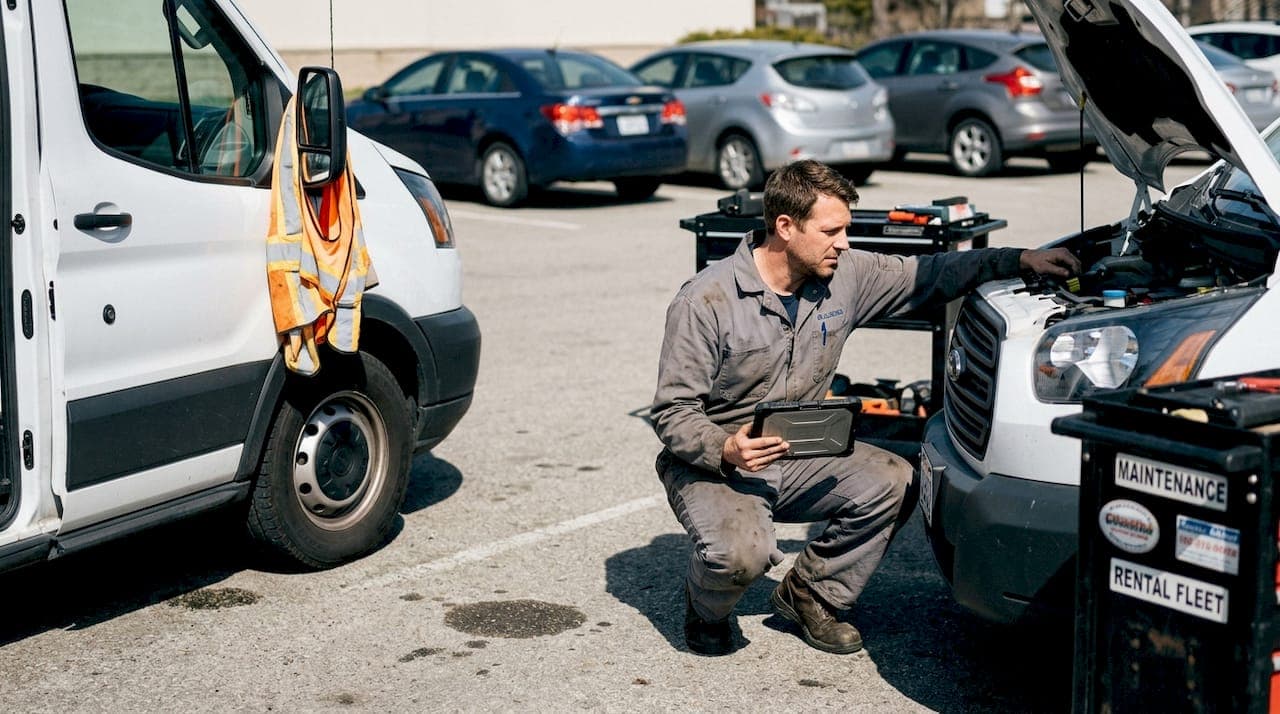
Predictive maintenance transforms your repair approach from reactive firefighting to proactive scheduling. Start by connecting your telematics system to a maintenance management platform that analyzes vehicle sensor data for early warning signs. Set threshold alerts for critical metrics like engine temperature, brake wear, tire pressure, and battery voltage. When a vehicle approaches predetermined thresholds, the system automatically generates a maintenance work order before the component fails. This approach prevents costly roadside breakdowns and extends vehicle lifespan by addressing issues during their optimal repair window.
Follow these steps to implement predictive maintenance:
- Install telematics devices in every fleet vehicle to capture real-time diagnostic data
- Configure alert thresholds based on manufacturer specifications and your historical failure data
- Create standardized maintenance protocols for each alert type with estimated repair times and costs
- Schedule preventive service during natural vehicle downtime between rentals to minimize revenue loss
- Track maintenance outcomes and adjust thresholds to improve prediction accuracy over time
- Review monthly reports comparing predictive maintenance costs against historical reactive repair expenses
Dynamic pricing maximizes revenue by adjusting rental rates based on real-time supply and demand conditions. Traditional static pricing leaves money on the table during high-demand periods and reduces utilization during slow periods. Configure your pricing engine to analyze current booking velocity, competitor rates, local events, weather forecasts, and seasonal patterns. The system automatically increases rates when demand exceeds supply and decreases them to stimulate bookings when vehicles sit idle. Lean-TPM synergy improved fleet availability by 10-20% while dynamic pricing adjusts rates in real time based on demand.
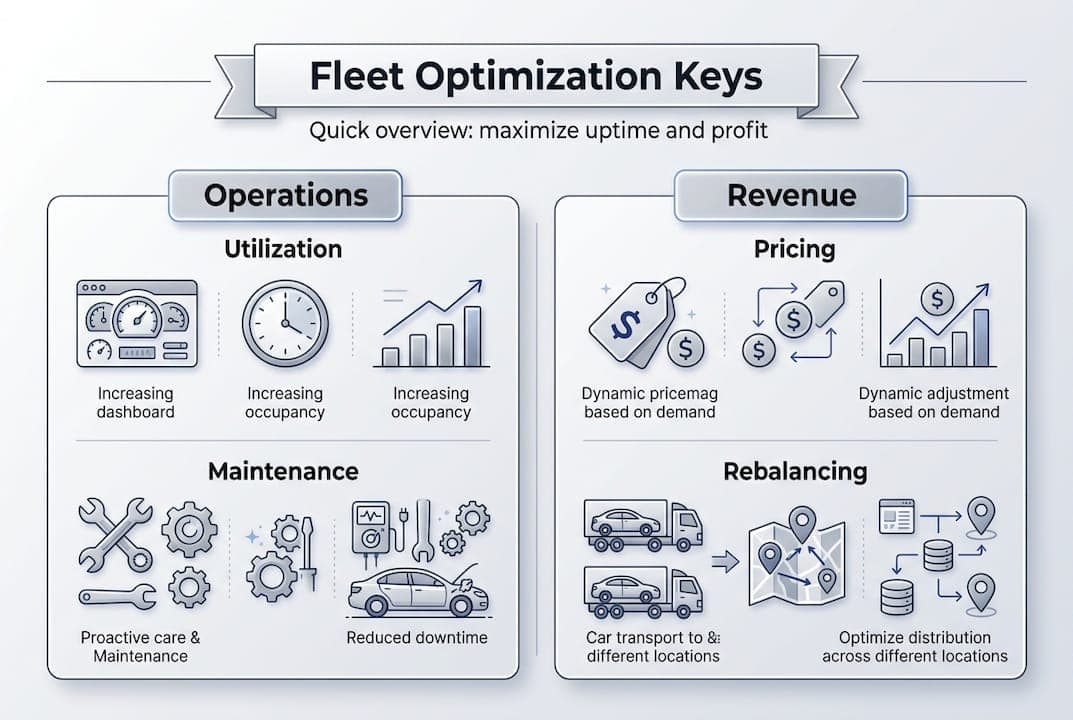
Fleet rebalancing addresses the geographic and temporal mismatch between vehicle supply and customer demand. Airport locations might experience weekend surpluses while downtown offices face weekday shortages. Seasonal tourist destinations need more vehicles in summer but excess capacity in winter. Analyze your booking data to identify these patterns, then create rebalancing protocols that move vehicles between locations during off-peak hours. Factor in transportation costs, driver availability, and fuel expenses to ensure rebalancing improves overall profitability rather than just shifting problems between locations.
| Pricing Approach | Rate Adjustment | Utilization Impact | Revenue Impact |
| --- | --- | --- |
| Static Pricing | Fixed rates regardless of demand | 60-70% average utilization | Baseline revenue |
| Dynamic Pricing | Real-time demand-based adjustments | 75-85% average utilization | 8-12% revenue increase |
| Hybrid Model | Manual seasonal adjustments | 65-75% average utilization | 4-6% revenue increase |
Pro Tip: Implement Lean principles by focusing on simple, high-impact tools first. Many SMEs achieve 80% of optimization benefits using basic telematics and demand forecasting before investing in advanced AI systems. Proven car rental optimization examples show that starting small with demand forecasting and pricing software delivers faster results than complex enterprise solutions.
Verifying results and troubleshooting common issues in vehicle fleet management
Measuring optimization success requires tracking specific KPIs that reveal whether your strategies actually improve profitability. Monitor utilization percentage by dividing total rental days by available vehicle days, targeting the 75-85% range that balances revenue with vehicle longevity. Calculate maintenance costs as a percentage of total revenue, aiming for 5-15% depending on fleet age and vehicle types. Track RevPACD by dividing total rental revenue by the number of vehicles multiplied by days in the period. Measure demand forecasting accuracy by comparing predicted bookings against actual rentals, targeting 90-95% accuracy within a two-week window.
Cloud dashboards visualize these metrics through real-time charts and trend graphs that highlight performance changes. Set up automated weekly reports that compare current performance against historical baselines and industry benchmarks. Create alert thresholds that notify you when metrics fall outside acceptable ranges, enabling quick corrective action. Segment your analysis by vehicle class, location, and season to identify specific areas needing improvement rather than treating your fleet as a homogeneous unit. Empirical benchmarks show fleet utilization targets of 75-85%, maintenance costs at 5-15% of revenue, and demand forecasting accuracy up to 95%.
Common fleet management problems have identifiable solutions:
- Double bookings: Implement a centralized reservation system with real-time availability updates across all booking channels to eliminate conflicts
- Seasonal overstocking: Use historical demand data to adjust fleet size seasonally through short-term leasing or strategic vehicle sales before low-demand periods
- Inaccurate damage reporting: Deploy mobile inspection apps with photo documentation at every rental transaction to create verifiable condition records
- Maintenance backlog: Prioritize repairs by revenue impact, addressing high-demand vehicle classes first while retiring underperforming units
- Geographic imbalances: Create automated rebalancing triggers based on location-specific utilization thresholds rather than manual observation
- Forecasting errors: Incorporate local event calendars, weather data, and competitor pricing into your prediction models to improve accuracy
Case studies validate these optimization approaches. Mid-sized rental operations implementing predictive maintenance reduced annual maintenance costs by 18% while decreasing vehicle downtime by 22%. Businesses adopting dynamic pricing saw revenue increases of 11% without adding vehicles to their fleet. Companies integrating digital transformation in car rental operations reported utilization improvements from 68% to 81% within six months.
When troubleshooting persistent issues, examine your data quality first. Inaccurate inputs produce unreliable forecasts and poor optimization decisions. Verify that telematics devices transmit data consistently, maintenance logs capture all service events, and booking systems record complete transaction details. Audit your processes quarterly to identify data gaps or inconsistencies that undermine your optimization efforts. Clean, comprehensive data forms the foundation for every successful fleet management strategy.
Explore Nomora's fleet management solutions to boost your rental business
Transforming your fleet operations from reactive management to proactive optimization requires integrated software that connects every aspect of your rental business. Nomora's cloud-based platform combines AI demand forecasting, telematics integration, and dynamic pricing in a single system designed specifically for small to medium car rental operations. The software eliminates manual spreadsheets and disconnected tools by centralizing reservations, fleet status, maintenance scheduling, and financial tracking in one accessible dashboard.
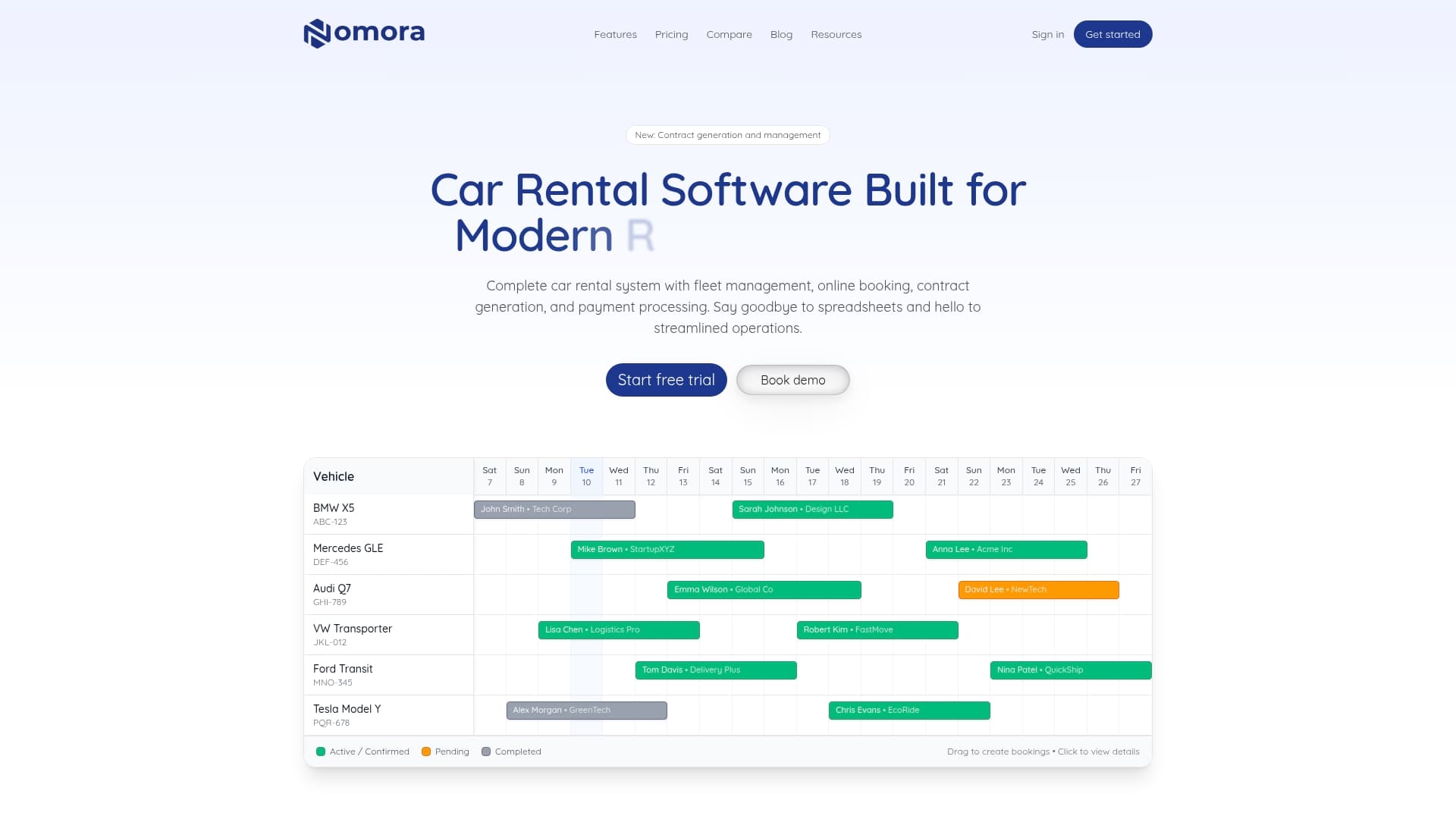
Nomora's fleet management software supports the optimization strategies outlined in this guide through real-time vehicle tracking, automated maintenance alerts, and conflict-free booking management. Digital contract generation and automated rental payment processing reduce administrative overhead while improving cash flow. The platform's flexible architecture adapts to your specific operational needs, whether you manage 10 vehicles or 100. Explore detailed car rental software use cases to see how rental businesses like yours achieve measurable efficiency gains and profitability improvements through integrated technology solutions.
What is predictive maintenance in vehicle fleet management?
What is predictive maintenance in vehicle fleet management?
Predictive maintenance uses telematics data and AI algorithms to forecast when vehicle components will fail, allowing you to schedule repairs before breakdowns occur. This approach analyzes sensor data for patterns indicating imminent failures, such as declining battery voltage or abnormal engine temperatures. By addressing issues proactively, you reduce costly emergency repairs and minimize revenue-losing downtime.
How does dynamic pricing improve rental fleet profitability?
Dynamic pricing adjusts your rental rates automatically based on real-time demand, competitor pricing, and inventory availability. When demand exceeds supply, rates increase to maximize revenue per transaction. During slow periods, lower rates stimulate bookings and improve utilization. This strategy captures additional revenue during peak times while maintaining steady vehicle turnover year-round.
What challenges do small to medium car rental businesses face in fleet management?
Small to medium rental businesses struggle with fluctuating seasonal demand, limited budgets for technology investments, and difficulty competing against larger operators with economies of scale. Maintenance costs consume disproportionate resources when reactive repairs replace preventive strategies. Cloud-based solutions designed for SMEs address these challenges by providing enterprise-grade tools at accessible price points with minimal implementation complexity.
Why is Lean-TPM integration important for small and medium fleets?
Lean-TPM integration streamlines operations by eliminating waste while maximizing equipment effectiveness through total productive maintenance principles. For small fleets, simplified Lean methods increase vehicle availability by 10-20% without requiring dedicated continuous improvement teams. This approach suits resource-constrained businesses by focusing on high-impact activities that deliver measurable results quickly, making operational excellence accessible to rental companies of any size.
Recommended
Ready to streamline your car rental business?
Book 30 minutes with the founder. We set up everything in this guide on your own vehicles, and migrate you out of Excel for free.