Key takeaways
| Point | Details |
|---|
| Regulatory compliance demands it | FMCSA's 2026 eDVIR rule fully authorizes digital signatures, removing the last barrier to going paperless. |
| The financial case is clear | Paperless systems can cut operating costs by 25–35% with ROI payback as fast as 14 to 30 days. |
| Audit performance improves sharply | Digital records achieve a 96% audit pass rate compared to only 73% for paper-based systems. |
| Implementation is faster than you think | Most fleets complete the full transition to paperless eDVIRs within 2 to 4 weeks with proper planning. |
| Start with compliance documents first | Targeting DVIRs and fuel receipts first delivers the fastest ROI and builds internal momentum for broader adoption. |
Why paper-based fleet management is failing in 2026
Paper processes were never built for the speed, accountability, or audit standards that modern fleet operations demand. For small to medium rental fleets, the administrative drag is especially acute. A single Driver Vehicle Inspection Report (DVIR) requires a three-signature cycle: the driver, the mechanic certifying the repair, and the next driver signing off. On paper, maintaining that chain reliably across a rotating vehicle pool is a serious compliance risk.
The consequences show up clearly in audit data. Only 7% of carriers using paper DVIRs pass DOT audits without a violation. Fines for non-compliance reach up to $15,420 per incident. Beyond fines, violations affect your CSA score, which directly influences your insurance premiums and your standing in the FMCSA Safety Measurement System.
Paper also fails on a purely operational level:
- Lost or damaged documents. A single missing inspection report can mean a failed audit, even when the inspection was actually completed.
- Illegible entries. Handwritten records create disputes and ambiguity. Auditors do not give the benefit of the doubt.
- No real-time visibility. A defect recorded on paper in the morning may not reach your maintenance team until the afternoon, or later if the driver forgets to hand in the form.
- No audit trail. Paper cannot record who viewed a document, when it was modified, or whether required signatures happened in the correct order.
The regulatory environment has shifted decisively. FMCSA's 2026 rule, effective March 23, 2026, explicitly authorizes electronic DVIRs and confirms digital signatures are fully compliant, eliminating prior concerns about wet ink requirements. This is not a gradual trend. It is a clear signal that digital documentation is now the compliance standard, not just a convenience.
The measurable benefits of going paperless
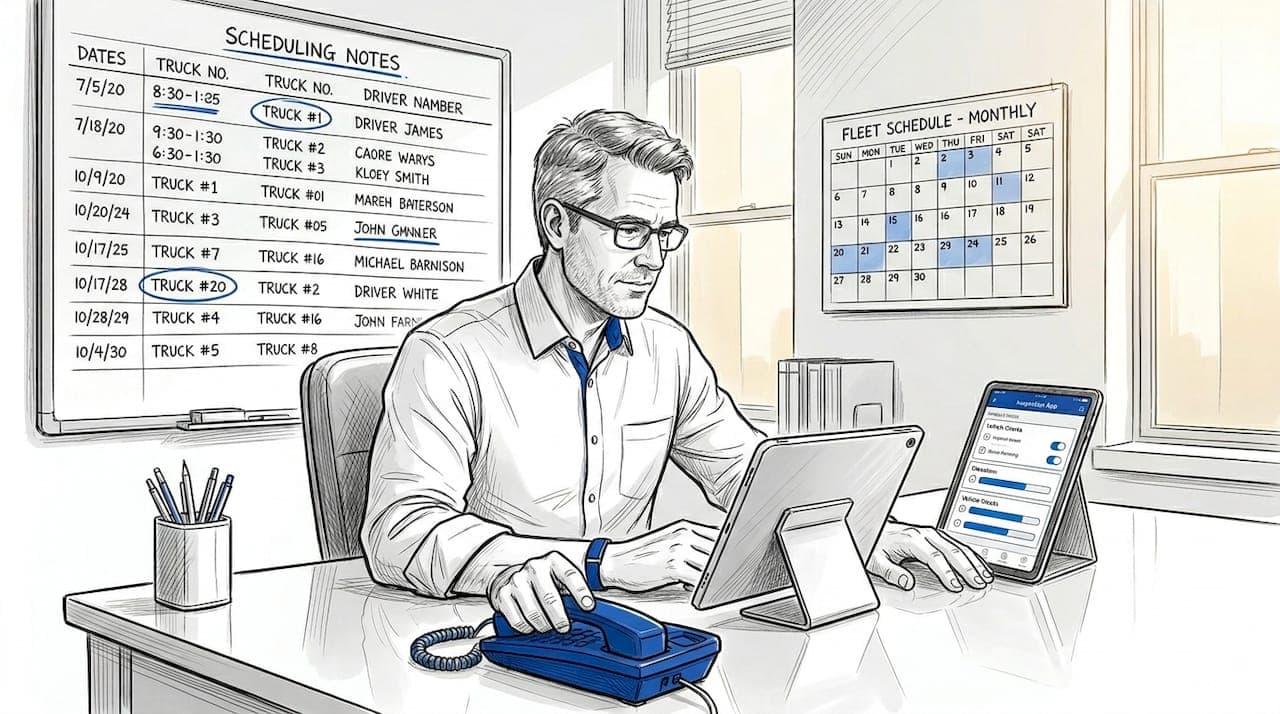
The advantages of going paperless in fleet management are not theoretical. They show up in operating budgets, audit outcomes, and vehicle safety records. Here is what the data shows across four critical areas.
1. Time savings in compliance administration
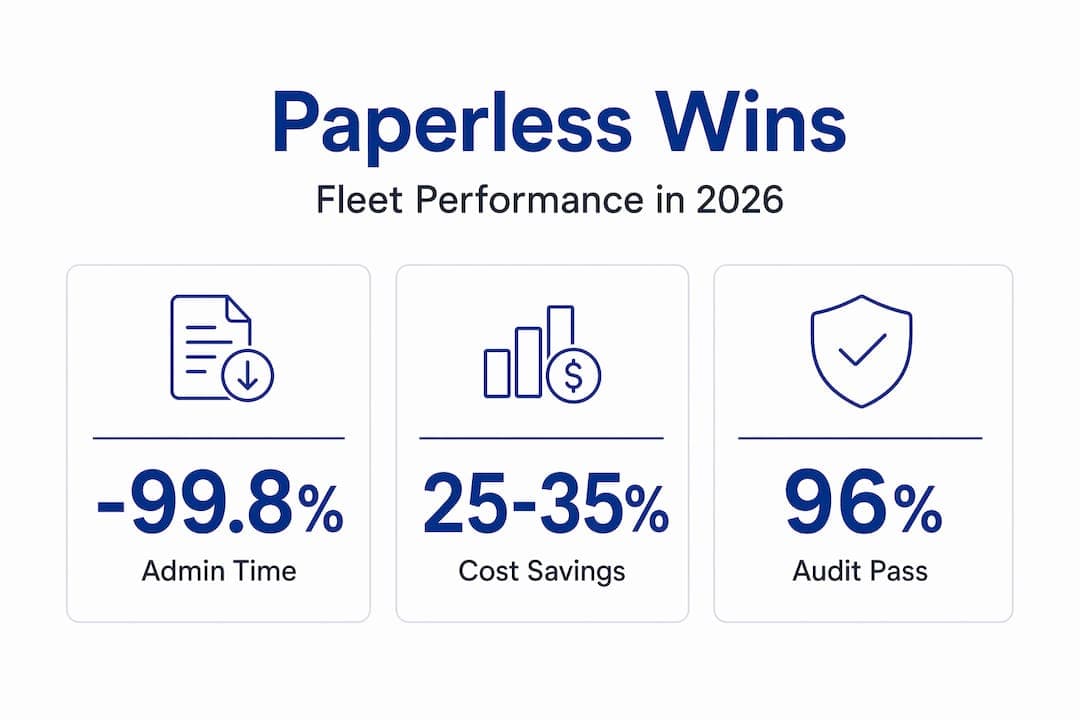
Going paperless can reduce compliance admin time by up to 99.8%. That translates practically to FMCSA audit preparation dropping from three to five days of work down to under ten minutes. For a fleet manager at a small rental company who is also handling reservations, customer service, and maintenance scheduling, recovering that time is significant.
2. Direct cost reduction
Digital fleet management cuts operating costs by 25 to 35%. Fuel savings from better route and maintenance data account for a meaningful share of that reduction. Mid-sized fleets have demonstrated 26x ROI on digital investments, with payback achieved in as little as 14 to 30 days. For a fleet of 20 to 50 vehicles, those numbers translate to tens of thousands of dollars recovered annually.
3. Audit pass rates
| Record type | Audit pass rate |
|---|
| Paper-based DVIRs | 73% |
| Digital eDVIR systems | 96% |
The 96% audit pass rate for digital systems is not a coincidence. Electronic records are complete, time-stamped, and impossible to alter retroactively. Auditors can verify the full compliance chain in minutes rather than hours.
4. Safety and defect tracking
Digital defect alerts route automatically to maintenance teams and can block vehicle dispatch until repair certification is confirmed. With paper, a defect noted at 7 a.m. might not trigger a work order until mid-day. Digital systems eliminate that gap entirely, reducing both breakdown risk and liability exposure.
Pro Tip: When calculating your potential ROI, do not focus only on labor savings. Include the cost of a single CSA violation or DOT fine in your baseline. One prevented fine can cover the annual cost of a digital fleet management platform several times over.
What a real paperless fleet management system looks like
Not all digital solutions deliver the compliance protections and operational benefits described above. Understanding what a capable system actually does helps you evaluate your options clearly.
The foundation is a digital DVIR workflow. Drivers complete inspections on a mobile app, with GPS timestamping confirming location and time. The app functions offline and syncs when connectivity is restored, which matters for remote rental drop-off locations. Defects trigger immediate alerts to maintenance staff, and the system holds dispatch authorization until the three-signature compliance cycle is complete digitally.
Beyond the DVIR, a true paperless fleet system includes:
| Feature | What it does |
|---|
| Immutable audit trails | Records every document action with timestamp and user ID, as required for DOT compliance |
| ELD integration | Combines eDVIR data with electronic log data for a unified compliance record |
| Automated work order routing | Sends defect alerts directly to the mechanic with repair history attached |
| Cloud storage with retention policies | Maintains records for the required retention period without manual filing |
| Customizable inspection templates | Supports different vehicle types across your rental fleet in one system |
One critical point on audit trails: a shared drive folder is not compliance. Real audit readiness requires immutable records showing every action taken on a document, by whom, and when. A true document management system provides that. A collection of PDFs in a folder does not.
Pro Tip: When evaluating platforms, ask specifically whether the audit trail is immutable and user-authenticated. If a vendor cannot answer that question directly, the system likely does not meet FMCSA documentation standards.
The benefits of digital fleet management extend beyond compliance. Real-time data on vehicle condition, maintenance status, and utilization feeds directly into reservation and dispatch decisions, reducing conflicts and unplanned downtime.
How to implement a paperless fleet for your rental company
Most fleets complete the full transition within two to four weeks with structured planning. The process is straightforward if you follow a logical sequence.
Step 1: Audit your current paper processes.
List every form, log, and report your team produces on paper. Note where forms get lost, where signatures are missed, and which documents cause the most friction during audits or month-end reviews.
Step 2: Prioritize compliance documents first.
Target DVIRs and fuel receipts before moving to less critical paperwork. These documents generate the most compliance risk and the fastest measurable ROI, typically within 30 to 90 days.
Step 3: Select the right platform.
Look for a system that is explicitly FMCSA-compliant for eDVIRs, integrates with your ELD provider, and supports mobile offline functionality. Verify data retention policies match regulatory requirements (typically 90 days for DVIRs).
Step 4: Configure inspection templates by vehicle type.
Your passenger vans, SUVs, and specialty vehicles likely require different inspection checklists. A good platform lets you configure these templates once and assign them to vehicle categories automatically.
Step 5: Train drivers and staff.
Driver adoption is the single biggest risk factor in a paperless transition. Keep training sessions short and practical, focused on the app workflow rather than theory. A 30-minute hands-on session with a test vehicle beats a two-hour presentation.
Step 6: Set up defect routing and maintenance tracking.
Define who receives defect alerts, what response time is expected, and how repair certification flows back to dispatch. Document this workflow so it survives staff turnover.
Step 7: Establish retention and audit-readiness protocols.
Decide who is responsible for periodic audit checks of your digital records. Schedule a quarterly internal review to confirm records are complete and accessible before a real audit request arrives.
A few practical notes on change management:
- Involve your most trusted drivers in the pilot phase. Their buy-in carries more weight with the broader team than any policy memo.
- Track a visible metric in the first 30 days, such as the number of completed digital DVIRs versus missed paper forms, and share that data with your team.
- Connect the paperless rental process to driver safety outcomes, not just administrative efficiency. Drivers respond better when they understand defect tracking protects them, not just the company.
My honest take on why this transition cannot wait
I've watched rental fleet managers delay the paperless transition for years, usually for the same reasons: the current system "works well enough," the team is stretched thin, or the upfront setup feels daunting. What I've learned is that those justifications get more expensive with every passing quarter.
The FMCSA's 2026 eDVIR authorization did not create new obligations. It removed the last excuse for staying on paper. Digital signatures are now unambiguously legal, and going paperless is a competitive necessity, not a future option. Fleets that continue with paper face compounding risk as audits grow more data-driven and CSA scores carry more weight with insurers.
The misconception I hear most often is that going digital means a major IT project. In practice, the fleets I've seen move fastest are the ones that pick one painful document, usually the DVIR, digitize it first, and build from there. The ROI materializes quickly, the team gains confidence, and broader adoption follows naturally.
What genuinely surprised me is how much driver engagement improves once paperwork is off their plate. Drivers who resented end-of-shift form-filling become advocates once they see how fast a digital inspection takes. That shift in culture is worth more than any single metric.
My direct advice: do not build a roadmap that starts twelve months from now. Identify your highest-friction paper process this week, evaluate two or three platforms by next week, and run a pilot with five vehicles within thirty days. You will recover the cost of the decision before the quarter ends.
— Dizzy
How Nomora supports your paperless fleet transition
For rental companies ready to replace paper with a system that actually scales, Nomora is built to do exactly that. Nomora functions as the central nervous system of your rental operation, connecting fleet management, reservations, contract generation, and payments in one cloud-based platform.
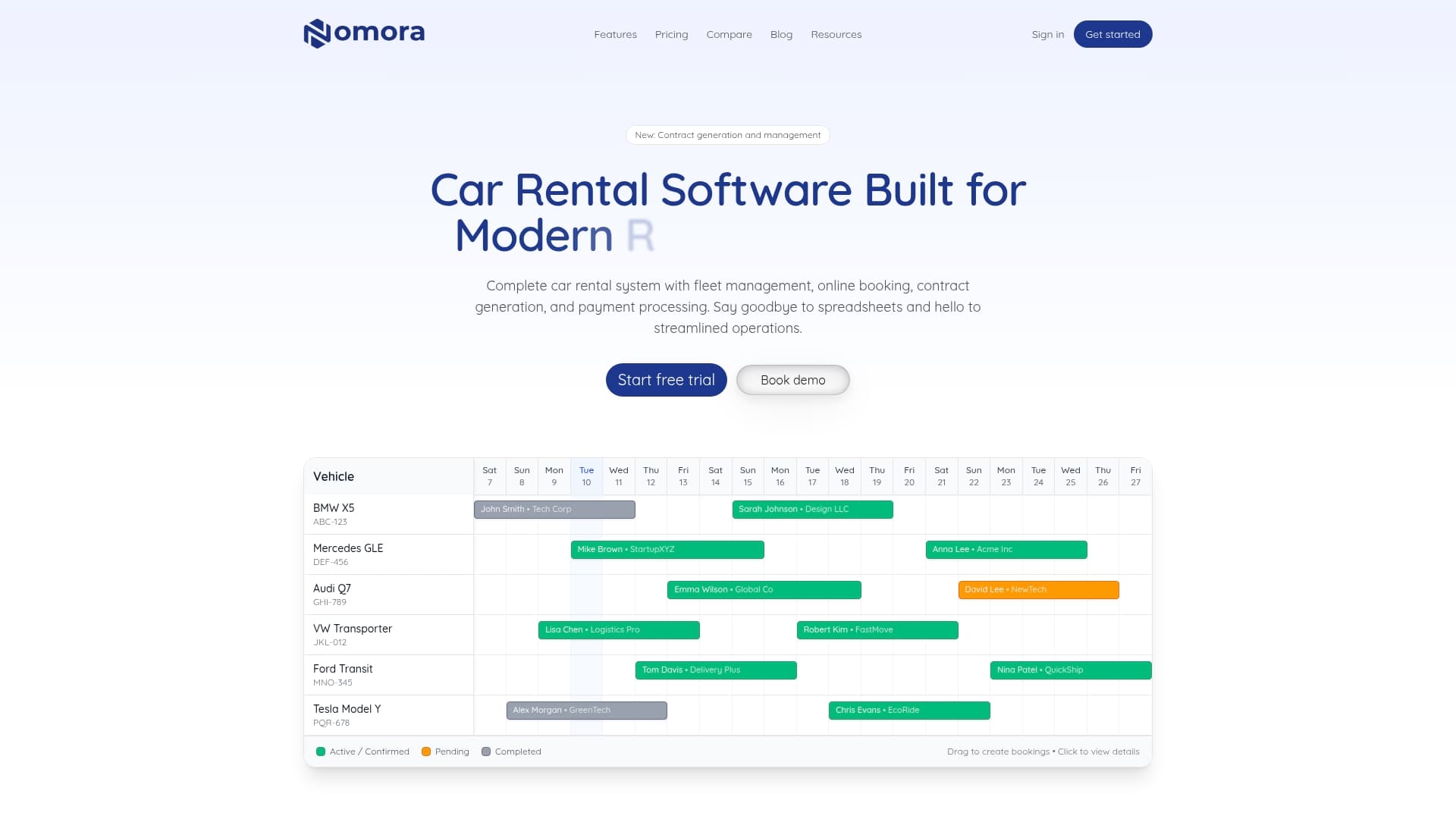
For small to medium rental fleets, Nomora's real-time fleet visibility and automated documentation workflows address the compliance and administrative gaps that paper creates. The platform supports integrations with GPS tracking and maintenance systems, giving you the fleet maintenance data you need to reduce downtime and stay audit-ready. Onboarding takes 24 to 48 hours, so you are not looking at months of setup before you see results.
Explore how Nomora's rental software solutions support different fleet types and operational models. Whether you run a 10-car independent operation or a multi-location franchise network, the platform adapts to your workflows, not the other way around.
FAQ
What does going paperless mean for fleet compliance?
Going paperless means replacing paper DVIRs, maintenance logs, and inspection forms with electronic records that include digital signatures, GPS timestamps, and immutable audit trails. FMCSA's 2026 rule confirms digital eDVIRs are fully compliant, and digital systems achieve a 96% audit pass rate versus 73% for paper.
How long does it take to implement a paperless fleet system?
Most fleets complete the transition within two to four weeks when starting with DVIRs and high-priority compliance documents. Proper driver training and template configuration are the two factors that most affect timeline.
What are the biggest cost savings from going paperless?
Digital fleet management reduces operating costs by 25 to 35%, driven by lower administrative labor, fewer compliance fines, and better maintenance data reducing repairs. Mid-sized fleets have seen payback within 14 to 30 days of adoption.
Are digital DVIRs legally acceptable under FMCSA rules?
Yes. FMCSA's final rule, effective March 23, 2026, explicitly authorizes eDVIRs and confirms digital signatures satisfy all compliance requirements, removing prior uncertainty about wet ink signature obligations.
Where should a small rental fleet start with going paperless?
Start with the Driver Vehicle Inspection Report. It carries the highest audit risk, requires the most coordination on paper, and delivers measurable ROI within 30 to 90 days once digitized, making it the best first step toward a fully paperless operation.
Recommended