Most car rental businesses still run on spreadsheets, phone calls, and disconnected databases. The result is predictable: double-bookings, missed revenue, and staff buried in admin work. But the gap between those businesses and cloud-powered competitors is widening fast. Operational costs can drop by up to 80% when rental companies migrate to scalable cloud platforms, and staff needs can shrink by 50%. This article breaks down exactly how cloud solutions drive those results, what features matter most, and how you can apply these lessons to your own fleet, whether you manage 10 vehicles or 1,000.
Table of Contents
Key Takeaways
| Point | Details |
|---|
| Centralized and real-time data | The cloud keeps all reservations, fleet info, and pricing synchronized to avoid mistakes and lost revenue. |
| Automated efficiency and cost savings | Automation through the cloud cuts staff workload, lowers IT costs, and lets you scale operations easily. |
| AI-powered analytics boost profits | Leverage cloud-based AI for smarter pricing and fleet care, directly impacting profits and customer satisfaction. |
| Cloud solutions fit every size fleet | Whether you have 10 or 1,000 vehicles, cloud platforms help you compete by delivering the same cutting-edge features. |
Understanding the cloud's fundamental role in car rental
The word "cloud" gets thrown around constantly, but for car rental operators, it has a very specific meaning. A cloud-based platform means your reservation data, fleet status, pricing rules, and customer records all live in one centralized system. Anyone on your team can access it from any device, anywhere, in real time. No more emailing spreadsheets back and forth or calling the branch to check availability.
Digital transformation in car rental is fundamentally about replacing manual, disconnected processes with integrated platforms that scale as your business grows. That shift is not just about convenience. It changes the entire operating model.
Here is what cloud platforms actually replace:
- Manual reservation logs tracked in spreadsheets or whiteboards
- Disconnected pricing systems that require staff to update rates by hand
- Siloed branch databases that cannot communicate with each other
- Paper-based contracts that slow down the customer pickup process
- Reactive maintenance tracking that waits for breakdowns before acting
A common myth is that cloud technology is only practical for large franchise networks. That is simply not true. Modern SaaS platforms are modular and priced to fit fleets of all sizes. A 15-vehicle independent operator benefits from the same real-time visibility as a 500-vehicle corporate fleet. The key software features that matter most, such as conflict-free booking and automated contracts, are available at every tier.
Industry data shows that cloud adoption reduces fleet downtime by 20 to 25% and can cut operational costs by up to 80%. These are not projections. They are documented outcomes from rental businesses that made the switch.
Scalability is another underappreciated advantage. Adding a new branch or 50 new vehicles to a cloud system takes hours, not weeks. There is no new server to provision or software license to negotiate. You simply expand within the platform. That kind of agility is what lets growing rental businesses move faster than competitors still locked into legacy systems.
Centralized data and real-time operations: eliminating chaos
Disconnected systems create a specific kind of operational chaos that every rental manager recognizes. A customer books online, but the vehicle was already reserved by phone. A branch updates pricing locally, but the website still shows the old rate. Staff manually reconcile bookings at end of day and still miss conflicts. This is not a people problem. It is a systems problem.
Real-time synchronization of reservations and fleet data eliminates double-bookings and removes manual entry from the equation entirely. When a booking comes in through any channel, the system updates instantly across all platforms.
Here is what a cloud-powered booking flow looks like in practice:
- Customer selects a vehicle on your website or OTA listing
- The system checks real-time availability across all branches
- Reservation is confirmed and inventory is locked instantly
- Customer receives automated confirmation with contract details
- Staff sees the booking in the dashboard with full vehicle and customer data
| Factor | Manual operations | Cloud-driven operations |
|---|
| Booking conflicts | Common, hard to trace | Eliminated by real-time sync |
| Pricing updates | Manual, delayed, error-prone | Instant across all channels |
| Staff time on admin | High, repetitive | Reduced by automation |
| Multi-channel visibility | Fragmented | Unified dashboard |
| Customer response time | Slow, dependent on staff | Automated and immediate |
Dynamic availability management maximizes sales by ensuring every channel reflects accurate inventory at all times. That means fewer lost bookings and more revenue captured without additional staff effort.
Pro Tip: Connect your cloud platform to OTAs and brokers through system integrations via API. When your inventory updates in one place, it updates everywhere simultaneously. This alone can eliminate the most common source of customer complaints in rental operations.
You can also automate rental bookings to handle confirmation emails, deposit collection, and contract generation without any staff involvement. Combined with real-time tracking, your team spends less time on logistics and more time on customer experience.
Optimizing fleet management with cloud-driven intelligence
Fleet management in a manual environment is reactive by nature. A vehicle breaks down. You pull it from rotation. You lose revenue while it sits in the shop. Cloud platforms change that equation entirely by shifting fleet management from reactive to proactive.
Telematics and cloud-based analytics give you a live picture of every vehicle in your fleet. You know where each car is, how many miles it has logged, when it last had service, and whether it is showing any warning signs. That data feeds into predictive maintenance systems that alert you before a breakdown happens.

Predictive maintenance and AI optimization reduce downtime by 20 to 25% and raise fleet utilization rates to between 75 and 85%. For a mid-size operator, that difference in utilization can represent tens of thousands of dollars in additional annual revenue.
| Metric | Without cloud tools | With cloud and AI |
|---|
| Fleet utilization rate | 55 to 65% | 75 to 85% |
| Unplanned downtime | High, reactive | Reduced by 20 to 25% |
| Maintenance cost per vehicle | Unpredictable | Lower and scheduled |
| ROI timeline | Unclear | Often under 12 months |
Key capabilities that cloud platforms bring to fleet management include:
- Predictive maintenance alerts based on mileage, engine data, and usage patterns
- AI-driven scheduling that optimizes which vehicles get assigned to which bookings
- Real-time GPS tracking for location visibility and theft prevention
- Utilization reporting that shows which vehicles are underperforming and why
- Automated service reminders that keep your fleet compliant and roadworthy
AI-driven systems increase fleet utilization by 3% on average and deliver rapid ROI, often within the first year of deployment. For businesses already operating at high volume, even a 3% utilization improvement translates to significant bottom-line gains.
Pro Tip: If you are a mid-size operator just starting with cloud tools, begin with telematics and GPS through your fleet management guide. Get comfortable with the data before layering in AI optimization. Building confidence in the numbers first makes every subsequent decision easier.
Cutting costs and boosting revenue: automation, dynamic pricing, and the bottom line
The financial case for cloud adoption is not subtle. Serverless cloud platforms reduce operational costs by 30 to 80% and allow companies to automate up to 50% of routine tasks. For rental businesses running on thin margins, that is a structural advantage that compounds over time.
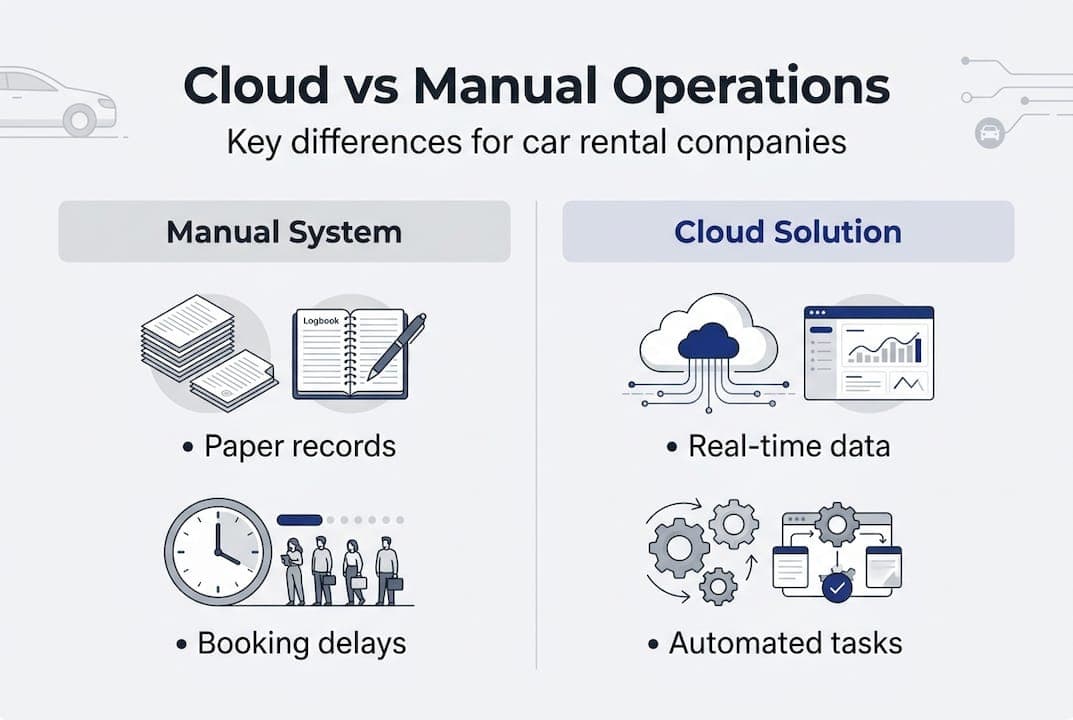
Automation handles the high-frequency, repetitive work that consumes staff hours. Invoicing, booking confirmations, payment processing, deposit collection, and contract generation can all run without human intervention. One documented outcome shows platforms processing over 1,800 invoices per month at 99% accuracy, with no additional headcount required.
Revenue gains are equally compelling. Dynamic pricing delivers 35 to 45% more direct bookings and millions in additional revenue for businesses that implement it correctly. AI-powered pricing adjusts rates based on demand signals, competitor pricing, seasonality, and fleet availability in real time. You capture more revenue during peak periods without manually adjusting every rate card.
Key financial advantages of cloud adoption:
- Lower IT infrastructure costs with no servers to maintain or software to update manually
- Reduced staffing overhead as automation handles routine workflows
- Real-time pricing adjustments that respond to market conditions without delay
- No-show reduction of 60 to 70% through automated deposit collection at booking
- ROI timelines under 12 months in most documented case studies
The demand forecasting software built into modern platforms also helps you plan fleet purchasing and staffing more accurately. You stop guessing and start making decisions based on actual demand patterns. Pair that with strong rental pricing strategies and your revenue optimization becomes systematic rather than instinctive.
Focus automation on the decisions you make most often. Pricing, availability, and payment processing are the highest-frequency decisions in any rental operation. Automating those three areas alone delivers measurable returns within the first few months.
What most car rental owners overlook about the cloud
Most operators approach cloud adoption by comparing feature lists. They want to know which platform has the best contract module or the most integrations. That is a reasonable starting point, but it misses the deeper value entirely.
The real return from cloud technology comes from what you do with the data it generates. A platform that gives you real-time utilization rates, cost per booking, and revenue per vehicle is only valuable if you actually use those numbers to make decisions. Many businesses adopt cloud tools and then continue operating on gut instinct.
Measure ROI by utilization rates and cost per booking, not just by whether you adopted the technology. Avis and Budget both emphasize this point: the metric that matters is operational efficiency, not the sophistication of the software stack.
Cloud adoption is not a one-time project. It is an ongoing practice of reading the data, adjusting operations, and improving margins. The businesses that see the biggest gains treat their platform as a decision-support system, not just a booking tool. That mindset shift is what separates operators who boost profits consistently from those who adopt cloud tools but see modest results.
Do not get distracted by buzzwords or feature counts. Get clear on which metrics drive your profitability, then choose the platform that gives you the clearest visibility into those numbers.
Ready to unlock the power of cloud for your fleet?
The evidence is clear: cloud platforms reduce costs, eliminate booking conflicts, improve fleet utilization, and drive revenue growth. The question is not whether to make the move, but how to do it efficiently.
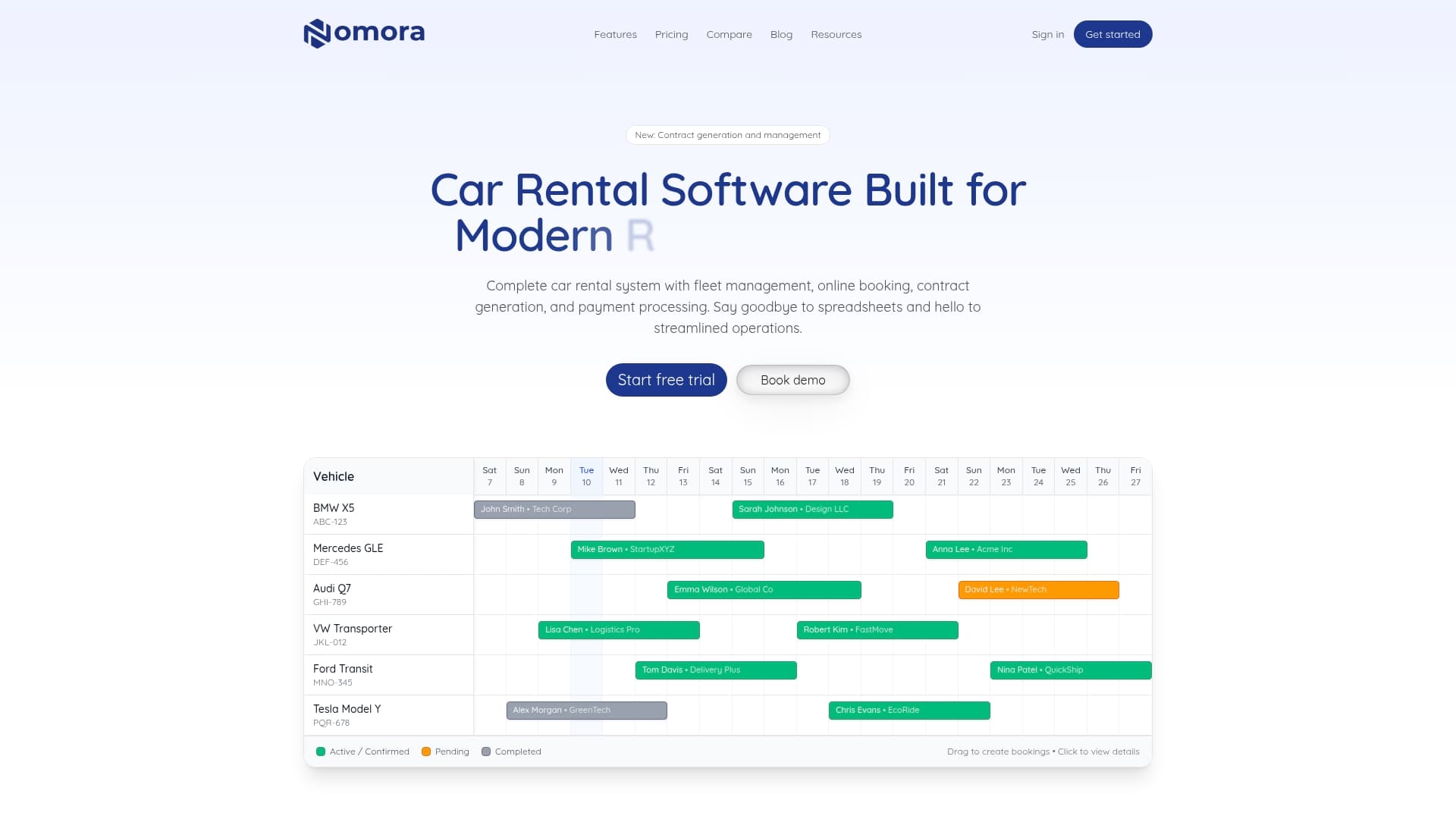
Nomora is built specifically for rental businesses that want to move fast without the complexity. From preventing double bookings to automated rental payments, the platform handles the operational details so your team can focus on growth. Explore the full range of software use cases to see how Nomora fits your fleet size and business model. Setup takes 24 to 48 hours, and the platform scales with you as your operation grows.
Frequently asked questions
How does cloud computing prevent double-bookings in car rental?
Cloud synchronizes reservation data in real time across every sales channel, so the moment a vehicle is booked, it becomes unavailable everywhere else instantly, eliminating conflicts and manual entry errors.
Is the cloud suitable for small and mid-size car rental operators?
Yes. Modern cloud platforms are modular and scale to any fleet size. Small operators gain the same real-time visibility and scalable platform benefits as large networks, without proportional increases in IT costs or staffing.
What's the fastest way to see ROI from cloud adoption?
Start with automating high-frequency tasks like pricing and predictive maintenance. Cloud tools reduce downtime by 20 to 25% and lift utilization rates quickly, which directly improves revenue without adding headcount.
How much can car rental businesses save by migrating to the cloud?
Operational costs drop 30 to 80% in documented case studies, with staff needs reduced by up to 50% when businesses automate core workflows like invoicing, payments, and booking management.
Recommended
Ready to streamline your car rental business?
Book 30 minutes with the founder. We set up everything in this guide on your own vehicles, and migrate you out of Excel for free.