Key takeaways
| Point | Details |
|---|
| Digital transformation replaces manual workflows with automated systems | Eliminates paper-based processes, reduces errors, and accelerates reservation handling |
| Core technologies include cloud platforms, AI pricing, and GPS tracking | Real-time data visibility, dynamic optimization, and preventive maintenance capabilities |
| Automation reduces costs while improving fleet utilization | Cuts operational expenses by up to 30% and maximizes vehicle availability |
| Enhanced customer interfaces boost satisfaction and loyalty | Self-service booking, instant contracts, and secure payments improve experience |
| Phased implementation with staff training ensures smooth adoption | Start with assessment, choose scalable platforms, and monitor KPIs for continuous improvement |
Digital transformation fundamentally reshapes how car rental businesses operate by replacing traditional manual methods with integrated technology platforms. Before digital adoption, rental operators faced significant challenges managing reservations through phone calls and paper logs, tracking vehicle availability using spreadsheets, and manually generating contracts for each transaction. These manual processes cause high error rates and limit business scalability as fleet size grows.
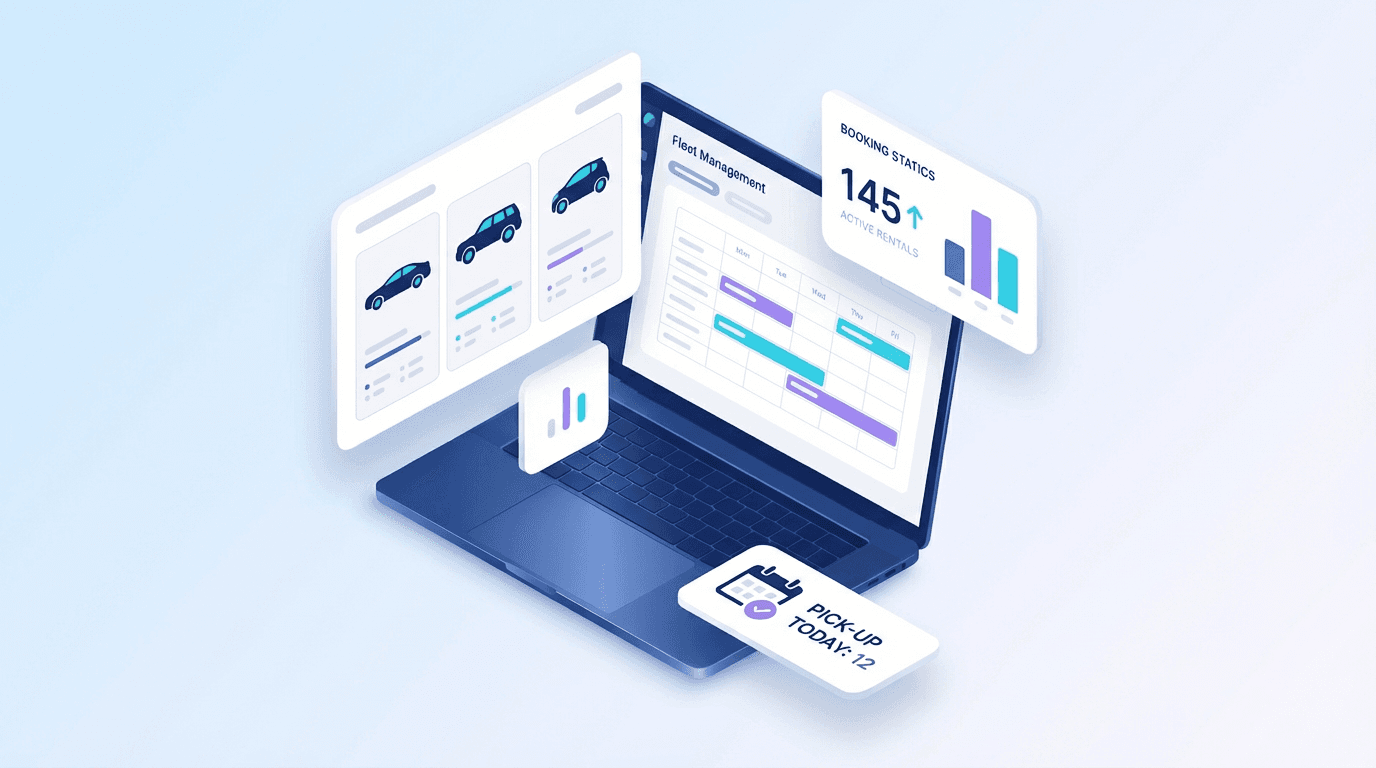
Modern digital platforms address these inefficiencies through automation and real-time data integration. Cloud-based systems centralize reservation management, fleet tracking, contract generation, and payment processing into unified workflows accessible from anywhere. This integration eliminates duplicate data entry, reduces booking conflicts, and provides instant visibility into vehicle availability and location.
The strategic importance for car rental operators centers on three core benefits:
- Operational automation reduces labor costs and eliminates time-consuming manual tasks like contract creation and data reconciliation
- Real-time analytics enable data-driven decisions about pricing, fleet allocation, and maintenance scheduling
- Enhanced customer experience through self-service booking portals and instant digital contract delivery improves satisfaction and repeat business
For business owners evaluating digital transformation, understanding these foundational concepts helps frame technology investments as strategic enablers rather than mere IT expenses. The shift from reactive manual management to proactive automated systems represents a fundamental change in how rental operations function daily.
Several interconnected technologies power effective digital transformation in car rental operations. Automation platforms handle routine tasks like reservation confirmation, contract generation, and payment processing without manual intervention. These systems integrate with your existing workflows to eliminate repetitive data entry and reduce human error in critical transactions.
Real-time data analytics provide instant visibility into fleet utilization rates, revenue per vehicle, maintenance schedules, and booking patterns. Managers access dashboards showing which vehicles generate highest returns, optimal pricing points for different seasons, and utilization gaps requiring attention. This analytical capability transforms gut-feel decisions into evidence-based strategies.
Artificial intelligence applications optimize dynamic pricing based on demand patterns, competitor rates, and seasonal trends. AI algorithms adjust rental rates automatically to maximize revenue while maintaining competitive positioning. These systems also predict vehicle availability conflicts before they occur and suggest optimal fleet allocation across multiple locations.

GPS tracking and telematics integration enable real-time vehicle location monitoring, mileage tracking, and maintenance alerts based on actual usage patterns rather than fixed schedules. Operators receive automatic notifications when vehicles require service, reducing unexpected breakdowns and costly roadside assistance calls. Mobile app trends show customers increasingly expect real-time vehicle status updates and contactless pickup options enabled by GPS technology.
Pro Tip: Choose platforms offering modular implementation where you activate features incrementally rather than overhauling everything simultaneously. This approach reduces adoption risk and allows staff to adapt gradually.
Cloud SaaS platforms enable onboarding within 24-48 hours, eliminating lengthy on-premise installations and reducing upfront capital requirements. Modern system integration capabilities connect your rental platform with payment gateways, accounting software, and customer relationship management tools for seamless data flow. Understanding how rental software transforms businesses helps operators appreciate the interconnected nature of these technologies working together.
Implementing digital tools delivers quantifiable improvements in operational metrics that directly impact profitability. Automation reduces operational costs by up to 30% by eliminating manual data entry, reducing processing time per reservation, and minimizing costly errors like double bookings or incorrect contract terms. Staff redirect time from administrative tasks toward customer service and business development activities.
AI-driven pricing increases revenue by adjusting rates dynamically based on real-time demand signals, competitive positioning, and historical booking patterns. Systems automatically raise prices during peak periods to maximize revenue from limited inventory and lower rates during slow periods to maintain utilization. This optimization happens continuously without manual intervention.
GPS-based maintenance scheduling reduces vehicle downtime by 20-25% through predictive alerts based on actual mileage and usage patterns rather than arbitrary time intervals. Operators schedule preventive maintenance during natural fleet gaps, avoiding emergency repairs that remove vehicles from revenue service unexpectedly.
| Management Approach | Monthly Admin Hours | Booking Error Rate | Fleet Utilization |
|---|
| Manual spreadsheets | 120-160 hours | 8-12% | 65-70% |
| Basic digital tools | 60-80 hours | 3-5% | 75-80% |
| Comprehensive platform | 20-30 hours | <1% | 85-90% |
This data comparison shows progressive efficiency gains as digital sophistication increases. Car rental management software boosts profits through these measurable operational improvements that compound over time.
Key efficiency metrics improved through digital transformation include:
- Reservation processing time drops from 15-20 minutes to 2-3 minutes per booking
- Contract generation becomes instant rather than requiring 10-15 minutes of manual document preparation
- Payment reconciliation shifts from hours of manual matching to automated real-time posting
- Fleet status updates occur continuously instead of requiring daily manual inventory checks
Pro Tip: Track key performance indicators before and after implementation to quantify ROI and identify areas requiring additional optimization. Measuring baseline performance provides concrete evidence justifying technology investments and guides continuous improvement efforts.
Understanding the ROI comparison between software and manual management helps operators build business cases for digital transformation investments based on specific operational improvements rather than general technology enthusiasm.
Data-driven fleet and reservation management
Real-time data integration transforms fleet and reservation management from reactive problem-solving to proactive optimization. Integrated platforms provide instant visibility into which vehicles sit idle, where demand concentrates, and how to redistribute fleet assets for maximum utilization. Managers access live dashboards showing availability, location, maintenance status, and booking commitments across all vehicles simultaneously.
Automated conflict-free booking systems prevent double reservations by checking real-time availability before confirming any new booking. Integrated systems reduce booking conflicts by up to 40% compared to manual calendars or basic scheduling tools. When multiple staff members handle reservations simultaneously, automated systems lock inventory instantly to prevent overlapping commitments.
| Feature | Manual Booking | Basic Digital | Integrated Cloud Platform |
|---|
| Real-time availability | Phone calls required | Single-location view | Cross-location visibility |
| Conflict prevention | Common errors | Basic checks | Automated locks |
| Fleet allocation | Gut feel decisions | Historical reports | AI-driven optimization |
| Maintenance tracking | Paper logs | Digital reminders | Telematics-based alerts |
Telematics data enables maintenance scheduling based on actual vehicle usage patterns rather than arbitrary timeframes. Systems track mileage, engine hours, and diagnostic codes to trigger service alerts precisely when needed. This approach reduces unnecessary maintenance visits while preventing unexpected failures that remove vehicles from service.
Benefits to fleet management and reservation accuracy include:
- Dynamic vehicle allocation moves fleet between locations based on demand patterns
- Predictive analytics forecast booking demand to guide inventory decisions
- Automated maintenance windows schedule service during natural utilization gaps
- Real-time status updates inform customers about vehicle readiness and location
Exploring specific car rental software use cases demonstrates how different rental business types leverage integrated platforms. Understanding how to prevent double bookings through systematic automation provides tactical guidance for immediate implementation.
Enhanced customer service through digital channels
Digital customer interfaces fundamentally improve the booking experience by enabling self-service transactions that complete in minutes rather than requiring phone calls or in-person visits. Online booking portals allow customers to browse available vehicles, compare options, select extras, and confirm reservations 24/7 without staff intervention. Instant contract generation delivers completed agreements digitally within seconds of booking confirmation.
Secure digital payment integration reduces friction by accepting credit cards, debit cards, and digital wallets through encrypted gateways compliant with payment card industry standards. Customers store payment methods for faster future bookings while operators benefit from immediate payment settlement rather than delayed check processing. Automated payment systems eliminate manual payment reconciliation and reduce payment disputes through clear digital records.
Digital contract software enables customers to review and sign agreements electronically before pickup, accelerating the rental process and improving documentation accuracy. Pre-signed contracts mean customers spend less time at pickup counters and more time using their rented vehicles.
Customer experience improvements driving repeat business include:
- Instant booking confirmation with detailed vehicle information and pickup instructions
- Self-service account management for viewing rental history and upcoming reservations
- Automated reminders about upcoming rentals, required documents, and return procedures
- Digital receipts and invoices eliminating paper documentation and simplifying expense reporting
- Transparent pricing with no hidden fees or surprise charges at checkout
Seamless digital interactions differentiate rental services in competitive markets where customers expect the same convenience they experience with other online services. Mobile-optimized booking flows capture spontaneous rental decisions when customers search on smartphones. Push notifications keep renters informed about vehicle status, pickup readiness, and return reminders without requiring manual follow-up.
Common misconceptions and barriers to digital adoption
Many rental operators hesitate to pursue digital transformation based on misconceptions about cost, complexity, and risk. The belief that transformation requires massive upfront investment prevents businesses from exploring affordable cloud-based solutions. Cloud SaaS platforms allow fast implementation with monthly subscription pricing that spreads costs over time rather than requiring large capital expenditures for on-premise systems and servers.
Resistance to change among established staff represents another significant barrier, particularly when employees feel comfortable with existing manual processes and fear technology will make their skills obsolete. This resistance often stems from inadequate communication about how automation enhances rather than replaces human capabilities by eliminating tedious tasks and enabling staff to focus on customer service.
Data privacy and GDPR compliance concerns cause legitimate hesitation, especially for businesses handling customer personal information and payment data. Modern platforms address these concerns through built-in security features, encryption, regular audits, and compliance certifications that exceed what most businesses achieve with manual systems storing information in spreadsheets or paper files.
Top barriers and strategies to overcome them:
- Cost concerns addressed through subscription pricing models requiring minimal upfront investment
- Staff resistance mitigated with comprehensive training programs and phased rollouts allowing gradual adaptation
- Technical complexity reduced by choosing user-friendly platforms designed for non-technical operators
- Integration challenges managed through platforms offering pre-built connectors for common tools
- Data security ensured via cloud providers offering enterprise-grade protection exceeding typical small business capabilities
Pro Tip: Implement digital transformation in phases starting with the most painful manual processes rather than attempting complete overhaul simultaneously. Quick wins build momentum and demonstrate value, reducing resistance to subsequent changes.
Addressing these misconceptions requires education about modern technology realities. Today's cloud platforms offer affordability, ease of use, and security that make digital transformation accessible to rental businesses of all sizes rather than exclusively serving large enterprises with dedicated IT departments.
A structured framework organizes transformation efforts into three interactive pillars that together drive business improvements. Understanding how these pillars connect helps operators plan comprehensive digital strategies rather than pursuing disconnected technology purchases.
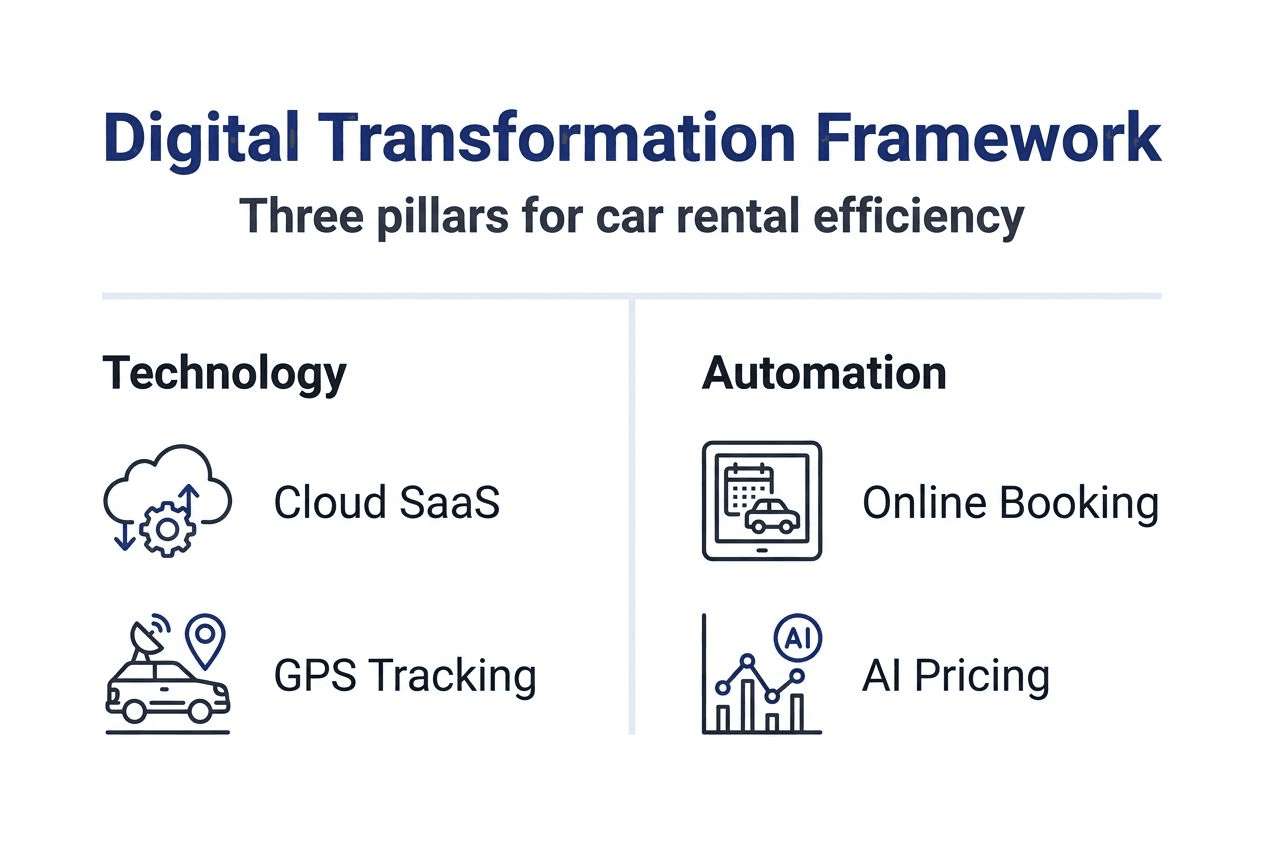
Technology integration forms the foundation by implementing cloud platforms, payment gateways, GPS tracking, and analytics tools that replace manual systems. This pillar focuses on selecting, deploying, and maintaining the technical infrastructure enabling automation and data visibility.
Process automation builds on technology by redesigning workflows to eliminate manual tasks through automated reservation handling, contract generation, payment processing, and maintenance scheduling. This pillar emphasizes how technology changes daily operations and redistributes staff time toward higher-value activities.
Customer-centric design ensures technology serves customer needs through intuitive booking interfaces, transparent pricing, instant confirmations, and convenient self-service options. This pillar connects technology capabilities with customer expectations and competitive differentiation.
| Pillar | Primary Focus | Key Technologies | Business Impact |
|---|
| Technology Integration | System foundation | Cloud platforms, APIs, telematics | Real-time data visibility, system reliability |
| Process Automation | Workflow optimization | AI, automated workflows, digital contracts | Reduced costs, fewer errors, faster processing |
| Customer-Centric Design | Experience enhancement | Mobile apps, self-service portals, digital payments | Higher satisfaction, repeat bookings, competitive edge |
These pillars interact continuously. Technology enables process automation, which improves customer experience, creating feedback that guides further technology investments. Evaluating your current state across all three pillars identifies gaps requiring attention and guides resource allocation.
Operators should assess where they stand on each pillar before planning transformation initiatives. Businesses strong in technology but weak in customer design may have sophisticated systems customers find confusing. Those automating processes without proper technology foundation risk unstable implementations. Choosing the best car rental software requires evaluating how well platforms support all three pillars simultaneously.
Successful digital transformation follows a structured implementation approach balancing ambition with realistic execution capabilities. These steps guide operators from initial assessment through ongoing optimization.
-
Conduct digital maturity assessment identifying current capabilities, pain points, and transformation priorities across reservations, fleet management, customer service, and financial processes.
-
Select scalable platform matching your business size, growth plans, and integration requirements, prioritizing systems offering modular implementation and proven reliability in car rental operations.
-
Develop change management plan communicating transformation benefits to staff, addressing concerns proactively, and appointing internal champions who advocate for new systems.
-
Execute phased rollout starting with highest-impact areas like automated reservations or conflict-free booking, allowing staff to master each module before adding complexity.
-
Provide comprehensive training ensuring all staff understand new systems through hands-on practice, documentation, and ongoing support addressing questions as they arise.
-
Monitor key performance indicators tracking efficiency gains, cost reductions, customer satisfaction improvements, and system adoption rates to evaluate success and guide iterations.
Executive buy-in proves critical since transformation requires resource commitment, temporary productivity dips during transition, and willingness to change established practices. Leaders must champion digital initiatives consistently rather than treating them as optional IT projects.
Best practices for platform selection emphasize integration capabilities, user interface simplicity, vendor support quality, and pricing transparency. Platforms offering comprehensive functionality like Nomora reduce integration complexity by handling reservations, fleet management, contracts, and payments within unified systems rather than requiring multiple disconnected tools.
Tracking specific KPIs quantifies transformation impact. Monitor reservation processing time, booking error rates, fleet utilization percentages, customer satisfaction scores, and operational cost per transaction. Baseline measurements before implementation provide comparison points demonstrating ROI and justifying continued investment.
The complete guide to car rental software in 2026 offers detailed evaluation criteria and implementation strategies for operators beginning their transformation journey.
Explore Nomora's car rental software solutions
Nomora provides a comprehensive cloud-based platform specifically designed to accelerate digital transformation for car rental businesses of all sizes. Our integrated system handles reservations, fleet management, automated contract generation, and secure payment processing within a unified interface accessible from any device. The platform eliminates manual workflows through intelligent automation while providing real-time analytics that guide strategic decisions.
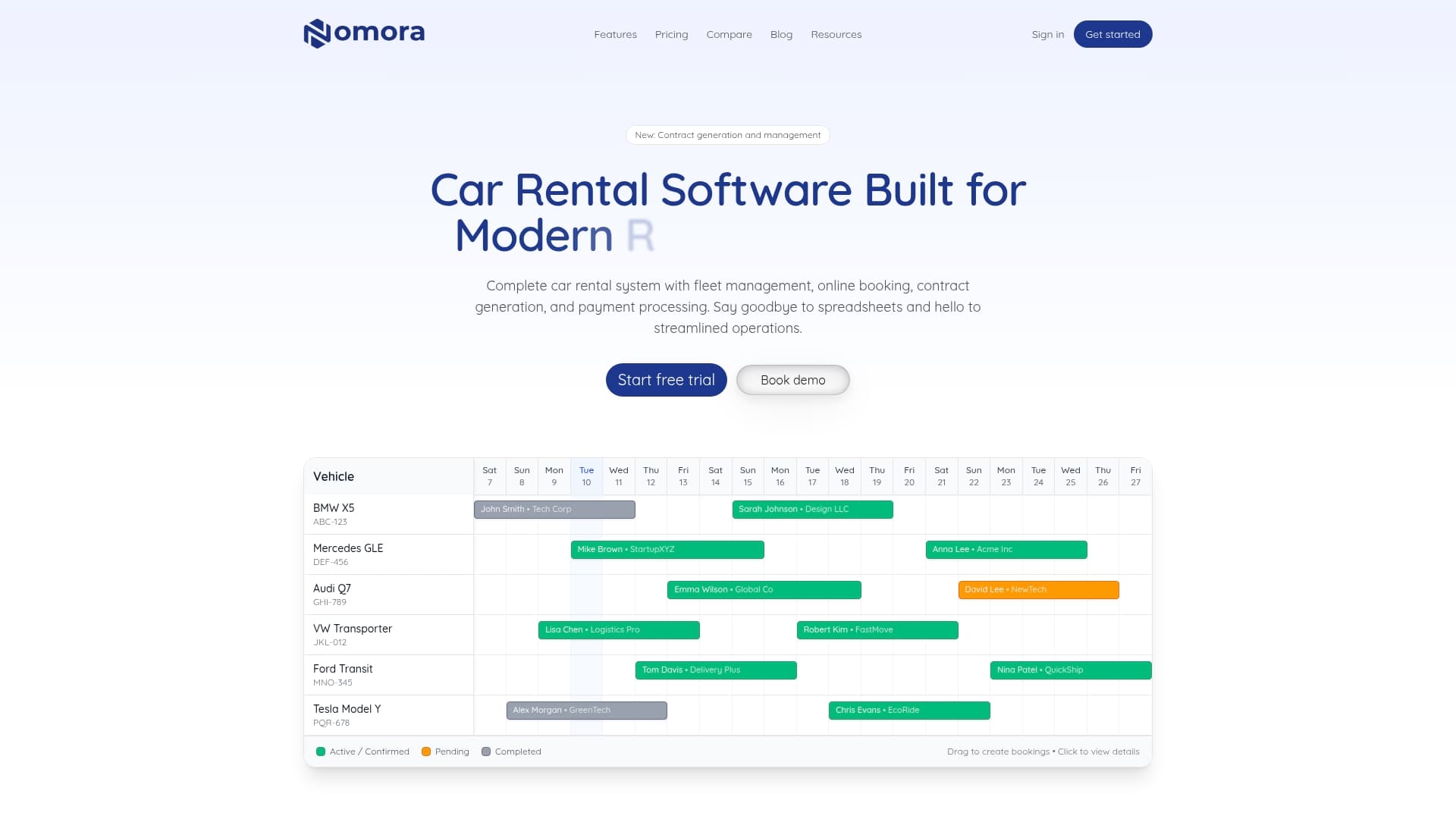
Explore specific car rental software use cases demonstrating how operators leverage Nomora's capabilities. Our fleet management software delivers real-time visibility and predictive maintenance alerts, while automated payment solutions streamline financial operations. With onboarding completed in 24-48 hours and flexible pricing plans, Nomora makes enterprise-grade technology accessible to businesses ready to enhance efficiency and customer service.
FAQ
Begin with a digital maturity assessment identifying your biggest operational pain points and current technology gaps. Choose a scalable cloud platform offering integrated functionality rather than disconnected tools requiring complex integration. Plan phased implementation starting with high-impact areas like automated reservations, and invest in staff training to ensure smooth adoption and maximize system utilization.
Automation eliminates time-consuming manual tasks like data entry, contract creation, and payment reconciliation, reducing labor costs by up to 30%. AI-driven pricing optimization maximizes revenue per vehicle while dynamic fleet allocation improves utilization rates. Real-time telematics data enables predictive maintenance scheduling that reduces unexpected breakdowns and costly emergency repairs.
Cost concerns often stem from outdated assumptions about expensive on-premise systems, but modern cloud platforms offer affordable monthly subscriptions requiring minimal upfront investment. Staff resistance diminishes through transparent communication, comprehensive training, and phased rollouts allowing gradual adaptation. GDPR compliance worries are addressed by choosing platforms with built-in security features and compliance certifications exceeding typical manual system protections.
Cloud-based platforms typically complete initial setup within 24-48 hours, though full transformation spans several months depending on business size and complexity. Phased implementation allows immediate benefits from early modules like automated reservations while staff gradually adopts additional features. Most operators see measurable efficiency improvements within the first quarter and achieve full transformation benefits within 6-12 months.
What should I look for when choosing car rental management software?
Prioritize platforms offering comprehensive integrated functionality covering reservations, fleet management, contracts, and payments rather than requiring multiple disconnected systems. Evaluate user interface simplicity ensuring staff can adopt quickly without extensive technical training. Verify integration capabilities with your existing payment gateways, accounting software, and other business tools. Confirm vendor support quality through reviews and trial periods testing responsiveness.
Recommended