Key Takeaways
| Point | Details |
|---|
| Modern tracking vital | Real-time software and IoT devices are now essential for managing rental vehicle availability and condition. |
| Profit from data-driven methods | Predictive maintenance and dynamic pricing quickly boost fleet utilization and bottom-line results. |
| Segment for efficiency | Applying ABC analysis and frequent cycle counts focuses effort where it saves the most on high-value assets. |
| Policy and tech together | Smart policies like overbooking and automated software tools are what separate leading rental businesses from the rest. |
What is rental inventory management in the vehicle rental industry?
Rental inventory management in vehicle rentals is the practice of tracking, controlling, and optimizing every asset in your fleet across its full lifecycle. It goes well beyond a simple availability calendar. The scope includes vehicle status (available, rented, in maintenance, or retired), physical condition, location, and utilization rate at any given moment.
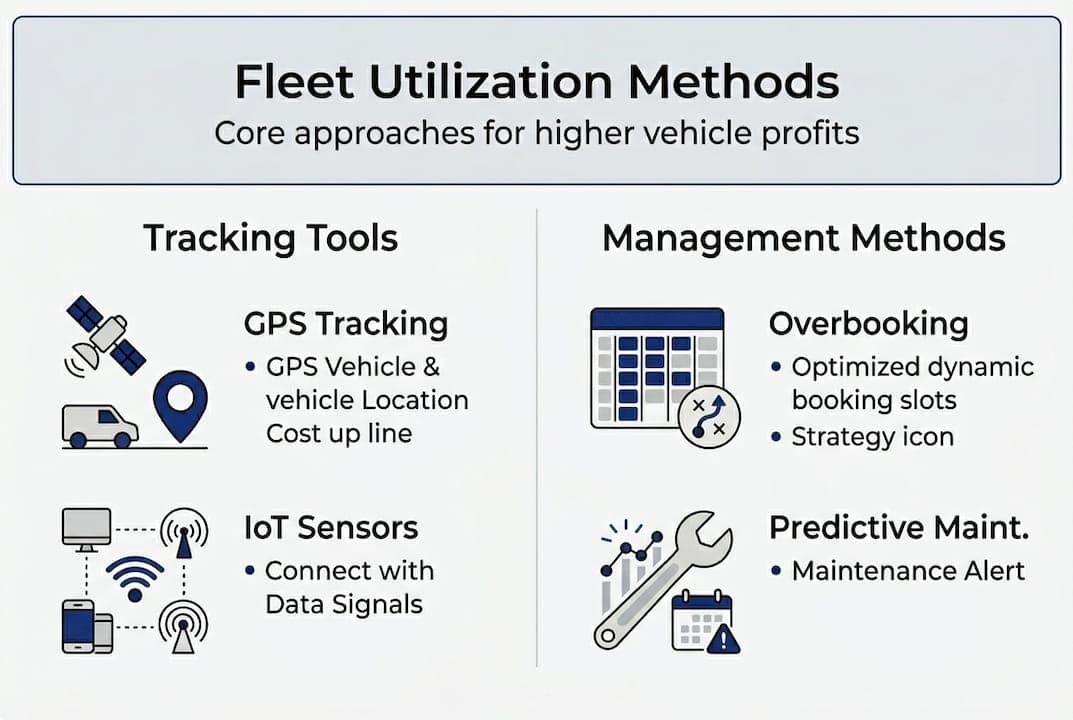
Modern operations rely on a combination of GPS tracking, IoT sensors, and integrated software to maintain this visibility. As real-time fleet tracking shows, rental inventory management involves tracking fleet availability, status, and condition using GPS, IoT, and software for optimal utilization. Without that data layer, decisions about pricing, maintenance, and purchasing are based on guesswork.
Key components of a solid rental inventory management system include:
- Vehicle availability: Accurate, real-time status for every unit in the fleet
- Condition tracking: Documented inspection records tied to each vehicle
- Utilization monitoring: Measuring how often each asset generates revenue
- Maintenance scheduling: Proactive service windows that minimize downtime
- Location visibility: Knowing where every vehicle is at all times
Real-time visibility is no longer a competitive advantage. It is the baseline expectation for any rental operation that wants to avoid costly surprises and keep customers satisfied.
For a broader look at how these components connect, the fleet management overview on Nomora's blog provides a strong foundation.
Now that you understand what rental inventory management is, let's explore the core methods, their impact, and how leading companies put them to use.
Core methods: From real-time tracking to predictive maintenance
Four methods consistently separate high-performing rental fleets from average ones: real-time tracking, predictive maintenance, dynamic pricing, and fleet rebalancing. Each one targets a specific profit leak.
Real-time tracking gives dispatchers and managers instant visibility into vehicle location and status, eliminating the lag that causes double-bookings and missed pickups. Predictive maintenance uses telematics data to flag issues before they become breakdowns. According to fleet benchmarks, predictive maintenance reduces downtime by 22%, while dynamic pricing adjusting rates based on demand boosts revenue by 8 to 12 percent.

The numbers behind these methods are compelling. Fleet utilization averages 70 to 85 percent, peaking at 90 to 95 percent during high-demand periods, and businesses using dynamic pricing consistently achieve 75 to 85 percent utilization compared to 60 to 70 percent with static rates. Maintenance costs typically run 5 to 15 percent of revenue, making predictive strategies a direct margin improvement.
| Method | Primary benefit | Typical impact |
|---|
| Real-time tracking | Eliminates booking conflicts | Reduces idle time and errors |
| Predictive maintenance | Prevents unplanned downtime | Cuts maintenance costs by up to 22% |
| Dynamic pricing | Matches rates to demand | Boosts revenue 8 to 12% |
| Fleet rebalancing | Optimizes geographic distribution | Improves utilization across locations |
Pro Tip: You do not need a full telematics overhaul to start. Even basic GPS data can reveal which vehicles sit idle longest and which locations consistently run short, giving you a clear starting point for improvement.
For operators looking to sharpen their demand strategy, demand forecasting software can help align fleet size and pricing with actual booking patterns.
Building on these fundamental techniques, it is crucial to fine-tune how you segment, value, and monitor both vehicles and parts in your operation.
How to segment your inventory: The ABC analysis and cycle counts
Not every vehicle or part deserves the same level of attention. ABC analysis is a proven segmentation framework that helps rental operators focus resources where they matter most.
- A-items: High-value vehicles or critical parts with frequent usage. These require tight tracking, weekly cycle counts, and priority restocking.
- B-items: Moderate value and usage. Monthly review cycles are appropriate.
- C-items: Low value or infrequent use. Quarterly counts or a buy-to-order approach works well here.
As fleet inventory best practices confirm, A-items should be tracked tightly with weekly cycle counts, while C-items can follow a buy-to-order model to reduce carrying costs.
Here is how to set up a practical segmentation and count schedule:
- List every vehicle category and parts SKU in your operation.
- Rank them by annual usage value (frequency multiplied by cost).
- Assign A, B, or C classification based on the top 20 percent, middle 30 percent, and bottom 50 percent.
- Set count frequencies: weekly for A, monthly for B, quarterly for C.
- Assign ownership so a specific team member is accountable for each tier.
| Category | Count frequency | Management approach |
|---|
| A-items | Weekly | Tight tracking, priority restocking |
| B-items | Monthly | Regular review, moderate buffer stock |
| C-items | Quarterly | Buy-to-order, minimal holding |
Pro Tip: Start your segmentation effort with A-items only. Getting those right first prevents the biggest losses and builds the discipline needed to manage B and C tiers effectively. The small fleet checklist is a useful companion resource for operators building these processes from scratch.
Managing inventory is only part of the puzzle. Next, discover how business policies and market realities shape your day-to-day operations and profits.
Smart policies: Overbooking, rebalancing, and handling demand peaks
Inventory management is not purely a tracking exercise. The policies you set around overbooking, vehicle movement, and seasonal demand directly affect both revenue and customer experience.
Overbooking is a calculated strategy. Overbooking rates of 5 to 15 percent, calibrated to historical no-show data, can improve utilization without consistently disappointing customers, provided you have clear upgrade or alternative vehicle policies in place.
Fleet rebalancing addresses the geographic mismatch that happens when one-way rentals concentrate vehicles at certain locations. Moving units proactively, based on demand forecasts, prevents both shortages and costly idle periods.
Common pitfalls and tactics to watch for:
- Overbooking without upgrade inventory leads to customer complaints and refunds
- Seasonal surges require advance fleet positioning, not reactive moves
- One-way rental policies need built-in rebalancing costs to stay profitable
- Demand mismatches at specific locations signal a need for localized pricing adjustments
Under-utilization and over-utilization each carry hidden costs. An idle vehicle is lost revenue. An overworked vehicle without maintenance windows is a liability waiting to happen.
For operators managing vehicles across multiple sites, the multi-location fleet management guide covers rebalancing strategies in detail, and fleet optimization examples show how real businesses have applied these tactics.
With policies and frameworks in place, you are ready to assess which fleet structure fits your growth and service goals.
Choosing between single-fleet and multi-fleet setups
The structure of your fleet inventory model has a direct impact on profitability and service quality. The two primary approaches are single-pool (centralized) and multi-fleet (location-based).
A single-pool model centralizes all vehicles under one inventory, making it easier to maximize utilization and reduce capital tied up in redundant assets. The tradeoff is that local availability can suffer when demand spikes at one location.
A multi-fleet model assigns dedicated vehicles to each location. This improves local service levels and reduces relocation frequency, but it can leave some locations with idle inventory while others run short.
Research on fleet pooling versus dedicated fleets confirms that single-fleet pooling is generally more profitable, while multi-fleet setups achieve higher utilization and service levels at key centers but carry higher relocation costs.
| Model | Strengths | Weaknesses |
|---|
| Single-pool | Higher capital efficiency, simpler management | Local shortages during demand spikes |
| Multi-fleet | Better local service, fewer relocations | Idle inventory risk, higher overhead |
| Hybrid | Balances control and service flexibility | Requires more sophisticated software |
Pro Tip: A hybrid approach, where a core pool is supplemented by location-specific reserves during peak periods, often delivers the best balance. For corporate operators, corporate rental solutions outlines how larger fleets structure this effectively.
No matter your structure, the right technology stack brings all these moving pieces together with transparency and control.
Think of your rental management software as the central nervous system of your operation. Every data point, from GPS location to maintenance alert to booking confirmation, flows through it. Without integration, you are managing fragments instead of a fleet.
Integrated software for real-time visibility is essential for handling demand forecasting, overbooking, and dynamic pricing without double-bookings. The accuracy and speed that software provides directly translate into fewer errors, faster turnarounds, and better customer experiences.
Key features to prioritize when evaluating rental software:
- Automated booking and conflict detection to eliminate double-bookings
- Maintenance scheduling and alerts tied to telematics data
- Mobile check-in and inspection tools for faster vehicle turnarounds
- Reporting dashboards with utilization, revenue, and downtime metrics
- GPS and IoT integration for real-time location and condition updates
- Dynamic pricing engine that adjusts rates based on demand signals
IoT sensors add another layer by monitoring fuel levels, tire pressure, and engine diagnostics in real time. These alerts allow your team to act before a vehicle goes out of service unexpectedly. The connection between technology adoption and profitability is direct. Operators who invest in integrated platforms consistently outperform those relying on spreadsheets and manual processes. For a closer look at how software drives margins, rental software profit drivers covers the financial case in detail.
You now have a complete framework for managing even a complex rental inventory. The next step is putting it into practice with tools built specifically for your business.
Optimize your rental fleet with smart technology solutions
Nomora's cloud-based platform is built to support everything covered in this guide, from real-time fleet visibility and predictive maintenance scheduling to dynamic pricing and multi-location rebalancing. Whether you operate a small independent fleet or a large franchise network, the platform adapts to your structure and scale.
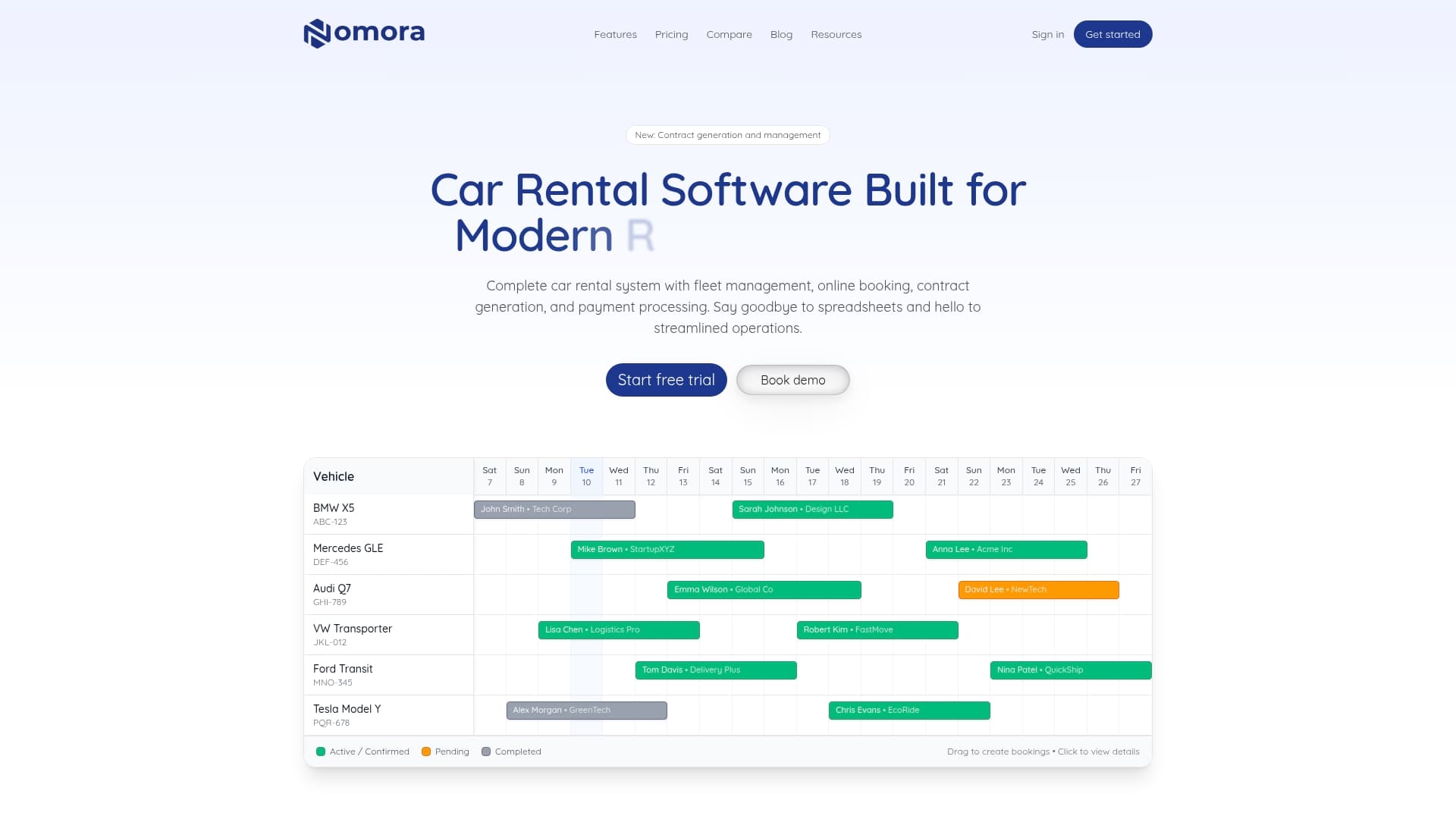
With Nomora's fleet management software, you get automated booking conflict detection, GPS integration, maintenance alerts, and reporting dashboards in one place. Explore the full range of rental software use cases to see how operators like you are using the platform to cut downtime and grow margins. You can also learn exactly how Nomora handles double booking prevention to protect your revenue and your reputation with every reservation.
Frequently asked questions
What is fleet utilization and why does it matter?
Fleet utilization measures the percentage of your vehicles actively generating rental revenue at any given time. Industry benchmarks place utilization at 70 to 85 percent on average, with peaks reaching 90 to 95 percent, and pushing beyond 85 percent consistently can strain maintenance schedules and reduce service quality.
How does predictive maintenance improve vehicle rental operations?
Predictive maintenance uses telematics data to identify wear patterns and forecast failures before they cause breakdowns. Preventive maintenance fleets see a 20 percent uptime increase, and predictive approaches cut maintenance costs by up to 18 percent compared to reactive repair strategies.
Is overbooking risky for car rental fleets?
Overbooking carries real risk if it is not backed by accurate no-show data and a clear upgrade policy. When managed correctly at rates between 5 and 15 percent, it improves utilization without consistently creating customer service problems.
What inventory management method is best for small fleets?
Small fleets get the most value from focusing on A-item accuracy with weekly cycle counts and using integrated rental software to maintain real-time visibility, since errors in a small fleet have a proportionally larger impact on revenue and availability.
Recommended