Key Takeaways
| Point | Details |
|---|
| Core analytics components | Telematics, AI forecasting, predictive maintenance, dynamic pricing, and utilization tracking work together to optimize fleet management and operational efficiency. |
| Predictive maintenance value | Predictive maintenance uses sensor data and forecasting to prevent breakdowns and reduce maintenance downtime. |
| Dynamic pricing benefits | Dynamic pricing engines adjust rates in real time based on demand signals and inventory levels to maximize revenue. |
| Overbooking strategy | Overbooking can improve utilization but requires probabilistic modeling and customer fallback plans to protect revenue and trust. |
| Data quality foundation | Start with cloud telematics and high quality data collection before layering AI forecasting to ensure reliable analytics. |
Understanding core components of rental data analytics
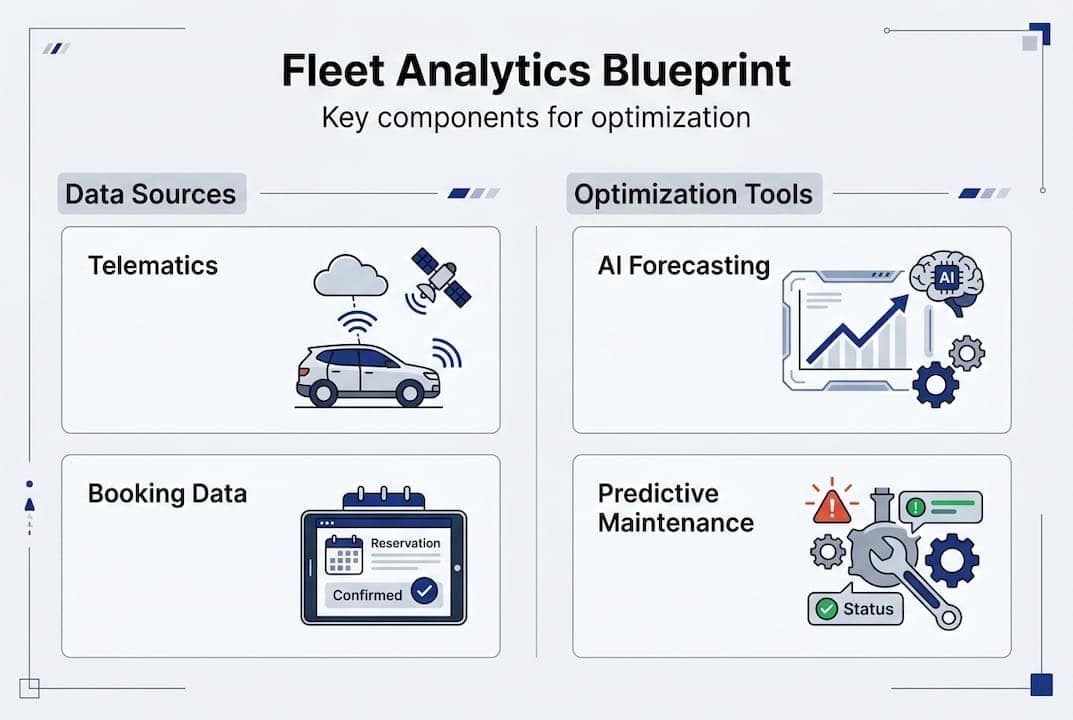
Rental data analytics in car rental businesses primarily involves telematics, AI demand forecasting, predictive maintenance, dynamic pricing, and utilization tracking to optimize fleet management and operational efficiency. Each component serves a distinct purpose but works best when integrated into a unified system.
Telematics forms the foundation by collecting real-time data from your vehicles. GPS location, fuel consumption, engine diagnostics, driving behavior, and mileage all flow into your analytics platform. This data stream enables every other component to function accurately. Without reliable telematics, you're making decisions based on guesswork rather than evidence.
AI demand forecasting predicts when customers will need specific vehicle types. These algorithms analyze historical booking patterns, seasonal trends, local events, weather forecasts, and competitor pricing. By anticipating demand spikes and valleys, you can position vehicles where they're needed most. This prevents the common scenario where economy cars sit idle while customers request SUVs you don't have available.
Predictive maintenance uses telematics and AI forecasting to reduce maintenance downtime and operational costs. Sensors monitor engine temperature, brake wear, tire pressure, and transmission performance. Machine learning models identify patterns that precede failures. You schedule repairs during low-demand periods instead of dealing with emergency breakdowns during peak season.
Dynamic pricing engines adjust rental rates continuously based on demand signals, competitor rates, local events, and inventory levels. A concert announcement triggers price increases for that weekend. A competitor drops rates by 15%, and your system responds within hours. This real-time adaptation maximizes revenue per available car day.
Utilization tracking monitors how often each vehicle generates revenue versus sitting idle. You identify which models customers prefer, which locations have excess inventory, and which vehicles drain resources without producing income. This insight drives smarter purchasing decisions and fleet rebalancing strategies.
Pro Tip: Start integrating cloud telematics before layering AI forecasting for measurable gains. Master data collection first, then add predictive capabilities once you trust your data quality.
These components work together to create a comprehensive vehicle fleet management system. Telematics feeds data to predictive maintenance and utilization tracking. AI forecasting informs dynamic pricing. All components contribute to better car rental demand forecasting and operational efficiency.
Key challenges and nuanced strategies in rental data analytics
Applying rental data analytics involves navigating complex trade-offs that textbooks rarely address. Real-world implementation requires balancing revenue maximization with customer satisfaction, operational constraints, and unpredictable variables.
Overbooking boosts utilization but requires probabilistic modeling and customer fallback plans to balance revenue and trust. Airlines overbook routinely because no-show rates are predictable. Car rentals face higher uncertainty because customers often modify or cancel reservations closer to pickup time. Your analytics must calculate optimal overbooking percentages for each vehicle class, location, and time period.
Common edge cases complicate your analytics models:
- Fleet rebalancing across locations when one-way rentals create inventory imbalances
- One-way rental pricing that covers repositioning costs without deterring customers
- Seasonal demand swings requiring different strategies for peak versus off-peak periods
- EV charging patterns and range anxiety affecting utilization and customer satisfaction
- Corporate contract commitments conflicting with dynamic pricing opportunities
Managing overbooking while maintaining customer trust requires systematic approaches:
- Calculate historical no-show rates by customer segment, vehicle class, and booking lead time
- Set conservative overbooking thresholds initially, then adjust based on actual outcomes
- Establish clear upgrade policies when overbooked situations occur
- Maintain relationships with partner rental companies for overflow referrals
- Monitor customer satisfaction metrics to detect when overbooking damages your reputation
- Build financial reserves to cover upgrade costs and compensation when predictions fail
Car rental revenue management is more complex than airlines and hotels due to fleet uncertainty and high rate volume. Airlines sell seats on scheduled flights with fixed capacity. Hotels manage rooms that stay in one location. You manage mobile inventory that customers relocate, damage unpredictably, and return late. Your pricing must account for repositioning costs, maintenance uncertainty, and the reality that a vehicle rented today might not be available tomorrow even if returned on time.
Effective rental data analytics requires balancing revenue maximization with fairness to avoid public relations disasters. Customers tolerate airline price fluctuations because they understand supply and demand. They react negatively when car rental prices seem arbitrary or exploitative, especially during emergencies or local crises.
Your analytics strategy must incorporate ethical guardrails. Surge pricing during natural disasters generates short-term revenue but long-term brand damage. Transparent pricing policies, clear explanations for rate changes, and loyalty program benefits help maintain trust while optimizing your car rental fleet performance.
Practical applications and measurable benefits for your car rental business
Rental data analytics delivers concrete improvements you can measure in your financial statements and operational metrics. Understanding these benchmarks helps you set realistic goals and evaluate vendor promises.
| Metric | Traditional Approach | With Data Analytics | Improvement |
|---|
| Vehicle downtime | 28% annual average | 22% with predictive maintenance | 22% reduction |
| Maintenance costs | Baseline | Scheduled repairs | 18% savings |
| Revenue per vehicle | Fixed pricing | Dynamic pricing | 11% increase |
| Fleet utilization | 65-70% typical | 80-85% optimized | 15-20% gain |
Predictive maintenance reduces downtime by 22% and maintenance costs by 18%, while dynamic pricing yields an 11% revenue lift. These aren't theoretical projections. They represent actual results from mid-size operators who implemented comprehensive analytics platforms.
Practical strategies you can implement immediately:
- Deploy telematics devices across your fleet to establish baseline data collection
- Integrate predictive maintenance alerts with your service scheduling system
- Connect dynamic pricing APIs to your reservation platform for real-time rate adjustments
- Implement utilization dashboards showing revenue per vehicle per day across locations
- Establish automated alerts when vehicles sit idle beyond threshold periods
- Create customer segmentation models to identify high-value versus price-sensitive renters
Pro Tip: SMEs can gain 10-20% availability increase without heavy tech investments via lean predictive maintenance. Start with basic telematics monitoring oil life, brake wear, and tire pressure. Schedule maintenance during predicted low-demand windows. This simple approach delivers measurable results before investing in sophisticated AI forecasting.
Empirical data shows seasonal pricing swings of 81% and utilization peaks of 90-95% in high season. Understanding these patterns helps you optimize inventory levels. Buying too many vehicles for peak season leaves them idle eight months annually. Buying too few means turning away customers during your most profitable periods.
Segmentation drives revenue per available car day growth by targeting different customer needs. Economy renters prioritize price and accept older vehicles. Luxury customers pay premium rates for new models with advanced features. Business travelers value convenience and reliability over cost. Your analytics should identify which segments generate highest margins and adjust inventory accordingly.
Real-time tracking transforms operations by providing visibility into vehicle location, status, and availability. You know instantly when a customer returns a vehicle, enabling faster turnaround for the next rental. You identify vehicles sitting at airports when demand exists downtown. This operational intelligence compounds over time, creating competitive advantages that manifest in higher utilization and customer satisfaction scores.

Comparing pricing models and their impact on revenue and customer perception
Your pricing strategy directly impacts both revenue and customer relationships. Different models suit different business contexts and customer expectations.
| Pricing Model | Revenue Impact | Customer Perception | Implementation Complexity |
|---|
| Fixed pricing | Baseline revenue | Predictable, fair | Low |
| Simple demand-based | 5-7% increase | Acceptable if transparent | Medium |
| Advanced dynamic | 11% increase | Risk of backlash | High |
Fixed pricing provides stability but leaves money on the table during high-demand periods. You charge the same rate whether it's peak tourist season or January doldrums. Customers appreciate predictability, but you subsidize low-demand periods with foregone high-demand revenue.
Simple demand-based pricing adjusts rates based on occupancy thresholds. When utilization exceeds 80%, prices increase by predetermined percentages. When it drops below 50%, you offer discounts. This approach captures some demand elasticity without complex algorithms.
Advanced dynamic pricing uses machine learning to optimize rates continuously based on dozens of variables. Dynamic pricing can deliver an 11% revenue lift but risks triggering customer backlash if perceived as unfair. The algorithm might raise prices during local emergencies or exploit information asymmetries, damaging your brand.
Pros and cons of each model:
- Fixed pricing pros: simple to communicate, builds trust, easy to implement
- Fixed pricing cons: foregone revenue, poor inventory optimization
- Demand-based pros: captures some elasticity, relatively transparent
- Demand-based cons: slower response time, misses optimization opportunities
- Dynamic pricing pros: maximum revenue extraction, real-time optimization
- Dynamic pricing cons: customer confusion, fairness concerns, technical complexity
Pro Tip: Use segmentation to target economy versus luxury segments to maximize revenue without alienating customers. Implement aggressive dynamic pricing for luxury vehicles where customers expect premium rates. Maintain more stable pricing for economy vehicles where customers comparison shop heavily and value predictability.
Mid-size operators can achieve a 22% reduction in downtime and better utilization with value-based segmentation pricing. This approach prices based on customer willingness to pay rather than pure cost-plus margins. Business travelers booking last-minute pay higher rates than leisure travelers planning months ahead. Both segments receive appropriate value for their specific needs.
Transparency prevents pricing backlash. Explain rate changes clearly on your website. Show how booking earlier or choosing different dates saves money. Provide loyalty program members with rate guarantees or discounts. These practices maintain trust while capturing revenue optimization benefits.
Integrating car rental demand forecasting software with your pricing engine creates a feedback loop. Forecasts inform initial rates. Actual booking velocity triggers adjustments. This continuous optimization maximizes revenue while maintaining competitive positioning. Your pricing strategy should balance short-term revenue gains with long-term customer relationship value.
How Nomora can empower your rental data analytics journey
Implementing comprehensive rental data analytics requires integrated software that connects telematics, forecasting, pricing, and operations. Nomora offers a cloud-based platform designed specifically for car rental businesses seeking to leverage these capabilities without building custom systems.
Our fleet management software integrates telematics data with predictive maintenance alerts, utilization tracking, and dynamic pricing engines. You gain real-time visibility into vehicle status, location, and performance metrics. Automated workflows trigger maintenance scheduling during predicted low-demand periods, minimizing revenue loss.
Nomora supports various car rental software use cases from independent operators managing 50 vehicles to corporate fleets exceeding 1,000 units. Our flexible architecture scales with your business while maintaining data integrity and system performance.
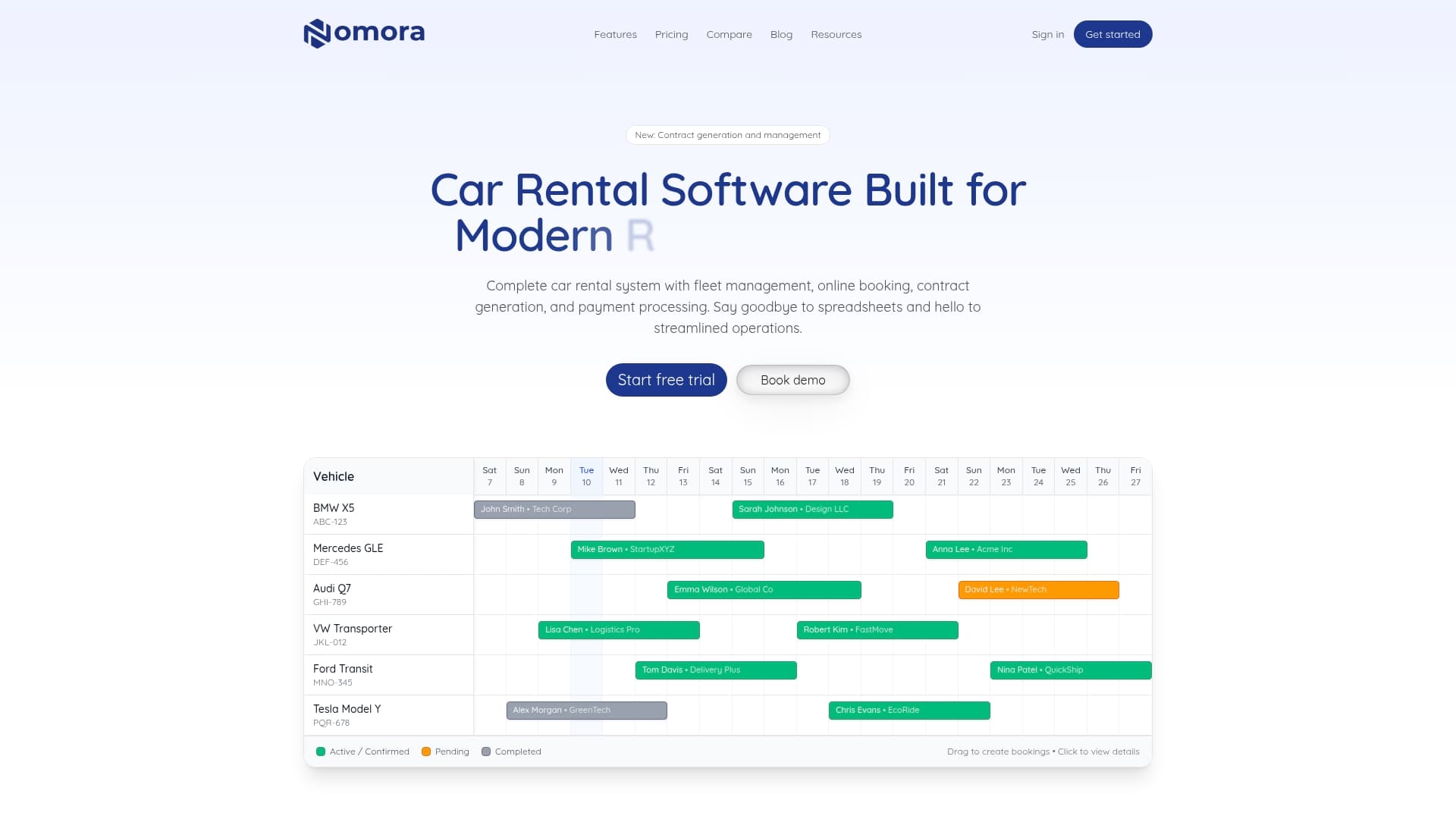
Implementation takes 24-48 hours with minimal disruption to ongoing operations. Our pricing plans accommodate different business sizes and growth stages, ensuring you pay for capabilities you actually use rather than enterprise features you don't need.
Frequently asked questions
What is rental data analytics and why is it important?
Rental data analytics uses telematics, AI forecasting, and machine learning to analyze fleet utilization, pricing effectiveness, and maintenance patterns. This technology transforms raw vehicle data into actionable insights that improve decision-making across operations, marketing, and financial planning. It's crucial because manual spreadsheet management cannot process the data volume or identify optimization opportunities that automated analytics reveals, directly impacting your profitability and competitive positioning.
How does predictive maintenance reduce costs in car rentals?
Predictive maintenance analyzes telematics data to identify patterns preceding component failures. Sensors monitor engine temperature fluctuations, unusual vibrations, brake wear rates, and fluid conditions. Machine learning algorithms compare these signals against failure databases to forecast when repairs become necessary. Predictive maintenance reduces downtime by 22% and maintenance costs by 18% by enabling scheduled repairs during low-demand periods instead of emergency fixes during peak season when every idle vehicle represents lost revenue.
What are the risks of using dynamic pricing in car rentals?
Customers may perceive fluctuating prices as unfair, especially when rates spike during local emergencies or appear arbitrary. Dynamic pricing risks fairness perception issues and public backlash if poorly managed. Social media amplifies negative experiences when customers discover they paid significantly more than others for identical vehicles. Maintaining transparency through clear rate explanations, advance booking discounts, and loyalty program protections helps balance revenue optimization with customer trust. Ethical guardrails preventing exploitative pricing during crises protect long-term brand value.
How can small and medium car rental businesses start using rental data analytics?
Begin with cloud telematics to collect essential vehicle data like location, mileage, fuel consumption, and basic diagnostics. This foundation costs less than custom software development while providing immediate operational visibility. Add AI forecasting gradually to improve utilization and maintenance scheduling once you trust your data quality. SMEs can achieve 10-20% availability boost using lean predictive maintenance and simple AI forecasting without big tech spends. Focus on cost-effective solutions tailored to your fleet size, starting with 50-100 vehicles before expanding to advanced dynamic pricing and complex optimization algorithms.
Recommended