TL;DR:
- Securing customer data helps rental businesses build trust, comply with regulations, and grow their market presence.
- Regular permissions audits and encryption are essential to prevent breaches and protect customer information effectively.
Securing customer data is defined as protecting sensitive personal information from unauthorized access, breaches, and misuse to preserve trust, meet legal obligations, and maintain business continuity. For rental business owners, this is not an abstract IT concern. Your customers hand over driver's licenses, payment details, home addresses, and contact information every time they book a vehicle. 70% of consumers will refuse to buy from a company they don't trust to protect that data. That single statistic explains why secure customer data practices are now a core business function, not a background task. Regulatory frameworks like GDPR and SOC 2 add legal weight to what is already a commercial imperative.
Why secure customer data: the direct benefits for rental businesses
Protecting customer information delivers measurable returns across four areas: trust, compliance, financial stability, and competitive positioning. Each one directly affects your bottom line.

Building customer loyalty through data trust
Customer loyalty depends on perceived safety. Consumers who doubt your data practices walk away before completing a booking. For rental businesses that rely on repeat customers and referrals, that lost confidence compounds over time. A single publicized breach can erase years of positive reviews.
Reducing financial exposure
The financial cost of poor data security is concrete. The average U.S. data breach in 2022 cost organizations nearly $10 million. That figure covers legal fees, regulatory fines, customer notification costs, and lost revenue. For a small or medium rental operation, a breach of that scale is existential, not just painful.
Compliance with GDPR, SOC 2, and similar frameworks
Rental businesses that collect data from European customers must comply with GDPR. Those pursuing enterprise or corporate fleet contracts often face SOC 2 audit requirements. Compliance with these frameworks is not optional once you cross certain customer thresholds or contract types. The good news: SOC 2 certification acts as a filter that removes competitors from enterprise sales conversations and shortens contract cycles. Certification pays for itself.
Operational continuity and partner confidence
Strong data security keeps your operations running when threats emerge. It also signals to insurance providers, fleet partners, and corporate clients that you run a disciplined business. Customers and partners now evaluate vendors on data ethics as a standard part of vendor selection. That shift means your data practices are now part of your sales pitch, whether you present them that way or not.
Key benefits at a glance:
- Customer retention: Verified data protection practices reduce booking abandonment and increase repeat rentals.
- Lower breach costs: Proactive controls cost far less than post-breach remediation, fines, and legal fees.
- Regulatory compliance: GDPR, SOC 2, and similar frameworks protect you from penalties and open enterprise markets.
- Competitive differentiation: Certified data security filters out less disciplined competitors in B2B sales.
- Partner trust: Fleet partners, insurers, and corporate clients favor vendors with documented security governance.
What risks do rental businesses face without data security?
The threat environment for rental businesses is specific and growing. Your systems hold a dense concentration of personally identifiable information: names, addresses, payment cards, license numbers, and sometimes GPS location data. That profile makes rental platforms attractive targets.
At least 375 million people in the U.S. were affected by data breaches during 2025 alone. That number reflects how broadly breaches have spread across industries, including transportation and vehicle services. The scale of exposure means your customers have likely already been affected by breaches elsewhere, which raises their expectations of you.
The risks fall into four categories:
- Identity theft and fraud: Stolen driver's license numbers and payment details enable identity theft. Your customers bear the personal harm; you bear the reputational and legal consequences.
- Regulatory penalties: GDPR violations carry fines up to 4% of annual global turnover. Non-compliance with local data protection laws adds further exposure.
- Reputation damage: A publicized breach triggers negative press, review platform backlash, and customer defection. Recovery takes years, not months.
- Third-party and vendor risk: Rental businesses often integrate with GPS providers, payment gateways, and booking platforms. Each integration is a potential entry point if vendor security is not vetted.
"Access drift, where former contractors or employees retain system access after their role ends, is one of the leading causes of preventable breaches. Most rental businesses do not audit permissions regularly enough to catch it."
The importance of protecting customer data becomes clearest when you map out how many people and systems touch your customer records. Most rental operators are surprised by that number. Each touchpoint is a risk that needs a control.
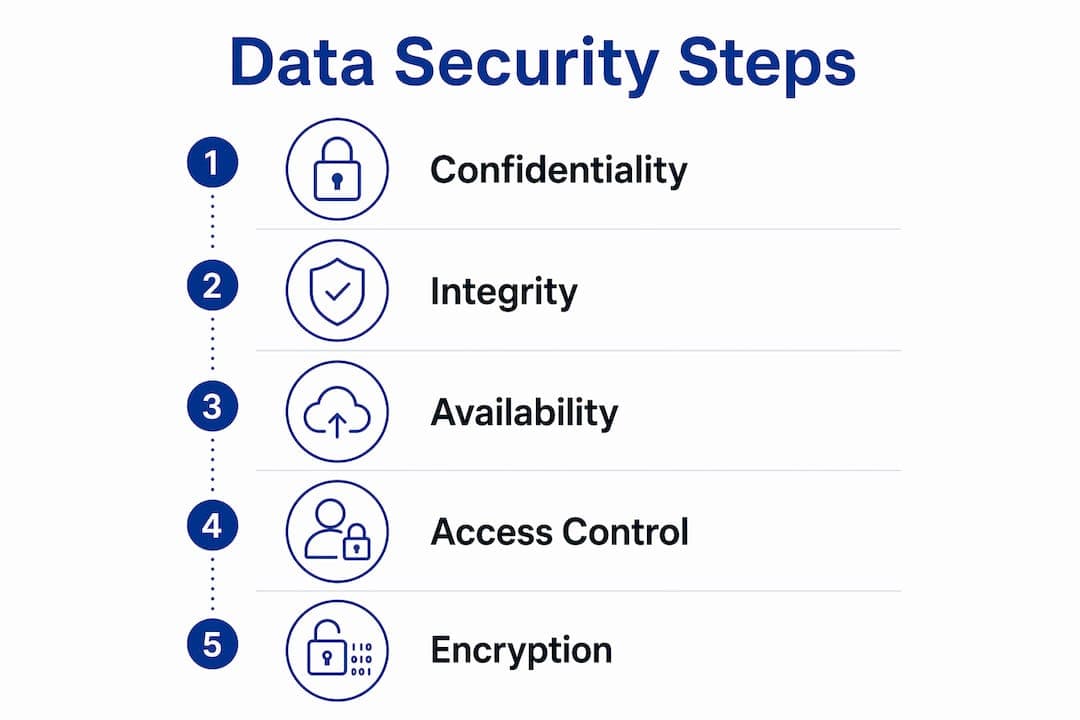
The CIA triad, which stands for confidentiality, integrity, and availability, is the standard framework for data security. Confidentiality means only authorized people access data. Integrity means data is accurate and unaltered. Availability means authorized users can access data when needed. Every control you implement maps back to one of these three principles.
Encryption is the baseline. Customer data stored in your rental management system and transmitted between devices must be encrypted. Unencrypted data in transit or at rest is readable by anyone who intercepts it.
Access controls and multi-factor authentication (MFA) limit who can reach sensitive records. Role-based access means a front-desk agent sees booking details but not full payment card numbers. MFA adds a second verification step that blocks most credential-based attacks.
Regular audits catch problems before they become breaches. Without data discovery and classification frameworks, businesses operate without knowing where their data lives, who has accessed it, or when it was last changed. A quarterly permissions review takes less than a day and closes the access drift gap.
Employee training on phishing is non-negotiable. Most breaches start with a single employee clicking a malicious link. A 30-minute annual training session on recognizing phishing emails reduces that risk significantly.
Pro Tip: Schedule a permissions audit every 90 days. Pull a full list of every user account with access to your rental management system, remove anyone who no longer needs it, and document the review. This single habit prevents the majority of insider and contractor-related breaches.
Additional controls worth implementing:
- Data minimization: Collect only what you need. If you don't need a customer's date of birth to complete a rental, don't collect it.
- Vendor vetting: Before integrating any third-party tool, review its security certifications and data handling policies. Ask for a SOC 2 report or equivalent.
- Software updates: Unpatched software is the most common technical entry point for attackers. Automate updates where possible.
- Breach response plan: Document what you will do in the first 24 hours after a breach. Who gets notified? Who calls the regulator? A written plan prevents costly delays.
For rental businesses managing GDPR compliance obligations, data minimization and documented retention policies are also legal requirements, not just good practice. You can also review rental security methods specific to the car rental context for additional controls.
How does data security support business growth in 2026?
The conventional view treats data security as a cost center. The current evidence says the opposite. Strong data security enables business growth by unlocking markets, accelerating sales, and building the kind of customer loyalty that advertising cannot buy.
Security governance is now a continuous business system, not a one-time project. Businesses that treat it as ongoing earn certifications, maintain clean audit records, and build institutional knowledge. Those that treat it as a checkbox exercise face recurring vulnerabilities and reactive costs.
The growth case is clearest in B2B rental markets. Corporate clients and fleet managers now include data security questionnaires in their vendor selection process. A rental company with documented SOC 2 compliance, a written breach response plan, and a clear data retention policy wins those contracts over competitors who cannot answer basic security questions.
Pro Tip: Add a one-page data security summary to your corporate sales materials. List your certifications, your data handling practices, and your breach response commitment. Most rental businesses don't do this. The ones that do close B2B deals faster.
| Growth driver | How data security contributes |
|---|
| Enterprise contract wins | SOC 2 and GDPR compliance satisfy procurement requirements |
| Customer retention | Verified security practices reduce churn after industry breach news |
| Partner relationships | Fleet and insurance partners favor vendors with documented controls |
| Brand reputation | Clean security record differentiates you in a crowded rental market |
| Operational resilience | Documented controls reduce downtime and recovery costs after incidents |
Rental businesses that invest in automotive data security as a strategic priority position themselves to grow into enterprise and fleet markets that smaller, less disciplined competitors cannot access.
Key Takeaways
Securing customer data is the single most direct way a rental business protects its revenue, reputation, and long-term growth potential in 2026.
| Point | Details |
|---|
| Customer trust is revenue | 70% of consumers refuse to buy from businesses they don't trust with their data. |
| Breaches are expensive | The average U.S. breach cost nearly $10 million in 2022; proactive controls cost far less. |
| Compliance opens markets | GDPR and SOC 2 compliance satisfy enterprise procurement requirements and filter competitors. |
| Access drift is preventable | Quarterly permissions audits stop the leading cause of insider and contractor breaches. |
| Security drives growth | Documented data practices accelerate B2B sales cycles and build durable partner loyalty. |
The part most rental owners get wrong
Most rental business owners I've worked with think about data security once a year, usually after reading about a breach in the news. That reactive mindset is the core problem. Security is not an event. It's a system, and like any system in your business, it needs regular maintenance.
The area I see neglected most often is access management. Staff turn over. Contractors finish projects. Seasonal workers come and go. Each departure is a potential access drift risk if permissions aren't revoked promptly. I've seen rental businesses with former employees still holding active logins to their booking systems months after leaving. That's not a technology failure. It's a governance failure.
The other overlooked area is vendor risk. Rental businesses integrate with GPS providers, payment processors, and booking platforms. Each one touches your customer data. Asking a vendor for their SOC 2 report before signing a contract is a five-minute task that most operators skip. The ones who skip it are the ones who end up explaining a third-party breach to their customers.
Data security is also your best sales asset in the B2B rental market. I've watched rental companies win corporate fleet contracts specifically because they could produce a written security policy on request. Their competitors couldn't. That's a competitive advantage that costs almost nothing to build and pays off repeatedly.
The mindset shift is simple: treat your customer data the same way you treat your fleet. You wouldn't let vehicles go unserviced or uninsured. Your data deserves the same structured attention.
— Dizzy
How Nomora helps rental businesses protect customer data
Nomora is built specifically for rental businesses that need to manage customer data securely without adding administrative overhead.
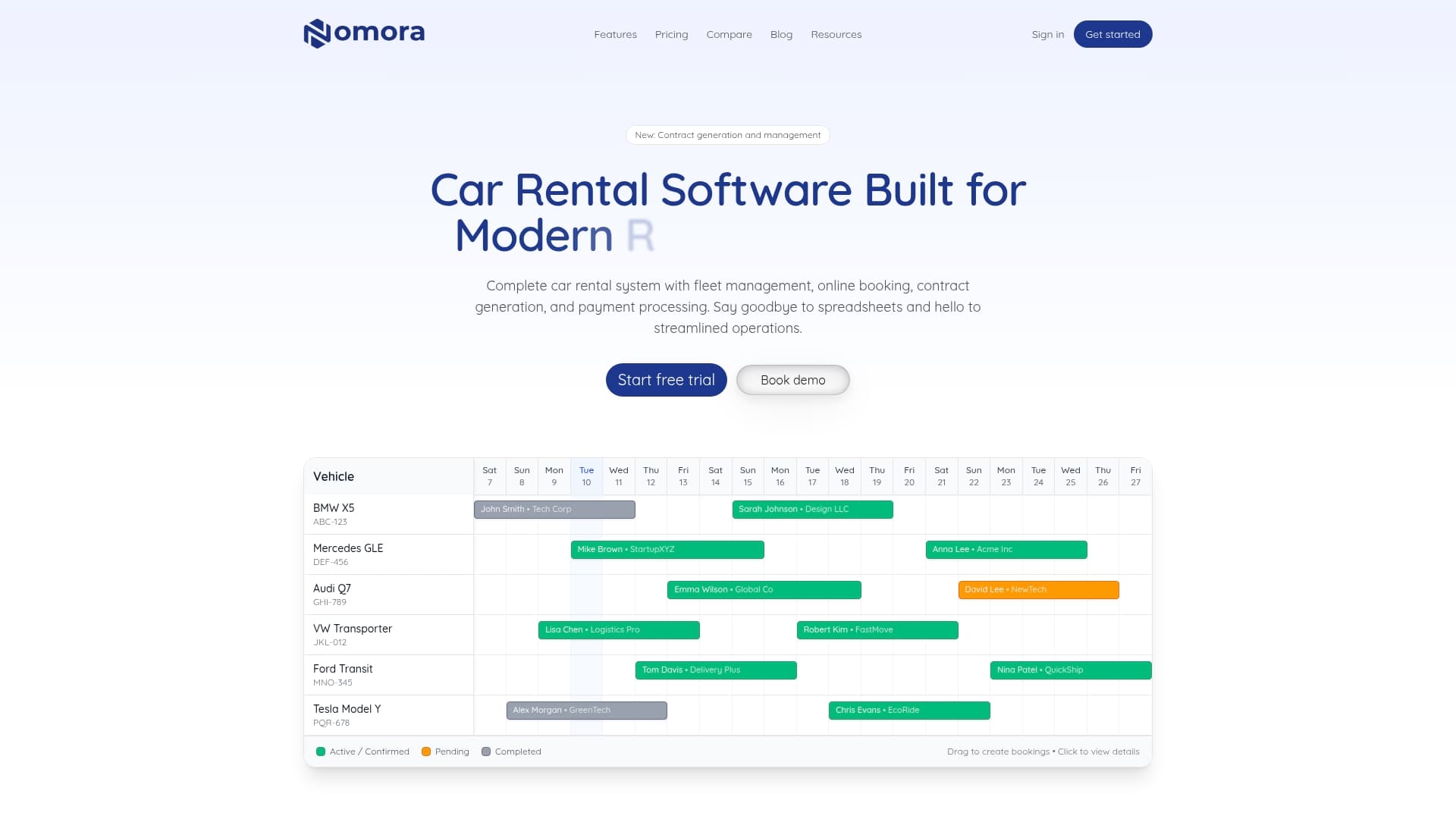
Nomora's cloud-based platform centralizes reservations, contracts, payments, and customer records in one GDPR-compliant system. Role-based access controls limit who sees sensitive data. Automated workflows reduce manual handling, which is where most data errors and exposure risks occur. For rental businesses ready to move beyond spreadsheets and disconnected tools, Nomora's rental management use cases show exactly how the platform fits different business types, from independent operators to franchise networks. You can also review Nomora's payment security features to see how customer payment data is handled within the platform.
FAQ
Why is securing customer data critical for rental businesses?
Rental businesses collect dense personal information including payment details, license numbers, and addresses. A breach exposes customers to identity theft and exposes the business to regulatory fines, legal costs, and lasting reputation damage.
What regulations apply to customer data in rental businesses?
GDPR applies to any rental business collecting data from European customers. SOC 2 is required by many enterprise and corporate fleet clients. Local data protection laws add further obligations depending on your operating region.
How does data security affect customer trust?
70% of consumers refuse to purchase from a business they don't trust to protect their data. For rental businesses, that translates directly to lost bookings and reduced repeat business.
What is access drift and why does it matter?
Access drift occurs when former employees or contractors retain system access after their role ends. It is one of the leading causes of preventable breaches and is stopped by regular permissions audits.
Can strong data security help a rental business grow?
Yes. Data privacy functions as a growth strategy by enabling enterprise contract wins, accelerating B2B sales cycles, and building the partner and customer loyalty that sustains long-term revenue.
Recommended
Ready to streamline your car rental business?
Book 30 minutes with the founder. We set up everything in this guide on your own vehicles, and migrate you out of Excel for free.