TL;DR:
- Fleet security involves protecting rental vehicles, connected systems, and operational data from theft, damage, and cyberattacks. Neglecting it leads to physical asset losses, operational disruptions, data breaches, and legal liabilities, risking business continuity. Implementing layered protection, including physical safeguards, cybersecurity controls, driver training, and regular policy reviews, is essential for effective fleet security management.
Fleet security is defined as the set of practices, technologies, and policies that protect a rental fleet's physical vehicles, connected systems, and operational data from theft, damage, and cyberattacks. For fleet managers and rental business owners, neglecting this discipline is not a calculated risk. It is an unplanned liability. The importance of fleet security spans three converging threats: physical theft, digital vulnerabilities in telematics and cloud platforms, and regulatory non-compliance under frameworks like ISO/SAE 21434 and SOC 2 Type II. Each threat alone can disrupt operations. Together, they can end a business. Understanding why prioritize fleet security starts with knowing exactly what you stand to lose.
Why prioritize fleet security: the risks of doing nothing
The financial cost of inaction is concrete and well-documented. Vehicle theft and cargo losses cost commercial fleets hundreds of millions annually, with the National Insurance Crime Bureau (NICB) identifying work trucks and vans as prime targets. Pickup trucks, cargo vans, and vehicles with accessible catalytic converters sit at the top of the theft list. For rental operators, a stolen vehicle is not just a lost asset. It is a gap in your fleet availability, a claim with your insurer, and a disruption to a customer's reservation.
Beyond physical theft, the reputational damage from a security failure is harder to quantify but equally damaging. Customers trust rental businesses with their travel plans and payment data. A single breach or high-profile theft incident can erode that trust faster than any marketing campaign can rebuild it. Legal exposure compounds the problem. Poor security practices, especially around data handling and access controls, create liability that courts are increasingly willing to penalize with large verdicts.
"Fleet security policies fail without consistent driver training emphasizing their role as active security participants, not just monitored employees." This insight captures why most fleet security programs underperform. They invest in technology and ignore the human layer entirely.
The risks of neglect include:
- Vehicle theft and catalytic converter theft, which generate direct asset losses and insurance premium increases
- Operational downtime from stolen or damaged vehicles that cannot be redeployed
- Data exposure from unsecured telematics or customer records
- Legal liability from security failures that harm customers or third parties
- Brand damage that reduces repeat bookings and referral business
How physical protection measures preserve fleet asset value
Physical fleet protection is the most visible layer of fleet security, and it directly affects your bottom line at trade-in time. Ceramic coatings and Paint Protection Film (PPF) defend vehicle exteriors from road debris, UV damage, and minor abrasions. Protected vehicles maintain higher trade-in values and require fewer detailing sessions over their operational life. For a rental fleet cycling vehicles every two to four years, that difference in resale value adds up across dozens of units.

Physical security controls go beyond coatings. Alarm systems, steering wheel locks, and GPS-enabled immobilizers deter opportunistic theft. Parking strategy matters too. Vehicles stored in well-lit, monitored lots with camera coverage are significantly less attractive targets than those left in open, unmonitored areas overnight.
The benefits of fleet protection at the physical level include:
- Ceramic coatings and PPF reduce exterior wear and preserve paint condition between rentals
- Alarm systems and immobilizers deter theft and reduce insurance premiums over time
- GPS tracking integration enables rapid vehicle recovery after theft incidents
- Monitored parking facilities lower exposure to opportunistic theft and vandalism
- Regular vehicle inspections catch damage early, reducing repair costs before they escalate
Pro Tip: Document vehicle condition with timestamped photos at every rental handoff. This practice protects you in disputes, supports insurance claims, and creates a clear record of pre-existing damage.
Why cybersecurity is now central to fleet security risk management
Cybersecurity is no longer a concern reserved for IT departments. It is a direct fleet security risk. Cybercriminals can remotely exploit telematics, ELDs, and Bluetooth or Wi-Fi connected devices to shut down entire fleets with a single command. That is not a theoretical scenario. It has happened to fleets globally, and the attack surface grows with every connected device added to a vehicle.
Failing to secure fleet telematics can cause system-wide operational outages lasting days or weeks. Those outages generate revenue loss, expose sensitive driver and customer data, and increase the likelihood of litigation. Rental businesses are particularly exposed because their fleets often connect to multiple third-party platforms, from GPS providers to payment gateways, each representing a potential entry point.
Cybercriminals treat enterprise IT and vehicle asset cybersecurity as a single attack surface. That means a vulnerability in your booking software can become a path into your telematics system. The two cannot be managed in isolation.
Here is how to build a defensible cybersecurity posture for your fleet:
- Vet vendors against recognized standards. Require that technology vendors hold ISO/SAE 21434, SOC 2 Type II, or ISO 27001 certification before granting them access to your systems.
- Demand a Software Bill of Materials (SBOM). IT departments often lack visibility into telematics and ELD firmware vulnerabilities. An SBOM from every vendor gives you a clear inventory of software components and known risks.
- Enforce Multi-Factor Authentication (MFA). Basic passwords are not sufficient. MFA on every platform access point reduces unauthorized entry significantly.
- Monitor for firmware updates. Unpatched telematics devices are a known attack vector. Establish a schedule for reviewing and applying vendor-issued updates.
- Segment your network. Keep vehicle telematics on a separate network from your customer-facing booking and payment systems.
Pro Tip: Ask every technology vendor for their incident response plan before signing a contract. A vendor without a documented response plan is a liability, not a partner.
How driver behavior shapes fleet safety outcomes
Drivers are simultaneously a fleet's first line of defense and its largest security risk. Well-trained drivers reduce theft and security incidents more effectively than technology alone. A GPS tracker tells you where a vehicle went after it was stolen. A trained driver prevents the theft from happening in the first place.
Effective driver management for rental fleets includes clear written policies on vehicle lockup, key handling, cargo protection, and how to report suspicious activity. These policies need to be communicated at onboarding and reinforced regularly. A policy that lives in a handbook no one reads does not reduce risk.
Building a security-oriented culture means treating drivers as active participants rather than monitored employees. When drivers understand the business impact of a theft or a data breach, they take ownership of prevention. The following practices build that culture effectively:
- Onboarding security briefings that explain specific risks relevant to your rental operation
- Clear lockup checklists for every vehicle return, including windows, doors, and any onboard devices
- Incident reporting channels that make it easy for drivers to flag suspicious activity without fear of blame
- Regular policy refreshers, at least quarterly, to address new threats and reinforce existing habits
- Recognition for security compliance, which reinforces positive behavior without creating a surveillance culture
Pro Tip: Pair your driver security training with your fleet risk management review cycle. Update training materials whenever you update policies, so both stay current together.
What does a layered fleet security approach look like in practice?
A layered approach to fleet security integrates physical protection, cybersecurity controls, and human policies into a single coordinated program. No single layer is sufficient on its own. Physical locks do not stop a cyberattack. Cybersecurity tools do not prevent a driver from leaving a vehicle unlocked. Policy documents do not replace GPS tracking. Each layer compensates for the gaps in the others.
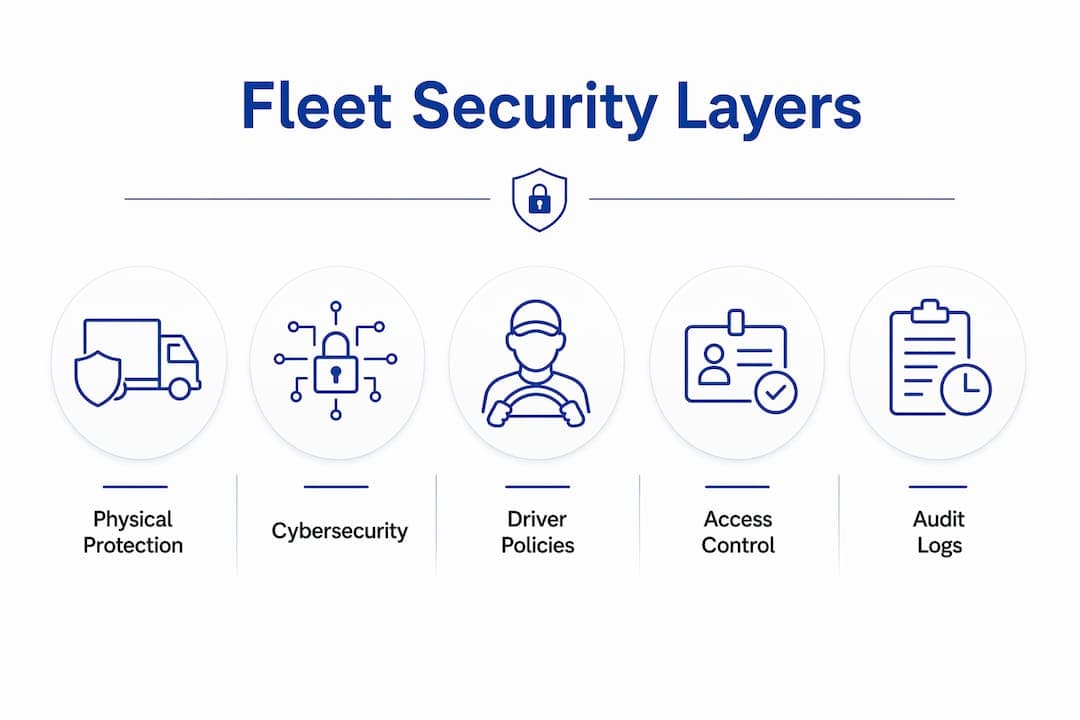
Verifiable audit logs are critical to surviving both cybersecurity incidents and legal disputes. They answer who accessed what, when, and what changed. Without them, you cannot investigate an incident, defend against a lawsuit, or demonstrate compliance to a regulator. Every platform in your fleet technology stack should produce tamper-evident logs by default.
Identity management failures, such as not revoking access for former employees, increase vulnerabilities. Centralized Single Sign-On (SSO) with MFA is more effective than managing individual passwords across multiple platforms. As your fleet grows, automate user provisioning and deprovisioning so access rights stay current without manual intervention.
| Security layer | Key action |
|---|
| Physical protection | Apply PPF and coatings; use GPS immobilizers and monitored parking |
| Cybersecurity controls | Enforce MFA and SSO; vet vendors for ISO/SAE 21434 or SOC 2 Type II |
| Identity management | Automate access provisioning; revoke credentials immediately on staff departure |
| Audit and compliance | Maintain tamper-evident logs; review access records quarterly |
| Human and policy layer | Train drivers regularly; update policies to reflect new threats |
Pro Tip: Schedule a full security review every six months. Threats evolve, regulations change, and your vendor roster shifts. A static security program becomes outdated faster than most fleet managers expect.
Key Takeaways
A layered fleet security program combining physical protection, cybersecurity controls, and consistent driver training is the most effective way to protect rental fleet assets and operational continuity.
| Point | Details |
|---|
| Physical protection pays off | Ceramic coatings and PPF reduce maintenance costs and preserve vehicle resale value over time. |
| Cyber threats are operational threats | Telematics vulnerabilities can cause fleet-wide outages lasting days, generating revenue loss and legal exposure. |
| Vendor standards matter | Require ISO/SAE 21434, SOC 2 Type II, or ISO 27001 certification from every technology vendor before granting system access. |
| Drivers are your first defense | Trained drivers prevent more incidents than technology alone; security culture requires active participation, not passive monitoring. |
| Audit logs protect you legally | Tamper-evident access logs are the primary tool for surviving cybersecurity incidents and legal disputes. |
The security gap most rental operators still ignore
After working closely with fleet operators across the rental industry, the pattern I see most often is not a lack of investment. It is a lack of integration. Operators spend money on GPS trackers, buy insurance, and run occasional driver briefings. But those efforts sit in separate silos. The GPS vendor does not talk to the booking platform. The driver policy has not been updated since the fleet added connected dashcams. The IT team does not know what firmware version is running on the telematics units.
Cybersecurity risks are outpacing traditional physical security concerns, and most rental operators have not caught up. Regulatory changes are pushing cybersecurity from a best practice to a mandatory compliance requirement. That means the cost of inaction is rising every year, not staying flat.
The operators who get this right treat security as a business function, not an IT checklist. They involve drivers in the conversation. They ask hard questions of their technology vendors. They review their security posture on a schedule, not just after an incident. That mindset shift is worth more than any single tool or certification.
— Dizzy
How Nomora supports fleet security for rental businesses
Rental businesses that manage fleet security manually face compounding risks as their operations grow. Nomora's cloud-based car rental management platform is built to address those risks directly, acting as the central nervous system of your rental operation.
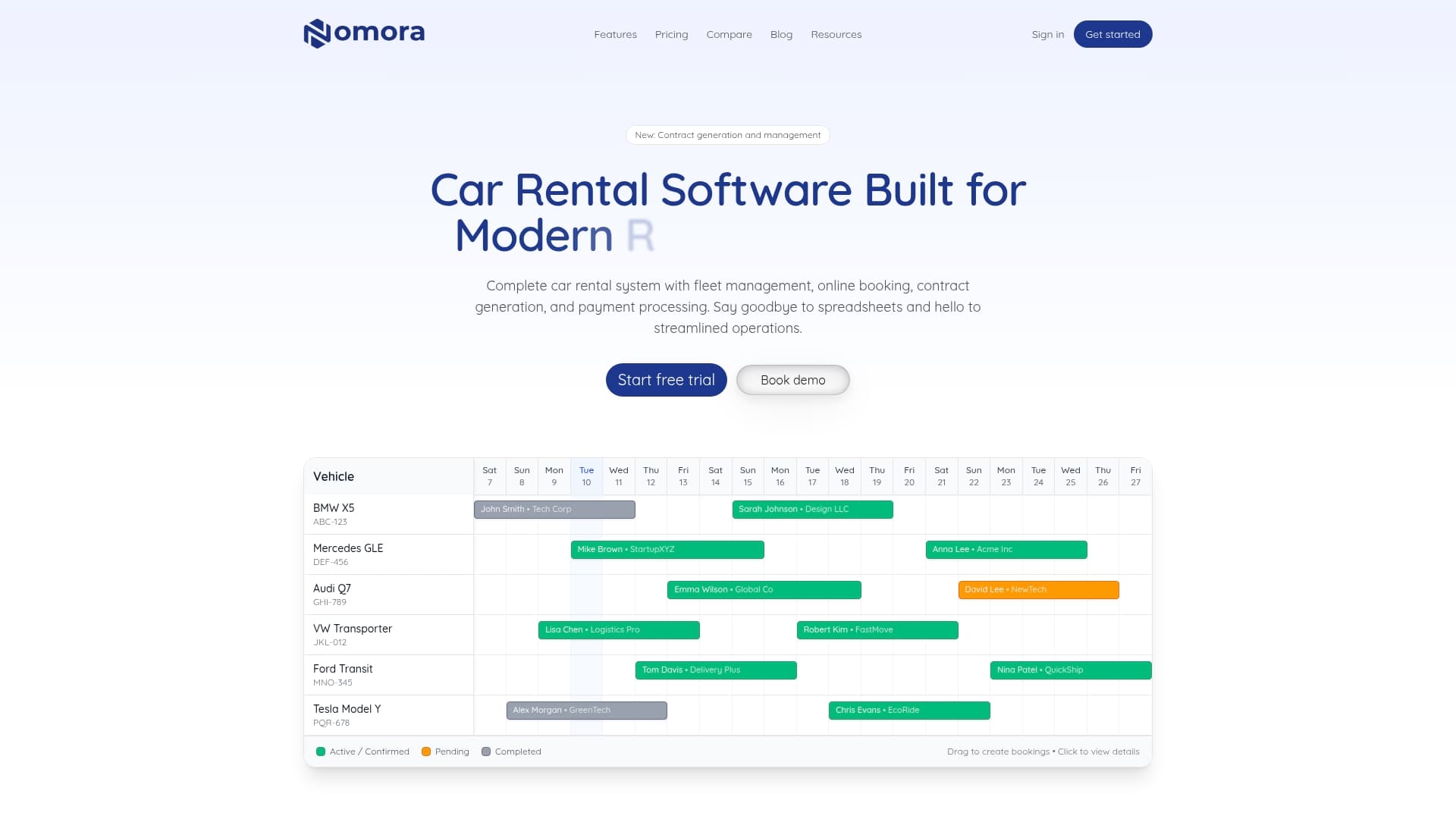
Nomora integrates GPS tracking, contract management, and customer data handling within a single platform that emphasizes GDPR compliance and data protection by design. Fleet managers can enforce driver policies, maintain clear audit trails, and manage access controls across their entire operation from one place. For rental businesses ready to move beyond spreadsheets and disconnected tools, Nomora's use cases by business type show exactly how the platform fits operations of every size, from independent operators to franchise networks.
FAQ
What is fleet security in the vehicle rental industry?
Fleet security is the combination of physical protection, cybersecurity controls, and operational policies that protect rental vehicles, connected systems, and customer data from theft, damage, and unauthorized access.
Why do cyberattacks pose such a serious risk to rental fleets?
Cybercriminals can exploit telematics, ELDs, and connected devices to disable entire fleets remotely, causing outages that last days or weeks and generating significant revenue loss and legal liability.
What physical measures most effectively protect fleet vehicles?
Ceramic coatings, Paint Protection Film, GPS-enabled immobilizers, alarm systems, and monitored parking facilities all reduce theft risk and preserve vehicle resale value over time.
How often should fleet security policies be reviewed?
Fleet security policies should be reviewed at least every six months to account for new threats, regulatory changes, and shifts in your technology vendor roster.
What cybersecurity certifications should fleet technology vendors hold?
Vendors should hold at least one of the following: ISO/SAE 21434, SOC 2 Type II, or ISO 27001. These certifications confirm baseline cybersecurity practices for connected fleet systems.
Recommended
Ready to streamline your car rental business?
Book 30 minutes with the founder. We set up everything in this guide on your own vehicles, and migrate you out of Excel for free.