Finding a car rental management system that bundles reservations, fleet tracking, contracts, and payments without feature gates or unpredictable costs is harder than expected. Many platforms restrict core modules, require minimum fleet sizes, or hide pricing behind sales calls, forcing operators into a trial and error cycle. This review compares five alternatives, covering feature access, scalability, and pricing so rental business owners can select software built for their operation size.
wheelsys.com alternatives16 min read•
Top 5 Wheelsys.com Software Alternatives 2026
Compare 5 wheelsys.com alternatives to find the best software for your car rental business management and rental operations in 2026.
N
Nomora Team
Car Rental Software Experts

Nomora
At a Glance
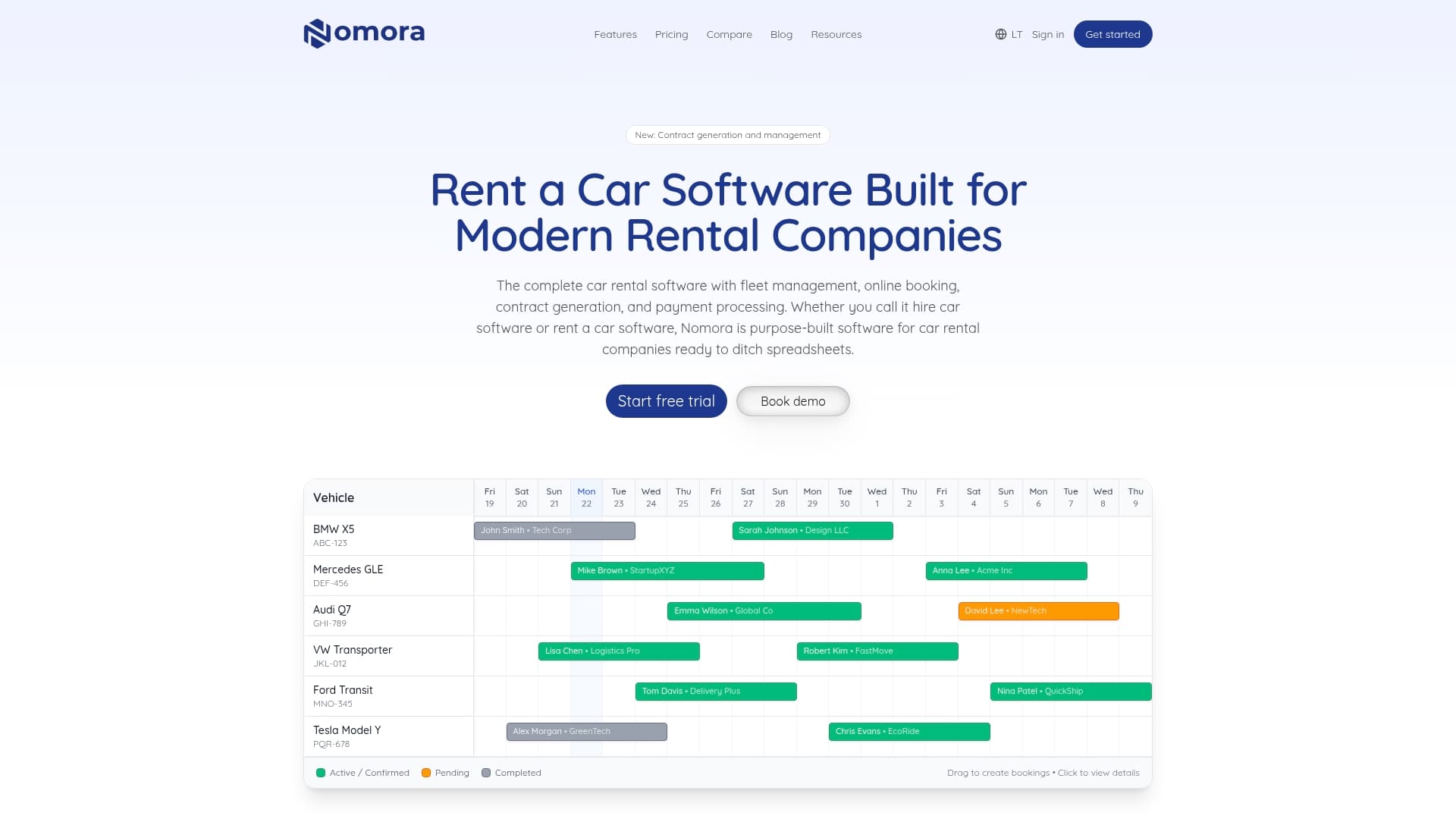
All features included in every plan with no feature gates or tiered restrictions. The platform bundles online booking, fleet tracking, automated contracts, payments, and API access under one price. The vendor advertises 24–48 hour onboarding and a free 14 day trial to speed adoption.
Core Features
Nomora centralizes reservations, payment processing, driver screening, smart rate rules, and API access while enforcing conflict free bookings in a cloud SaaS model. It includes an online booking portal, automated contract generation with e signatures, and mobile access for staff. Fleet management delivers real time tracking, maintenance scheduling, and GPS telematics via Wialon included in standard plans.
Key Differentiator
The platform keeps every feature unlocked at every tier, removing common feature gates for GPS, contracts, and payments. That approach simplifies procurement and removes surprise upgrade costs when a team adds telematics or an online portal. Clear per vehicle tiers and plain pricing make monthly forecasting straightforward for operators of any size.
Pros
All core tools ship with every plan, so small operators can access GPS tracking and contract e signatures without upgrading. The vendor offers a free 14 day trial with full access and no credit card required for testing. Pricing lists €45 per month for one to ten vehicles and per vehicle rates for larger fleets, with annual discounts and minimums. The product includes API access and mobile staff tools, and the vendor states GDPR compliance and cloud accessibility to support remote access and data protection.
Cons
- Website content was inaccessible due to an application error, which limited direct verification of some feature details.
Notable Integrations
- Stripe for payment processing.
- Montonio for bank transfers.
- Wialon for GPS and telematics.
Who It's For
Rental business owners and managers who want to replace spreadsheets and manual processes with a single system will benefit most. Corporate fleet teams and multi location operators gain from centralized contracts and telematics. Specialty renters such as luxury, truck, or motorcycle services can use branded booking portals and custom rate rules.
Unique Value Proposition
Wialon GPS telematics included at no additional cost for standard plans once configured properly. That inclusion removes a separate telematics vendor line item and shortens the path to live tracking. For operations that need quick visibility, bundled telematics plus API access reduces integration overhead and lowers monthly running costs.
Real World Use Case
According to the company, a rental agency with 30 vehicles reduced manual admin time by over 80% after adopting Nomora. That time savings freed staff to handle more bookings through a branded portal and improved fleet visibility via real time tracking.
Pricing
Pricing starts at €45 per month for 1 to 10 vehicles. Larger fleets pay €2.80 per vehicle per month for 11 to 50 vehicles and €2.20 per vehicle per month for 51 to 200 vehicles. Custom pricing is available for fleets over 200 vehicles, and minimum monthly fees and annual billing discounts apply.
Website: https://nomora.io
rentAll
At a Glance
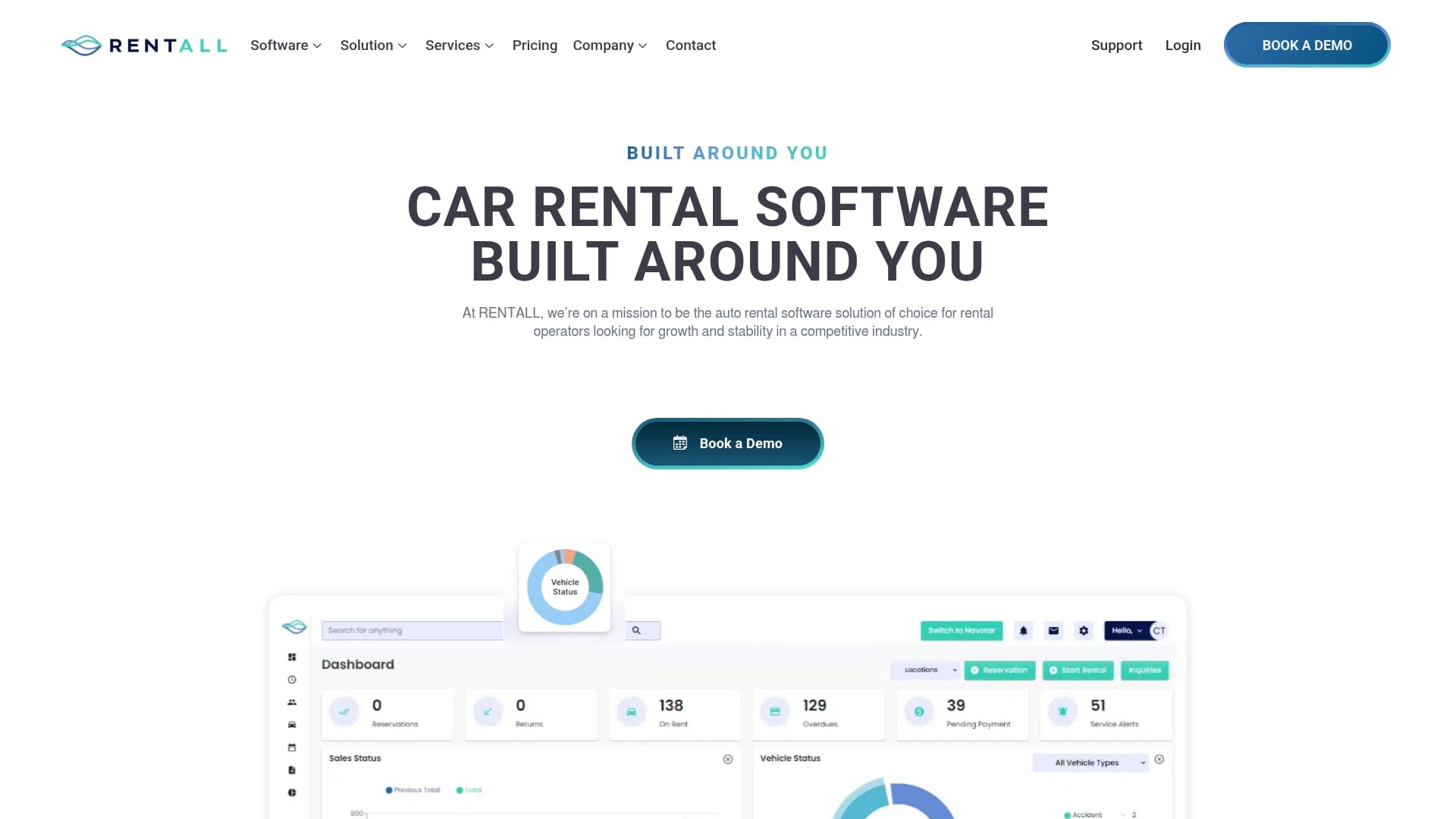
Requires a minimum fleet of 10 vehicles for implementation, which excludes very small operators. The platform supports cloud based access and a mobile application for check in and check out. It targets vehicle and equipment rental companies with industry specific modules and strong customization.
Core Features
Core capabilities include an online reservation interface, fleet tracking, and integrated payment processing. A mobile app handles on site check in and damage reporting. Cloud based modules manage reservations and fleet status and support industry specific needs.
Key Differentiator
The main differentiator is its focus on industry specific modules, which map workflows for car rental, RV, machinery, and marine operations. High customization lets operators tailor rates, contract templates, and permission sets to niche workflows. That design treats the software as the central nervous system of operations, linking bookings, fleet state, and payments in one place.
Pros
Strong customization and industry modules make it possible to adapt the system for different rental types without heavy development. Cloud based hosting and a mobile application reduce paperwork for staff and speed customer workflows. The vendor advertises an award winning product and a broad support network for onboarding and ongoing help.
Cons
- Pricing is not transparent. The company typically requires direct contact for a quote.
- Minimum fleet size of 10 vehicles prevents very small operators from adopting the system.
- Public information on API integrations and third party connectors is sparse, which raises questions for shops needing extensive integrations.
When It May Not Fit
Not a fit for sole proprietors or operators with fleets under 10 vehicles. Businesses that need published list prices or month to month tiers will prefer vendors who publish clear rates. Teams that require an extensive, documented API surface should verify integration capabilities before committing.
Who It's For
Best for small to enterprise level rental companies that manage cars, RVs, boats, or construction equipment. Operators who require configurable workflows, niche rate plans, and mobile check in will find the feature set relevant. Companies planning multiple locations or fleet growth gain from the modular configuration and vendor support.
Real World Use Case
A regional car rental company automates online bookings, processes payments, and generates performance reports with rentAll. Staff use the mobile app to perform check in and record damage, removing paper logs. That frees managers to focus on fleet allocation and revenue management.
Pricing
Pricing is not listed publicly. The vendor asks companies to request a custom quote based on fleet size and module choices. Operators should plan for a minimum implementation when their fleet approaches the 10 vehicle threshold.
Website: https://rentallsoftware.com
Rent Nine
At a Glance
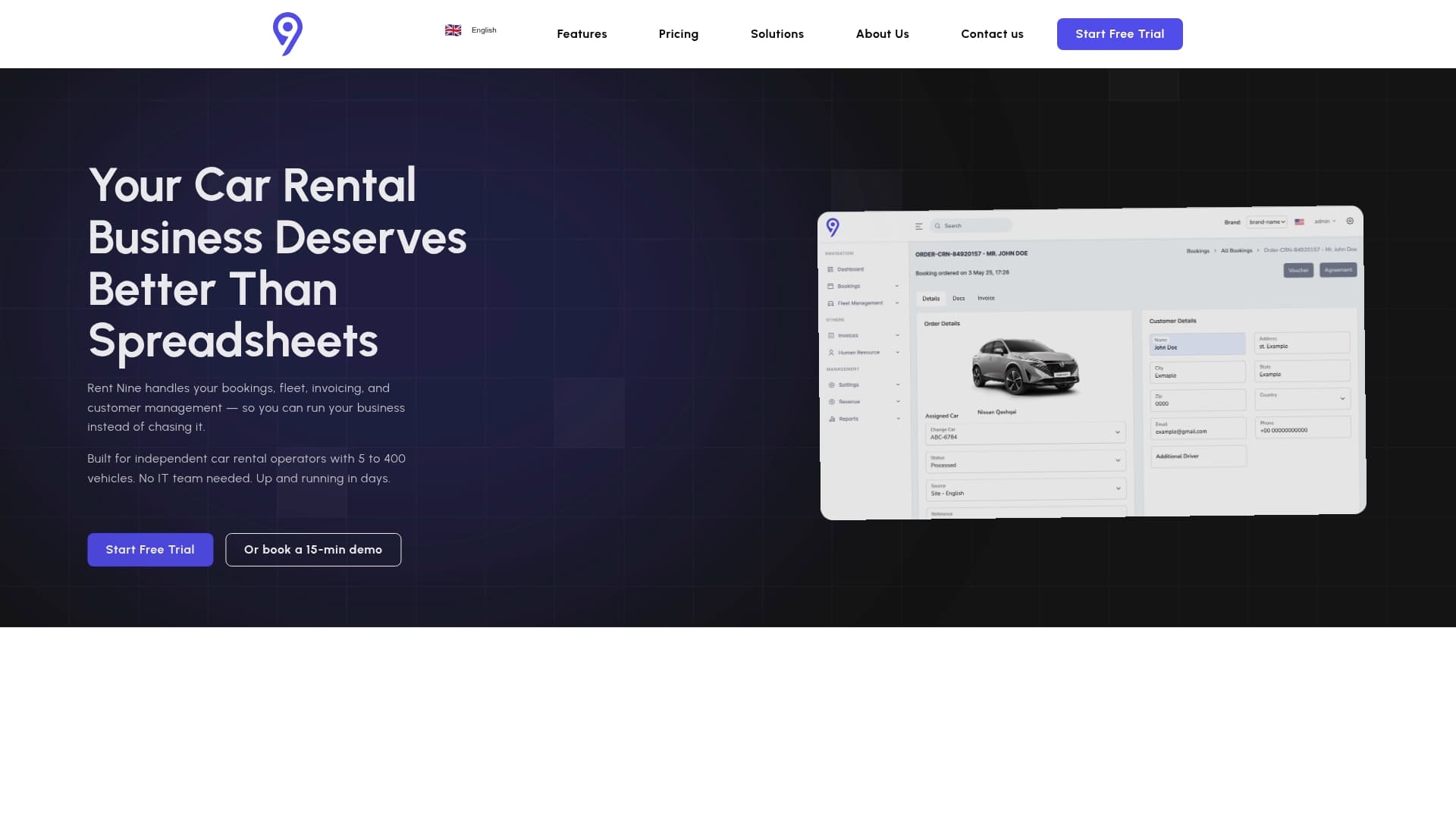
€50/month flat rate for 1-20 vehicles is Rent Nine's entry price for small fleets. The platform targets operators running between 5 and 400 vehicles and bundles reservations, fleet status, invoicing, and a website builder. This price model makes initial costs predictable for single-location operators.
Core Features
The platform offers Real-time reservation synchronization across channels, a fleet overview showing availability and maintenance status, and an online booking portal for customers. It includes broker and OTA channel management together with automated invoicing and integrated payments, plus dynamic pricing that adjusts for peak periods. A built-in website builder and API access support quick online presence and custom reporting.
Key Differentiator
Integration of core rental functions, channel management, and a website builder into one product is Rent Nine's central claim. That single environment reduces the number of separate tools an independent operator must run. Quick setup and real-time sync mean operators can move from spreadsheets to a managed system faster.
Pros
Rent Nine consolidates reservations, fleet management, invoicing, and a website inside one product, which cuts the number of logins and manual reconciliations. The platform guarantees no double bookings with its real-time sync and provides flexible pricing tied to fleet size that scales from a flat entry fee to per vehicle billing. Automated invoicing and integrated payments speed cash collection and reduce billing errors for teams that previously relied on manual invoicing.
Cons
-
Many features and third party integrations require a learning curve for new users. This raises onboarding time for teams without prior rental software experience.
-
Advanced customizations and white label branding are restricted to higher tier plans. Operators needing full brand control will face additional costs.
-
Customer support and onboarding timelines are not detailed in independent reviews. That lack of clarity can complicate planning for operators who need hands on help.
When It May Not Fit
Rent Nine best fits fleets from 5 to 400 vehicles, so very small single car operations and very large enterprise fleets may find its scale mismatch. Operators who need deep custom integrations should expect to invest in development work. Businesses that require extensive white label options or guaranteed onboarding SLAs should verify plan details before committing.
Who It's For
Independent vehicle rental operators and small to medium sized agencies that want a quick route off spreadsheets will find Rent Nine relevant. It fits single location businesses and multi location operators managing up to four hundred vehicles who want channel management and an integrated booking site. IT teams with tight budgets will appreciate the predictable fleet based pricing.
Real World Use Case
A small fleet owner in Bulgaria moved from spreadsheets to Rent Nine and stopped double bookings within days. The owner launched an online booking site and managed broker channels from one dashboard. Automated invoicing shortened the billing cycle and freed time previously spent on manual reconciliation.
Pricing
Plans start at €50/month for 1-20 vehicles under the Solo plan. Larger fleets move to tiered per vehicle pricing with rates that reach €1.80 per vehicle per month for 201–400 vehicles. Annual billing is available with discounted rates.
Website: https://rentnine.com
RentSyst
At a Glance
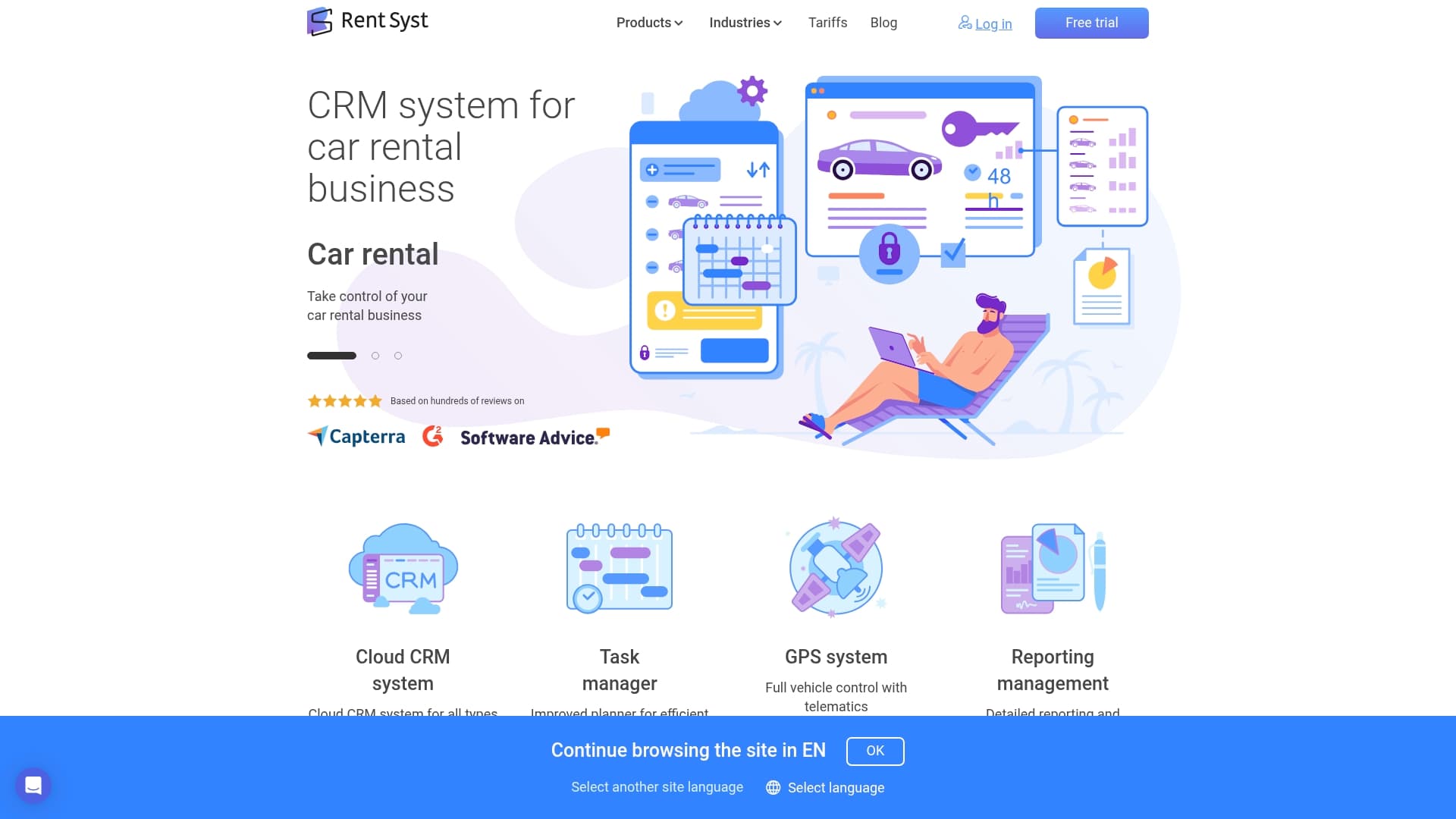
GPS vehicle control and telematics are built into the cloud CRM. That integration gives live fleet visibility alongside reservation and document workflows. The platform runs in a web browser and on mobile devices, letting managers check location and tasks from a phone or desktop.
Core Features
RentSyst combines reservation management, calendar driven task delegation, and document storage with vehicle telematics and GPS tracking. The system includes reporting tools that export operational and financial data, and it offers APIs and a WordPress plugin for website integration. Users can assign tasks, track vehicle status, and pull analytics from a single, cloud based interface.
Key Differentiator
The standout capability is built in vehicle telematics tied to the CRM. GPS tracking data flows into reservation and task views. That gives real time location, status checks, and analytics in one place rather than requiring a separate telematics vendor.
Pros
RentSyst adapts to different fleet sizes and operational models through configurable modules and settings. Its mobile friendly interface lets staff complete check in, check out, and inspections from a phone at the vehicle. The integrated vehicle telematics and GPS tracking reduce the need for separate tracking tools and help reconcile reservations with actual vehicle location.
Cons
- Some users report the system feels complex at first and requires a learning period.
- Pricing information is not listed publicly, which complicates vendor comparisons.
- Custom integrations may need technical expertise or developer time to complete.
When It May Not Fit
Operators that require a turn key, fixed price package with public pricing may find RentSyst a poor match. Small teams without any technical support could struggle during custom setup or when connecting to a bespoke website. Firms that need simple out of box tools with minimal configuration should look elsewhere.
Notable Integrations
- WordPress plugin for embedding booking flows or fleet listings on a website.
- APIs for third party services to push and pull reservation and telematics data.
- Payment gateways including Stripe and PayPal for online payments.
- Accounting connectors such as QuickBooks and Xero for financial export.
Who It's For
RentSyst fits car rental companies that need active fleet control plus reservations and reporting in one product. It suits regional operators, franchise groups, and corporate fleets that plan to use telematics. Buyers who can dedicate technical resources for integration will capture the most value.
Real World Use Case
A regional car rental company runs reservations and vehicle tracking on RentSyst. Staff open the reservation calendar to assign keys and tasks, then monitor vehicle location from the same dashboard. Management pulls weekly reports for revenue and utilization from the reporting module to adjust rates and allocation.
Pricing
Pricing is not published on the vendor site. Prospective buyers must request a quote to get plan details, seat counts, and any setup fees. The vendor lists integrations and modules rather than fixed tiered prices in public materials.
Website: https://rentsyst.com
The 42-Point Car Rental Operations Checklist
The exact checks profitable rental operators run every week — free, straight to your inbox.
- Fleet readiness & handover
- Bookings & no-show prevention
- Pricing & revenue reviews
- Contracts & compliance
- Payments & invoicing
- Maintenance & fleet health
One email with the checklist. No spam, unsubscribe anytime.
CARS+
At a Glance
CARS+ reports more than 30 years of industry experience. The product targets vehicle rental operators that need a highly configurable platform for reservations, fleet, and partner connectivity. It combines online booking, rate management, and lifecycle reporting into one installed system.
Core Features
CARS+ offers a configurable platform that grows with a business and supports multiple booking sources and locations. The system provides real-time data and a rates engine, online reservations with support for multiple currencies and languages, and fleet lifecycle, damage, and maintenance reporting. It also includes accounting and reporting tools plus staff mobile access and customer self-service portals.
Key Differentiator
Built around customization, CARS+ emphasizes configuration for initial requirements and future expansion. The product focuses on integration with brokers and online platforms using XML and JSON APIs and on real-time operational control across locations. That approach suits operators who need to adapt workflows without replacing core systems later.
Pros
The platform delivers deep configuration options to match different rental business models and pricing rules. It integrates reservations through XML and JSON interfaces, which helps consolidate bookings from brokers and direct channels. According to the company, the vendor maintains support offices across six continents, and it advertises continuous system monitoring and dedicated customer support.
Cons
- Pricing requires direct contact for a tailored quote, which slows initial procurement and budget planning.
- Integration complexity varies with existing systems, so technical mapping and testing are often needed.
- Advanced features require staff training, adding implementation time and short term operational overhead.
When It May Not Fit
Smaller operators that need a fixed monthly price and a plug and play package may find CARS+ too customizable for immediate use. Businesses without an IT resource for API mapping will face longer deployments. Teams seeking an out of the box consumer booking widget with minimal configuration may want a lighter alternative.
Notable Integrations
CARS+ connects to third parties via XML and JSON APIs for brokers and online platforms. That makes it possible to broker inventory, exchange rates, and sync reservations with partner systems. Integrations are technical and typically require project work to map fields and test flows.
Who It's For
Vehicle rental operators of all sizes that need a configurable global management system will get the most value. The product suits chains with multiple locations, brokers relying on API connectivity, and fleets that must track lifecycle and damage in detail. Independent operators planning growth can also adopt it to avoid switching platforms later.
Real World Use Case
A regional rental company expanding to three neighboring countries unified reservations across locations with CARS+. They automated fleet maintenance and damage reporting and connected to several brokers to increase online bookings. The system reduced manual reconciliation and centralized accounting entries for multi-currency operations.
Pricing
CARS+ uses customized pricing based on usage and required configuration. Prospective buyers must contact the vendor for a tailored quote and implementation estimate. That model suits operators that need bespoke setup rather than fixed tiered plans.
Website: https://thermeon.com
Comparison of alternatives
Nomora sets itself apart from its competitors by offering a fully inclusive feature set without tier restrictions, which simplifies decision-making for rental businesses. This approach contrasts with its competitors, creating specific use cases for each solution depending on the operational priorities of a rental service provider.
Deployment simplicity
Rent Nine provides an accessible path for those new to rental management software, as its integrated website builder allows for quick rise-of-service. This platform offers a lower learning curve, which is beneficial for businesses transitioning from manual operations to software-based solutions. Nomora offers a slightly longer onboarding phase but compensates with extensive support for a 14-day fully unrestricted trial, addressing potential uncertainties during migration.
Customization and scale
rentAll distinguishes itself with a high level of customization tailored to diverse niche markets, including RV, boat, and construction equipment rentals. This specificity suits operators who manage complex inventories or require fine-tuned workflow configuration. In comparison, Nomora provides standardized, all-inclusive plans focusing on ease of use and efficiency, making it more suitable for organizations prioritizing streamlined implementation over customizable intricacies.
Best fit
- Rental businesses seeking all-inclusive plans at a transparent pricing structure will find Nomora perfectly aligned to their business strategy, which minimizes unexpected costs.
- Enterprises needing sophisticated telematics and reporting should examine RentSyst, which integrates advanced vehicle tracking for operational insights.
- Agencies catering to niche industries that require highly customized workflows may benefit from rentAll's tailored features.
- Operators managing small fleets or exploring their first management software can start easily with Rent Nine, offering budgeting simplicity through flat-rate pricing.
- Large multinational fleet operators with complex configuration requirements should consider CARS+, supportively scaling with expanding needs.
Our pick
Nomora represents our top pick for its yet transparent solutions. Rental businesses will find its single-plan structure eliminating feature gate complications while supporting integration through APIs and telematics. However, operators whose fleets comprise fewer than five vehicles might first evaluate Rent Nine due to its entry-level flat-rate advantages.
The following comparison table outlines car rental management software platforms, focusing on Nomora's accessible feature set across all pricing tiers.
| Product | Core Features | Key Differentiator | Best For | Pricing | Notable Limitation |
|---|---|---|---|---|---|
| Nomora | Booking management, fleet tracking, e-signature contracts | All features included with simple per-vehicle pricing | Rental businesses wanting all-in-one tools | €45/month for up to 10 vehicles | Limited feature info due to website error |
| rentAll | Cloud reservations, mobile check-in, customizable workflows | Extensive industry-specific modules | Small to enterprise rental operations | Price not published | Minimum fleet size of 10 vehicles |
| Rent Nine | Real-time reservation sync, fleet overview, website builder | Integrated rental functions and channel management | Independent operators, small to medium agencies | €50/month for 1–20 vehicles | Advanced features require higher-tier plans |
| RentSyst | CRM with GPS tracking, task delegation, reporting tools | Built-in telematics tied to CRM | Regional operators needing fleet control | Price not published | Complexity reported by initial users |
| CARS+ | Reservations, lifecycle tracking, multi-location support | High customization for global rental management | Vehicle rental chains, brokers, enterprise fleets | Price not published | Requires IT resources for API mapping |
How to Choose the Right Wheelsys.com Alternative for Your Rental Business
Finding a reliable Wheelsys.com alternative involves addressing common rental management challenges like manual workflows, limited fleet visibility, and unpredictable pricing. Nomora tackles these pain points with a unified cloud-based SaaS platform that handles reservations, contract e signatures, real-time GPS tracking, and automated payments all under one price. This removes feature restrictions and simplifies monthly forecasting for operators of any size.
Nomora offers:
- Conflict-free online booking
- Fleet tracking with integrated telematics at no extra cost
- Quick 24–48 hour onboarding and GDPR-compliant cloud access
Explore Nomora’s full capabilities to see how it supports small to corporate rental businesses with an all-in-one tool, reducing admin time and improving fleet utilization.
Visit Nomora to test the free 14-day trial and start streamlining your rental operations today.
Learn more about Nomora and replace manual processes with an efficient, integrated system.
FAQ
How does Nomora's pricing structure benefit small operators?
Nomora offers a flat rate of €45 per month for one to ten vehicles. This structure allows small operators to access essential features like GPS tracking and contract e-signatures without needing to upgrade later on.
What is the difference between RentSyst and Nomora?
RentSyst excels in providing built-in vehicle telematics tied directly to its CRM, which enhances real-time tracking and management. Nomora, on the other hand, may simplify onboarding and startup with its all-inclusive feature access and 24–48 hour implementation for those looking for a lower-commitment option.
Can I access vehicle telematics with Nomora?
Yes, Nomora includes GPS telematics in its standard plans at no additional cost once configured properly. This allows users to track their fleet in real-time without engaging a separate vendor for telematics.
What should I expect regarding onboarding with Nomora?
Nomora advertises a quick onboarding process of 24–48 hours. This enables rental operators to start utilizing the platform rapidly, crucial for those needing immediate functionality.
Which software offers mobile access for staff?
Nomora supports mobile access for staff, allowing them to manage reservations and track fleet status from anywhere. This feature is essential for operators who require flexibility in managing their rentals.
Recommended
Ready to streamline your car rental business?
Book 30 minutes with the founder. We set up everything in this guide on your own vehicles, and migrate you out of Excel for free.