TL;DR:
- Remote fleet access offers real-time diagnostics, predictive alerts, and bidirectional commands beyond simple vehicle tracking. It significantly reduces maintenance costs, improves operational efficiency, and enhances safety through proactive management. Successful adoption requires strong security, staff training, and clear operational problem-solving goals to maximize its benefits.
Remote fleet access is one of those capabilities that sounds straightforward but does far more than most fleet operators expect. If you think what is remote fleet access simply means checking a map to see where your vehicles are, you are leaving serious operational value on the table. True remote fleet access spans real-time vehicle diagnostics, predictive maintenance alerts, bidirectional command capabilities, and cloud-based data analytics. This guide breaks down exactly how it works, what technologies power it, and how fleet managers can turn it into a measurable competitive advantage.
Table of Contents
Key takeaways
| Point | Details |
|---|
| More than GPS tracking | Remote fleet access covers diagnostics, predictive alerts, and remote commands, not just vehicle location. |
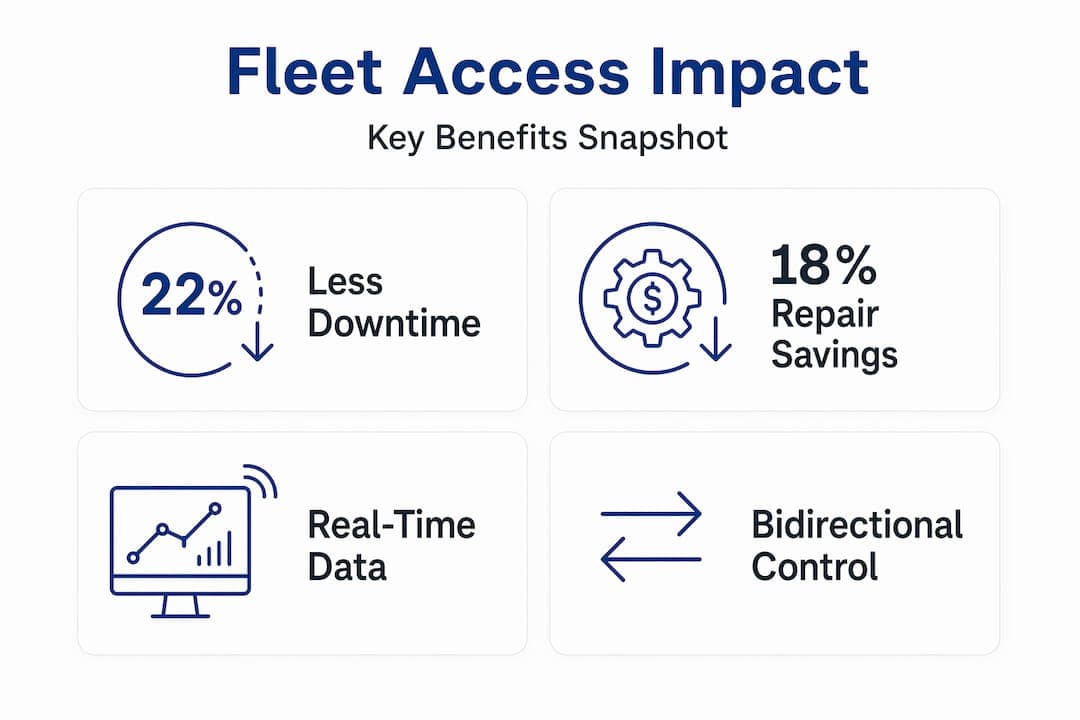
| Significant cost reduction | Integrated remote fleet management can reduce maintenance spend by 15 to 25% annually. |
| Bidirectional communication | Managers can send remote commands and clear fault codes before drivers even report a problem. |
| Security requires Zero Trust | Cloud-connected fleets need Zero Trust security models, not traditional VPNs, to stay protected. |
| Cultural adoption is the real challenge | Staff training and trust in automated alerts matter more than the technology itself for successful deployment. |
What remote fleet access really means
Remote fleet access is the ability to connect to, monitor, and interact with vehicles in your fleet from any location, using a combination of telematics hardware, cloud software, and data analytics. Think of it as the central nervous system of your fleet operation. Every signal your vehicles generate, from engine fault codes to fuel levels to GPS coordinates, flows through this system in real time.
Modern fleet systems connect vehicles via telematics devices, cloud computing, and dashboards that give managers live visibility from anywhere. This is a fundamentally different model from traditional fleet management, which relied on drivers calling in issues, paper maintenance logs, and end-of-day reports.
The core technology stack typically includes:
- Telematics devices: Hardware installed in vehicles that captures engine data, GPS position, speed, and sensor readings.
- Cellular or satellite connectivity: The transmission layer that sends vehicle data to a central cloud platform.
- Cloud-based dashboards: Software interfaces where fleet managers view real-time data, set alerts, and generate reports.
- Data analytics engines: Tools that process historical and live data to identify patterns, flag anomalies, and generate predictive insights.
- Bidirectional command capability: The feature that separates true remote fleet access from simple monitoring. Remote fleet systems allow managers to see fault codes, receive predictive alerts, and send remote commands to vehicles before drivers report issues.
That last point deserves emphasis. Most operators are familiar with the first four components. The bidirectional layer is where remote fleet access genuinely changes operations. You are not just watching your fleet; you are interacting with it.
Key benefits of remote fleet access
The advantages of remote fleet access compound quickly once a system is fully deployed. Here is a prioritized view of where fleet operators typically see the biggest returns:
-
Predictive maintenance and reduced downtime. Instead of waiting for a driver to report a check engine light, your system flags the fault code automatically. Remote diagnostics can be bidirectional, allowing fleets to reset faults and clear engine derates remotely, which cuts unplanned downtime significantly. A vehicle that would have sat at a service center for two days waiting for a diagnosis can often be assessed and cleared within hours.
-
Fuel and route efficiency. Real-time vehicle monitoring exposes excessive idling, inefficient routes, and hard-braking habits. Correcting these behaviors through targeted driver feedback consistently lowers fuel costs across the fleet.
-
Driver safety and compliance. Automated alerts for speeding, harsh cornering, or hours-of-service violations give managers the data they need to coach drivers proactively rather than reactively. This lowers accident risk and supports regulatory compliance documentation.
-
Faster issue resolution. When a vehicle reports a fault remotely, a technician can assess the severity before the vehicle even returns to base. This means the right parts and personnel are ready, not waiting.
-
Financial returns. Transitioning to integrated remote platforms can reduce annual maintenance spend by 15 to 25%, with payback on the investment in under three weeks. Those are returns that justify deployment at almost any fleet size.
Pro Tip: When evaluating the benefits of fleet access for your operation, start by calculating your current annual cost of unplanned vehicle downtime. That single number usually makes the business case faster than any other metric.
Advanced applications and emerging capabilities
Remote fleet access is expanding well beyond diagnostics and tracking. Three categories are worth understanding in depth.
Remote diagnostics with fault clearing
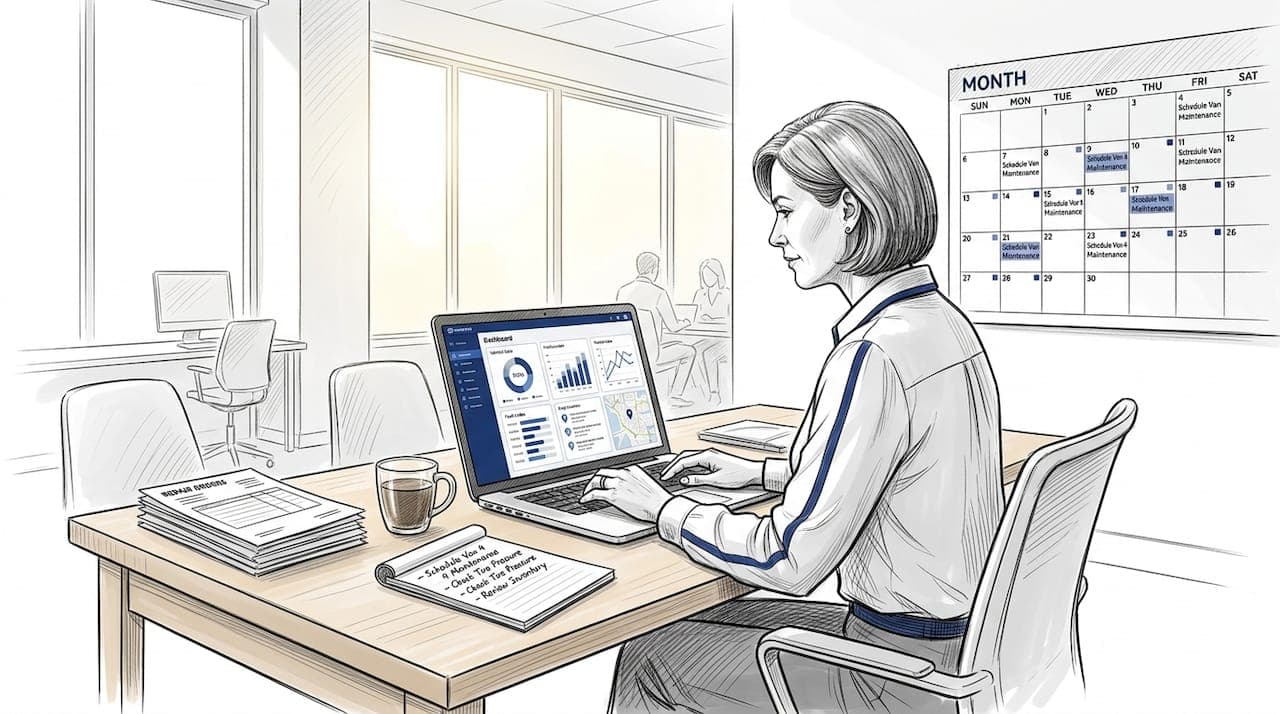
Bidirectional remote diagnostics let maintenance teams reset fault codes and clear engine derates without the vehicle returning to a depot. For long-haul trucking or dispersed rental fleets, this capability alone can eliminate dozens of unnecessary service trips per year. A fault that previously grounded a vehicle for a full day can be assessed, diagnosed, and cleared in under an hour.
Remote driving services
Remote-driving technology enables off-site operators to control vehicle braking and steering using real-time video feeds and remote control systems. The operational implications for vehicle relocation, last-mile delivery, and airport shuttle services are significant. However, adoption barriers are less about the technology and more about regulatory, insurance, and cultural frameworks that have not yet caught up.
Electric vehicle fleet integration
Electric vehicles generate more remote-accessible data than combustion vehicles. EV remote diagnostics monitor battery management systems, motor controls, and thermal systems to optimize uptime and predict failures before they occur. For fleet operators transitioning to electric, remote monitoring is not optional. It is the primary tool for managing range anxiety, charging scheduling, and battery degradation at scale.
Here is a comparison of typical capabilities across these three application types:
| Capability | Standard telematics | Remote diagnostics | EV remote monitoring |
|---|
| Real-time location | Yes | Yes | Yes |
| Engine fault alerts | Limited | Full bidirectional | Full bidirectional |
| Remote fault clearing | No | Yes | Yes |
| Battery health data | No | No | Yes |
| Remote vehicle control | No | No (standard) | Partial (charging) |
| Predictive failure alerts | Basic | Advanced | Advanced |
Pro Tip: If your fleet includes any electric vehicles, confirm that your remote fleet access solution specifically supports battery management system integration. Generic telematics platforms often miss EV-specific data points that are critical for uptime planning.
How to adopt remote fleet access technology
Getting remote fleet access right is an implementation challenge as much as a technology one. Here is where most operators run into friction:
-
Software consolidation. Many fleets run separate tools for GPS tracking, maintenance scheduling, fuel cards, and driver compliance. Consolidating into one unified dashboard closes the operational complexity gap and produces faster decision-making. Fragmented systems create blind spots even when good data exists.
-
Security architecture. As you move to cloud-connected remote access, traditional VPN-based security is not sufficient. Zero Trust security is now the industry standard for protecting complex, cloud-connected fleet ecosystems. Zero Trust means every user, device, and data request is verified independently, regardless of network location.
-
Staff training and culture. Successful remote fleet management requires staff to trust automated alerts over manual check-ins. Cultural resistance is the top reason pilots fail. Invest in training before deployment, not after.
-
Regulatory and insurance alignment. Advanced applications like remote diagnostics and remote driving carry legal and insurance implications that vary by jurisdiction. Engage your legal and insurance teams early, particularly if you are managing cross-border fleets.
-
Vendor selection and piloting. Before committing to a full deployment, run a structured pilot on a defined subset of vehicles. Measure baseline metrics before activation, then compare after 60 days. This gives you real data to justify broader rollout and surfaces integration issues before they affect your full fleet.
You can also review how remote access workflows are structured in practice to anticipate the organizational adjustments involved.
Measuring impact and optimizing over time
Deploying remote fleet access is not a one-time event. The ongoing value comes from continuous monitoring, interpretation, and refinement. The metrics that matter most include:
- Vehicle uptime percentage: Track how often each vehicle is available versus sidelined for maintenance. A post-deployment improvement here is one of the clearest indicators of system value.
- Unplanned maintenance events: Count how many maintenance actions were reactive versus predicted. The goal is to shift this ratio steadily toward planned interventions.
- Fuel consumption per mile or kilometer: This reveals the combined impact of routing improvements, idle reduction, and driver behavior coaching.
- Mean time to resolution (MTTR): How long does it take from fault detection to vehicle back in service? Remote diagnostics should drive this number down measurably.
Analytics dashboards within your fleet access platform should surface these metrics automatically. The operational shift is using that data to make decisions daily, not just in quarterly reviews. Fleet managers who check dashboards reactively gain far less than those who build proactive workflows around their alert systems. For a deeper look at how maintenance metrics translate to cost savings, fleet maintenance management practices are worth reviewing alongside your remote access rollout.
My take on what most operators get wrong
I have worked with fleet operations that invested heavily in remote access technology and saw minimal returns within the first year. In almost every case, the technology was not the problem. The disconnect was between what the data showed and what managers actually did with it.
The most common mistake is treating remote fleet access as a monitoring tool rather than a decision support system. Teams set up alerts, then dismiss them when they contradict existing habits or create extra steps. Predictive maintenance alerts get ignored because "the driver said it drives fine." That is exactly the pattern that erases the ROI.
My honest advice: before you buy any hardware or software, define three specific operational problems you want to solve. Maybe it is unplanned breakdowns costing you rental revenue. Maybe it is fuel spend you cannot account for. Then implement with those problems as your success criteria. Technology without a defined problem to solve tends to become expensive data storage.
The future of remote fleet management is genuinely exciting, particularly for electric fleets and remote diagnostics. But the operators who will extract the most value are the ones who pair strong technology with even stronger operational discipline.
— Dizzy
How Nomora supports your remote fleet operations
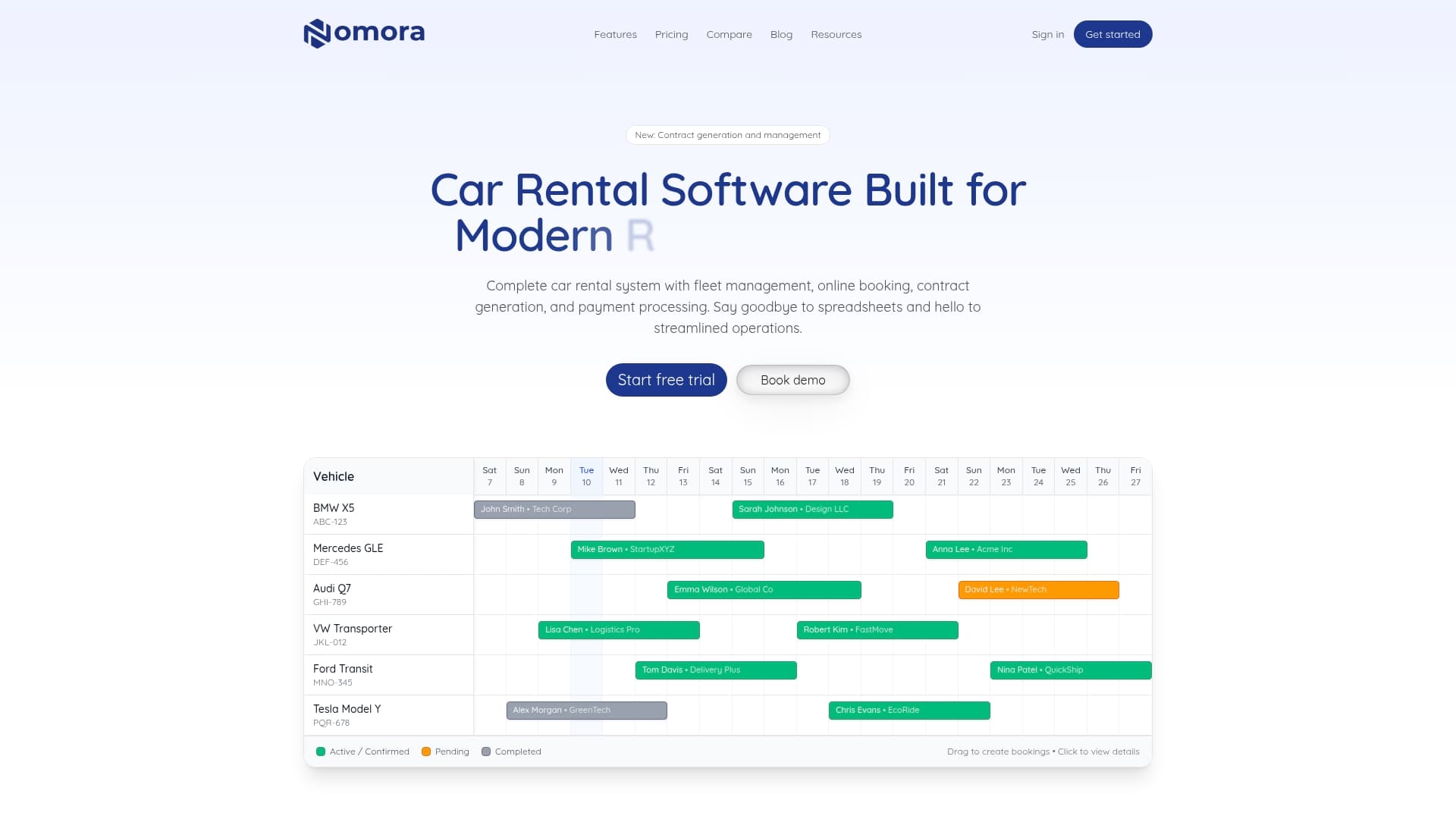
Nomora's cloud-based platform is built for exactly the kind of operational visibility that remote fleet access requires. From real-time GPS tracking integrations and automated maintenance alerts to centralized dashboards that replace disconnected tools, Nomora gives fleet managers a single place to act on the data that matters. The platform is designed for rental businesses of all sizes, and setup takes 24 to 48 hours.
Whether you manage a regional rental fleet, a corporate vehicle pool, or a franchise network, Nomora's fleet use cases cover the specific workflows you need to manage vehicles, contracts, and customer data without manual overhead. Explore how Nomora fits your operation and request a demo to see the platform in action.
FAQ
What is remote fleet access in simple terms?
Remote fleet access is the ability to monitor, diagnose, and interact with vehicles in your fleet from any location using telematics devices, cloud software, and real-time data dashboards. It goes well beyond GPS tracking to include fault code reading, predictive maintenance alerts, and bidirectional commands.
How does remote fleet access differ from GPS fleet tracking?
GPS tracking shows you where vehicles are. Remote fleet access shows you where they are, how they are performing, what faults they are generating, and lets you send commands or clear issues remotely without the vehicle returning to base.
What are the main benefits of remote fleet access?
The core benefits include reduced unplanned downtime through predictive diagnostics, lower maintenance costs (typically 15 to 25% annually), improved fuel efficiency, stronger driver safety compliance, and faster fault resolution.
How do you access a fleet remotely in practice?
Fleet operators use a cloud-based telematics platform that aggregates data from hardware installed in each vehicle. Managers log into a centralized dashboard from any internet-connected device to view live data, set alerts, generate reports, and send remote commands.
Is remote fleet access secure?
Security depends heavily on architecture. Zero Trust frameworks are rapidly becoming the industry standard for cloud-connected fleet systems, replacing traditional VPNs that are insufficient for modern fleet ecosystems with multiple connected endpoints.
Recommended
Ready to streamline your car rental business?
Book 30 minutes with the founder. We set up everything in this guide on your own vehicles, and migrate you out of Excel for free.