TL;DR:
- Starting a vehicle rental business requires an initial investment of $10,000 to $50,000 for small fleets. Key costs include vehicle acquisition, insurance, licensing, technology, and working capital reserves. Proper budgeting and early investment in systems and legal compliance are critical for success.
Vehicle rental startup costs are the initial capital outlays required to launch a rental business, covering vehicle acquisition, commercial insurance, licensing, technology infrastructure, and working capital reserves. Most small independent operators launch with $10,000 to $50,000, investing in one to three used vehicles. That range shifts dramatically depending on fleet size, vehicle type, and business model. This guide breaks down every major cost category so you can build a realistic budget before you spend a dollar.
1. What are typical vehicle acquisition costs for a startup fleet?
Vehicle acquisition is the single largest line item in any car rental startup budget. Used, reliable vehicles typically cost $15,000 to $30,000 each. New vehicles run $25,000 to $48,000 per unit. Starting with one to three cars keeps your initial investment manageable and limits your exposure while you validate demand.
Buying outright gives you full ownership and no monthly obligations. Financing through a commercial auto loan spreads the cost but adds interest. Leasing is generally not recommended for rental startups because most lease agreements prohibit subletting, which directly conflicts with your business model. If you lease a vehicle and rent it to customers, you likely void the lease contract.
- Used economy vehicles: $15,000–$30,000 each, lower insurance costs, faster depreciation recovery
- New standard vehicles: $25,000–$48,000 each, warranty protection, higher resale value
- Specialty vehicles (luxury, EVs, trucks): Higher upfront cost, but command higher rental rates and serve niche markets
Specialty vehicles like electric cars or luxury sedans cost more to insure and maintain. They also attract a different customer segment willing to pay premium rates. Before adding them, confirm there is actual demand in your market. A small business vehicle guide can help you match vehicle type to your target customer profile.
Pro Tip: Start with two to three used, mid-range vehicles in the $20,000 range. Prove your model works before scaling the fleet. Fleet depreciation compounds quickly, so understanding how depreciation affects your assets from day one protects your margins.

2. How much do insurance, licensing, and compliance cost?
Regulatory and insurance costs are non-negotiable. Skipping or underfunding them creates legal and financial exposure that can shut down your business after a single incident.
Commercial auto insurance is the most significant recurring compliance cost. Standard commercial coverage runs $1,500 to $3,000 per vehicle annually. That figure covers liability and collision. One uninsured claim can erase months of profit, so adequate coverage is not optional.
Licensing fees vary by state. Motor vehicle dealer or rental company licenses cost $200 to $1,500, and the application process takes two to eight weeks. Build that timeline into your launch plan. Waiting until the last minute delays your opening date.
- State rental or dealer license: $200–$1,500, required before operating
- Surety bond: Required in many states to protect customers, typically $10,000–$25,000 face value
- Zoning clearance: Required if operating from a physical lot or office
- Legal drafting for rental contracts: $2,000–$8,000 for state-compliant agreements
Customized, state-compliant rental agreements must be drafted or reviewed by an attorney. Generic templates often lack required Loss Damage Waiver disclosures, which can make your contracts unenforceable in court.
Regulatory compliance is consistently underestimated in both time and cost. Budget for it early and treat attorney fees as a fixed startup expense, not an optional line item.
3. What are the technology and marketing expenses for a rental startup?
Technology is the central nervous system of a modern vehicle rental operation. Without a booking system, you are managing reservations manually, which creates errors, double bookings, and lost revenue. Online bookings generate over 71% of vehicle rental market revenue, making digital infrastructure a core startup cost, not a luxury.
Setting up a professional website with an integrated booking engine costs $2,000 to $5,000 upfront. Monthly software fees for fleet management and reservation platforms like Rently or HQ Rental run $50 to $300 per month. That monthly spend pays for itself quickly when it eliminates scheduling conflicts and automates payment collection.
- Website and booking system setup: $2,000–$5,000 one-time
- Fleet management software: $50–$300/month
- Google Business Profile: Free, but critical for local search visibility
- Digital advertising (Google Ads, social media): $300–$1,000/month to start
- Listing on peer-to-peer platforms: Variable fees, but expands reach quickly
Pro Tip: Set up your Google Business Profile before you launch. It costs nothing and drives local search traffic from day one. Pair it with a basic SEO strategy targeting your city and vehicle type to reduce paid ad dependency over time.
Marketing costs are often underestimated by first-time operators. Budget at least three months of marketing spend before expecting consistent inbound bookings. Platforms like Nomora integrate booking, fleet tracking, and customer communications in one system, which reduces the number of separate tools you need to pay for and manage.
4. How to budget working capital and manage cash flow
Working capital is the cash buffer that keeps your business running when revenue dips and expenses do not. Cover at least three to six months of operating expenses before you open. Seasonal demand swings and surprise repairs are not exceptions in this business. They are the rule.
Cash flow mismanagement is one of the top reasons rental startups fail. A vehicle sitting idle for two weeks after an accident still costs you insurance, loan payments, and parking fees. Without a cash buffer, that gap becomes a crisis.
| Operating expense | Estimated monthly cost |
|---|
| Commercial insurance (per vehicle) | $125–$250 |
| Loan or financing payment (per vehicle) | $300–$600 |
| Maintenance and repairs | $150–$400 |
| Fuel and cleaning | $100–$300 |
| Software and technology | $50–$300 |
| Marketing and advertising | $300–$1,000 |
Common funding sources for vehicle rental startups include:
- Personal savings: Lowest cost of capital, no debt obligation
- Commercial bank loans: Suitable for fleet financing with good credit history
- SBA microloans: Up to $50,000 for small startups with limited collateral
- Private investors or partners: Faster access to capital, but requires equity sharing
- Business credit lines: Useful for covering short-term cash gaps
Build a break-even analysis before you launch. Know exactly how many rental days per month you need to cover fixed costs. That number becomes your minimum performance target. Tax professionals also recommend evaluating the Standard Mileage Rate versus Actual Expense Method for vehicle deductions, since depreciation can significantly reduce your taxable income in the early years.
5. How do different startup models affect your initial investment?
The business model you choose determines your starting costs, your level of control, and how fast you can build a customer base. Three models dominate the market for new entrants.
Independent startup is the most common entry point. You own the fleet, set your own rates, and build your brand from scratch. Initial investment ranges from $10,000 to $50,000. You have full control but slower brand recognition. This model works well for niche operators targeting specific vehicles or local markets.
Dealership partnership involves working with an existing auto dealer to access vehicles and customers. Startup costs run $25,000 to $60,000. You gain a built-in customer base and vehicle sourcing advantage. Control is moderate since you depend on the dealer relationship.
Franchise model (Avis, Hertz, Enterprise) requires $606,000 to $1,570,000 in total startup investment. You get strong brand recognition and operational support, but royalties and franchise fees reduce your margins. This model suits entrepreneurs with significant capital and a preference for proven systems over building from scratch.
| Model | Startup cost range | Brand support | Control level |
|---|
| Independent | $10,000–$50,000 | None | Full |
| Dealership partnership | $25,000–$60,000 | Moderate | Moderate |
| Franchise (Avis, Hertz) | $606,000–$1,570,000 | Strong | Limited |
The right model depends on your available capital and your appetite for risk. If you have under $50,000 and want to test the market, start independent with a small fleet and use a rental software platform built for your business size. Scale after you prove the model works.
Key takeaways
Starting a vehicle rental business requires budgeting across five core areas: vehicle acquisition, commercial insurance, licensing, technology, and working capital reserves of at least three to six months.
| Point | Details |
|---|
| Vehicle acquisition dominates costs | Budget $15,000–$30,000 per used vehicle; avoid leasing due to subletting restrictions. |
| Insurance and compliance are fixed | Commercial insurance runs $1,500–$3,000 per vehicle annually; legal drafting adds $2,000–$8,000. |
| Technology drives revenue | Online bookings generate over 71% of rental revenue; budget $2,000–$5,000 for setup. |
| Working capital prevents failure | Maintain three to six months of operating reserves to survive seasonal gaps and repairs. |
| Model choice sets your ceiling | Independent startups start at $10,000; franchises require over $600,000 to launch. |
What I have learned about managing rental startup finances
The biggest mistake I see new operators make is treating vehicle acquisition as the only real cost. They buy two cars, get excited, and then realize they have no budget left for insurance, software, or the three months of slow bookings that almost every new rental business experiences.
The second mistake is leasing. I have spoken with founders who signed standard vehicle leases thinking they could rent those cars out. The lease agreement prohibited subletting. They had to unwind the arrangement at a loss. Buy outright or finance through a commercial loan designed for fleet use. There is no workaround on this one.
Technology investment pays back faster than most founders expect. A proper booking system eliminates double bookings, automates payment collection, and gives you real data on fleet utilization. Without it, you are flying blind. The $100 to $200 per month you spend on software is the cheapest employee you will ever hire.
Legal compliance is the area where cutting corners costs the most. A rental contract without proper Loss Damage Waiver language can leave you fully liable for a customer's accident. One claim without proper legal protection can exceed your entire startup budget. Spend the money on an attorney before you rent your first vehicle.
My honest advice: start small, stay liquid, and invest in systems early. A two-car operation with solid software, proper insurance, and a compliant contract is a real business. A ten-car operation with spreadsheets and a generic contract is a liability waiting to happen.
— Dizzy
How Nomora helps you control costs from day one
Managing vehicle rental startup costs gets significantly easier when your booking, fleet, and payment systems live in one place. Nomora is a cloud-based car rental management platform built for operators of all sizes, from single-vehicle startups to multi-location fleets.
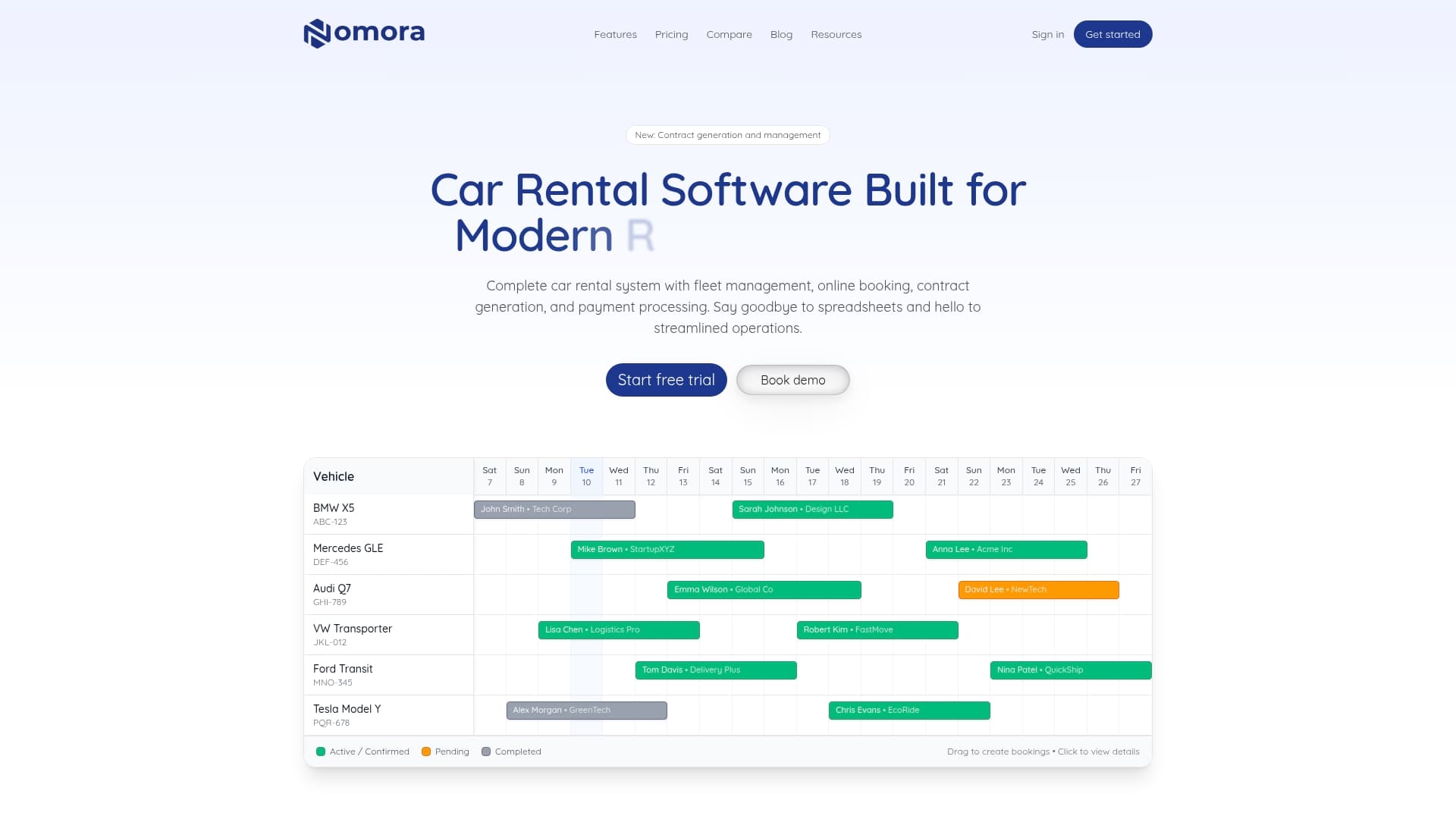
Nomora replaces manual spreadsheets with automated reservations, contract generation, GPS fleet tracking, and integrated payment processing. Setup takes 24–48 hours. The platform eliminates the administrative overhead that quietly drains startup margins. Explore Nomora's software use cases to see how it fits your specific business model, or review Nomora's pricing plans to find the right tier for your fleet size and budget.
FAQ
How much does it cost to start a vehicle rental business?
Most independent vehicle rental startups launch with $10,000 to $50,000, covering one to three used vehicles, insurance, licensing, and basic technology. Franchise models like Avis or Hertz require $606,000 to over $1,500,000.
What insurance does a car rental startup need?
Commercial auto insurance is required, costing $1,500 to $3,000 per vehicle annually. Coverage must include liability and collision to protect against claims that could otherwise eliminate your operating capital.
Can you lease vehicles for a rental business?
Leasing vehicles for a rental business is not recommended. Most standard lease agreements prohibit subletting, which makes renting those vehicles to customers a contract violation. Finance or buy outright instead.
How long does it take to get a rental business license?
State licensing for a motor vehicle dealer or rental company takes two to eight weeks to process. Fees range from $200 to $1,500 depending on the state, so apply early in your launch timeline.
What is the biggest financial risk for a new rental startup?
Cash flow failure is the leading cause of early closure for rental startups. Seasonal demand drops and unexpected repair costs require a working capital buffer of at least three to six months of operating expenses.
Recommended