TL;DR:
- Vehicle rental fraud, including theft, non-return, and payment scams, causes significant financial losses. Implementing layered technology, clear documentation, and proactive processes greatly reduces fraud risk. Proper communication and digital tools enhance security while maintaining customer trust and satisfaction.
Vehicle rental fraud costs rental businesses far more than most owners realize. While disputes over scratches and dents get the most attention, the biggest financial losses often trace back to vehicle theft, non-return, and sophisticated payment fraud. In fact, over 58% of rental car damage claims in 2025 were not actually the renter's fault, which signals how murky and exploitable the damage claim process can be. This guide walks you through the real fraud landscape, the best prevention techniques available today, and how modern technology gives rental businesses a measurable edge. You will leave with a clear framework for protecting your fleet and your bottom line.
Table of Contents
Key Takeaways
| Point | Details |
|---|
| Fraud goes beyond damage claims | Vehicle theft and identity manipulation are major risks, costing more than simple damage disputes. |
| Document everything | Thorough records, clear terms, and digital checklists are your first line of fraud defense. |
| Use layered tech tools | Combining ID verification, GPS tracking, and integrated software reduces fraud rates far better than solo tactics. |
| Balance security and service | Transparent, efficient fraud prevention keeps customers happy and loyal while protecting your fleet. |
Defining vehicle rental fraud and its business impact
Now that we've set the scene on the real cost of rental fraud, it's essential to break down exactly what threats your business faces. Vehicle rental fraud is not a single event. It is a category of deliberate actions taken to gain financial advantage from a rental transaction, at the expense of your business.
The most common types fall into four categories:
| Fraud type | Description | Typical business impact |
|---|
| Damage claim manipulation | Renters deny pre-existing damage or fabricate new claims | Disputed costs, legal fees |
| Identity and payment fraud | Stolen IDs or credit cards used to book and retain vehicles | Vehicle loss, chargebacks |
| Chargeback fraud | Renters dispute legitimate charges with their bank | Revenue loss, processing fees |
| Policy violations | Subletting, unauthorized drivers, or geographic violations | Liability, insurance gaps |
Many rental operators focus heavily on damage disputes because they are frequent and visible. But owner losses from theft and non-return are often far more financially damaging per incident. A single stolen vehicle can represent a five-figure loss before insurance recovery even begins.
Here is what makes fraud particularly dangerous for independent and mid-sized operators:
- Low-volume businesses absorb individual fraud losses more severely than large fleets
- Manual processes create documentation gaps that fraudsters exploit
- Delayed detection means vehicles can be gone for days before an alert triggers
- Insurance gaps often leave owners partially exposed even with policies in place
Using a vehicle rental checklist at every stage of the rental cycle closes many of these gaps before they become costly problems. The key insight here is that fraud prevention is not just about catching bad actors after the fact. It is about building a system where fraud is far harder to attempt in the first place.
Understanding the full risk landscape is what separates reactive businesses from resilient ones. When you know what you are protecting against, you can allocate resources, policies, and technology where they actually matter.
Key techniques to prevent rental fraud: Best practices and pitfalls
Understanding the risks is only half the battle. Here is what you can do to protect your operations with practical, tested methods.
Preventing fraud starts before the renter ever picks up the keys. Each step in the rental process is an opportunity to gather evidence, confirm identity, and set clear expectations.
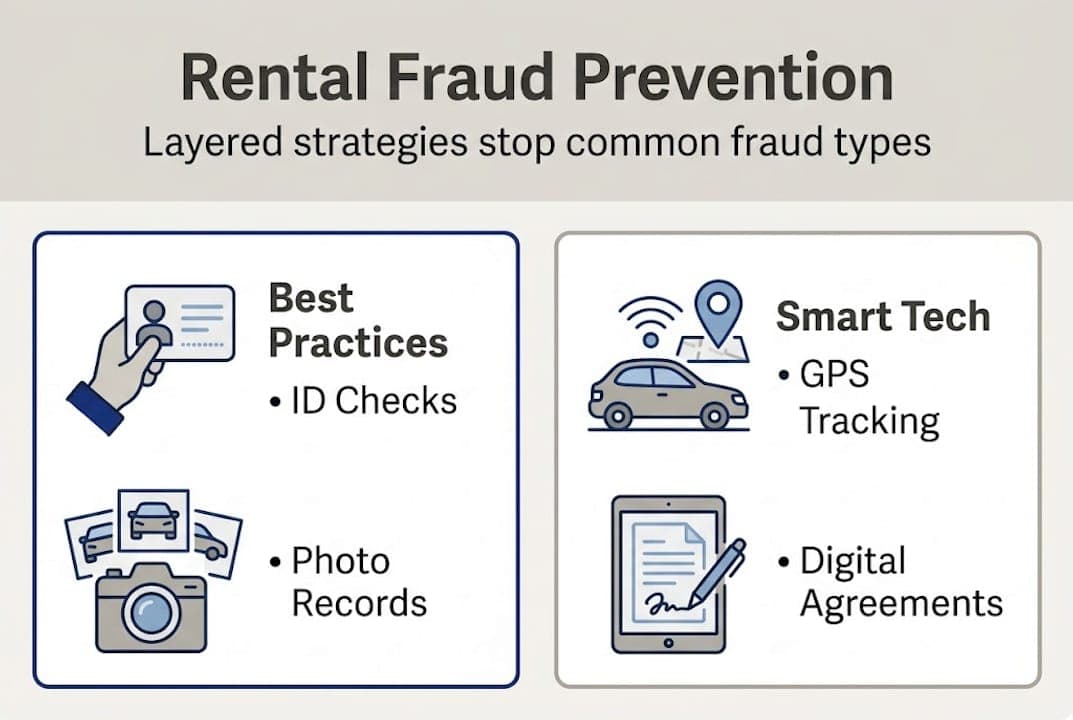
- Collect time-stamped pre-rental photos. Document every panel, interior surface, and accessory before handover. Video walkthroughs work even better.
- Obtain explicit written or digital authorization. Every charge type, including fuel fees, late returns, and damage deductibles, should be acknowledged before the rental begins.
- Use digital rental agreements. Paper documents get lost and are hard to produce quickly in disputes. Digital records are searchable, date-stamped, and harder to tamper with.
- Verify identity against payment method. The name on the ID and the card used must match. Mismatches are a common early indicator of fraud attempts.
- Maintain post-rental inspection records. A second photo set at return, cross-referenced with the pre-rental images, gives you a timestamped chain of evidence.
Chargebacks represent a particularly frustrating fraud type because your own payment processor becomes the arbiter. Businesses that prevent chargeback fraud through clear terms, documented agreements, and accurate authorizations win significantly more disputes.
"Friendly fraud," where a customer disputes a legitimate charge, accounts for a growing share of rental chargebacks. Without a clear paper trail, the business almost always loses.
Pro Tip: Build digital checklists into your handover process and require customer sign-off at each stage. Integrating vehicle inspection records into your rental software means documentation is automatic, not an afterthought.
One common pitfall is assuming that verbal communication is enough. If it is not written, confirmed, and stored, it will not hold up in a dispute. Equally dangerous is applying inconsistent processes across your team. Using a system integration guide to standardize workflows across staff reduces human error and prevents process gaps that fraudsters look for.
Leveraging technology: From ID verification to GPS tracking
Alongside process improvements, technology plays a vital role in raising the bar for fraud prevention. The most effective modern rental operations treat technology as a layered defense, not a single solution.

Here is how different technology types map to fraud reduction outcomes:
| Technology | Fraud type addressed | Estimated impact |
|---|
| Digital ID verification | Identity fraud, payment fraud | High |
| GPS tracking | Vehicle theft, non-return | High |
| Automated contract generation | Chargeback fraud, documentation gaps | Medium to high |
| Payment gateway integration | Chargeback fraud, card fraud | Medium to high |
| Telematics and geofencing | Policy violations, unauthorized use | Medium |
The evidence behind technology-led prevention is compelling. Vendors using technology have reduced fraud rates to as low as 1%, which is a dramatic improvement over businesses relying solely on manual checks. Additionally, proactive ID verification and GPS can cut fraud by 40 to 60%, which is a benchmark no manual process can match.
Key technology-driven behaviors that deter fraud:
- Real-time GPS alerts notify you the moment a vehicle exits an approved zone
- Digital ID scanning flags mismatches and flagged identities at the point of booking
- Automated payment holds protect against renters who book with insufficient funds or stolen cards
- Contract timestamps create legally defensible records for every transaction
Pro Tip: No single technology eliminates all fraud. A multi-layered approach, combining identity checks, GPS, and automated documentation, consistently outperforms single-point solutions. Think of integrating rental software as building layers of protection rather than installing one strong lock.
The shift toward real-time tracking also changes the dynamic when vehicles go missing. Instead of discovering a non-return 24 hours later, you can act within minutes. For the broader context of how these tools fit into operational strategy, digital transformation resources can help map out a realistic adoption path.
Balancing customer experience with strict security
However, tightening processes can bring new challenges, especially when it comes to the customer journey. Rental businesses sometimes pull back on fraud prevention because they worry about friction. The concern is understandable, but the trade-off is rarely as stark as it feels.
The key is to make security measures feel like professionalism, not suspicion. When a renter sees a thorough inspection process and a clear digital agreement, most interpret that as a sign that the company takes care of its vehicles and its customers. That perception builds trust.
Practical communication tips for maintaining a positive experience while enforcing security:
- Explain processes proactively. Tell renters why you take photos and verify identity. Transparency converts friction into reassurance.
- Automate wherever possible. Digital agreements and automated ID checks reduce wait times compared to manual paperwork.
- Set expectations in advance. Email confirmation with policy highlights prevents surprise at pickup.
- Train staff on tone. How your team communicates security steps matters as much as the steps themselves.
- Acknowledge legitimate complaints quickly. Fast response to real damage disputes shows renters you are fair, which actually reduces fraudulent counter-claims.
While customer-facing scams drive complaints, losing sight of owner losses from theft and non-return can be far more damaging in the long run.
Rental businesses that invest in key software features designed for automation and communication report fewer disputes overall, not more. By removing ambiguity from the rental process, you remove the conditions that allow fraud and complaints to thrive. Exploring how software directly connects to boosting rental profits reinforces that better security and better service are not competing priorities.
Why smart prevention strategies won't kill your customer loyalty
With these frameworks in mind, it is worth challenging a belief that holds many rental operators back: the idea that tighter security will drive good customers away.
Here is what we observe in practice. Customers who have rented from businesses with thorough, professional processes almost always prefer them on repeat visits. They appreciate knowing exactly what they agreed to, exactly what was documented, and exactly what to expect. Ambiguity is not friendliness. It is risk for everyone involved.
Fleet managers who adopt tech-backed security and communicate policies clearly tend to see two things happen. Fraud attempts drop because the business becomes a harder target. And customer satisfaction improves because the process is faster, clearer, and more predictable. The operators who see security as a loyalty investment, not a cost, are the ones building durable businesses. Software that boosts profits through better processes also builds the kind of operational confidence that customers feel when they interact with your team.
Take your rental fraud prevention to the next level
If you are ready to put powerful fraud prevention strategies into action, here is how to start.
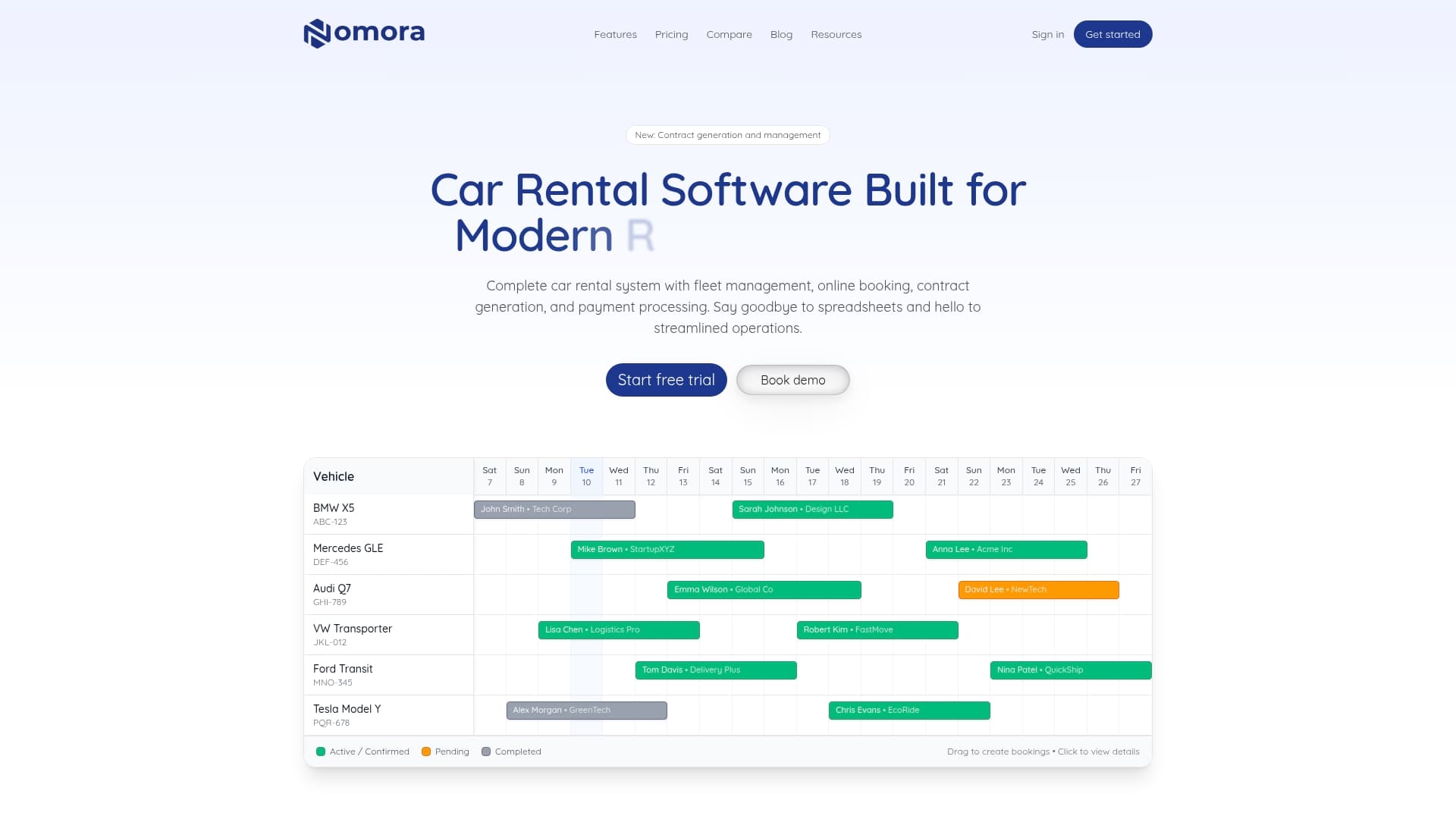
Nomora's cloud-based platform acts as the central nervous system of your rental operation, connecting ID verification, GPS tracking, automated contracts, and payment processing in one place. Whether you manage five vehicles or five hundred, the platform gives you real-time visibility and audit-ready documentation at every step. Explore rental software use cases to see how businesses like yours are reducing fraud and streamlining operations. You can also discover tools specifically designed for preventing double bookings and automated payments solutions that close common fraud entry points.
Frequently asked questions
What are the main types of vehicle rental fraud?
Key types include damage claim manipulation, identity fraud, credit card chargebacks, and vehicle theft or non-return. Owner losses from theft and non-return are typically more costly per incident than customer-facing scams.
How effective is technology in reducing rental fraud?
Integrated solutions like ID verification and GPS tracking can cut fraud by 40-60% or more when deployed as part of a layered security approach.
How can car rental businesses prevent chargeback fraud?
Clear rental terms, documented agreements, and thorough condition reports help prevent chargebacks. Businesses that maintain proof of agreement and accurate authorizations win significantly more payment disputes.
Does fraud prevention hurt the customer experience?
No. When done transparently and efficiently, security measures actually enhance trust and reputation. Most renters interpret thorough documentation and digital processes as signs of a professional, reliable business.
What documentation is crucial for protecting against fraud disputes?
Accurate, time-stamped records of vehicle condition, renter ID, and communication logs are vital. Photo and video documentation at both pickup and return creates a legally defensible chain of evidence that resolves most disputes quickly.
Recommended
Ready to streamline your car rental business?
Book 30 minutes with the founder. We set up everything in this guide on your own vehicles, and migrate you out of Excel for free.