TL;DR:
- Real-time fleet data enables significant cost savings through fuel reduction, predictive maintenance, and safety improvements.
- Consistent review and integration of telematics data lead to faster ROI and enhanced operational efficiency.
Real-time data in fleet management is defined as the continuous, live collection and analysis of vehicle location, engine diagnostics, driver behavior, and fuel consumption through GPS units and telematics systems. The benefits of real-time data in fleet management are direct and measurable: fleets that deploy live tracking and telematics platforms reduce fuel costs, cut unplanned downtime, and improve driver safety within months of implementation. Platforms like Geotab, Samsara, and Nomora connect GPS hardware to cloud dashboards, giving fleet managers instant visibility across every vehicle in their operation. For logistics professionals managing anywhere from 15 to 400 units, this shift from spreadsheets to live data is the single most impactful operational upgrade available in 2026.
How does real-time data improve operational efficiency in fleets?
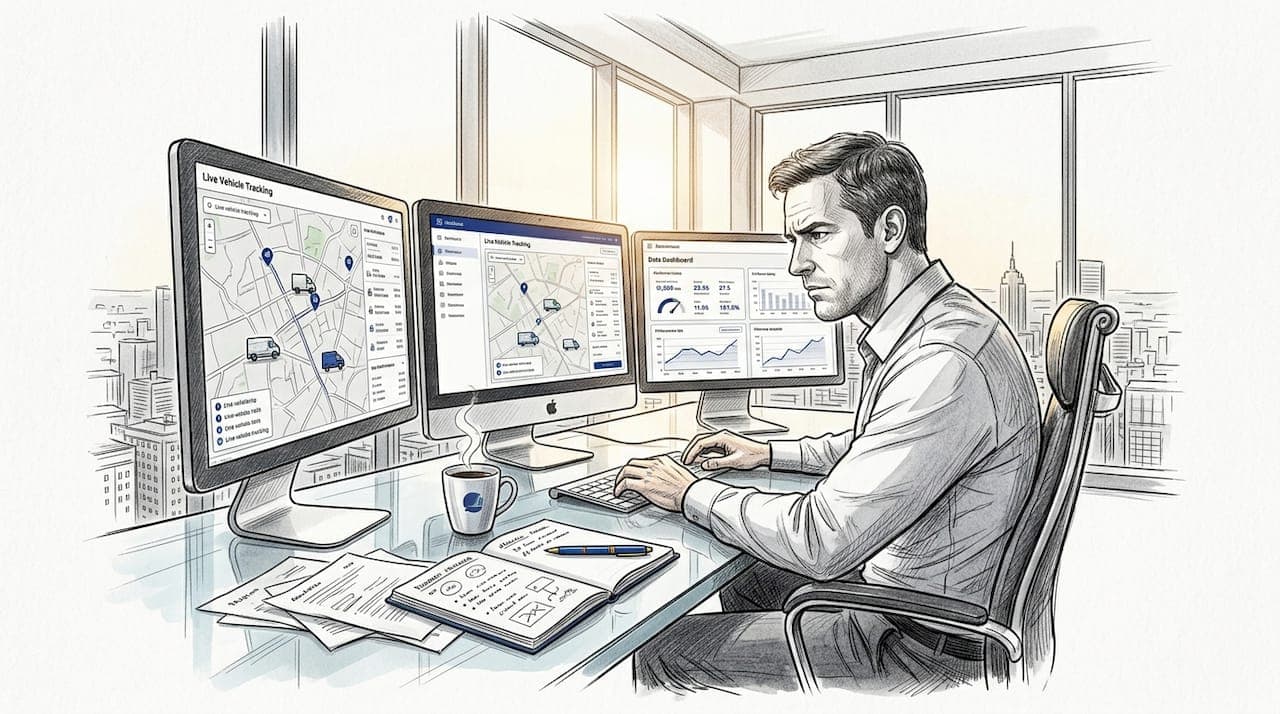
Real-time fleet tracking converts guesswork into precision. When dispatchers can see every vehicle's live location, they eliminate the lag between a driver completing a job and receiving the next assignment. That lag, in large fleets, compounds into hours of lost productivity each week.
The operational gains from live data fall into four distinct categories:
- Live location updates reduce dispatch lag by giving coordinators accurate vehicle positions at all times, so the nearest available driver gets the next job.
- Geofencing alerts notify managers the moment a vehicle leaves an authorized zone, preventing unauthorized use and catching route deviations before they cause delays.
- AI-powered route optimization recalculates paths based on live traffic, weather, and delivery windows. AI route optimization reduces fuel budgets by 19.3%, a figure that compounds significantly across large fleets.
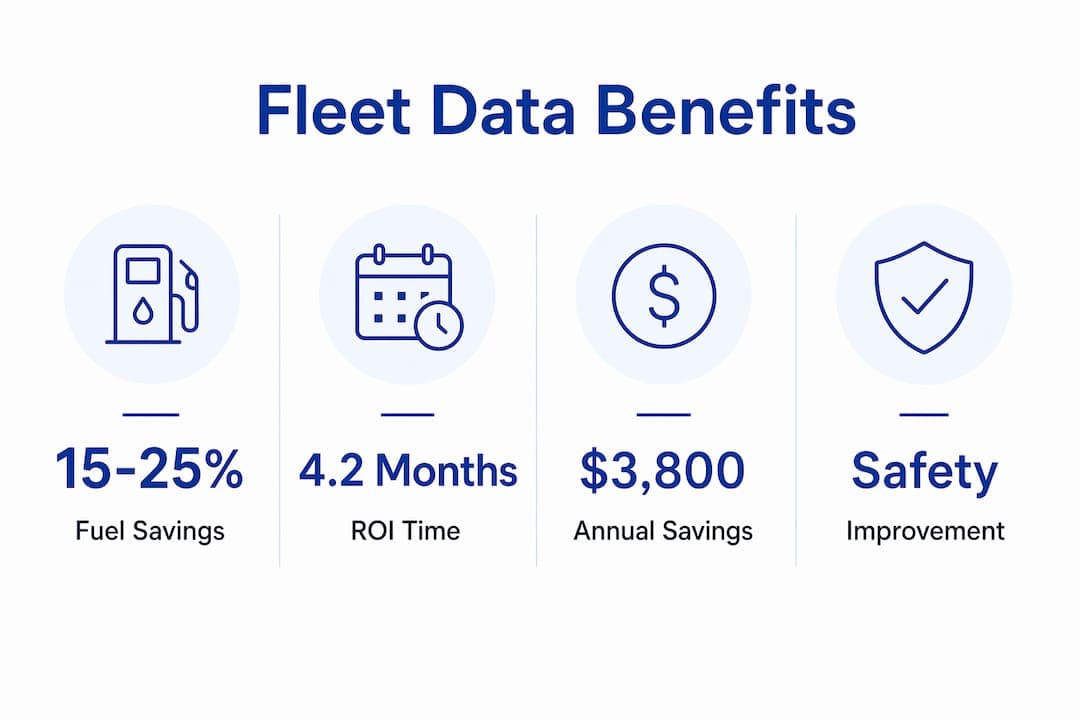
- Idle time reduction is one of the fastest wins. Real-time tracking systems cut fuel costs by 15% to 25%, with idle reduction alone saving 8% to 12%. That means a fleet spending $200,000 annually on fuel could recover up to $50,000 per year from these two changes alone.
The shift from reactive to proactive operations is the real value here. Real-time visibility transforms fleet oversight through automated alerts that resolve issues before they affect delivery commitments. A driver sitting idle for 20 minutes at a loading dock triggers an alert. A vehicle deviating from its planned route gets flagged immediately. Managers act on facts, not reports filed the next morning.
Pro Tip: Configure your telematics platform to send idle alerts after 3 minutes of engine-on, no-movement status. Most fleets set this threshold too high at 10 minutes, missing a significant portion of recoverable idle time.
What role does real-time data play in vehicle maintenance and reducing downtime?
Predictive maintenance is the most financially significant benefit that live fleet data delivers. Without continuous monitoring, fault codes sit undetected until a vehicle breaks down on the road. Emergency roadside repairs cost four to five times more than scheduled maintenance, and the lost revenue from an out-of-service vehicle compounds that figure further.
Here is how real-time data transforms the maintenance cycle:
- Early fault code detection. Telematics systems read OBD-II diagnostic codes the moment they appear, sending alerts to fleet managers before a minor issue becomes a major failure.
- Proactive scheduling. Predictive maintenance enabled by live data catches vehicle failures 2 to 4 weeks in advance, allowing managers to schedule repairs during off-peak hours rather than losing a vehicle mid-route.
- Automated maintenance logs. Every service event, mileage milestone, and inspection record is timestamped and stored automatically, eliminating manual paperwork and supporting compliance audits.
- Compliance tracking. DOT inspections, emissions checks, and registration renewals are tracked against live odometer data, so nothing falls through the cracks.
The ROI on this approach is well documented. The median fleet recovers telematics investment in 4.2 months, with annual savings of approximately $3,800 per tracked unit from fuel, idle, theft, and downtime reductions. For a 50-vehicle fleet, that is $190,000 in annual savings. Smaller fleets of 15 to 400 vehicles realize consistent per-unit savings, confirming that the benefits scale regardless of fleet size. Pairing live diagnostics with a structured fleet maintenance workflow turns data into a repeatable system rather than a one-time fix.
The benefits of real-time driver tracking extend well beyond knowing where a vehicle is located. Continuous monitoring of driver behavior, including speeding, harsh braking, rapid acceleration, and seatbelt compliance, gives fleet managers the data needed to coach drivers before an accident occurs rather than after.
Key safety capabilities enabled by live driver data include:
- Instant violation alerts sent to managers when a driver exceeds a speed threshold or triggers a harsh braking event, allowing supervisors to address the behavior the same day.
- Automated driver scorecards that rank performance weekly, giving drivers objective feedback and creating healthy competition within teams.
- AI dash cam integration that captures footage of near-miss events, providing evidence for insurance claims and coaching conversations.
- Reduced accident rates that translate directly to lower insurance premiums. Fleets using AI dash cams and behavior monitoring have reported $588,577 in yearly safety-related savings, a figure that includes reduced claims, lower premiums, and avoided legal costs.
The connection between safety data and customer trust is direct. When a client asks whether a driver followed the agreed route or maintained safe speeds near their facility, you can answer with timestamped data rather than a verbal assurance. That accountability strengthens long-term relationships and supports contract renewals.
Pro Tip: Share driver scorecards with drivers directly, not just with managers. Fleets that give drivers access to their own performance data see faster behavioral improvement than those that use scores only for disciplinary purposes.
In what ways does real-time fleet data improve customer satisfaction?
ETA accuracy is the metric customers care about most, and live fleet data is the most reliable way to deliver it. Predictive tracking improves ETA accuracy by 25% to 40%, which means fewer missed delivery windows, fewer customer service calls, and fewer contract disputes.
| Service Area | Without Real-Time Data | With Real-Time Data |
|---|
| ETA accuracy | Estimated, often off by 30+ minutes | Predictive, within 5 to 10 minutes |
| Delay communication | Reactive, after the fact | Proactive, automated alerts to clients |
| Dispute resolution | Verbal accounts, slow resolution | Timestamped GPS records, resolved quickly |
| Customer retention | Vulnerable to single service failures | Protected by transparency and accountability |
Real-time GPS tracking enhances customer trust by providing objective, timestamped delivery and operational data. When a client claims a delivery arrived late, you pull the GPS record and resolve the dispute in minutes rather than days. That kind of transparency is a competitive differentiator in logistics markets where service reliability determines who wins long-term contracts.
Real-time communication also changes the customer experience during active deliveries. Automated notifications sent when a vehicle departs, arrives, or encounters a delay keep clients informed without requiring a phone call. This reduces inbound inquiries and frees up your operations team to focus on managing exceptions rather than answering status questions.
What are the overall cost savings from real-time fleet monitoring?
The financial case for 24/7 fleet monitoring is built on savings across five distinct cost categories, not just fuel. Understanding the full picture helps justify the investment to finance teams and ownership groups.
"Fleets that combine idle reduction with AI route optimization recover fuel savings of up to 25% annually, while predictive maintenance and safety monitoring add thousands more in avoided costs per vehicle."
Here is how the savings stack up across categories:
| Cost Category | Savings Mechanism | Estimated Annual Impact |
|---|
| Fuel | Idle reduction + route optimization | 15% to 25% reduction |
| Maintenance | Predictive scheduling vs. emergency repairs | 4 to 5× cost avoidance per incident |
| Insurance | Improved safety records, fewer claims | Varies; up to $588,577 for large fleets |
| Labor | Automated dispatch and reporting | Hours saved per dispatcher per week |
| Administration | Digital inspections, compliance logs | Reduced manual overhead |
The $3,800 annual savings per tracked vehicle figure is particularly useful for building a business case. A 30-vehicle fleet generates $114,000 in annual savings. A 100-vehicle fleet generates $380,000. Those numbers assume average performance improvements, not best-case scenarios. Fleets that track assets in real time and review data consistently outperform those that install hardware and ignore the dashboards.
Administrative savings are often underestimated. Automated digital vehicle inspections, compliance tracking, and maintenance logs eliminate hours of manual data entry per week. For a fleet manager overseeing 50 vehicles, that time savings alone can justify the platform cost.
Key takeaways
Real-time fleet data delivers its strongest ROI when live tracking, predictive maintenance, and driver behavior monitoring operate together as an integrated system rather than separate tools.
| Point | Details |
|---|
| Fuel savings are immediate | Idle reduction and route optimization cut fuel costs by 15% to 25% within the first operating months. |
| Maintenance ROI is fastest | Fleets recover telematics investment in a median of 4.2 months through avoided emergency repairs and downtime. |
| Driver data reduces risk | Real-time behavior monitoring and scorecards lower accident rates and can save hundreds of thousands annually in safety-related costs. |
| Customer trust is data-driven | Timestamped GPS records resolve disputes quickly and improve ETA accuracy by 25% to 40%. |
| Consistent review multiplies returns | Installing hardware without reviewing weekly reports leaves most of the ROI unrealized. |
Why most fleets underuse the data they already have
Most fleet managers I work with are not struggling to collect data. They are struggling to act on it consistently. The hardware is installed, the dashboard is live, and the reports are generating every week. But the review habit never forms, and the data sits unused while the same inefficiencies repeat.
Fleet managers who review weekly reports consistently achieve higher ROI than those who check in only when something goes wrong. That finding is not surprising, but it is widely ignored. The instinct is to treat telematics as a monitoring tool rather than a decision-making system. The fleets that get the most out of live data treat their weekly review as a fixed operational ritual, the same way they treat payroll or compliance checks.
The other mistake I see regularly is configuring alerts too broadly. When every minor event triggers a notification, managers start ignoring the inbox. The better approach is to start with three to five high-priority alerts, speeding above a defined threshold, extended idle, and geofence violations, and build from there once the team has developed the habit of responding.
The future of fleet data is not more data. It is better integration. Platforms that connect live telematics with predictive analytics and automated work order generation will separate high-performing fleets from average ones over the next three years. The fleets investing in that integration now are building a structural advantage that will be very difficult to close later.
— Dizzy
See real-time fleet data in action with Nomora
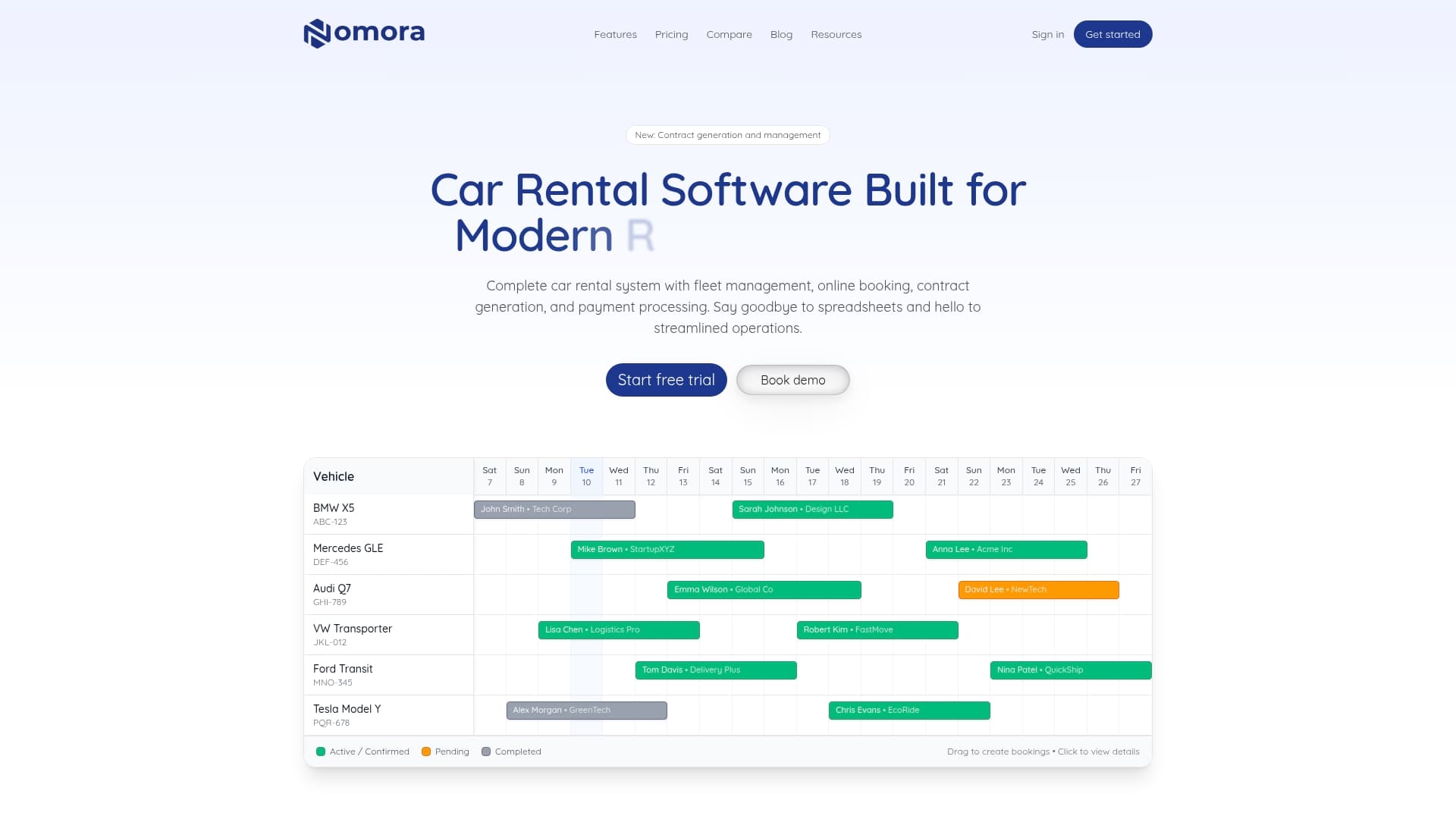
Nomora's cloud-based platform connects GPS tracking, maintenance scheduling, and reporting dashboards into a single system built for rental and logistics fleet operators. Live vehicle location, automated alerts, and digital inspection logs give you the operational visibility described throughout this article without requiring a complex IT setup. Onboarding takes 24 to 48 hours, and integrations with fuel cards and payment gateways are included. Explore fleet software use cases by business type to see how operators similar to yours are applying real-time data to reduce costs and improve service delivery. You can also visit the Nomora platform to review pricing and request a demo.
FAQ
What are the main benefits of real-time data in fleet management?
The primary benefits include fuel cost reductions of 15% to 25%, predictive maintenance that catches failures 2 to 4 weeks early, improved driver safety, and ETA accuracy improvements of 25% to 40%. Together, these deliver a median telematics ROI recovery in 4.2 months.
How does real-time driver tracking reduce accident rates?
Live monitoring of speeding, harsh braking, and seatbelt compliance allows managers to coach drivers before accidents occur. Fleets using AI dash cams and behavior monitoring have reported over $588,000 in annual safety-related savings from reduced claims and lower insurance premiums.
How quickly do fleets see ROI from real-time tracking systems?
The median fleet recovers its telematics investment in 4.2 months, with annual savings of approximately $3,800 per tracked vehicle. Consistent weekly data review is required to realize the full return.
Can small fleets benefit from real-time monitoring?
Fleets of 15 to 400 vehicles realize consistent per-unit savings from telematics, confirming that the financial benefits of live tracking are not limited to large enterprise operations.
How does live fleet data improve customer satisfaction?
Predictive tracking improves ETA accuracy by 25% to 40%, and timestamped GPS records allow fleet managers to resolve delivery disputes quickly with objective evidence rather than verbal accounts.
Recommended
Ready to streamline your car rental business?
Book 30 minutes with the founder. We set up everything in this guide on your own vehicles, and migrate you out of Excel for free.