Managing a vehicle rental business means juggling maintenance schedules, customer expectations, pricing strategies, and fleet availability all at once. Without a structured approach, you risk double bookings, unexpected downtime, and frustrated customers. A comprehensive vehicle rental checklist serves as your operational backbone, helping you systematically address maintenance, inspections, booking management, and customer service. This guide walks you through building an expert-backed checklist tailored for small and medium rental companies, designed to optimize performance, reduce costs, and keep your fleet running smoothly in 2026.
Table of Contents
Key takeaways
| Point | Details |
|---|
| Checklists streamline operations | They organize maintenance, bookings, and customer interactions into manageable workflows. |
| Predictive maintenance cuts costs | Reducing downtime by 30% and lowering maintenance expenses by 20% through data-driven scheduling. |
| Digital tools prevent disputes | Timestamped photo inspections and AI damage detection minimize customer conflicts over vehicle condition. |
| Strategic models shape checklists | Asset-heavy fleets prioritize vehicle control while software-led models emphasize automation and scalability. |
| Dynamic pricing requires transparency | Revenue optimization works when customers understand pricing clearly and feel treated fairly. |
Establishing your vehicle rental checklist criteria
Before you build your checklist, you need clear criteria that reflect your fleet type, operational model, and customer expectations. Start by categorizing checklist items into maintenance, inspection, booking management, and customer communication. Each category addresses specific pain points that can derail operations if ignored.
Fleet-specific factors matter significantly. If you operate electric vehicles, your checklist must include charging station availability and battery health monitoring. Seasonal demands require adjusting tire types and fluid levels based on weather patterns. Your strategic choice between asset-heavy ownership and asset-light partnerships shapes what you prioritize. Asset-heavy fleets need detailed vehicle condition tracking, while software-led operations focus on software use cases for rentals that automate processes.
Set maintenance intervals based on industry benchmarks like oil changes every 5,000 to 7,000 miles and tire rotations every 5,000 miles. These standards prevent breakdowns and extend vehicle lifespan. Incorporate operational KPIs such as fleet utilization rates, average daily rates, and customer satisfaction scores to measure checklist effectiveness.
Digital inspections deserve special attention. Use timestamped photos to document vehicle condition before and after each rental. This practice minimizes damage disputes and protects your business from fraudulent claims. Your checklist should mandate photo capture at specific angles: front, rear, both sides, interior dashboard, and odometer reading.
Consider these essential criteria:
- Maintenance frequency aligned with manufacturer recommendations and usage patterns
- Inspection protocols that capture vehicle condition comprehensively
- Booking workflows that prevent double reservations and pricing errors
- Customer communication standards for transparent pricing and damage policies
- Technology integration points for complete car rental software guide implementation
Core checklist components for vehicle rental operations
Your operational checklist needs specific, actionable items that staff can execute consistently. Break down each component into clear steps that leave no room for interpretation or shortcuts.
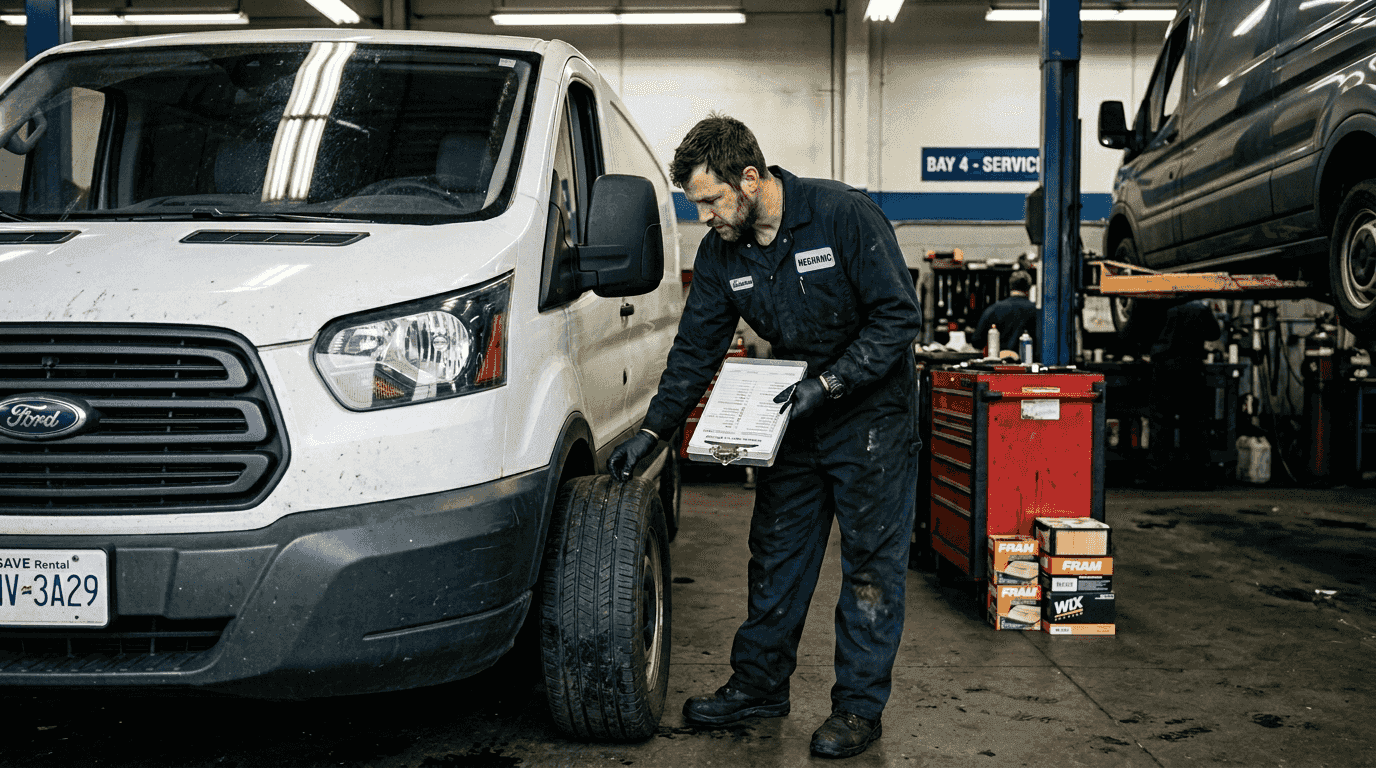
Maintenance tasks form your first line of defense against costly breakdowns. Schedule oil changes every 5,000 to 7,000 miles depending on vehicle type and driving conditions. Rotate tires every 5,000 miles to ensure even wear and extend tire life. Conduct monthly brake inspections to catch wear before it becomes dangerous. Daily vehicle inspections before rentals should check fluid levels, tire pressure, lights, and windshield condition.
Booking management prevents the chaos of double reservations and pricing confusion. Your checklist must include verification steps that confirm vehicle availability before confirming reservations. Implement dynamic pricing rules that adjust rates based on demand, but document these clearly for customers. Track additional fees like one-way charges and underage driver surcharges systematically. Software for small fleets can automate these checks and prevent double bookings through real-time availability updates.
Customer service standards protect both parties. Document vehicle condition with timestamped photos from multiple angles before each rental begins. Walk customers through the vehicle, pointing out existing damage and explaining your damage policy. Communicate pricing transparently, breaking down base rates, insurance options, and additional fees in writing. Provide customers with digital copies of inspection photos so they have the same documentation you do.
Damage control requires proactive documentation. Digital photo inspections reduce disputes by providing clear evidence of pre-existing damage. AI tools can analyze photos to detect scratches, dents, and interior wear automatically. When customers return vehicles, repeat the inspection process immediately and compare photos side by side.
Pro Tip: Pilot predictive maintenance on 10% to 15% of your fleet before full rollout. Track downtime reduction and cost savings over three months to build your business case for wider implementation.
Comparing checklist strategies: asset-heavy vs software-led approaches
Your operational model fundamentally shapes how you design and execute checklists. Asset-heavy and software-led strategies each demand different priorities and offer distinct advantages.
Asset-heavy operations give you complete control over your vehicles. You own the fleet, manage maintenance directly, and build relationships with long-term corporate clients who value consistency. This model works well for stable markets with predictable demand. Your checklist emphasizes physical vehicle condition, detailed maintenance records, and depreciation management. You need systems that track every repair, replacement part, and service interval meticulously.
However, asset-heavy models carry higher capital risk but offer stable operations. You face significant upfront investment in vehicles, storage facilities, and maintenance infrastructure. Depreciation eats into profits, and damage costs hit your bottom line directly. When a vehicle sits idle, you lose money on a depreciating asset.
Software-led approaches flip this equation. You minimize capital expenditure by partnering with vehicle suppliers or using peer-to-peer models. Fleet management software automates bookings, payments, and customer communications. Your checklist focuses on process automation, data accuracy, and customer experience optimization. You can scale quickly without buying more vehicles, and software for medium fleets handles complexity as you grow.
The trade-off comes in technology dependence. System failures can halt operations entirely. Overbooking risks increase if your software doesn't sync availability across platforms accurately. You sacrifice some control over vehicle quality when relying on partners.
| Factor | Asset-Heavy Model | Software-Led Model |
|---|
| Capital Investment | High upfront vehicle purchase costs | Low CAPEX, subscription software fees |
| Scalability | Limited by vehicle acquisition budget | Rapid scaling through partnerships |
| Revenue Stability | Predictable with B2B contracts | Variable based on demand and platform performance |
| Risk Exposure | Depreciation and damage costs | Technology failures and overbooking |
| Checklist Focus | Vehicle maintenance and condition | Process automation and data accuracy |
Niche fleet strategies offer a middle path. Specializing in electric vehicles, luxury SUVs, or commercial vans can boost utilization rates and justify premium pricing. However, you must account for higher insurance costs and faster depreciation on specialized vehicles. Your checklist needs category-specific items like EV charging protocols or commercial vehicle DOT compliance checks.
Implementing and optimizing your vehicle rental checklist for 2026
Building a checklist is one thing. Making it work consistently requires technology, monitoring, and continuous improvement.
Fleet management software transforms checklists from paper forms into automated workflows. Set up maintenance alerts that trigger based on mileage or time intervals. Configure inspection templates that guide staff through photo capture and condition documentation. Automate booking confirmations that include pricing breakdowns and damage policies. Your software should flag conflicts immediately when someone tries to reserve an unavailable vehicle.
Monitor KPIs religiously. Track fleet utilization rates to identify underused vehicles that might need different pricing or marketing. Calculate average daily rates across vehicle categories to spot pricing opportunities. Measure maintenance costs per vehicle to catch expensive problem units early. Survey customer satisfaction systematically and correlate feedback with specific operational practices.
Dynamic pricing increases profits when implemented thoughtfully. Adjust rates based on demand patterns, but communicate changes transparently. Customers accept higher prices during peak periods if they understand the logic and see consistent value. Hidden fees and surprise charges destroy trust faster than any pricing strategy can build it.
Leverage digital tools across your operation. Use photo-based damage detection to standardize inspections. Implement electronic contracts that customers can sign on tablets or smartphones. Integrate payment gateways that process transactions instantly and sync with your accounting system. Connect GPS tracking for high-value vehicles to monitor location and usage patterns.
Your implementation checklist should include:
- Software selection and configuration for your specific fleet size and business model
- Staff training on digital tools and inspection protocols
- KPI dashboard setup with daily, weekly, and monthly reporting
- Customer communication templates for bookings, confirmations, and damage policies
- Quarterly review process to analyze performance data and adjust procedures
Pro Tip: Review your checklist quarterly and adjust based on utilization patterns and maintenance data. What works in summer may need tweaking for winter conditions, and your fleet mix changes as you retire older vehicles and add new ones.
Integrate demand forecasting software to anticipate busy periods and adjust your maintenance schedule accordingly. Servicing vehicles during slow periods minimizes revenue loss from downtime. Predictive analytics help you stock the right vehicle types for upcoming demand, reducing the chance of turning away customers or leaving expensive vehicles idle.
Test new checklist items on a small scale before rolling them out fleet-wide. If you want to add a new inspection step or change a maintenance interval, try it with a subset of vehicles first. Measure the impact on costs, customer satisfaction, and operational efficiency. This approach minimizes risk and builds staff buy-in through demonstrated results.
Optimize your vehicle rental operations with Nomora software
Executing a comprehensive checklist manually becomes overwhelming as your fleet grows. Nomora offers specialized software tailored for small to medium rental operations, turning your checklist into automated workflows that run consistently without constant supervision.
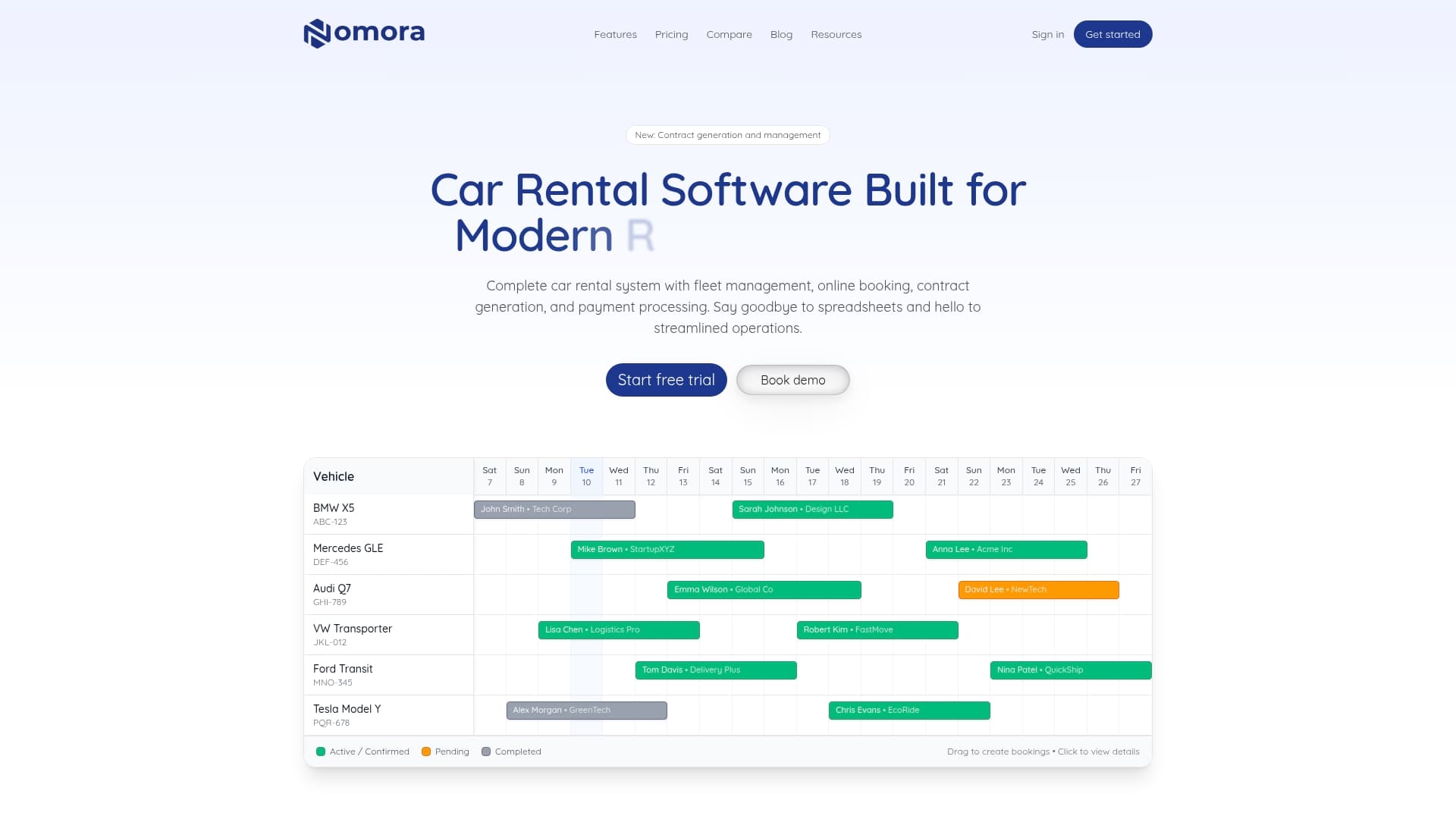
Our platform includes automated maintenance tracking that alerts you when vehicles need service based on mileage and time intervals. Dynamic pricing tools help you maximize revenue during peak periods while keeping rates competitive when demand softens. Digital contracts streamline the rental process, reducing paperwork and speeding up customer handoffs. Real-time availability prevents double bookings across all your reservation channels.
These features directly address the operational challenges your checklist targets. Fleet management software reduces downtime by ensuring maintenance happens on schedule. Automated inspections with photo documentation minimize damage disputes. Integrated payment processing eliminates manual reconciliation errors.
Explore car rental software use cases proven effective for companies like yours. See how our prevent double bookings guide helps rental businesses eliminate one of the most frustrating operational problems. Discover strategies that boost profits through better utilization and smarter pricing.
Frequently asked questions
What should be included in a comprehensive vehicle rental checklist?
A complete checklist covers maintenance tasks like oil changes and tire rotations, pre-rental vehicle inspections with photo documentation, booking management to prevent double reservations, customer service protocols for transparent pricing communication, and damage documentation procedures. Customize these components based on your fleet type, whether you operate standard sedans, electric vehicles, or specialty equipment. Effective checklists reduce downtime, prevent customer conflicts, and optimize revenue by ensuring consistent operational standards across your entire fleet.
How can predictive maintenance reduce rental fleet downtime and costs?
Predictive maintenance uses data from vehicle sensors and usage patterns to schedule service before breakdowns occur. This approach reduces downtime by 30% and cuts maintenance costs by 20% compared to reactive repairs. Instead of waiting for a check engine light, you service vehicles based on actual wear indicators and mileage thresholds. Early detection of issues like worn brake pads or aging batteries prevents roadside breakdowns that frustrate customers and require expensive emergency repairs.
Fleet management software automates maintenance alerts based on mileage and time, ensuring you never miss scheduled service. Digital photo inspections reduce damage disputes by providing timestamped evidence of vehicle condition before and after rentals. AI-powered image analysis can detect scratches and dents automatically, standardizing inspection quality across staff members. Dynamic pricing software balances revenue optimization with customer satisfaction by adjusting rates based on demand while maintaining transparent communication about pricing logic.
How do asset-heavy and software-led rental models impact checklist design?
Asset-heavy models require detailed vehicle maintenance checklists because you own the fleet and bear all depreciation and repair costs directly. Your checklist emphasizes physical condition tracking, service records, and damage management. Software-led models prioritize process automation and booking accuracy since you rely on technology to coordinate vehicles from multiple sources. Your checklist focuses on data integrity, platform synchronization, and customer communication workflows rather than hands-on maintenance tasks.
Recommended