Key Takeaways
| Point | Details |
|---|
| Real time tracking | Software with real time tracking and utilization analytics can deliver up to a 30 percent uplift in fleet utilization. |
| Automated booking management | Automated booking prevents double bookings and synchronizes calendars across channels to speed processing and reduce errors. |
| Integrated payments and contracts | Integrated payment and contract automation streamline operations and improve compliance. |
| Analytics dashboards | Analytics dashboards support better decision making and optimize fleet utilization. |
| Multi location scalability | Multi location support and advanced integrations enable scalable growth across branches and systems. |
How to evaluate essential rental software features
Evaluating rental software requires a structured framework that aligns features with your business objectives. The core criteria should focus on fleet utilization improvement, booking accuracy, customer experience enhancement, operational automation, and scalability potential. These factors directly influence your bottom line and operational efficiency.
Fleet utilization stands as the most critical metric for rental businesses. Fleet utilization averages 70-79%, with peak performers reaching 90-95%. Software that includes real-time tracking and utilization analytics helps you achieve targets of 75-85% and can deliver up to 30% uplift. This improvement translates directly to revenue gains without expanding your fleet.
Booking management features form the operational backbone of your rental business. Software that prevents double bookings, automates calendar management, and provides real-time availability reduces customer frustration and staff workload. The accuracy of your booking system directly impacts customer satisfaction and your ability to maximize vehicle occupancy during peak periods.
Scalability considerations become crucial as your business grows. Multi-branch support, centralized dashboards, and role-based access controls allow you to expand without proportionally increasing administrative overhead. Software with robust integration capabilities connects seamlessly with telematics systems, payment gateways, and accounting platforms, creating a unified operational ecosystem.
Pro Tip: Prioritize software with modular architecture that lets you activate features as your business needs evolve, avoiding the cost of switching platforms later.
When evaluating top 10 car rental software features, focus on those that address your specific pain points. A small single-location operator needs different capabilities than a multi-branch franchise network. Identify your operational bottlenecks first, then match software features to those challenges rather than selecting features based on what sounds impressive.
Top rental software features explained with examples
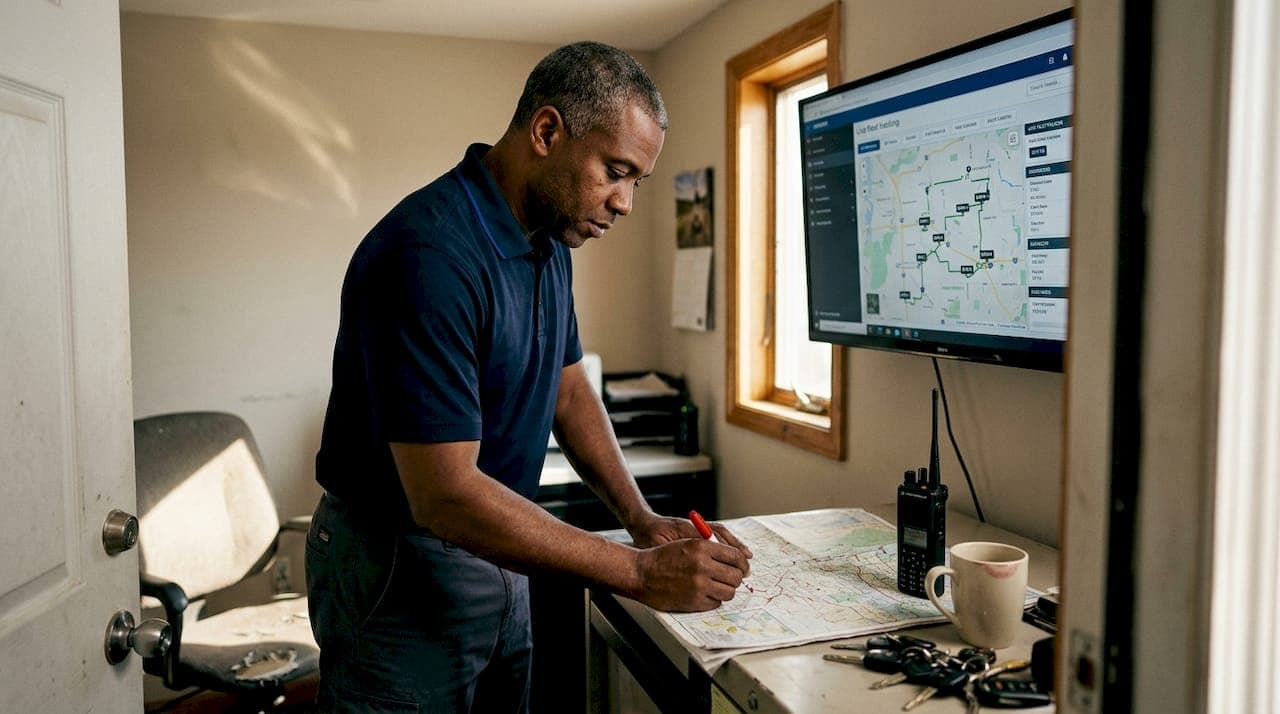
Real-time fleet tracking and GPS integration revolutionize how you manage vehicle availability. Modern software includes real-time fleet tracking, GPS location services, maintenance scheduling, and utilization analytics. These capabilities reduce downtime by immediately identifying available vehicles, tracking maintenance needs before breakdowns occur, and optimizing allocation based on location data. For example, if a customer requests a vehicle near the airport, your system instantly identifies the closest available unit rather than requiring manual phone calls to multiple locations.
Automated booking and reservation systems eliminate the errors that plague manual processes. Automated booking management prevents double-bookings and improves processing speed by 80%. The system maintains a single source of truth for vehicle availability, synchronizes across all booking channels including your website and phone reservations, and automatically updates calendars when rentals are confirmed or modified. This automation means your staff spends less time managing spreadsheets and more time serving customers.
Integrated payment processing supports multiple payment methods while automating invoicing and receipt generation. The software processes credit cards, digital wallets, and bank transfers within a unified interface, automatically generates invoices based on rental agreements, and sends payment reminders for overdue accounts. This integration accelerates cash flow and reduces the administrative burden of manual payment tracking.
Customer management with CRM features enhances your ability to deliver personalized service. The system stores customer preferences, rental history, and communication records, enabling targeted marketing campaigns and loyalty programs. When a repeat customer calls, your staff immediately sees their previous rentals, preferred vehicle types, and any special requirements, creating a seamless experience that builds loyalty.
Contract automation includes e-signatures, customizable templates, legal compliance features, and multi-language support. This capability simplifies the rental agreement process by generating contracts automatically based on booking details, collecting digital signatures on tablets or smartphones, and ensuring all required legal clauses are included. For businesses operating in multiple regions, multi-language support eliminates the need for separate contract versions.
Pro Tip: Implement software with mobile self-service portals that let customers complete paperwork before arrival, reducing check-in time and improving the rental experience.
These features work together to create operational efficiency. When you automate rental bookings car rentals, the system handles reservation management, payment processing, and contract generation as a unified workflow. This integration eliminates data entry errors and ensures information flows seamlessly between systems. Understanding how car rental software boosts profits helps you prioritize features that deliver measurable ROI rather than simply adding complexity.
Comparing rental software features: integrations, analytics, and scalability
Analytics and reporting dashboards provide the visibility needed for informed decision making. Analytics dashboards improve fleet utilization by 25-40%, allowing you to identify patterns and optimize operations. These dashboards display key performance indicators including occupancy rates, revenue per vehicle, maintenance costs, and customer acquisition metrics. Exportable reports support financial planning and investor presentations, while real-time data enables quick responses to changing market conditions.
Advanced integrations connect your rental software with specialized tools that enhance capabilities. Telematics and GPS integrations provide real-time vehicle location, fuel levels, and mileage tracking. API access enables custom integrations with proprietary tools or industry-specific platforms. Payment gateway integrations support multiple processors and currencies for international operations. Accounting software connections automate financial record keeping and tax preparation.
Multi-location and multi-branch support with centralized dashboards and role-based access improves scalability. This capability allows you to manage multiple locations from a single interface while maintaining appropriate access controls. Branch managers see only their location's data, while corporate administrators access consolidated reports across all branches. Inventory synchronization prevents scenarios where one location runs short while another has excess capacity.
| Feature Category | Key Capabilities | Best For | Trade-offs |
|---|
| Analytics Dashboards | KPI tracking, custom reports, data export | Data-driven decision makers | Requires staff training to interpret metrics |
| Advanced Integrations | APIs, telematics, payment gateways | Growing businesses with complex needs | Higher initial setup complexity |
| Multi-location Support | Centralized control, role-based access | Multi-branch operations | More expensive than single-location plans |
| Mobile Access | Customer portals, staff apps | Businesses prioritizing convenience | Dependent on reliable internet connectivity |
When reviewing car rental system integration guide resources, focus on how integrations reduce manual work and improve data accuracy. The best integrations operate invisibly, synchronizing information automatically without requiring staff intervention. This seamless operation becomes increasingly important as your business scales and transaction volume grows.
The ability to optimize car rental fleet examples demonstrates how these advanced features work in practice. Businesses using comprehensive analytics identify underperforming vehicles, adjust pricing strategies based on demand patterns, and make informed decisions about fleet composition. Multi-location support enables load balancing, where vehicles can be temporarily relocated to meet demand spikes in specific markets.
Making the right software choice for your rental business
Choosing software tailored to your business size and operational complexity ensures you invest in capabilities you'll actually use. Small single-location operators need robust core features like booking management and payment processing but may not require sophisticated multi-branch controls. Medium-sized businesses with 2-5 locations benefit from centralized dashboards and role-based access. Large enterprises and franchise networks require advanced API integrations and custom reporting capabilities.
Incorporating dynamic pricing and overbooking models maximizes revenue potential. Dynamic pricing and overbooking models can increase revenues by millions and reduce costs by 35%. These strategies require software that supports flexible pricing rules, demand forecasting, and automated rate adjustments. The system should analyze historical data, competitor pricing, and current availability to suggest optimal rates.
Planning for multi-city operations requires addressing tax variations, regional pricing differences, and inventory synchronization challenges. Overbooking requires probabilistic models and real-time conflict resolution to prevent customer service failures. Your software should handle these edge cases automatically, alerting staff when manual intervention becomes necessary.
Follow these steps to select and implement rental software effectively:
- Document your current operational pain points and prioritize them by impact on revenue or customer satisfaction.
- Request demos from 3-5 software providers and test their solutions with realistic scenarios from your business.
- Verify integration capabilities with your existing tools including accounting software, payment processors, and telematics systems.
- Review the onboarding timeline and training resources to ensure your team can adopt the new system quickly.
- Negotiate contract terms that allow feature upgrades as your business grows without requiring platform migration.
- Plan a phased rollout starting with core features before activating advanced capabilities.
Exploring car rental software use cases helps you understand how different businesses leverage specific features. Case studies reveal implementation strategies, common challenges, and measurable outcomes that inform your decision process.
Modern rental software delivers measurable financial benefits including 25-40% improvements in fleet utilization, 80% faster booking processing, and millions in additional revenue through dynamic pricing. These gains compound over time as your team masters the platform and your customer base grows, making software selection one of the most impactful decisions for rental business profitability and customer satisfaction.
Explore Nomora's car rental software solutions
Ready to transform your rental operations with software built for efficiency? Nomora offers car rental software manage bookings and fleet with comprehensive capabilities designed for growing rental businesses. Our platform includes real-time fleet tracking, maintenance scheduling, and utilization analytics that help you maximize vehicle availability and reduce downtime.
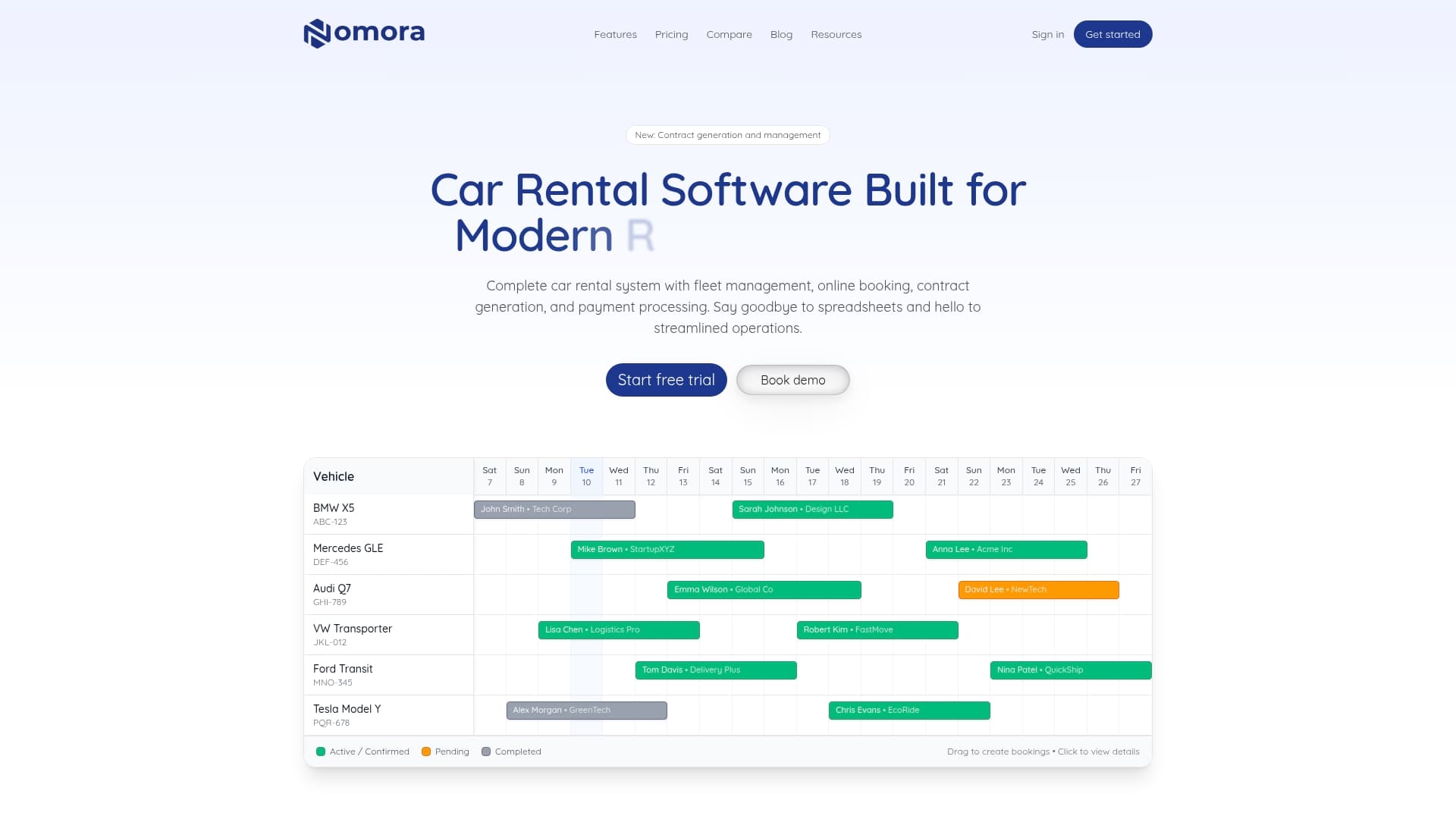
Our automated booking and payment features eliminate double bookings while improving processing speed. The integrated payment system supports multiple methods and generates invoices automatically, accelerating your cash flow. Fleet management software for 50+ vehicles scales with your business, providing centralized control across multiple locations with role-based access for your team.
Car rental contract software streamlines agreement processing with e-signatures, customizable templates, and multi-language support. This automation ensures compliance while reducing paperwork time, letting your staff focus on delivering exceptional customer service. Nomora's cloud-based platform offers 24-48 hour onboarding, GDPR compliance, and extensive integration options to fit your existing workflow.
What are the key software features to look for in a car rental system?
What essential features should rental software include?
Real-time fleet tracking, automated booking management, integrated payment processing, contract automation, analytics dashboards, and multi-location support form the foundation of effective rental software. These features work together to eliminate manual processes, reduce errors, and provide the visibility needed for informed decision making. Mobile access and customer self-service portals enhance convenience for both staff and renters.
How does automated booking prevent operational errors?
Automated booking systems maintain a single source of truth for vehicle availability, preventing double bookings that damage customer relationships. The system synchronizes across all channels including phone, website, and in-person reservations, updating calendars instantly when bookings are confirmed or modified. This automation speeds reservation processing by 80% while eliminating the spreadsheet errors common in manual systems.
Why are analytics dashboards critical for rental businesses?
Analytics dashboards provide real-time visibility into key performance indicators including fleet utilization, revenue per vehicle, occupancy rates, and maintenance costs. This data enables you to identify underperforming vehicles, adjust pricing strategies, and make informed decisions about fleet composition. Exportable reports support financial planning and help you demonstrate ROI to stakeholders.
Do mobile portals improve customer experience?
Mobile and self-service portals significantly enhance customer convenience by allowing renters to complete paperwork before arrival, reducing check-in time. Customers can browse available vehicles, compare prices, sign contracts digitally, and manage their reservations from smartphones. This convenience improves satisfaction scores while reducing staff workload during peak periods.
How important is integration flexibility?
Integration flexibility with telematics systems, payment gateways, and accounting software supports scalability as your business grows. API access enables custom connections with proprietary tools or industry-specific platforms. These integrations eliminate manual data entry, reduce errors, and create a unified operational ecosystem where information flows seamlessly between systems.
How does rental software improve fleet utilization?
What role does real-time tracking play?
Real-time tracking reduces downtime by providing instant visibility into vehicle locations, availability status, and maintenance needs. Fleet utilization improves by 25-40% with analytics and real-time vehicle tracking. The system optimizes allocation by identifying the closest available vehicle for customer requests, eliminating the delays associated with manual phone calls between locations.
How do utilization analytics identify opportunities?
Utilization analytics identify idle vehicles and peak demand periods by analyzing historical rental patterns and current occupancy rates. This insight enables you to adjust pricing dynamically, relocate vehicles between locations to meet demand, and make informed decisions about fleet expansion or reduction. The data reveals which vehicle types generate the highest revenue per day, guiding future purchasing decisions.
Can rental software handle multi-location operations effectively?
Does centralized control improve efficiency?
Yes, leading rental software provides centralized dashboards that display consolidated data across all locations while maintaining role-based permissions for appropriate access control. Multi-location support with centralized dashboards and role-based access enhances scalability. Branch managers access only their location's information, while corporate administrators view company-wide reports and manage system-wide settings from a single interface.
How does multi-branch management streamline operations?
Multi-branch management synchronizes inventory across locations, enabling load balancing where vehicles can be temporarily relocated to meet demand spikes in specific markets. The system tracks vehicle movements between branches, maintains accurate availability across all locations, and prevents scenarios where one branch runs short while another has excess capacity. This coordination maximizes fleet utilization across your entire network.
What role do integrations play in rental software effectiveness?
How do integrations create operational efficiency?
Integrations connect different systems for seamless operations, eliminating manual data entry and reducing errors. When your rental software integrates with accounting platforms, financial transactions automatically sync to your bookbooks. Payment gateway integrations process transactions securely while updating reservation records instantly. These connections create a unified operational ecosystem where information flows automatically between specialized tools.
What integration capabilities matter most?
Advanced integrations include telematics/GPS, payment gateways, APIs, and accounting software support. Telematics provides real-time vehicle location, fuel levels, and mileage tracking. API access enables custom integrations with proprietary tools or industry-specific platforms. Payment gateway integrations support multiple processors and currencies for international operations, while accounting software connections automate financial record keeping.
How does contract automation benefit car rental operations?
What efficiency gains does automation deliver?
Contract automation speeds rental agreement processing and reduces paperwork errors by generating contracts automatically based on booking details. Contract automation includes e-signatures, customizable templates, and multi-language legal compliance. Staff no longer spend time manually filling out forms or photocopying signed agreements. Digital signatures collected on tablets or smartphones eliminate printing costs and storage requirements.
How does multi-language support help?
Multi-language contract support ensures compliance across different regions while accommodating customers' language preferences. The system automatically generates agreements in the appropriate language based on customer selection or location, including all required legal clauses for that jurisdiction. This capability eliminates the need to maintain separate contract versions and reduces the risk of using outdated templates that lack current legal requirements.
Recommended