Toll management for a rental business comes down to three jobs: match every toll and parking ticket to the right rental, bill the renter under terms they agreed to, and keep records that survive a dispute. The hard part is timing. Notices reach you weeks after the car is back, so you need clean rental periods, plate data and card authorization on file before the notice arrives.
This guide walks through how charges reach you, how to assign them, what to disclose, how to bill, and how to reconcile. It also covers parking ticket handling, because the workflow is almost identical.
TL;DR
- Tolls and tickets are issued to the registered owner, which is your company. You identify the renter by matching plate, date and time to your rental records, then pass the charge on under your rental agreement.
- Notices can arrive one to four weeks or more after a rental, so keep a card authorization and accurate pickup and return timestamps on every contract.
- Disclose toll, ticket and processing fees before the renter signs. Some states already require advertised rates to include mandatory charges.
- Reconcile monthly: every toll or citation should end as billed, paid by the renter, or written off with a reason.
- One system holding vehicles, reservations, contracts and payments makes matching faster and cuts wrong-renter charges.
Table of Contents
How tolls and parking tickets reach your company
Most tolling is now cashless. A gantry reads the plate or a transponder, and the bill goes to the registered owner of the vehicle. For a rental fleet, that is you, not the driver.
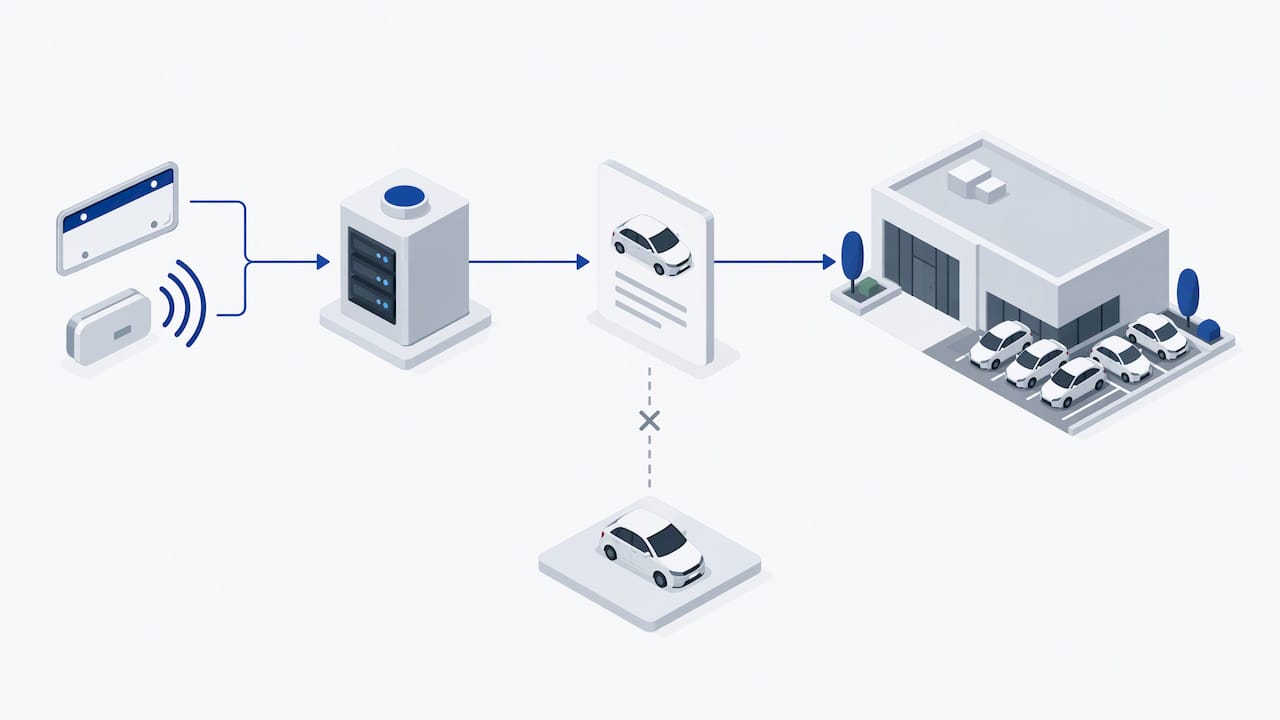
The U.S. Defense Travel Management Office describes the usual sequence: rental companies, as registered owners, receive and pay the violation, identify the driver, then may charge the original payment method and send an amended receipt, a copy of the citation and dispute instructions. A large truck-rental operator describes the same pattern: the registered owner is billed by the toll company and charges the customer under the rental contract addendum.
Three paths bring charges to you:
- Transponder tolls. Tolls post to the account tied to the device in the vehicle. You receive a statement, often in batches.
- Plate-based tolls. Cameras read the plate and a notice or invoice is mailed to the owner, sometimes with a late fee already added.
- Citations. Parking tickets, red-light and speed camera notices arrive by mail or through a municipal portal, addressed to the registered owner.
Camera-based citations never identify the driver. As one rental operator's guide explains, the company uses the date and time stamp on the ticket to work out who had the car. That is why your timestamps matter more than anything else in the process.
Assigning each charge to the right renter
Matching is a lookup with three keys: the vehicle, the timestamp and the location. The notice gives you the plate (or transponder ID), the date and time, and often the gantry or street. Your records must answer: which vehicle had this plate at that moment, and which contract was open?
What you need on every rental record
- Plate and vehicle ID, including any plate swaps when a vehicle is re-registered or a temporary plate is used.
- Exact pickup and return timestamps, with time zone. A toll at 11:40 p.m. on return day is a different case from one at 9:00 a.m.
- Driver and billing details, including additional drivers and a corporate account if the rental is billed to a company.
- Signed rental agreement with the toll, citation and processing-fee clauses. A digital agreement with e-signature keeps the signed copy tied to the booking.
- Card on file with authorization for post-rental charges.
A simple matching routine
- Log the notice the day it arrives, with the notice date, plate, event time and amount.
- Find the vehicle by plate and check which contract was open at the event time.
- Check for edge cases: vehicle moved between branches, rental extended, vehicle in the workshop, or a staff or loaner use.
- If GPS data is available, confirm the vehicle was where the notice says. Disputes often turn on this one check.
- Assign the charge to the contract, or to an internal account if no renter was responsible.
The edge cases cause most wrong-renter charges. A rental extended by phone but not recorded, or a vehicle returned early but closed late, will push a charge onto the wrong person. Keeping extensions and early returns in the system, not in someone's notes, closes that gap. Our guide to late return policy clauses covers how to document those changes.
What to disclose before you charge
Charging for tolls and tickets is routine. Surprising renters with unexplained fees is what triggers chargebacks and complaints. Put three things in writing before pickup:
- How tolls are handled: the transponder or plate-billing program, the toll cost itself, and any per-toll or per-day service fee.
- That the renter is responsible for tickets and violations during the rental period, and that you may charge the card on file after the rental ends.
- The administrative fee for processing a ticket, and how it is calculated.
Rules differ by state and are changing. Iowa's rental code, for example, requires advertised rental rates to include mandatory charges and bars imposing mandatory charges beyond the quoted rate, and treats missing required disclosures as an unfair or deceptive practice. Whether a toll program fee counts as mandatory depends on how it is structured, so have counsel review your wording for each state where you operate.
A 2026 New Jersey bill, S2258, shows where regulation may head. As introduced, it would require written notice of a toll violation to the vehicle owner within 60 days, give 30 days to remedy it, and bar an administrative fee without that process. It would also tie administrative fees to the actual cost of processing and collecting. It is a proposal, not enacted law, but it is a useful design target: fees that reflect real cost, sent with a clear notice and a window to respond.
For the contract language itself, see our overview of rental contract essentials.
Billing the renter: fees, timing and card authorization
There are two common billing models, and many operators combine them.
| Model | How it works | Best for |
|---|
| Pass-through billing | Actual tolls and tickets are billed to the renter after the notice arrives, plus a stated admin fee | Operators who want to charge exactly what was incurred |
| Flat daily toll program | The renter pays a set daily rate on days they use tolls, or a fixed rate for the rental | Operators who want predictable pricing and fewer post-rental charges |
Admin fees vary widely. One large operator lists a $30 administrative fee for tickets and $1 for each toll charge, and reduces the ticket fee to $15 if the customer pays within seven days. Treat those figures as one example of structure, not a benchmark. Set your own fees based on what handling a notice actually costs you, and state them in the agreement.
Authorization and timing
Post-rental charges depend on one thing: the renter agreed to them. Large operators state that the agreement authorizes charging the card on file, and a national toll program notes that tolls and fees are charged to the card once data arrives, which can take about 4 to 6 weeks. Renters without a card on file are invoiced instead.
When you charge, send the renter a clear itemized message:
- The toll or ticket date, time and location
- The amount from the agency, and your admin fee shown as a separate line
- A copy of the notice or citation
- How to pay the agency directly or dispute the charge
The Defense Travel Management Office's guidance lists the same package: an amended receipt, citation copy and dispute instructions. For business renters, it also helps to route these charges to the right account. Our corporate billing checklist explains how.
Late notices and charges after the rental ends
Expect delays. Government and toll agencies commonly take one to four weeks to pass on information, and sometimes longer. The Defense Travel Management Office also notes that violations can appear after the rental ends, and that the rental agreement authorizes retroactive charging for fines, toll violations and administrative fees.
That makes late notices a records problem, not a customer service problem. A good policy has four parts:
- A stated charge window. Tell renters in the agreement how long after return you may bill, and stick to it.
- Fast action on arrival. Match and bill within days of receiving the notice. Old, unexplained charges generate disputes.
- A paper trail. Keep the agency notice, the contract, the timestamps and your message to the renter together.
- A dispute path. If the renter says they were not driving, or the vehicle was elsewhere, check the contract dates and GPS log before you answer.
If a renter pays the agency directly, record it and remove the charge from their balance so they are not billed twice. Our guide to damage disputes at return shows the same evidence-first approach for another common disagreement.
Reconciling tolls and citations
Reconciliation tells you whether the process works. At month end, every notice you received should be in one of four states:
- Billed to a renter and collected
- Billed and outstanding, with an age
- Paid by the renter directly to the agency
- Written off or absorbed, with a reason (no matching contract, internal vehicle use, fee waived)
Compare the total of agency statements to the total you billed. A gap points to missed notices, unmatched plates or charges never sent. Trade press describes why this is harder than it sounds: no single system holds everything needed to verify a toll. Toll records sit with agencies, GPS data with the telematics provider, and vehicle and rental records with you. Manual review rarely catches the patterns behind repeat errors.
Track a few numbers each month:
- Notices received versus notices billed
- Average days from notice to billing
- Share of charges disputed, and share upheld
- Unmatched notices and their causes (plate swaps, extensions, missing contract)
If a plate keeps showing up unmatched, fix the underlying record. Our payment reconciliation process shows how to fold these charges into your regular close.
Parking ticket handling in practice
Parking tickets follow the toll workflow with two differences. First, the issuing city or county usually sets a payment deadline and a penalty schedule, so the clock starts when the ticket is issued, not when you find it. Second, the renter can often pay or contest directly with the issuing jurisdiction, which is cheaper for everyone when they do it quickly.
A workable approach:
- Log the ticket and its deadline the day it arrives.
- Match it to a contract using plate and time.
- Send the renter the ticket copy and payment instructions straight away.
- If the renter does not pay before the deadline, pay the agency yourself to avoid penalties, then bill the renter plus your stated admin fee under the agreement.
- Record the outcome so the ticket closes in reconciliation.
Paying early and recovering from the card on file usually costs less than letting penalties accrue. Check each jurisdiction's own rules and deadlines, since they differ by city and state.
Our perspective
We build rental software, and we see the same pattern in operators who struggle with tolls: the data exists, but it lives in different places. The contract is in one tool, the vehicle list in a spreadsheet, payments in a third system, and the notice in an email inbox.
We think of rental software as the central nervous system of the operation. When reservations, fleet records, contracts, customer data and payments sit in one platform, matching a charge to a renter becomes a lookup rather than an investigation. Conflict-free bookings mean fewer overlapping or ambiguous rental periods, and that is where wrong-renter charges start.
Our approach is to keep the foundations tidy so any charge can be traced: accurate vehicle assignment, clear contracts, stored payment details and real-time fleet visibility, including GPS tracking. Every Nomora plan includes all features, so a small operator gets the same tools as a large one.
Dizzy
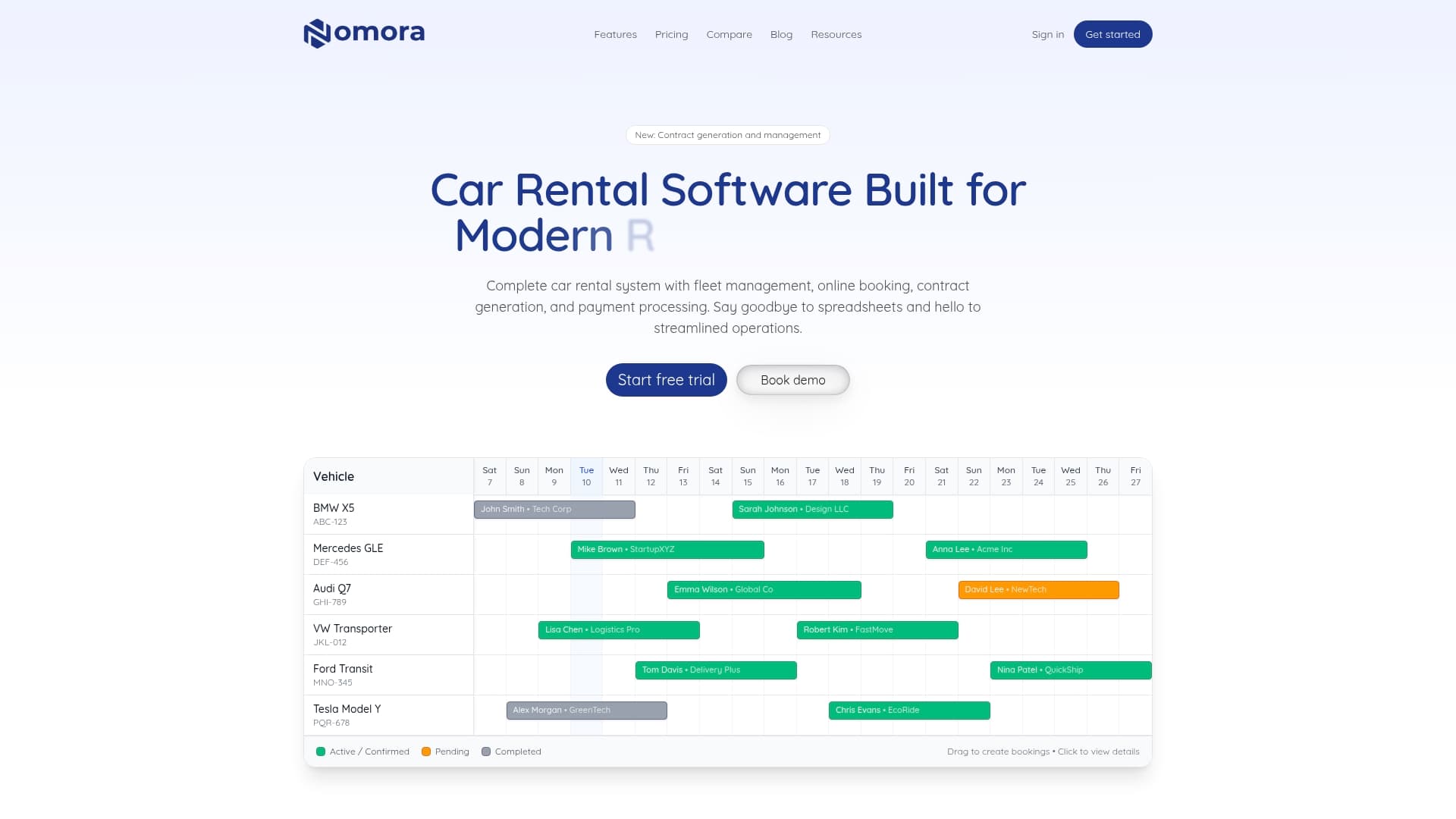
A toll and ticket process only works if your rental records are accurate. Nomora brings reservations, fleet management with GPS tracking, automated contracts, customer data and automated rental payments into one cloud platform, so the pieces you need to match and bill a charge are in the same place. Onboarding is designed to get you operational in 24 to 48 hours.
Plans are published on the pricing page: Starter is €45 per month, Business is €2.80 per vehicle per month, and Fleet is €2.20 per vehicle per month. Enterprise is available with custom pricing. If you want to see how the platform fits your type of operation, read the all-in-one car rental software overview.
For a wider view of the vocabulary your team will meet along the way, our rental industry terms guide is a useful companion. If you operate in Canada or Australia, our guide to importing toll data from Linkt and 407 ETR covers how toll charges are brought into rentals there.
FAQ
Who is responsible for a toll or parking ticket on a rental car?
The notice goes to the registered owner, which is the rental company. The company identifies the renter from the rental dates and times, then passes on the charge under the rental agreement. That is why the agreement must clearly assign responsibility for tolls, tickets and fees to the renter.
How long after a rental can I charge for a toll?
It depends on when the agency's notice arrives, which can be one to four weeks or longer. State your charge window in the agreement and bill promptly once the notice is matched. Ask counsel about any state-specific limits where you operate.
Can I charge an administrative fee for handling tickets and tolls?
Many operators do, and the fee should be disclosed before the renter signs. Some state laws restrict undisclosed mandatory charges, and proposals such as New Jersey's S2258 would tie fees to actual processing cost. Set a fee that reflects your real handling cost and write it into the agreement.
What records should I keep for a disputed charge?
Keep the agency notice, the signed rental agreement, pickup and return timestamps, the plate and vehicle record, GPS location data if you have it, and your message to the renter. This is the same package public guidance says renters should receive: the citation copy, an amended receipt and dispute instructions.
What if the renter has no card on file?
Issue an invoice for the toll or ticket and its fee, with the supporting notice attached. Collecting card details and authorization at booking avoids this problem and is the simplest way to speed up post-rental billing.
Sources
Recommended
Ready to streamline your car rental business?
Book 30 minutes with the founder. We set up everything in this guide on your own vehicles, and migrate you out of Excel for free.