TL;DR:
- Rental insurance protects tenants, landlords, and vehicle renters from property damage, liability, and vehicle risks. Choosing the right policy depends on your role and specific needs, with coverage options varying in scope and cost. Many policies overlap, so verifying existing coverage helps avoid paying for unnecessary add-ons.
Rental insurance is defined as a policy that protects against financial loss from property damage, liability claims, or vehicle-related risks during a rental period. The types of rental insurance options available split into three distinct categories: renters insurance for tenants, landlord insurance for property owners, and vehicle rental insurance for drivers and fleet operators. Each category serves a different risk profile, and choosing the wrong one leaves real gaps in your protection. This guide breaks down every major coverage type so you can match the right policy to your situation.
1. What types of renters insurance cover personal property and liability?
Standard renters insurance includes three core components: personal property coverage, liability coverage, and loss of use coverage. Each component addresses a different financial risk that tenants face.

Personal property coverage pays to repair or replace your belongings if they are stolen, damaged by fire, or destroyed by a covered event. The key distinction here is whether your policy uses a named perils or an all-risk structure. Named perils policies cover only the specific events listed in the contract, such as fire, theft, or windstorm. All-risk policies cover every cause of loss except those explicitly excluded, giving you broader protection by default.
Liability coverage protects you if a guest is injured in your rental unit or if you accidentally damage someone else's property. Liability coverage can pay court judgments and legal expenses up to policy limits, which often start at $100,000. That protection matters more than most renters realize until they face a lawsuit.
Loss of use coverage pays for temporary housing and extra living expenses if your rental unit becomes uninhabitable after a covered event. Think of it as a financial buffer that keeps a burst pipe from turning into a hotel bill crisis.
Renters insurance costs between $15 and $30 per month for a standard policy. That price point makes it one of the most affordable insurance options available to individuals.
Pro Tip: Most standard policies reimburse based on actual cash value, meaning depreciation reduces your payout. Add replacement cost coverage to your policy so you receive the full cost of replacing an item at today's prices, not what it was worth after three years of wear.
2. What are the main landlord rental property insurance types?
Landlord insurance and renters insurance protect entirely different parties. Landlord insurance covers the building owner's assets, liability exposure, and lost rental income. Renters insurance covers the tenant's personal belongings and personal liability. A landlord's policy does nothing for a tenant's laptop or clothing, and a renter's policy does nothing for the building structure.
There are three standard landlord policy forms: DP-1, DP-2, and DP-3.
| Policy Form | Coverage Type | Best For |
|---|
| DP-1 (Basic) | Named perils only; limited events covered | Vacant or low-value properties |
| DP-2 (Broad) | Broader named perils; more events included | Single-family rentals with moderate risk |
| DP-3 (Special) | Open perils on structure; named perils on contents | Most occupied rental properties |
DP-1 is the most basic form and covers only a short list of named perils. It typically pays actual cash value, not replacement cost. DP-2 expands that list significantly and suits most single-family rental homes. DP-3 is the most complete form, covering the building structure on an open-perils basis. That means everything is covered unless the policy specifically excludes it.
Landlord policies also cover lost rental income when a covered event forces tenants to vacate. That feature protects cash flow during repairs, which is critical for property owners who depend on monthly rent to cover their mortgage.
The scale of this market is significant. About 19.3 million rental properties nationwide require landlord insurance coverage. That figure reflects how many property owners carry real financial exposure without the right policy in place.
3. What are the common rental car insurance options and coverages?
Vehicle rental insurance is its own category with four primary coverage types. Each one addresses a specific risk that comes with driving a car you do not own.
- Collision Damage Waiver (CDW) / Loss Damage Waiver (LDW): This is not technically insurance. It is a waiver that releases you from financial responsibility if the rental vehicle is damaged or stolen. CDW/LDW is the most commonly purchased add-on at the rental counter.
- Liability coverage: This pays for damage or injuries you cause to other people or their property while driving the rental. Many states require a minimum level of liability coverage, but rental company minimums are often low.
- Personal accident insurance: This covers medical costs for you and your passengers if you are injured in an accident with the rental vehicle.
- Personal effects coverage: This reimburses you for personal belongings stolen from the rental car. Your renters insurance or homeowners policy may already cover this, so check before paying twice.
Rental car insurance options from the rental counter can overlap significantly with coverage you already carry. Many personal auto insurance policies extend to rental vehicles, and some credit cards provide primary or secondary CDW coverage as a cardholder benefit.
Pro Tip: Verify your existing coverage before accepting any waiver at the rental counter. Call your auto insurer and check your credit card benefits. Paying for duplicate coverage is one of the most common and avoidable rental car mistakes.
For rental businesses managing fleets, understanding how vehicle inspection practices interact with insurance claims is equally important. A documented pre-rental inspection protects both the business and the customer when damage disputes arise.
4. How to choose the best rental insurance type for your situation
Selecting the right coverage depends on your role in the rental transaction and the specific risks you face. The table below maps common scenarios to the most appropriate insurance type.
| Scenario | Recommended Coverage | Key Priority |
|---|
| Renting an apartment | Renters insurance (DP personal lines) | Personal property and liability |
| Owning a rental property | Landlord insurance DP-2 or DP-3 | Building, liability, lost income |
| Renting a car occasionally | CDW/LDW plus liability verification | Damage waiver and liability gap |
| Operating a rental fleet | Commercial auto plus liability endorsements | Fleet protection and business liability |
For individual renters, the first priority is liability coverage. Most renters underestimate how quickly a guest injury claim can exceed their savings. A policy with at least $100,000 in liability protection is a reasonable starting point.
For landlords, the choice between DP-2 and DP-3 comes down to risk tolerance and property value. DP-3 costs more but removes the guesswork about whether a specific event is covered. For occupied properties with paying tenants, DP-3 is the stronger choice.
For vehicle renters, the decision is about avoiding gaps rather than buying everything on offer. Check your personal auto policy, review your credit card benefits, and only purchase what you do not already have. Businesses operating rental fleets need commercial auto policies, not personal lines coverage. Standard personal policies exclude vehicles used for commercial rental purposes.
One area that catches both individuals and businesses off guard: standard renters insurance excludes business property. If you run a business from your rental unit and keep equipment there, a separate business endorsement or commercial policy is required to cover those assets.
Rental businesses can also reduce liability exposure through documented security and risk management practices that work alongside insurance coverage.
Key takeaways
The most effective rental insurance strategy matches each coverage type to a specific risk, whether that is personal property, building structure, vehicle damage, or liability.
| Point | Details |
|---|
| Three distinct categories | Renters, landlord, and vehicle rental insurance each protect a different party and risk. |
| DP-3 offers the broadest landlord protection | Open-perils structure covers all events except explicit exclusions, reducing coverage gaps. |
| Verify existing coverage first | Personal auto policies and credit cards often duplicate rental car add-ons at the counter. |
| Replacement cost beats actual cash value | Adding replacement cost coverage prevents depreciation from reducing your payout after a loss. |
| Business property needs separate coverage | Standard renters insurance excludes business equipment; a commercial endorsement fills that gap. |
The coverage detail that most people skip
People spend time comparing monthly premiums and almost no time reading what the policy actually covers. That is the wrong order of operations.
The named perils versus all-risk distinction is the single most important factor in a renters or landlord policy, and most buyers never ask about it. A named perils policy sounds complete until the specific event that damages your property is not on the list. I have seen renters lose thousands of dollars on claims that a slightly broader policy would have paid in full.
Liability coverage deserves more attention than it gets. Most renters think of their policy as protection for their stuff. The liability component is often worth more. A single slip-and-fall lawsuit from a guest can exceed the value of every item you own. Paying an extra few dollars per month for higher liability limits is one of the clearest value trades in personal insurance.
For businesses operating rental fleets, the gap between personal and commercial coverage is where the real risk lives. A personal auto policy will not cover a vehicle being rented out commercially. That is not a technicality. It is a complete denial of coverage when you need it most. Getting the right commercial policy in place before the first rental goes out is not optional.
— Dizzy
How Nomora supports rental businesses beyond insurance
Insurance protects your assets after something goes wrong. Nomora helps you manage the operations that reduce how often things go wrong in the first place.
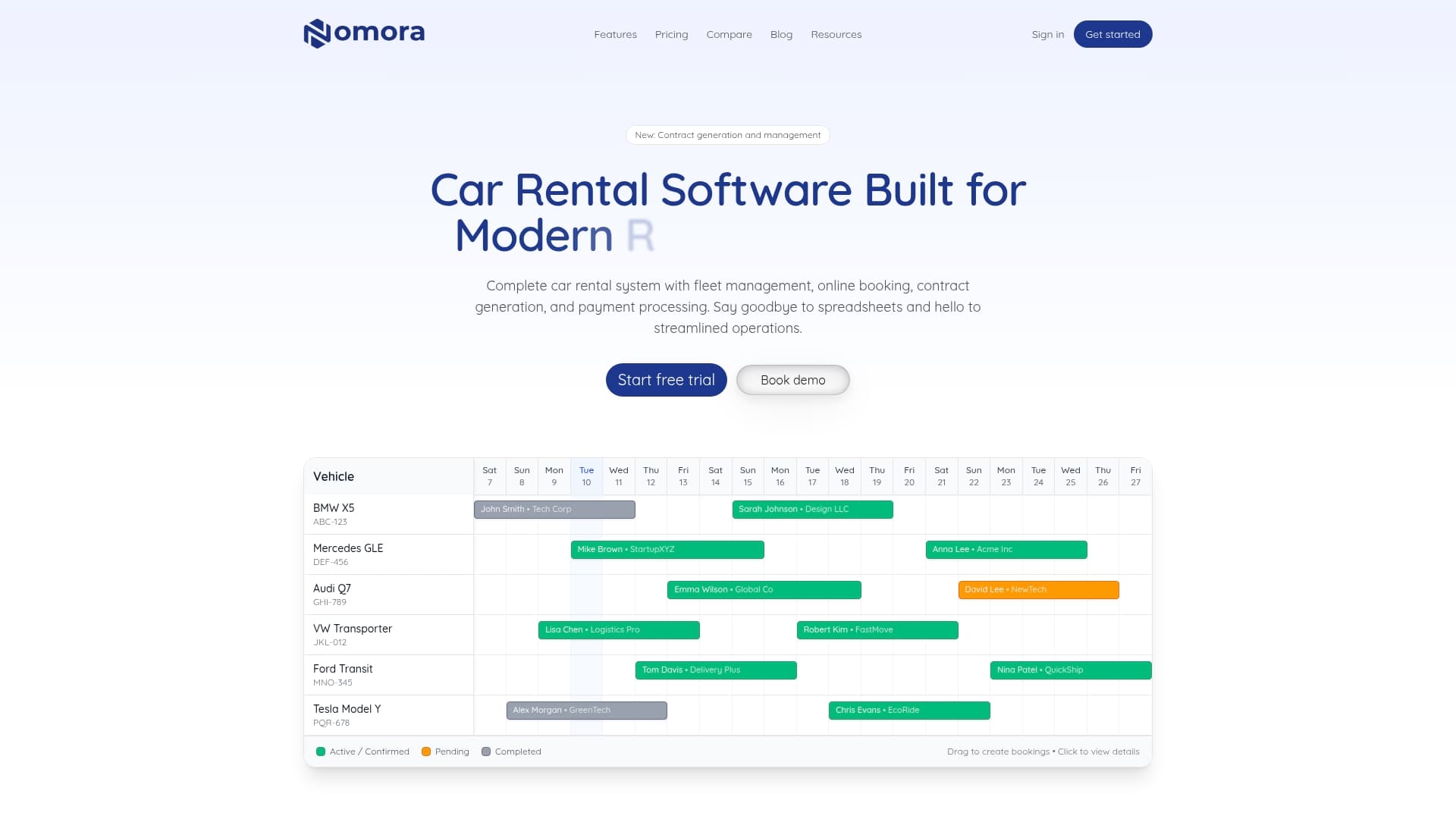
Nomora is a cloud-based car rental management platform built for rental businesses of all sizes. It handles reservations, fleet tracking, contract generation, and automated payment processing in one integrated system. When a damage dispute arises, having timestamped inspection records and signed digital contracts in Nomora gives you the documentation your insurer needs. Explore Nomora's use cases by business type to see how the platform fits your operation and supports the risk management practices that work alongside your insurance coverage.
FAQ
What is rental insurance?
Rental insurance is a policy that protects against financial loss from property damage, liability claims, or vehicle risks during a rental period. It applies to both residential tenants and vehicle renters, with different policy types for each situation.
What is the difference between renters insurance and landlord insurance?
Renters insurance covers a tenant's personal belongings and personal liability. Landlord insurance covers the building structure, property damage, and lost rental income for the property owner.
Do I need rental car insurance if I have personal auto insurance?
Many personal auto policies extend coverage to rental vehicles, so you may already be protected. Confirm your existing limits with your insurer before purchasing add-ons at the rental counter to avoid paying for duplicate coverage.
What does a DP-3 landlord policy cover?
A DP-3 policy covers the building structure on an open-perils basis, meaning all causes of loss are covered except those explicitly excluded. It is the broadest standard landlord insurance form and suits most occupied rental properties.
Does renters insurance cover business equipment?
Standard renters insurance excludes business property used in a rental unit. A separate business endorsement or commercial policy is required to cover equipment, inventory, or other business assets kept at a residential address.
Recommended
Ready to streamline your car rental business?
Book 30 minutes with the founder. We set up everything in this guide on your own vehicles, and migrate you out of Excel for free.