Managing car rental reservations, fleet tracking, and payments across multiple tools leads to missed bookings and slow reconciliation. Most platforms gate essential features behind plan upgrades and do not publish transparent per vehicle pricing for scaling fleets. This comparison covers pricing, feature access, and integration options so operators can select a software that matches reservation, fleet, and payment needs without unpredictable costs.
toprent.app alternatives11 min read•
Top 3 TopRent.app Software Alternatives 2026
Explore 3 toprent.app alternatives to help you choose the best car rental management software for your business needs.
N
Nomora Team
Car Rental Software Experts

Nomora
At a Glance
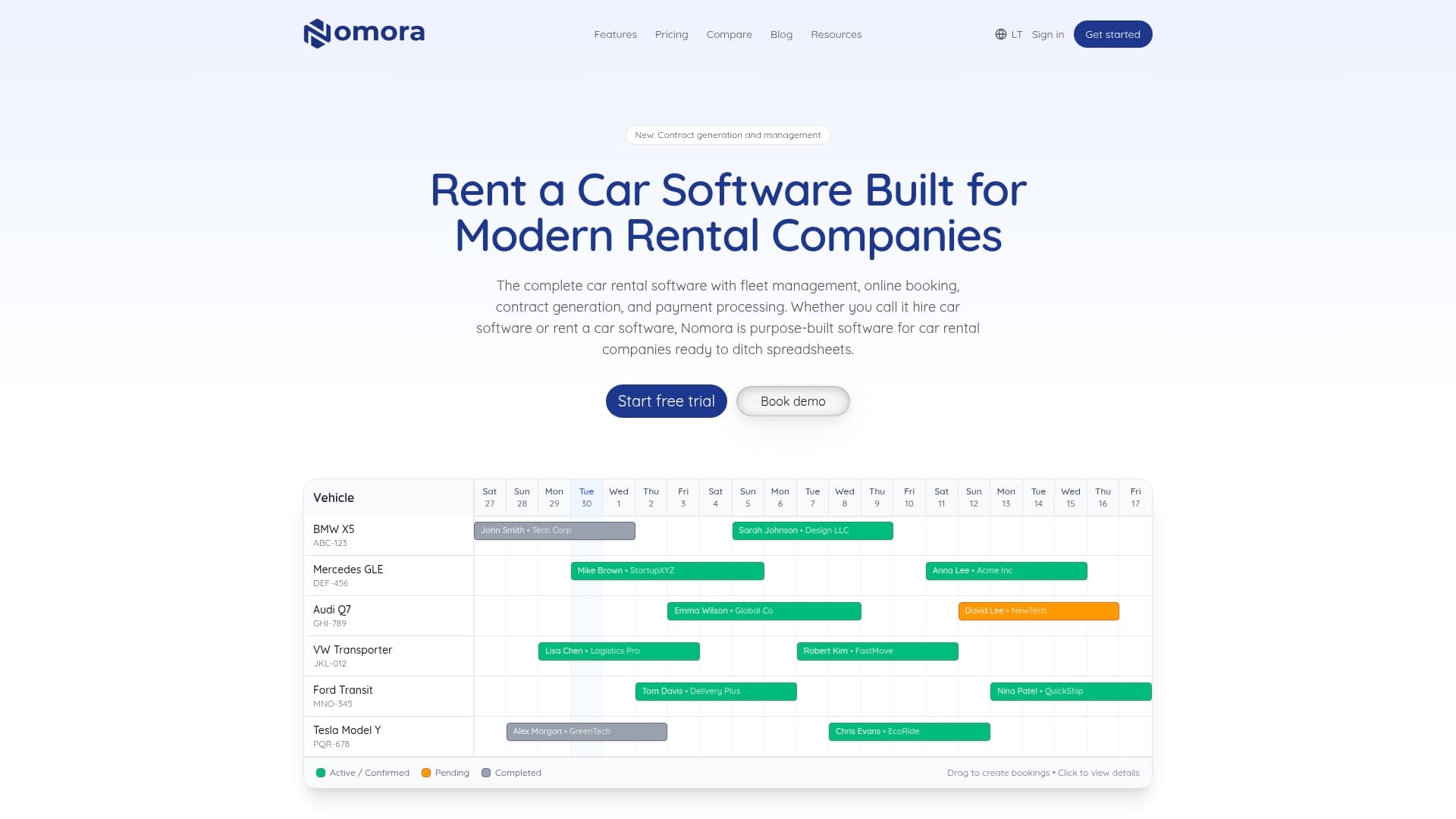
Nomora's marketing materials state automation reduces admin time by over 20 hours weekly. The platform claims conflict free bookings and real time visibility into fleet location and availability. It also advertises fast onboarding and tiered per vehicle pricing for predictable costs.
Core Features
Nomora combines an online booking portal with white label customization, customer relationship records, and automated email notifications for reservations and payments. The system includes fleet management tools for maintenance scheduling and vehicle tracking, plus contract generation with electronic signatures and mobile access for managers. GPS integration links vehicle telematics to reservations and reporting, and analytics track utilization, revenue, and performance.
Key Differentiator
Nomora keeps every feature available in every plan with no feature gating and transparent fees. That approach removes surprise upgrades and keeps the same feature set as fleets grow. Pairing universal access with automation supports the vendor's claim about cutting weekly admin time.
Pros
Transparent pricing makes budget forecasts straightforward, and the vendor advertises a 14-day free trial with no credit card required so teams can test the full platform. All plans include the same features, which avoids juggling multiple tiers when adding locations or vehicles. Mobile access, built in analytics, and GPS telematics let managers monitor utilization and maintenance from a single dashboard. According to the company, setup completes in 24–48 hours, which helps operations move off spreadsheets quickly.
Cons
- Website currently inaccessible, which limits access to detailed product documentation and slows evaluation.
Notable Integrations
- Stripe for payment processing and card handling.
- Montonio for bank transfers in the Baltic region.
- Native GPS connection for vehicle telematics and real time tracking.
Who It's For
Nomora suits vehicle rental businesses that want a single system for reservations, fleet upkeep, contracts, and payments. It fits small operators replacing spreadsheets and multi location companies managing dozens of vehicles. Corporate fleet managers and specialty rental providers will find the telematics and reporting features useful.
Unique Value Proposition
Starting price of €45/month for 1–10 vehicles gives operators a predictable entry cost while all features remain available. That pricing model lets you forecast per vehicle costs as the fleet grows and keeps administration tools consistent across plans. For teams that bill or report per vehicle, the per vehicle tiers simplify budgeting.
Real World Use Case
A mid sized rental company running 50 vehicles across three locations moves bookings from spreadsheets into Nomora. The company automates contract generation with electronic signatures, routes payments through Stripe, and monitors vehicles with integrated GPS. Reporting highlights low utilization windows and helps adjust pricing and maintenance schedules.
Pricing
Pricing starts at €45/month for 1–10 vehicles. Per vehicle tiers follow at €2.80/vehicle/month for 11–50 vehicles and €2.20/vehicle/month for 51–200 vehicles, with custom pricing for fleets above 200. All plans include every feature and the 14 day trial.
Website: https://nomora.io
RentSyst
At a Glance
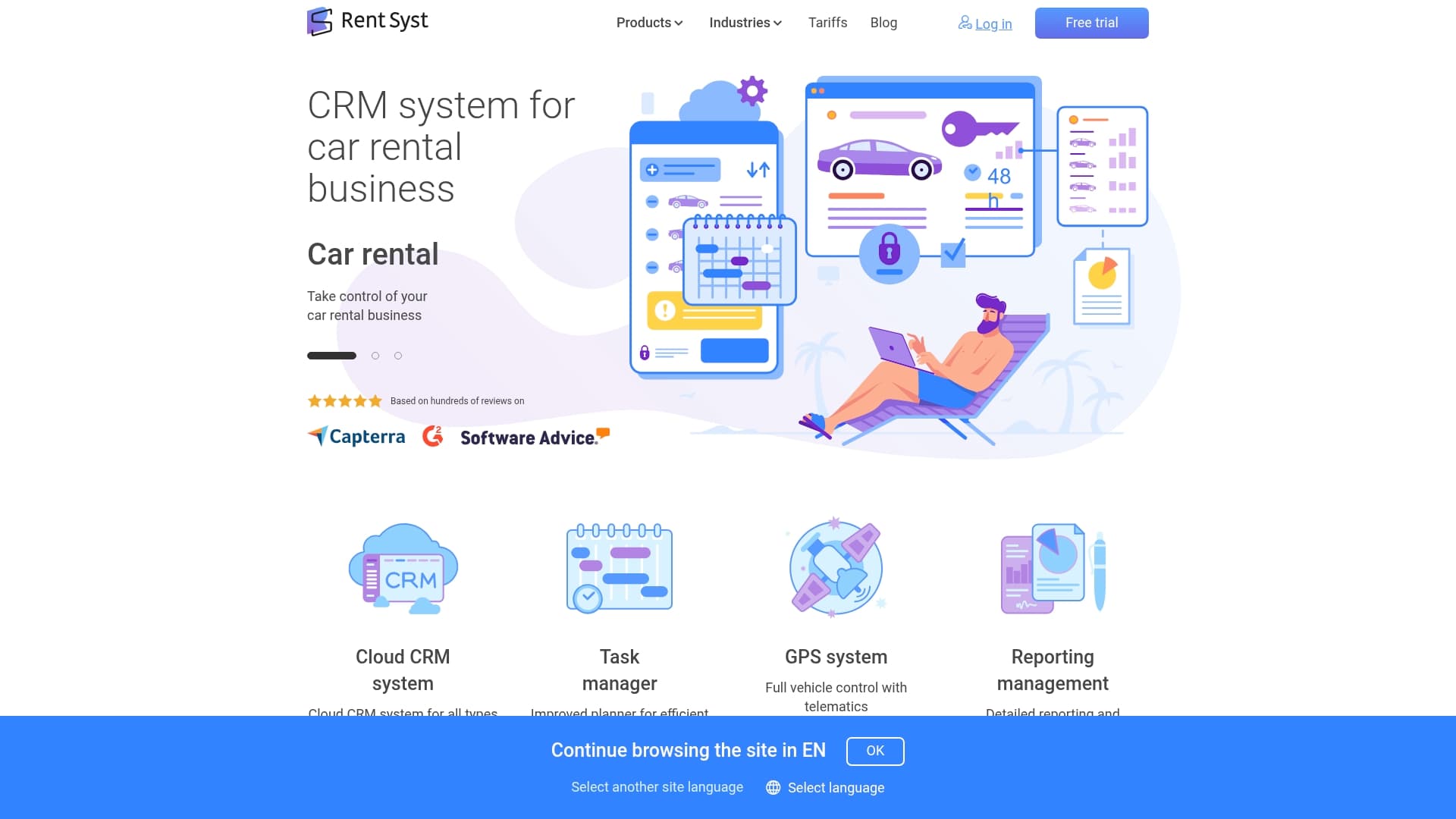
RentSyst supports fleet management across cars, heavy machinery, trucks, RVs, and boats. The system includes real time GPS and worldwide remote access from any device. That combination lets operators monitor location and status while handling reservations and billing from one cloud CRM.
Core Features
RentSyst combines a Cloud CRM system with real time GPS and telematics tracking to manage vehicles and customers. It offers online reservation widgets for website integration and fleet management for multiple vehicle types. The platform also adds a task manager to assign maintenance and operational workflows.
Key Differentiator
The product emphasizes deep third party connectivity and live vehicle tracking tailored to rental operations. That focus makes it easier to match reservation data with telemetry and maintenance schedules. For fleets that need location accuracy and external booking channels, this is the primary selling point.
Pros
Highly flexible configuration options let companies adapt workflows for rental, leasing, and sharing businesses. The interface stays approachable for staff, reducing training time for new hires. Remote access and automated functions such as GPS vehicle tracking and maintenance reminders improve control over uptime and utilization. Integrations with payment and accounting platforms simplify reconciliation across channels.
Cons
- Setup and heavy custom configuration can be complex and may require technical support from the vendor or a partner.
- Third party integrations often need configuration work, which adds time to initial deployment. This is especially true for nonstandard broker or accounting setups.
- The pricing model is listed on the website, but detailed line by line costs are not publicly shown, which complicates budgeting.
When It May Not Fit
Companies without reliable internet should not plan core operations on RentSyst since it runs from the cloud. If an operator lacks internal IT resources, expect to engage technical support for integrations and custom flows. Small teams seeking a plug and play solution with fixed public pricing may find the setup overhead burdensome.
Notable Integrations
- Stripe
- PayPal
- QuickBooks
- Zoho
- Xero
- Authorize.Net
- Rentalcars
- Booking.com
Who It's For
The product fits car rental, leasing, and fleet management companies that need a single system for reservations, tracking, and operations. It also suits operators who sell through online brokers and want those bookings reconciled automatically. Larger fleets that run mixed vehicle types will benefit most from the platform features.
Real World Use Case
A vehicle rental company deploys RentSyst to manage a 150 vehicle fleet across city and out of town branches. They add GPS tracking to monitor returns and assign maintenance tasks when mileage hits thresholds. Online reservations from the company website and broker channels flow into the same reservation ledger for unified reporting.
Pricing
Tariffs are listed on the RentSyst website, but the vendor does not publish detailed plan rates in the product summary. Contact the vendor for tailored quotes and configuration cost estimates.
Website: https://rentsyst.com
HQ Rental Software
At a Glance
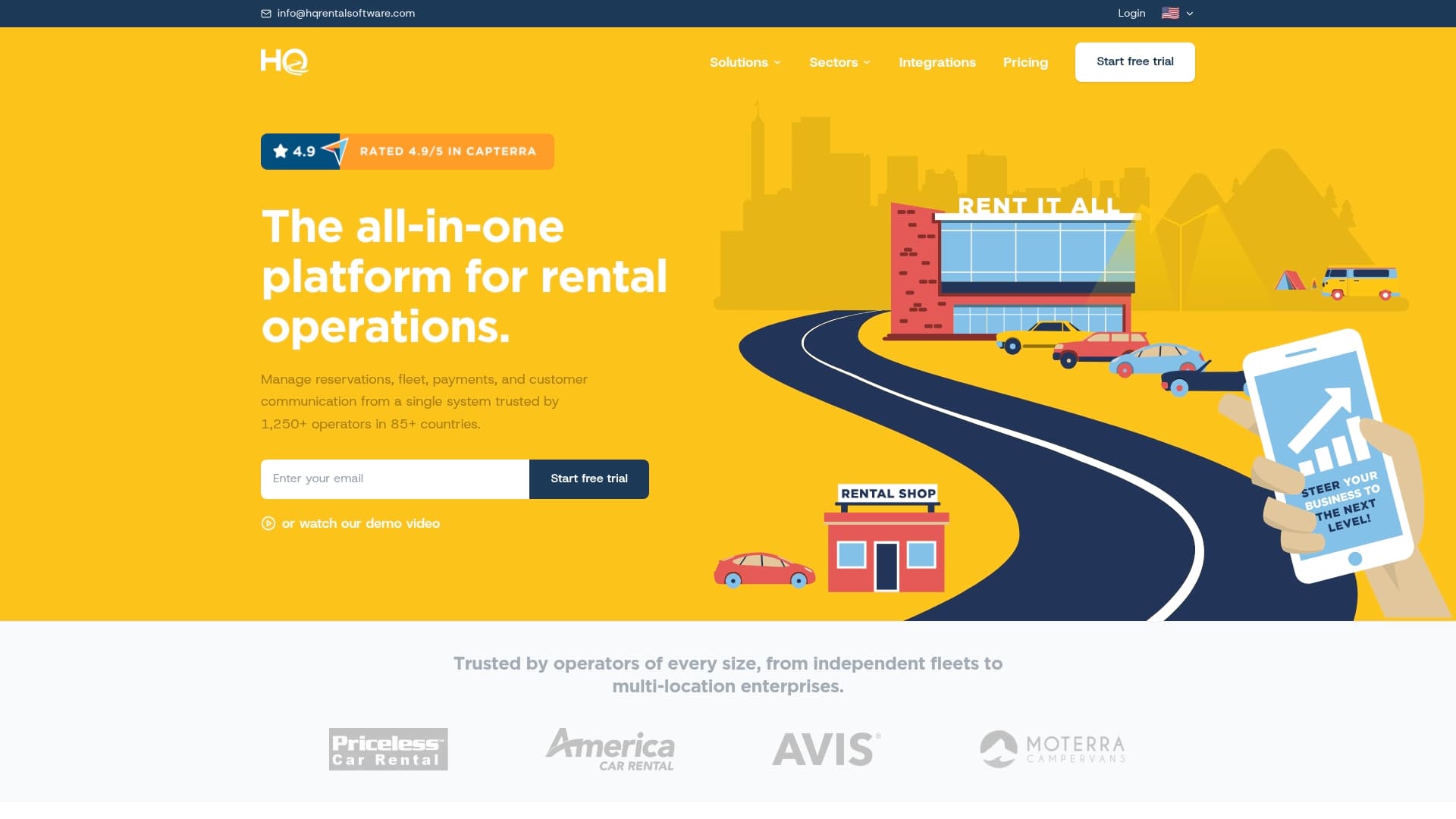
HQ Rental Software reports more than 1,250 operators across 85+ countries. That reach reflects a product built to handle different rental markets from cars to boats and equipment. The platform emphasizes configurability, with documented APIs and a knowledge base to support custom workflows. This positioning makes it a fit for businesses that need an adaptable core system.
Core Features
The system combines online reservations and payments, fleet management and real-time tracking, and digital rental agreements with e-signatures in one platform. It supports channel and multi-location management while letting you handle cars, bikes, boats, and equipment under the same account. API documentation and onboarding resources help integrate telematics, accounting, and web storefronts.
Key Differentiator
The principal strength is broad customization paired with a large integrations catalog. That combination lets operators map HQ Rental Software to existing accounting systems, payment gateways, and telematics providers. The platform targets businesses that need tailored workflows rather than an out-of-the-box minimal setup.
Pros
The product is highly flexible and adapts to different rental markets, which helps mixed-fleet operators run cars, bikes, and equipment from one system. Guided onboarding and quick setup reduce initial friction for teams that allocate implementation time. A wide integration set covers payments, accounting, and telematics, giving you a chance to connect existing tools to a single rental management core.
Cons
-
Customer support and the depth of features appear to favor users willing to invest time in setup. This can frustrate teams seeking a very simple interface.
-
Smaller operators without dedicated IT staff may face configuration overhead during initial deployment. That complexity can slow adoption for very small shops.
-
Pricing scales with fleet size and selected features, so larger operations should expect to discuss custom quotes with sales.
When It May Not Fit
If you operate a tiny, single-location fleet and need a minimal, plug-and-play booking page, the platform may feel heavy. The configuration and customization options assume either internal technical resources or a longer onboarding period. If absolute price predictability matters, the variable pricing tied to fleet size could be a drawback.
Notable Integrations
HQ Rental Software lists integrations across accounting, payments, and web platforms that support bookkeeping and customer payments. Notable partners include:
- Xero
- QuickBooks
- Stripe
- PayPal
- Google Analytics
- WordPress
- Squarespace
- Mercado Pago
Who It's For
This product fits rental businesses that require an integrated, customizable management system and operate multiple vehicle types or locations. It suits regional chains, specialty rental shops with mixed fleets, and enterprises that need API access to tie telematics and accounting into operations. Small teams that can commit time to configuration will get the most value.
Real World Use Case
A regional car rental company uses HQ Rental Software to manage several branches, automate online bookings, and centralize fleet maintenance records. The company issues digital contracts, accepts online payments through Stripe or PayPal, and monitors vehicle health via telematics integrations. That setup reduced manual reconciliation and concentrated bookings into a single dashboard.
Pricing
Tiered plans start at $120/month for small fleets, with higher tiers and enterprise options available for larger operations. Pricing depends on fleet size and selected modules, so larger customers typically receive custom quotes from sales.
Website: https://hqrentalsoftware.com
The 42-Point Car Rental Operations Checklist
The exact checks profitable rental operators run every week — free, straight to your inbox.
- Fleet readiness & handover
- Bookings & no-show prevention
- Pricing & revenue reviews
- Contracts & compliance
- Payments & invoicing
- Maintenance & fleet health
One email with the checklist. No spam, unsubscribe anytime.
Comparison of alternatives
Choosing the right car rental management software involves understanding the balance between simplicity and configurability offered by the available platforms. Each product delivers unique advantages catering to different operational models, providing options to match diverse business requirements.
Flexibility and customization
Among the alternatives, RentSyst shines in flexibility and its broad support for various vehicle types, from cars and vans to heavy machinery and boats. This makes RentSyst particularly compelling for operators managing highly varied or complex fleet compositions. Furthermore, advanced integrations with third-party platforms, such as booking channels and payment gateways, provide great extensibility. However, this flexibility comes at the cost of potentially higher complexity during initial configuration and may require external technical support.
Pricing structures and user accessibility
Nomora excels in its clearly tiered pricing model and ensures consistent feature access across all plans. This simplifies the scaling process for businesses looking to expand their fleets without incurring additional functionality costs. The straightforward onboarding process, completed in as little as 24–48 hours, further reduces downtime and aids quick adaptation.
Best fit
- Businesses prioritizing predictable pricing without surprises will value Nomora's transparent tiered structure with no feature layers.
- Companies managing diverse fleet types, such as heavy machinery alongside standard vehicles, will benefit most from RentSyst's advanced integration and configuration options.
- Operators needing customization for unique workflows, like mixed fleet rental management or niche markets, may find HQ Rental Software most aligned with their requirements.
Our pick
Nomora emerges as a top choice for operations needing clarity in pricing and direct access to fleet management functions without complexity. Its per-vehicle pricing model, combined with an all-inclusive feature structure, ensures even growing businesses can scale effectively while focusing on core operational efficiency. However, specialized or highly diversified fleets might better leverage the configurability that competitors like RentSyst provide.
To decide on the best car rental management software, consider platform accessibility, features, and adaptability.
| Product | Core Feature | Key Differentiator | Best For | Pricing | Notable Limitation |
|---|---|---|---|---|---|
| Nomora | Online booking portal, GPS tracking | Universal feature access and flat tiers | Vehicle rental businesses, multi-location | €45/month for up to 10 vehicles | Website currently inaccessible |
| RentSyst | Cloud CRM, GPS vehicle tracking | Live vehicle tracking tailored workflows | Vehicle rental and leasing organizations | Price not published | Setup requires technical support |
| HQ Rental Software | Multi-location and fleet management | Broad customization and integrations | Mixed-fleet and regional rental chains | Starting at $120/month | High initial configuration burdens less technical teams |
Challenges in Choosing Toprent.app Alternatives for Rental Fleet Management
Finding the right rental software that handles reservations, fleet tracking, contracts, and payments without complexity can slow operations. Many fleet managers face issues with limited features gated by tiers or unclear pricing that complicate budgeting and expansions. Nomora offers a solution by providing every feature in all plans and transparent pricing that grows predictably with your fleet size. Its automation reduces over 20 hours of weekly admin work, improving focus on managing your vehicles and customers.
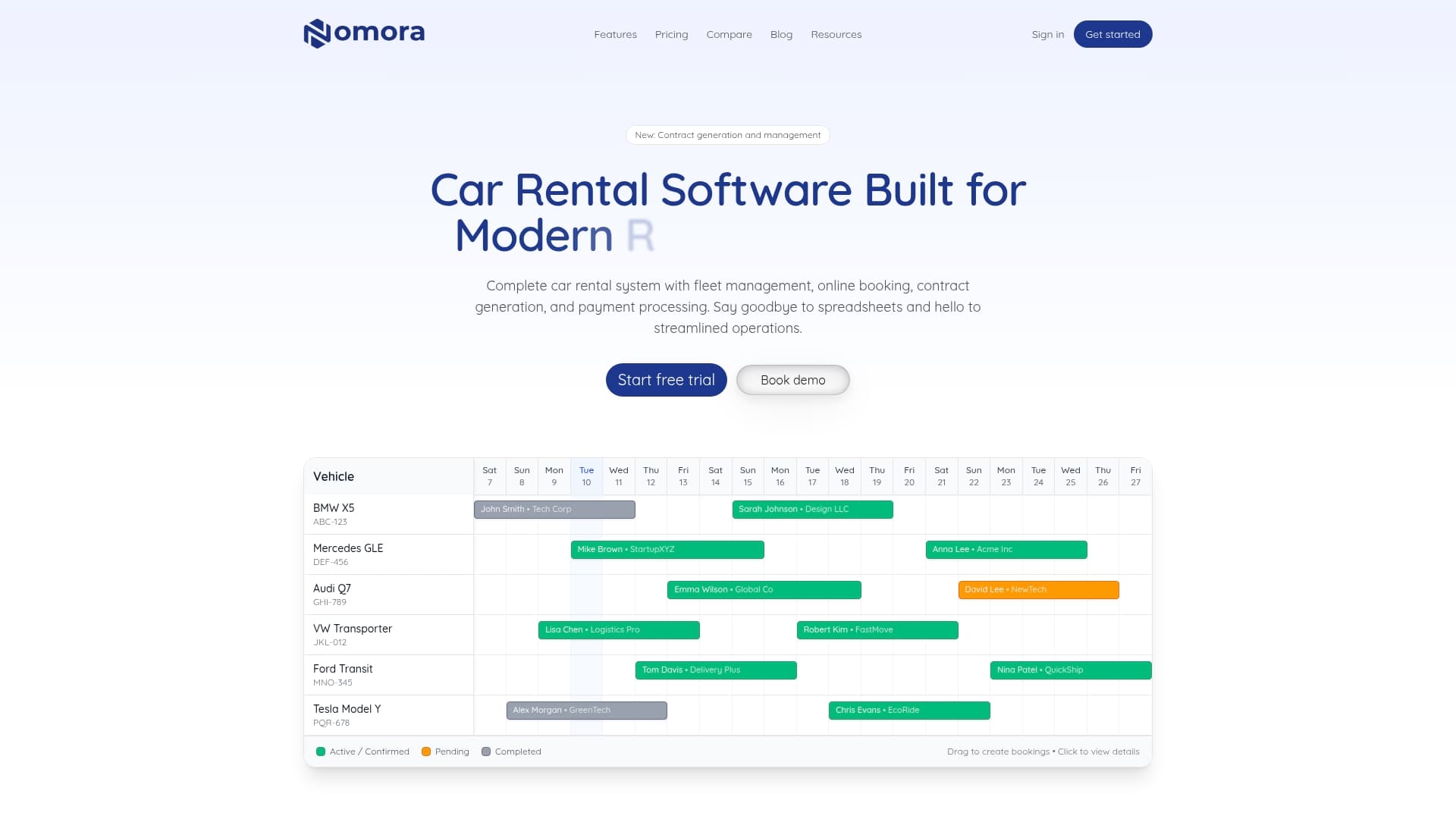
If you manage a vehicle rental business looking to replace spreadsheets or improve multi-location oversight, Nomora suits small operators and larger franchise networks alike. Visit Nomora to test the full platform with a no-credit card 14-day trial. Begin onboarding in 24 to 48 hours and gain real-time fleet visibility alongside contract and payment automation.
FAQ
What makes Nomora suitable for vehicle rental businesses?
Nomora provides a comprehensive system for managing reservations, fleet upkeep, contracts, and payments. Its online booking portal, fleet management tools, and automated email notifications streamline the rental process. Operating teams should expect to reduce admin time significantly, as Nomora claims to save over 20 hours weekly.
How does Nomora compare to RentSyst for car rental management?
RentSyst excels in deep third-party connectivity and live vehicle tracking tailored to rental operations, making it suitable for fleets requiring location accuracy and external booking channels. Nomora also offers excellent fleet management features, but its strength lies in providing a unified system with transparent pricing across all plans. Businesses should evaluate their specific needs related to integrations and tracking capabilities.
Can Nomora handle multiple vehicle types for rental management?
Nomora is designed for vehicle rental businesses and supports mixed fleets without feature gating. This flexibility allows operators to manage different vehicle types under one system, making it an efficient choice as fleets grow and diversify. Businesses should consider the adaptability of Nomora to their unique operational needs.
What is the pricing structure for Nomora?
Nomora starts at €45 per month for 1–10 vehicles, with a predictable cost structure as the fleet expands. Each plan offers the same features, ensuring that teams do not face surprise upgrades. This pricing model simplifies budgeting as the company grows.
How quickly can a team set up Nomora for use?
Setup for Nomora typically completes within 24–48 hours, allowing teams to transition from spreadsheets efficiently. This quick onboarding process helps businesses enhance operations promptly, creating an immediate impact on rental workflows.
Recommended
Ready to streamline your car rental business?
Book 30 minutes with the founder. We set up everything in this guide on your own vehicles, and migrate you out of Excel for free.