Key Takeaways
| Point | Details |
|---|
| Fully digital workflow | A paperless rental process covers everything from reservation to return with no physical paperwork. |
| Unlock efficiency | Going paperless reduces errors, speeds up rental operations, and streamlines audits and billing. |
| Improve customer experience | Customers benefit from faster check-ins, instant receipts, and less waiting. |
| Stronger dispute resolution | Digital contracts and record-keeping provide solid evidence for resolving conflicts. |
| Strategic data leverage | Paperless workflows let you use data for analytics, service improvement, and growth opportunities. |
What is a paperless rental process?
With the ambitions for digital transformation set, it is crucial to clearly define what a paperless rental process actually involves and how it stands apart from traditional methods.
A paperless rental process is a fully digital, end-to-end workflow that replaces every paper touchpoint in a car rental operation with a connected digital equivalent. This means no printed contracts, no handwritten inspection sheets, no physical receipts, and no filing cabinets of customer records. Instead, every stage of the rental journey is captured, stored, and accessible through a cloud-based platform.
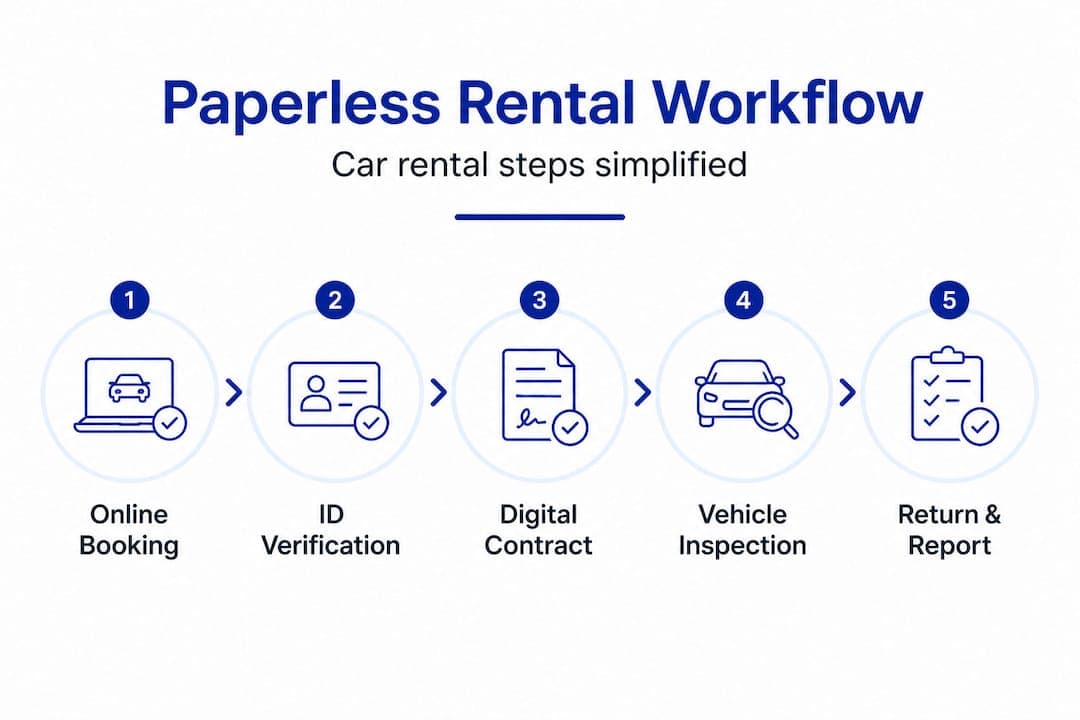
A paperless workflow for car rentals covers reservation, customer verification, digital contracts, vehicle condition capture, automated handover and return, instant receipts, and stored digital audit evidence. Each of these steps generates a record that is timestamped, searchable, and legally defensible. That is fundamentally different from a scanned PDF of a paper form.
Here is a direct comparison of how paper-based and paperless workflows differ across key operational steps:
| Workflow step | Paper-based | Paperless |
|---|
| Reservation | Phone/email, manual entry | Online booking with auto-confirmation |
| Customer verification | Physical ID check, manual record | Digital ID scan, real-time validation |
| Contract signing | Printed, signed by hand | E-signature on tablet or mobile |
| Vehicle inspection | Handwritten sheet, instant photos | Mobile app with timestamped photos |
| Key handover | Manual log | Digital sign-off with audit record |
| Return processing | Staff review of paper | Automated check-in via app or kiosk |
| Invoice and receipt | Printed or emailed PDF | Instant digital receipt, auto-reconciled |
The technologies that power each of these steps include:
- Digital e-signature tools for legally binding contract execution
- Mobile ID verification for fast, accurate customer authentication
- Vehicle inspection apps that capture photos and annotate damage in real time
- Cloud-based dashboards that give staff full visibility across the fleet
- Automated payment gateways that process deposits, charges, and refunds without manual input
- SMS and email notification engines that keep customers informed at every stage
When you look at this list, it becomes clear that a paperless process is not a single tool. It is an interconnected system where each part communicates with the others. Think of it as the central nervous system of your rental operation, where every signal travels instantly and nothing gets lost in translation.
Core benefits of going paperless in car rentals
Now that you know what a paperless process entails, let's break down why taking this digital leap pays off for both your business and your customers.
The most immediate gain is speed. A customer who books online, verifies their identity through a mobile app, and signs a contract digitally can pick up a vehicle in minutes rather than standing in line for 20 to 30 minutes completing paper forms. That faster experience translates directly into higher satisfaction scores and repeat bookings.
The second major benefit is accuracy. Manual data entry is a leading source of errors in rental operations, including wrong dates, misspelled names, and missed damage notes. Digital systems eliminate most of these errors by auto-populating fields, enforcing required inputs, and flagging inconsistencies before a rental begins.
A paperless rental process also provides audit trails for billing and disputes, which is one of its most underrated advantages. Every action in the system is logged with a timestamp, a user ID, and the relevant data. If a customer disputes a damage charge six weeks after their rental, you can pull up the signed inspection report, the timestamped photos, and the contract terms in seconds. That level of documentation is simply not achievable with a folder of handwritten notes.
Here are the core benefits in summary:
- Faster check-in and check-out that reduces customer wait times and staff workload
- Elimination of manual errors through automated data capture and validation
- Stronger dispute resolution backed by digital evidence and signed records
- Lower operational costs from reduced printing, storage, and administrative overhead
- Easier regulatory compliance because digital records are easier to organize, audit, and retain
- Seamless data access for any team member, from any location, at any time
- Improved customer experience through customer self-service options and instant communication
Compliance is worth particular attention. Regulations around data privacy, including GDPR in Europe and similar frameworks elsewhere, require businesses to manage and protect customer data responsibly. A modern paperless platform with built-in encryption and access controls makes compliance far more manageable than maintaining physical files. Streamlining contracts digitally also means your records are consistently formatted and retrievable, which is exactly what auditors and regulators expect to see.
Pro Tip: Track your return on investment by measuring three specific metrics before and after going paperless: average check-in time per customer, error rate on contracts, and staff hours spent on administrative tasks. These numbers tell a clear story about the value your digital investment is generating.
How does the paperless rental process work? (Step-by-step)
Understanding the benefits is great, but seeing the full digital workflow in action makes it real. Let's map exactly how the process works, step by step.
The end-to-end workflow for a paperless rental runs from reservation to customer verification, digital contracts, vehicle condition capture, handover and return, instant receipts, and stored digital evidence. Here is how each phase works in practice:
-
Online reservation. The customer selects a vehicle, dates, and add-ons through a booking portal or mobile app. The system checks real-time availability, prevents double-bookings, and sends an automated confirmation. Staff see the reservation populate instantly on their dashboard. A solid system integration guide helps you connect your booking portal to your fleet management and payment tools from day one.
-
Pre-arrival digital verification. Before pickup, the customer uploads their driver's license and completes ID verification through a secure link. This step removes the bottleneck at the counter and gives staff advance notice of any verification issues.
-
Digital contract generation and e-signature. The platform generates a rental agreement pre-filled with the customer's data, the vehicle details, and the rental terms. The customer reviews and signs electronically, on their phone or on a tablet at the counter. No printing required.
-
Vehicle condition capture. Staff or the customer completes a digital vehicle inspection using a mobile app. Photos are taken, damage is annotated, and the condition report is signed by both parties. This is the step that protects you most in a dispute.
-
Key handover with digital sign-off. The vehicle is handed over and the digital record is finalized. The customer receives a copy of the contract and inspection report by email instantly.
-
In-rental monitoring. For businesses using real-time tracking, the platform can monitor vehicle location and alert staff to issues like late returns, geofence breaches, or unusual driving patterns.
-
Return and digital check-in. When the customer returns the vehicle, a return inspection is completed the same way as the pre-rental check. The system compares both reports automatically and flags discrepancies.
-
Automated invoicing and payment. Automated payment workflows process the final charge, release the deposit, and send the customer a digital receipt. No manual calculation. No delayed billing.
Here is a quick reference for the technology involved at each stage:
| Workflow step | Technology/platform |
|---|
| Reservation | Online booking engine, fleet calendar |
| ID verification | Mobile ID scan, biometric check |
| Contract signing | E-signature platform |
| Vehicle inspection | Mobile inspection app with photo capture |
| Payment processing | Integrated payment gateway |
| Fleet monitoring | GPS tracking dashboard |
| Invoicing | Automated billing engine |
Pro Tip: Set up automated SMS or email notifications at steps 2, 5, and 8, meaning pre-arrival verification, handover, and return. Customers who receive timely updates feel more confident, and staff spend less time answering status questions over the phone.
Overcoming common challenges with paperless systems
A digital transition can feel daunting, so let's zero in on the practical risks and how successful operators handle them.
Data security is the concern operators raise most often, and it is a reasonable one. A reputable cloud-based platform protects customer data using end-to-end encryption, role-based access controls, regular third-party security audits, and GDPR-compliant data handling. The real risk, in most cases, is not digital systems but paper records that can be lost, stolen, or read by anyone who opens the wrong filing cabinet.

Customer tech adoption is the second major concern, especially for businesses that serve older demographics or occasional renters unfamiliar with digital tools. The solution here is a combination of simple interface design and staff readiness. If your e-signature process takes more than three taps to complete, it needs to be simplified. Train your team to guide customers through the process in under two minutes at the counter. Most customers adapt quickly once they see how fast it is.
System outages are a legitimate operational risk. Every digital business needs a contingency plan. That means maintaining a temporary offline mode on mobile inspection apps, keeping a minimal printed backup contract template available for extreme cases, and ensuring your platform provider offers a strong uptime guarantee and responsive support.
Here is a summary of the most common operator concerns and their practical responses:
- "Our data could be hacked." Use platforms with certified encryption and conduct regular access audits. Digital is more auditable than paper.
- "Customers won't know how to use it." Keep the customer-facing interface simple and offer staff-assisted options at the counter.
- "What if the system goes down?" Select a platform with high uptime SLA commitments and have a lightweight offline backup for critical steps.
- "Digital contracts won't hold up in court." They do. Digital signature contracts with full audit trails are legally binding in most jurisdictions.
- "Staff will resist the change." Involve team members early in the transition, provide hands-on training, and show them how the new system reduces their own workload.
Digital records do more than replace paper. They create a complete, timestamped record of every rental interaction that is far more reliable in resolving billing disputes than anything a paper system can produce. Operators who have experienced a contentious damage claim know that digital audit trails settle the matter quickly, clearly, and without ambiguity.
Our take: The real opportunity most car rental operators miss with paperless
With the challenges in mind, here is a strategic takeaway that sets the most competitive operators apart.
Most car rental businesses go paperless for one reason: to reduce administrative work. That is a legitimate goal, and the efficiency gains are real. But operators who stop there are leaving significant value on the table.
The deeper opportunity in a paperless operation is data. Every digital interaction generates structured information about your customers' preferences, booking patterns, upsell responses, vehicle utilization rates, and return behaviors. When that data is centralized in a cloud platform, it becomes a strategic asset you can actually use.
Consider what becomes possible. You can identify which vehicle categories are most often upgraded at checkout, and build a targeted upsell prompt into your digital contract flow. You can analyze which customers return within 90 days and send them a personalized offer before they go to a competitor. You can spot underutilized vehicles in your fleet and shift their positioning in your booking engine to improve utilization rates. None of this is possible with paper records.
The operators who understand this are not just going paperless. They are building a data-driven business that becomes smarter with every rental. The paperless use cases available to modern rental businesses go far beyond operational cleanup. They include predictive fleet planning, automated loyalty workflows, and integrated marketing automation.
The conventional wisdom is that going paperless is a back-office improvement. The reality is that it is a front-line competitive advantage. Your customers experience it as convenience. Your team experiences it as reduced friction. And your business experiences it as a platform for sustainable growth.
If this article has clarified what a paperless rental process can do for your operation, the natural next question is: where do you start?
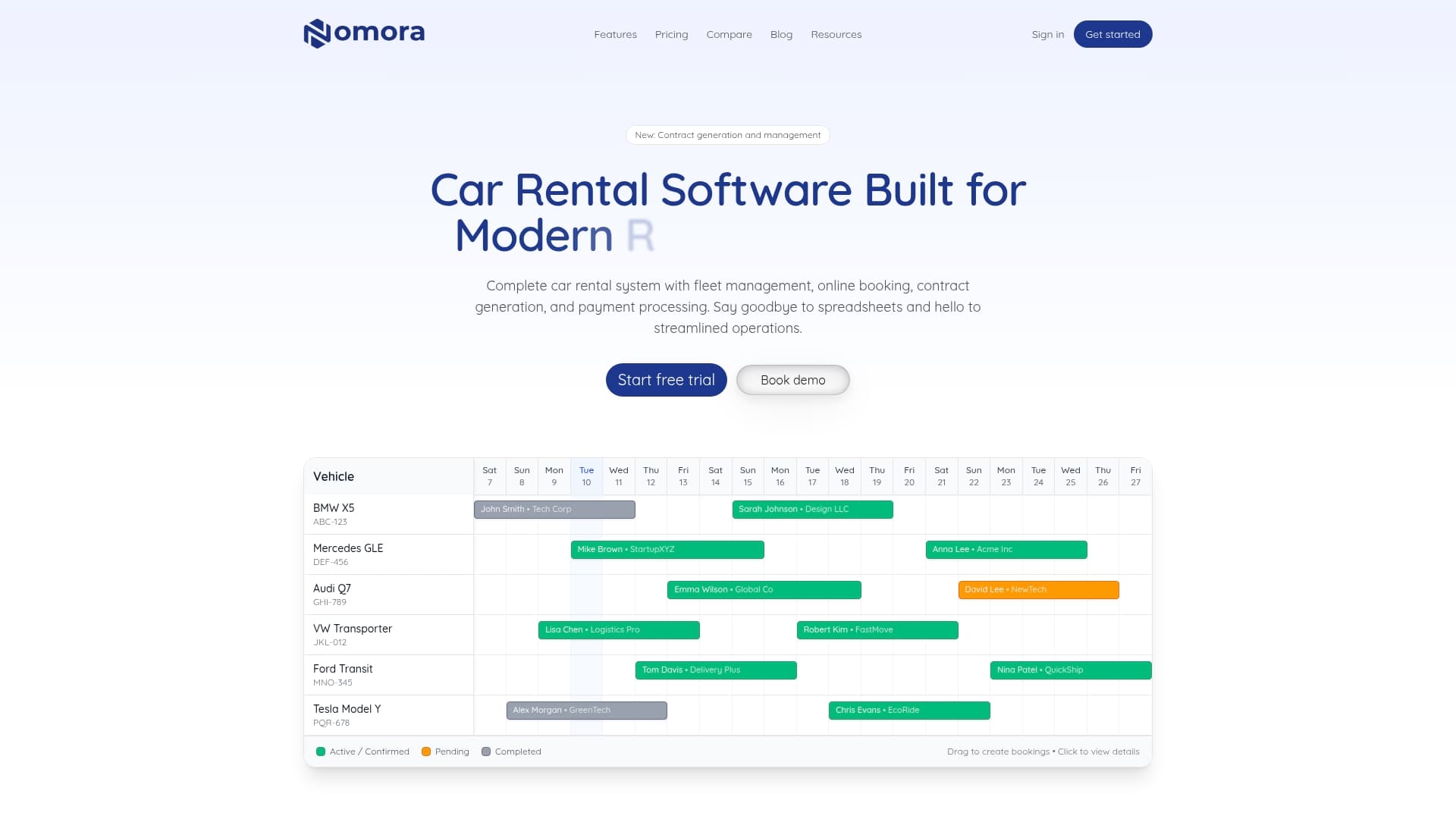
Nomora is a cloud-based car rental management platform built specifically to support this kind of end-to-end digital workflow. From reservation and contract generation to fleet tracking and automate payment collection, Nomora connects every part of your operation in one integrated system. Setup takes 24 to 48 hours, which means you can start running digital rentals without months of implementation work. Explore see paperless use cases to see how businesses like yours are using Nomora to move faster, reduce errors, and grow more efficiently. The tools are ready when you are.
Frequently asked questions
Yes, modern paperless systems use encryption and regular security audits to keep customer data and digital contracts safe. Paperless workflows provide secure, auditable records that are more reliably protected than physical paper files.
How fast can a car rental business switch to a paperless workflow?
Many businesses can begin integrating core paperless features within weeks, but a full workflow transition typically takes a few months depending on the size of the operation and the number of systems being replaced.
Do digital rental agreements have the same legal weight as paper contracts?
Yes, digital rental agreements with e-signatures are legally binding and include digital audit trails that strengthen their enforceability in a dispute.
How do paperless processes handle vehicle condition disputes?
Digital vehicle inspection photos and signed audit trails resolve disputes faster and more reliably than traditional paper records. Digital evidence provides a timestamped, signed record that leaves little room for disagreement.
What if a customer prefers paper receipts or contracts?
Most paperless platforms can generate and print documents as needed, keeping legacy customers comfortable while the business continues moving toward a fully digital workflow.
Recommended