The moment a theft alert fires, verify it against telematics data, preserve the GPS export, and notify police and your insurer within the Golden Hour, the first 60 minutes after confirmation. Every enabler that matters flows from that window: anti-tamper GPS tracking, a single named incident lead, and a digital audit trail. Platforms like Nomora exist to make those three things automatic instead of improvised.
TL;DR:
- Confirm theft within the first 15 minutes using GPS history and ignition timestamps to avoid false alarms from impound or user error.
- Export GPS logs and route data immediately upon theft confirmation to ensure legally admissible evidence for police and insurers.
- Implement a clear, pre-defined escalation matrix assigning roles to notify police, monitoring partners, and insurers within designated timeframes.
- Use telematics devices with dual-tracker redundancy, power-disconnect alerts, and anti-jamming features to improve chances of recovery during active theft.
- Build an integrated workflow with platforms like Nomora that automatically links renter data and GPS logs to streamline rapid incident response.
Table of Contents
What Are the First Steps in Stolen Rental Car Recovery?
Stolen rental car recovery succeeds or fails in the first hour. Wait past that window and your odds drop fast, not because tracking stops working, but because staff scramble to figure out who calls whom, and evidence that should have been exported gets overwritten by newer GPS pings.
The industry term for this is incident escalation management, and it is worth knowing because "stolen rental car recovery" describes the outcome, while escalation management describes the system that produces it. A car rental business without a defined escalation matrix is not doing recovery. It is doing improvisation with expensive vehicles.
0 to 15 minutes: verify before you escalate
- Confirm it is actually theft. Pull the last 24 to 72 hours of GPS history and ignition timestamps before assuming the worst. Impound, an extended rental, or a shift-change mix-up account for a real share of "missing vehicle" alerts, and telematics history typically resolves the question fast.
- Notify your internal incident lead. One named person owns the case from this point forward. No committee decisions during a live theft.
- Alert police immediately after confirmation, then the insurer, then your monitoring partner if you use one. That order matters because police need live location data while it is still live.
- Activate theft mode on the tracking device and generate a secure, time-stamped location link police can access directly rather than relying on a phone call relay.
- Export the GPS and route logs now, not after the call with the insurer. Data exported at the moment of confirmation carries more evidential weight than a report pulled together the next day.
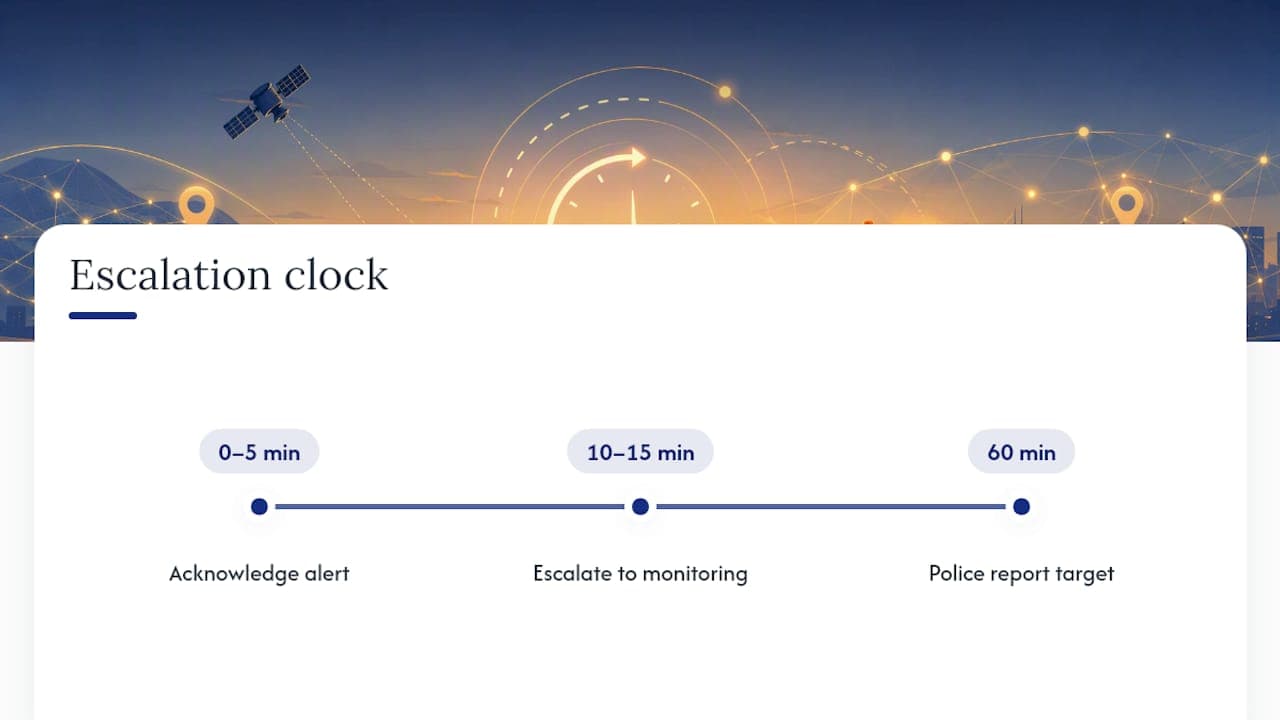
The escalation clock
Acknowledge any critical alert within 5 minutes. If it is not resolved in 10 to 15 minutes, hand it to 24/7 monitoring or your fleet manager. Target a filed police report and a Crime Reference Number within 60 minutes of confirmed theft.
Do not send staff to chase the vehicle. Recovery is a police and telematics job, not a parking-lot confrontation.
Pro Tip: Print or save your escalation matrix somewhere staff can find it without logging into three systems during a panic. A theft at 2 a.m. is the worst time to discover the on call number is out of date.
Which Telematics Features Actually Improve Recovery Odds?
Not all GPS units are equal, and the gap shows up exactly when you need it most: during an active theft. The device and the software behind it determine whether you have admissible evidence or a vague story.
Look for these capabilities before you sign a telematics contract:
- Dual-tracker redundancy. A primary GPS unit plus a hidden backup survives the common tactic of disabling the visible tracker.
- Power-disconnect alerts. The unit reports the moment someone cuts power, which is often the first sign of theft rather than a byproduct of it.
- OBD/ECU access detection. Thieves increasingly reprogram vehicles through the diagnostic port; a system that flags unauthorized OBD access closes that gap.
- Signal-jamming detection. Jammers defeat basic GPS. Anti-jamming alerts flag the interference itself, not just the silence that follows.
- Geofence exit triggers. An automatic alert the instant a vehicle crosses a rental zone boundary buys minutes you cannot get back later.
- Exportable, timestamped logs. Live sharing is useful for police in the moment; signed CSV exports with GPS route history are what insurers and courts actually want afterward.
One vendor-reported figure worth taking seriously: GRS, a fleet telematics provider, cites a 91% recovery rate for stolen vehicles when live telematics data guides police in real time. That is a vendor claim, not an independent audit, but it lines up with the operational logic: police recover vehicles faster when they know where to look instead of where to guess.
Hardware costs run $100 to $200 per vehicle with $20 to $50 monthly subscriptions for standard fleet telematics, with enterprise-grade systems priced higher for richer data and faster reporting. Integrating that hardware directly into your rental management platform so the GPS record attaches automatically to the contract and renter file matters more than the device brand. A single incident record beats three disconnected logs every time an insurer asks for proof.
Who Notifies Whom, and in What Order?
An escalation matrix only works if everyone knows their role before the alert fires, not while it is happening. Build one incident lead role that owns the case, backed by clear notification packets for each recipient.
| Recipient | When to notify | What to include |
|---|
| Incident lead / supervisor | Immediately on alert | Vehicle ID, last known GPS location, renter name |
| Police | Within 15 minutes of confirmed theft | Full GPS history, contract details, renter ID, vehicle description |
| Monitoring partner | If unresolved in 10 to 15 minutes | Live tracking access, alert type, prior escalation steps |
| Insurer | Within the Golden Hour | Police report status, CRN once issued, policy number, contract copy |
The incident lead is the single point of contact for every subsequent call, which prevents the common failure where police, the insurer, and the fleet manager all have slightly different versions of the timeline.
Every notification packet should carry the same core fields: vehicle identification number, renter details, GPS coordinates with timestamps, and the contract number tying the vehicle to the booking. Standardizing that incident data prevents the gaps that show up later when an insurer asks for something nobody thought to capture.
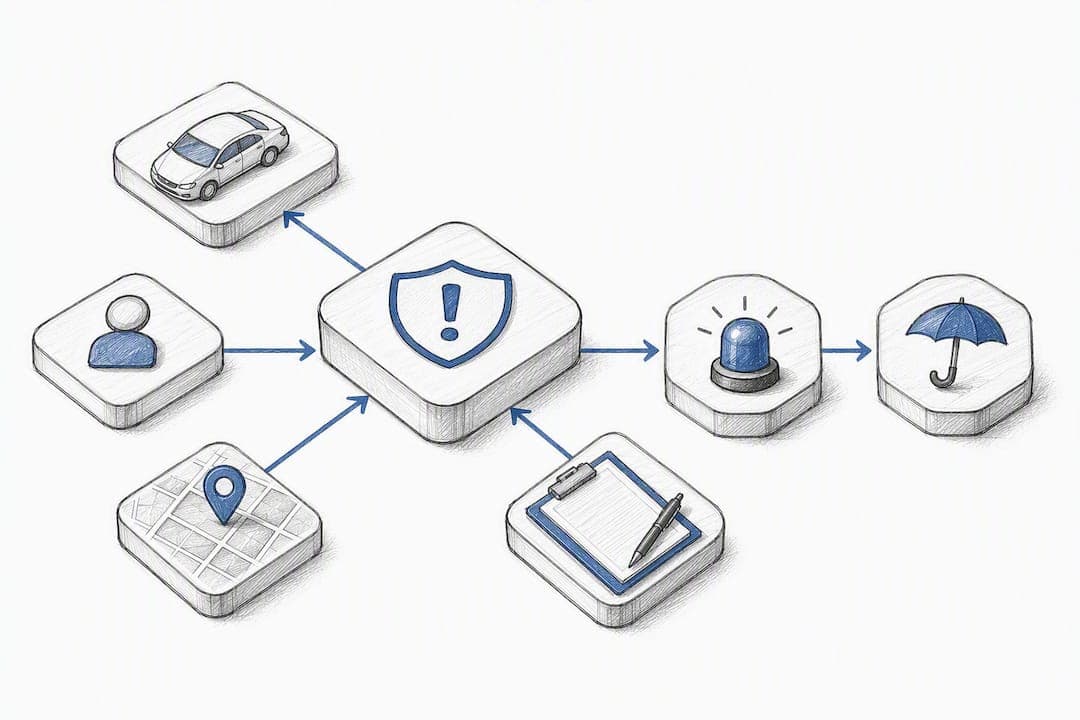
Log every step in a timestamped incident record: who was notified, when, and what they were told. That record becomes the backbone of both the police file and the eventual insurance claim.
What Documentation Do Police and Insurers Actually Require?
Insurers and police both work from evidence, not narrative. What you hand them determines how fast the claim moves.
- GPS history and geofence exit logs with timestamps
- Ignition on/off timestamps around the theft window
- The signed rental agreement, ideally e-signed and stored digitally
- Pre-rental photos documenting vehicle condition
- Renter identification and payment authorization records
- The Crime Reference Number, recorded the moment police issue it
Digital rental contracts with e-signatures and real-time fleet tracking let insurers verify coverage and incident facts fast instead of chasing paper. That speed matters for a claim type adjusters routinely scrutinize: loss of use.
To support a loss-of-use claim, keep your booking calendar and a 90-day average daily rate on file. Insurers and adjusters commonly dispute loss-of-use demands when there is no utilization history backing the revenue figure. Submit that record alongside the property-damage settlement, not after it.
What Should You Check Before Putting a Recovered Vehicle Back on the Road?
Recovery is not the finish line. A vehicle that sat with a thief for even a few hours can carry damage that is not visible on a walk-around inspection, and putting it straight back into a rental contract is a liability risk.
- Inspect the OBD/ECU port for unauthorized access or reprogramming.
- Check for hidden aftermarket GPS units the thief may have installed to track resale attempts.
- Examine wiring and the ignition system for signs of hot-wiring or lock manipulation.
- Run a full mechanical and safety inspection before the vehicle returns to the fleet.
- Attach the preserved telematics export to the vehicle's file, alongside a written post-recovery report.
- Document the criteria if the vehicle needs to be declared out-of-service or a total loss rather than repaired.
Pro Tip: Treat the post-recovery report the same way you treat the incident record: dated, specific, and attached to the vehicle file permanently. If that car ever gets sold or re-financed, the paper trail protects you.
How Nomora Supports an Integrated Recovery Workflow
An incident workflow is only as fast as its weakest handoff. Nomora lets you build incident templates in advance, so a theft alert auto-populates renter details, contract data, and GPS history instead of someone typing it under pressure.
Set your required telematics device list once during onboarding, which typically takes 24 to 48 hours, so every vehicle in the fleet reports through the same integration. Configure automatic exports tied to each contract, assign staff roles ahead of time, and load your monitoring partner and insurer contacts into the notification chain before you ever need them.
The Perspective Most Operators Get Wrong
The conventional advice on stolen rental car recovery treats GPS tracking as the whole solution. It is not. A tracker without a rehearsed escalation matrix just tells you, in real time, that you have no plan.
What actually moves the needle is boring: a single named incident lead, a notification order everyone already knows, and evidence exported the moment theft is confirmed rather than reconstructed later from memory. Fleets that invest in premium hardware but skip the operational rehearsal still lose recovery time to confusion about who calls the insurer first.
The other blind spot is treating recovery and prevention as separate budgets. Anti-tamper alerts, geofencing, and audit logs serve both purposes at once, they deter opportunistic theft and they document the incident the moment it happens. Prioritize the device features that do double duty, then build the escalation habit around them until it is automatic. Software can hand you the data. It cannot make the phone calls in the right order for you.
— Dizzy
Set Up a Recovery Workflow Before You Need One
Nomora is built to remove the guesswork from stolen rental car recovery. GPS integrations attach directly to each contract, so a theft alert pulls up the renter's ID, payment authorization, and rental agreement in one record instead of three disconnected systems.
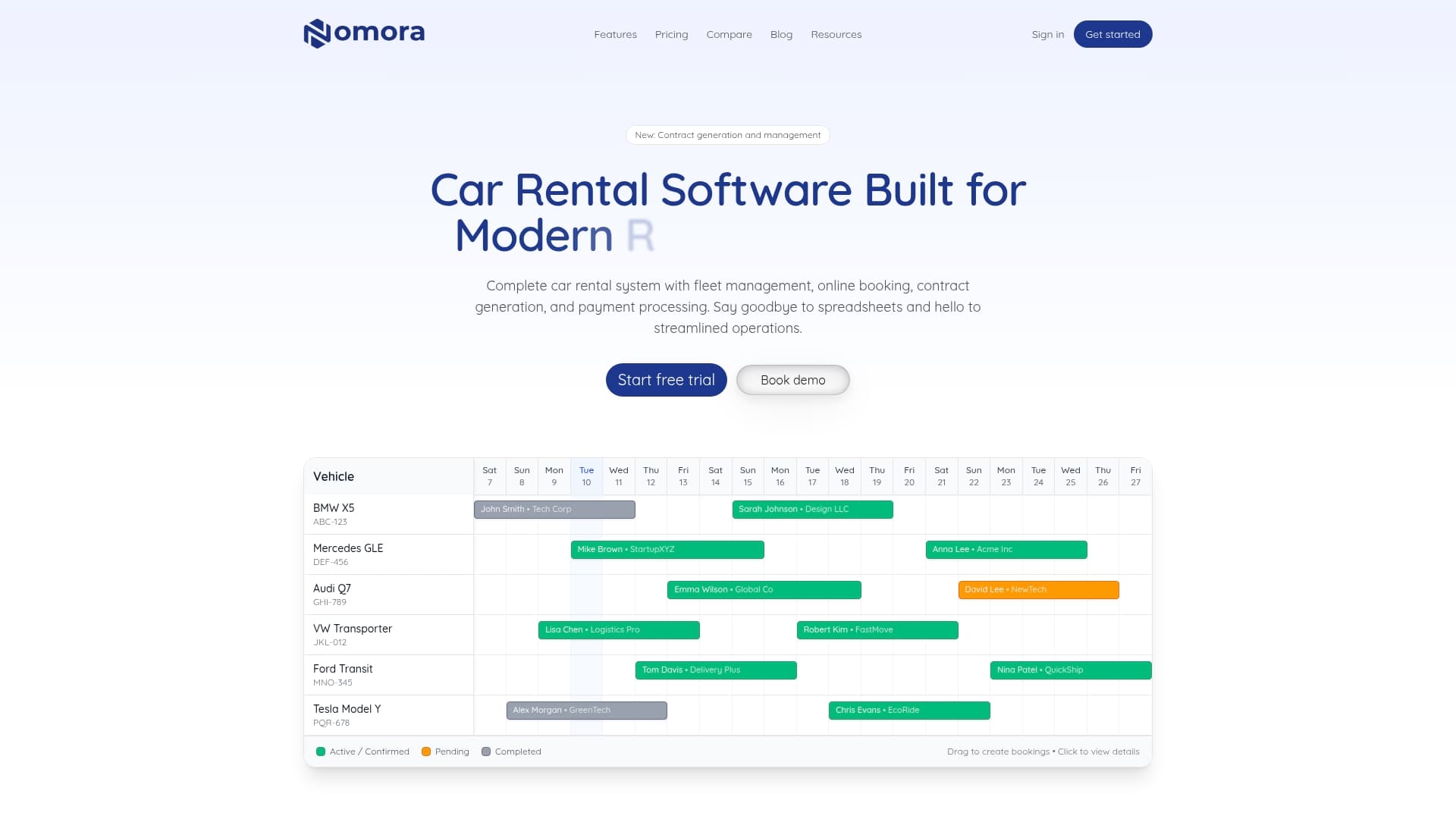
The features that matter most here are already built in: single incident records linked to e-signed contracts, exportable audit logs formatted for police and insurers, and rapid onboarding that gets your telematics integration live in a day or two rather than weeks. If you already run GPS hardware, Nomora connects to it. If you do not, the car rental software platform walks you through device selection during setup.
Start by reviewing how the platform handles your fleet type on the use cases page, then schedule a demo to test the incident export flow with your own vehicle data before your next theft alert forces you to learn it live.
Primary Sources and Further Reading
Sources
Recommended
Ready to streamline your car rental business?
Book 30 minutes with the founder. We set up everything in this guide on your own vehicles, and migrate you out of Excel for free.