TL;DR:
- Specialty vehicle rental covers non-standard vehicles with unique management, pricing, and compliance needs.
- Automation in reservations, pricing, and damage tracking is essential to manage edge cases and scale profitably.
- Manual processes pose risks and inefficiencies; cloud-based platforms enable scalability and higher margins.
Most rental business owners assume that standard car rental software can handle any type of vehicle. That assumption is costly. Specialty vehicle rental refers to the short-term rental of non-standard vehicles tailored for specific uses, such as luxury or exotic cars, minibuses, pickups, wheelchair-accessible vehicles, and heavy-duty trucks. These vehicles serve niche markets with unique pricing, compliance, and management requirements that general-purpose tools simply cannot address. If you operate or plan to launch a specialty rental business, this guide will walk you through what defines the category, how core operations work, and how automation helps you run a leaner, more profitable fleet.
Table of Contents
Key Takeaways
| Point | Details |
|---|
| Specialty rentals defined | Specialty vehicle rentals are non-standard vehicles like exotics, minibuses, and heavy-duty trucks for niche customer needs. |
| Operational complexity | Specialty rentals demand unique pricing, maintenance, and reservation processes distinct from regular car rentals. |
| Automation benefits | Cloud-based software automates reservations, tracking, pricing, and reporting, helping SMBs scale effortlessly. |
| Edge case management | Automated workflows handle mileage limits, overbooking, and custom adaptations for efficient specialty operations. |
| Profitability insights | Premium pricing can drive higher margins if depreciation and maintenance are managed with the right tools. |
Understanding specialty vehicle rental
Not every vehicle that sits outside a standard compact or midsize class qualifies as specialty. The distinction matters because it shapes how you price, insure, maintain, and market your fleet. Specialty vehicle rental includes non-standard vehicles tailored for specific uses, and that definition covers a surprisingly wide range of asset types.
Here is a breakdown of the most common specialty vehicle categories:
- Exotic and luxury cars: High-value vehicles like sports cars and premium sedans rented for events, experiences, or corporate travel
- Minibuses and passenger vans: Used for group transfers, airport shuttles, and corporate mobility programs
- Pickup trucks and utility vehicles: Rented for construction projects, moving, or outdoor activities
- Wheelchair-accessible vehicles: Adapted for passengers with mobility needs, often subject to specific compliance standards
- Heavy-duty trucks: Used for cargo transport, industrial projects, or specialized logistics
- Specialty event vehicles: Vintage cars, convertibles, or branded vehicles for weddings and productions
These categories do not just differ in size or price. They differ in how customers find them, how long they rent them, and what happens when something goes wrong. Your customer profile shifts too. A person renting a wheelchair-accessible van has entirely different needs than someone booking a Ferrari for a weekend.
The table below compares standard and specialty rentals across key operational dimensions:
| Dimension | Standard rental | Specialty rental |
|---|
| Vehicle availability | High volume, broad inventory | Limited, niche-specific units |
| Customer profile | General travelers, commuters | Event planners, businesses, medical users |
| Pricing model | Fixed daily rates | Dynamic, premium, or project-based pricing |
| Maintenance frequency | Scheduled intervals | More frequent, vehicle-specific protocols |
| Insurance complexity | Standard coverage | Custom policies, higher liability exposure |
| Software requirements | General reservation tools | Modular, rules-based platforms |
For SMBs exploring specialty vehicle solutions, the operational gap between standard and specialty rentals is where most businesses lose money. Generic tools create blind spots. A purpose-built approach to luxury fleet management and specialty assets closes those gaps before they become expensive problems.
Key operational mechanics for specialty rental businesses
Once you understand what counts as specialty, the next step is mastering the business mechanics that drive profitability. Key mechanics include fleet acquisition, reservations management, pricing, utilization tracking, maintenance scheduling, customer data handling, and insurance. Each of these works differently when your fleet includes high-value or adapted vehicles.
Fleet acquisition and financing carry more weight in specialty rentals. A single exotic car can depreciate faster than an entire row of economy sedans. You need financing plans that account for higher residual value risk and shorter useful life cycles. Budgeting for depreciation upfront protects your margins.
Pricing is where specialty rentals either win or bleed. Revenue per day (RPD) and average daily rate (ADR) are the two primary metrics. Specialty vehicles command premium rates, but those rates must reflect actual demand, seasonality, and vehicle condition. Flat pricing is a missed opportunity. Review your pricing strategies regularly to ensure you are capturing the full value of your fleet.
Utilization tracking measures how many days a vehicle is rented versus how many days it is available. For specialty fleets, low utilization is more damaging because carrying costs are higher. Tracking this metric in real time allows you to adjust availability windows, promotional offers, and maintenance schedules proactively. A solid fleet management guide will show you how to benchmark utilization by vehicle type.
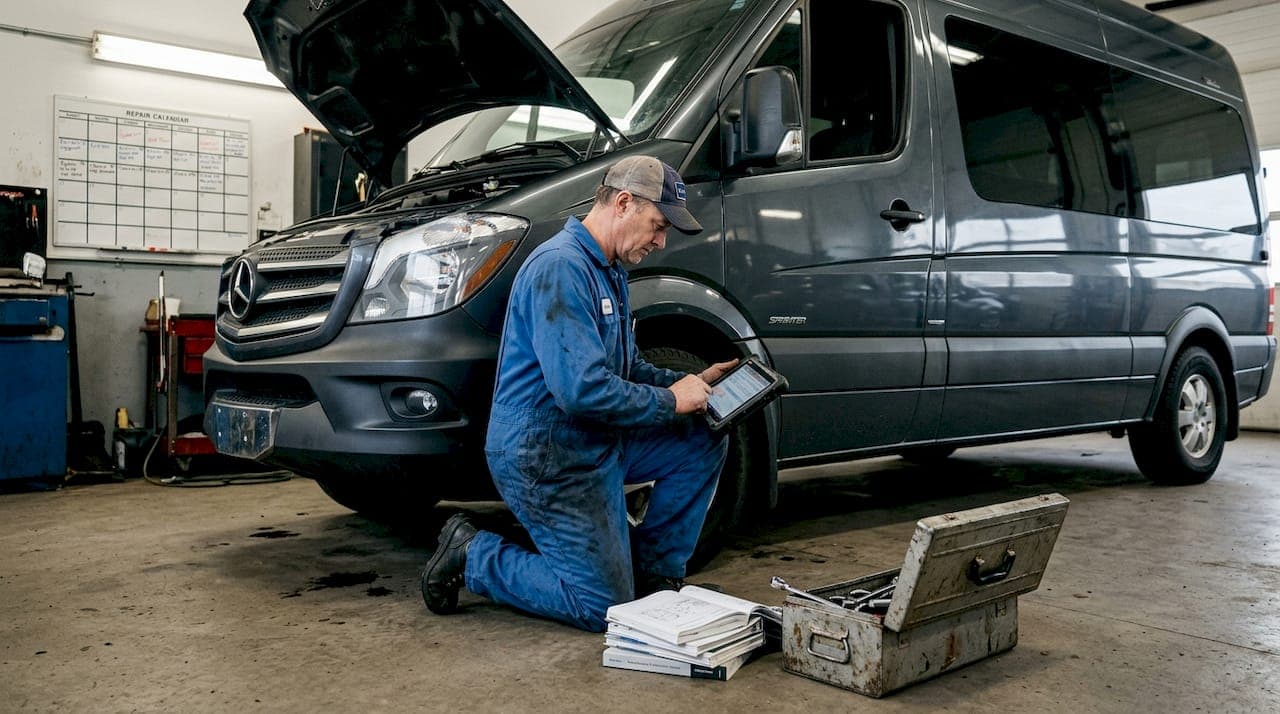
Maintenance for specialty vehicles is not optional or flexible. Exotic cars often require manufacturer-certified service. Wheelchair-accessible vehicles must meet safety standards. Heavy trucks need compliance checks. Missing a service interval is not just a mechanical risk, it is a liability risk.
Here is a quick comparison of utilization and maintenance priorities:
| Metric | Standard fleet | Specialty fleet |
|---|
| Target utilization rate | 70-80% | 60-75% (higher downtime for servicing) |
| Maintenance cost as % of revenue | 15-25% | 30-40% |
| Insurance premium range | Standard | 2-4x standard rates |
Pro Tip: Use fleet allocation software to automate vehicle assignment based on availability, maintenance status, and customer tier. This reduces manual scheduling errors and keeps your highest-value assets earning revenue.
Challenges and edge cases unique to specialty rentals
Knowing the mechanics is one thing. Handling the edge cases that arise daily in specialty rental operations is another challenge entirely. These situations do not appear in standard rental workflows, and they can derail your revenue if you are not prepared.
Here are the most common edge cases your business will face:
- Overbooking: Without an availability engine and auto-allocation rules, two customers can book the same vehicle for overlapping dates. For specialty fleets with one or two units per category, this is a serious problem.
- Mileage limits: Exotic cars often carry strict mileage caps per rental period. Tracking these manually is error-prone and leads to billing disputes or vehicle damage that goes unrecorded.
- Turnaround times: A wheelchair-accessible van needs cleaning, safety checks, and sometimes reconfiguration between rentals. If your system does not block buffer time automatically, you will create back-to-back conflicts.
- Custom damage reports: Standard damage forms do not capture the nuances of specialty vehicles. A scratch on a Ferrari is not the same as a scratch on a compact car. Custom reporting templates protect you legally and financially.
- Maintenance deadlines by mileage or date: Some vehicles trigger service requirements based on mileage, not just calendar intervals. Your system needs to track both and alert you before a deadline is missed.
Edge cases like overbooking resolution, turnaround times, mileage limits, and custom damage reports are not rare exceptions in specialty rental. They are weekly realities. Businesses that rely on spreadsheets to manage these situations lose time, money, and customer trust.
"Real-time visibility into your fleet is not a luxury feature. It is the foundation of every profitable specialty rental operation."
Pro Tip: Invest in real-time fleet tracking and rule-based workflows before you scale. Adding automation after you have grown creates more disruption than starting with it. Good inventory management practices also reduce the frequency of these edge cases by keeping your data accurate from day one.
Automating specialty rental operations: Technology and software solutions
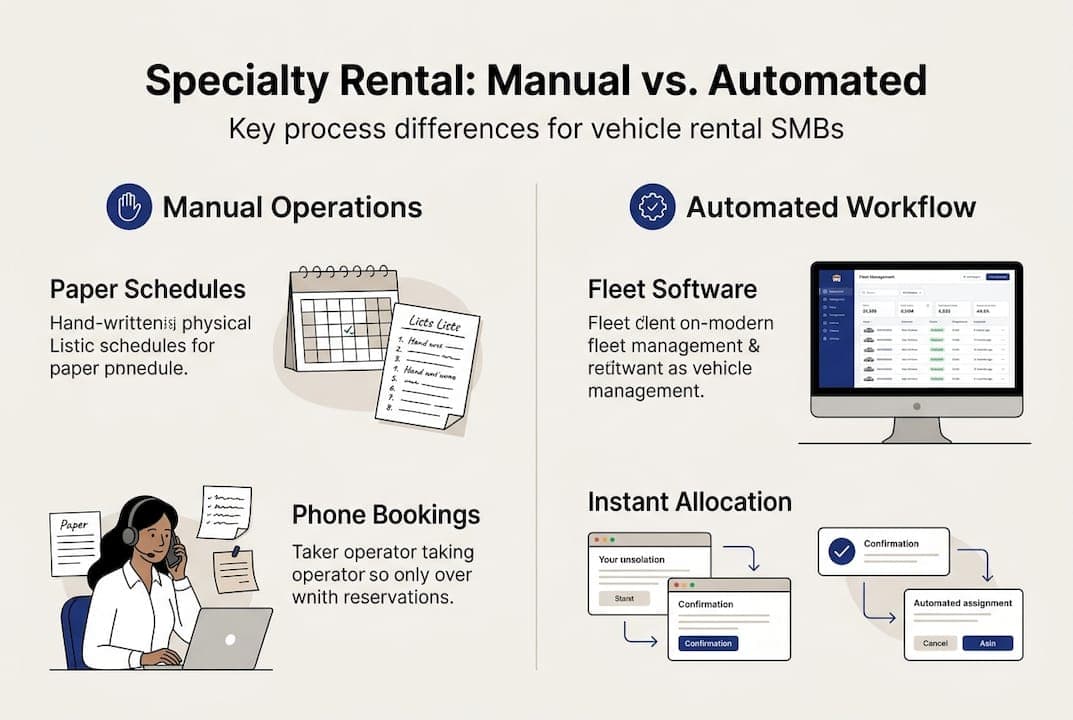
Automation is not just about saving time. For specialty rental SMBs, it is the mechanism that turns a fragile manual operation into a scalable, profitable business. Cloud-based software automates reservations, real-time availability, dynamic pricing, fleet allocation, invoicing, payments, telematics integration, and damage tracking to manage operations efficiently.
Here is what a well-configured automation stack does for your specialty rental business:
- Real-time availability: Prevents double bookings by updating inventory the moment a reservation is confirmed or canceled
- Dynamic pricing: Adjusts rates based on demand, occupancy, vehicle type, and seasonal patterns without manual intervention
- Telematics integration: Connects with GPS and telematics integration tools to monitor mileage, location, and vehicle health automatically
- Automated invoicing and payments: Generates contracts, collects deposits, and processes final payments without staff involvement
- Damage tracking: Captures pre and post-rental condition reports with photo documentation, reducing disputes
- Maintenance alerts: Triggers service reminders based on mileage or calendar thresholds, keeping your fleet compliant
Modular platforms let SMBs start with core features and add capabilities as they grow. You do not need a large IT team or a six-figure implementation budget. Specialty vehicle management software built for this market can be configured and deployed quickly, with most platforms offering onboarding within 24 to 48 hours.
Exploring the full range of software use cases helps you match platform capabilities to your specific fleet type. Whether you manage exotics, accessible vehicles, or commercial trucks, the right configuration makes a measurable difference. Optimizing real-time booking workflows also reduces the manual back-and-forth that slows down your team during peak demand periods.
Pro Tip: Choose a platform with customizable auto-rules and reporting templates. Generic software forces you to adapt your workflow to the tool. The right specialty rental platform adapts to your workflow instead.
Our perspective: Why automation is essential for specialty rental SMBs
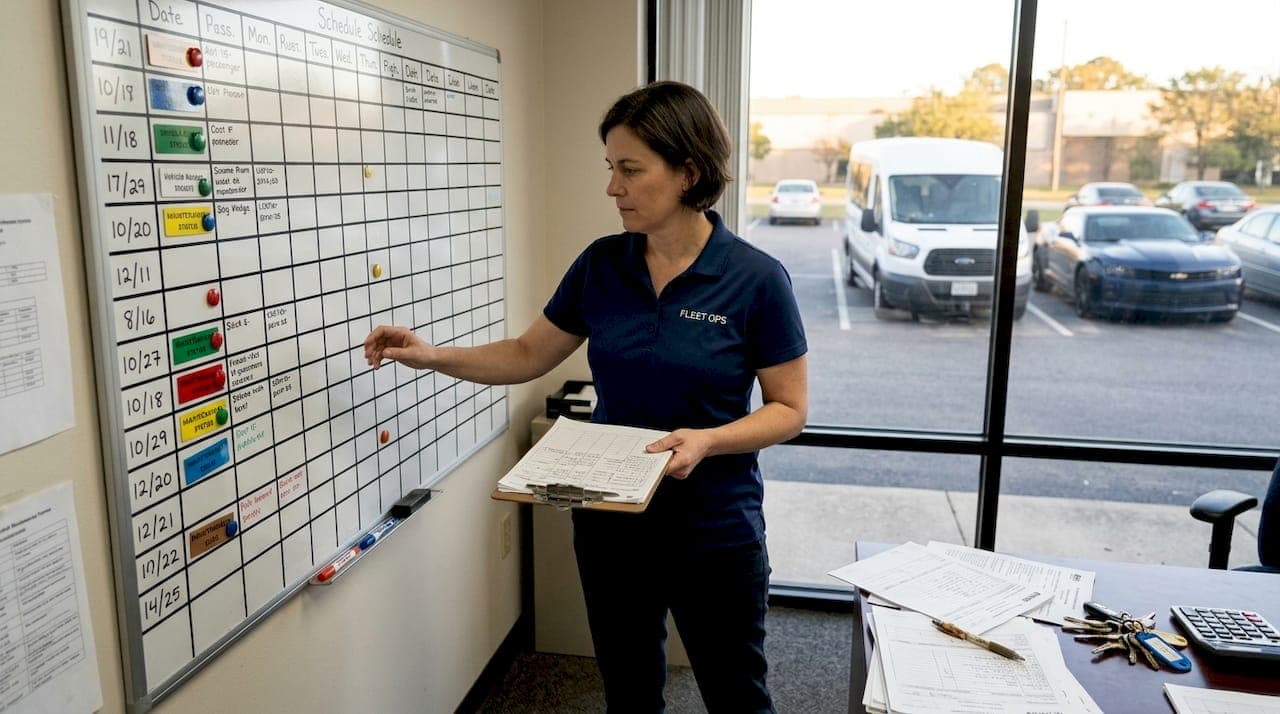
Here is an uncomfortable truth that most software vendors will not say directly: manual operations do not just slow you down, they actively put your business at risk. Every spreadsheet you use to track mileage limits or maintenance schedules is a single point of failure. One missed entry can mean a damaged vehicle, a billing dispute, or a compliance violation.
SMBs benefit from modular cloud software replacing manual processes, enabling scalability without large IT overhead. But the real value is not just efficiency. It is resilience. When your data lives in a connected system, you can see problems before they become crises.
The businesses we see struggling most in specialty rental are not the ones with bad vehicles or weak marketing. They are the ones trying to manage premium assets with tools designed for simpler operations. The gap between what their fleet demands and what their systems can deliver is where profitability disappears.
Automation also changes how you think about growth. Instead of asking "Can we handle more volume?" you start asking "What types of vehicles should we add next?" That is a fundamentally different, and more profitable, mindset. Review fleet profitability insights to understand which asset types deliver the best returns relative to their carrying costs. The move from spreadsheets to cloud platforms is not a trend. It is a structural shift that separates growing businesses from stagnant ones.
Discover automated solutions for specialty vehicle rental
If this guide has clarified the operational demands of specialty rental, the next step is putting that knowledge into action. Nomora is a cloud-based rental management platform built to handle exactly the complexity you have read about here.
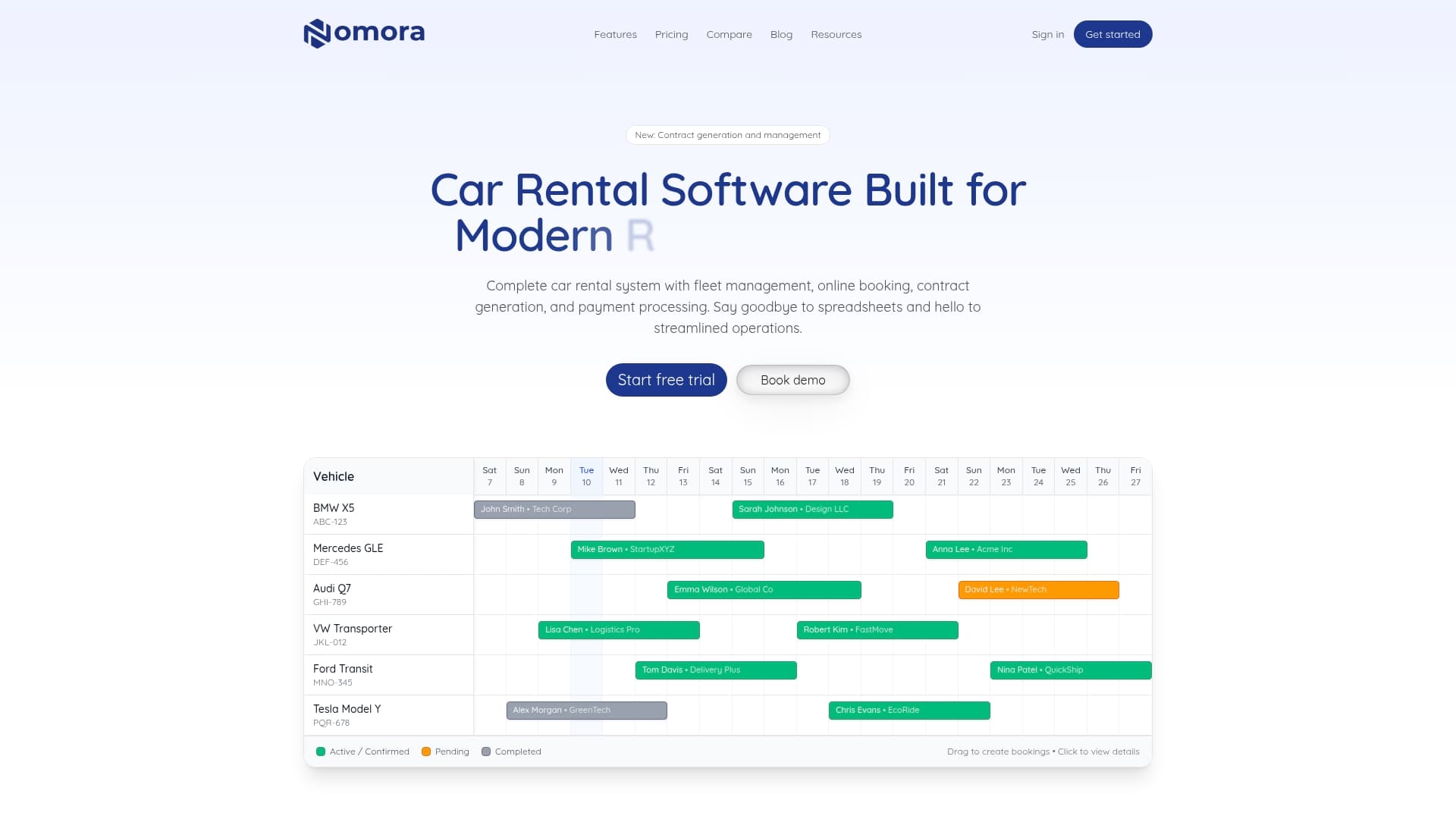
From preventing double bookings to automating payments, Nomora gives specialty rental SMBs the tools to run a tighter, more profitable operation. You can explore specialty rental use cases to see how the platform handles different vehicle types and workflows. If overbooking is a recurring problem, learn how to prevent double bookings with automated availability rules. And for businesses still processing payments manually, automated payments can eliminate that friction entirely.
Frequently asked questions
What qualifies as a specialty vehicle rental?
A specialty vehicle rental involves non-standard vehicles like exotics, minibuses, wheelchair-accessible vans, or heavy-duty trucks used for niche needs not met by general car rental companies.
How does software improve specialty vehicle rental operations?
Cloud-based software automates reservations, dynamic pricing, fleet allocation, and damage tracking, reducing manual errors and enabling businesses to scale without adding administrative overhead.
What are common edge cases in specialty rental workflows?
Edge cases include overbooking, mileage limits, custom damage reports, and turnaround times between rentals, all of which require rule-based systems rather than manual tracking.
Why do specialty rentals have higher margins?
Specialty vehicles command premium daily rates, but they also carry higher depreciation and maintenance costs that can consume 50 to 60% of revenue, making precise cost management essential for profitability.
Can SMBs compete in specialty vehicle rental without automation?
Manual operations are not scalable for specialty fleets. Modular cloud software replacing manual processes is essential for accurate reservations, dynamic pricing, and managing the unique demands of specialty vehicle categories.
Recommended
Ready to streamline your car rental business?
Book 30 minutes with the founder. We set up everything in this guide on your own vehicles, and migrate you out of Excel for free.