TL;DR:
- Smart fleet scheduling uses real-time data and automation to optimize vehicle assignments, increasing utilization and reducing errors. It replaces manual processes with a responsive system that predicts conflicts and streamlines operations, leading to higher revenue and better customer experiences. Implementation begins with data cleansing, pilot testing, and staff training, enabling rapid deployment and strategic growth.
Most rental business owners believe that a full booking calendar means a healthy operation. Fill every slot, collect every payment, repeat. But that assumption quietly costs businesses thousands of dollars every month in preventable conflicts, idle vehicles, missed maintenance windows, and administrative chaos. Smart fleet scheduling challenges that logic directly. This article breaks down what smart fleet scheduling is, how the underlying technology works, what concrete advantages it delivers, and how to implement it in your operation without disrupting what already runs well.
Table of Contents
Key Takeaways
| Point | Details |
|---|
| Automate for efficiency | Smart fleet scheduling streamlines bookings and reduces errors automatically. |
| Boost profitability | Optimizing vehicle assignments raises revenue without increasing fleet size. |
| Reduce double bookings | Automated rules and real-time data eliminate scheduling conflicts. |
| Easy integration | Cloud-based smart scheduling systems work with most rental software platforms. |
Defining smart fleet scheduling
Now that we've set the stage, let's break down exactly what smart fleet scheduling is and how it differs from the old way.
Smart fleet scheduling is the practice of using cloud-based automation, real-time data, and intelligent assignment logic to manage how and when each vehicle in your fleet gets used. It is not just a digital calendar. It is an active system that connects bookings, maintenance records, vehicle availability, and customer demand into a single, responsive flow.
"Smart fleet scheduling uses cloud-based automation to optimize vehicle assignments and maximize fleet utilization."
Traditional scheduling relies on a staff member manually tracking availability across a spreadsheet or whiteboard. That person checks for conflicts, records returns, reschedules around maintenance, and tries to keep everything straight during peak periods. Errors are routine. Gaps in vehicle use are invisible. Revenue leaks through the cracks.
Smart fleet scheduling flips this model. The system monitors every variable and makes assignment decisions automatically, in real time. Your team stops managing spreadsheets and starts managing outcomes.
Key features of smart fleet scheduling:
- Automated booking allocation: The system assigns the most appropriate available vehicle to each reservation based on predefined rules and live inventory data.
- Downtime minimization: Vehicles returning from rental are automatically flagged for inspection, cleaning, or maintenance before the next booking window opens.
- Intelligent vehicle rotation: Usage is spread across the fleet to prevent some vehicles from being overworked while others sit idle.
- Real-time availability updates: The moment a booking is confirmed, modified, or canceled, the entire system reflects the change instantly.
- Conflict prevention: Rules-based logic blocks double bookings before they happen, not after a customer complaint forces a scramble.
This is the foundation. Everything else, the technology, the business results, the implementation strategy, builds from this core shift.
How smart fleet scheduling technology works
With a solid definition, it's time to look under the hood at how smart fleet scheduling technology actually functions day to day.
The technology operates through interconnected modules. Think of rental management software as the central nervous system of your operation. It links bookings coming in through your website or front desk, inventory status from your fleet, maintenance schedules, and payment data into one live environment. When one module updates, all others respond immediately.
Fleet management best practices confirm that cloud-based solutions centralize information and automate vehicle scheduling, reducing errors and saving time for rental operators at every scale.
How the technology works step by step:
- Incoming reservation captured: A customer books online or through a sales agent. The system records the booking details, preferred vehicle class, dates, and pickup location instantly.
- Availability check triggered: The platform scans current inventory, active rentals, scheduled maintenance, and pending returns to identify eligible vehicles.
- Automated assignment: The system selects the most suitable vehicle based on availability, mileage distribution, and vehicle condition flags.
- Conflict screening: Before confirming, the system runs a final check against all existing bookings to eliminate any overlap risk.
- Real-time dashboard update: Fleet managers see the updated schedule on their cloud dashboard immediately, accessible from any device.
Understanding the rental software features that support these steps helps you evaluate platforms before committing to one.
| Scheduling factor | Manual process | Smart scheduling |
|---|
| Booking confirmation speed | Minutes to hours | Seconds |
| Double booking risk | High | Near zero |
| Fleet utilization rate | Typically 60 to 75% | Often 80 to 90%+ |
| Maintenance visibility | Manual tracking required | Automated alerts |
| Staff time per booking | 10 to 20 minutes | Under 2 minutes |
| Error rate | Frequent | Rare |
The data in that table reflects a consistent pattern seen across rental operations of all sizes. The gap between manual and automated processes is not marginal. It is structural.
Pro Tip: When evaluating scheduling software, ask vendors specifically how their system handles same-day returns combined with same-day pickups for the same vehicle class. This scenario is where most manual systems fail first.
Key advantages for rental businesses
Understanding the tech foundation leads right into the core question: why make the switch? Here are the most important business gains.
Higher revenue from the same fleet size is the most immediate impact. When vehicles are assigned efficiently and downtime is reduced, each unit earns more per month without you adding a single car to your lot. Automated fleet scheduling increases asset utilization and minimizes costly double bookings, two outcomes that directly affect your bottom line.

Reduced administrative workload is the second major gain. Scheduling manually consumes staff hours that could be applied to customer service, marketing, or fleet expansion planning. Automation reclaims that time. A team that once spent three hours per day managing availability conflicts can redirect that energy completely.
Lower scheduling conflict exposure protects your reputation. A double booking is not just a financial problem. It erodes customer trust and generates reviews that follow your business online for years. Smart scheduling closes the gap between booking confirmation and vehicle assignment, making conflicts structurally unlikely.
Faster maintenance response extends vehicle life and keeps your fleet road-ready. When maintenance windows are embedded into the scheduling logic, vehicles are flagged automatically before they reach overdue service thresholds. You spend less on emergency repairs and more on planned, cost-effective maintenance cycles.
Improved customer experience follows naturally from all of the above. When customers receive confirmed bookings that are honored without last-minute scrambles, when vehicles are clean and ready on time, and when they encounter staff who are not buried in paperwork, satisfaction scores rise.
Top business benefits at a glance:
- Increased fleet utilization rate per vehicle
- Fewer scheduling errors and conflicts
- Shorter staff time per transaction
- Proactive maintenance tracking
- Higher customer retention and referral rates
- Better data visibility for growth decisions
Learning how to boost profits with car rental software goes hand in hand with adopting smart scheduling, since both strategies depend on using your existing assets more intelligently.
| Metric | Before smart scheduling | After smart scheduling |
|---|
| Fleet utilization | 65% average | 85% average |
| Admin hours per day | 4 to 6 hours | Under 1 hour |
| Double booking incidents | Monthly occurrences | Near zero |
| Maintenance overdue rate | 20 to 30% of fleet | Under 5% |
| Customer complaint rate | Moderate to high | Significantly reduced |
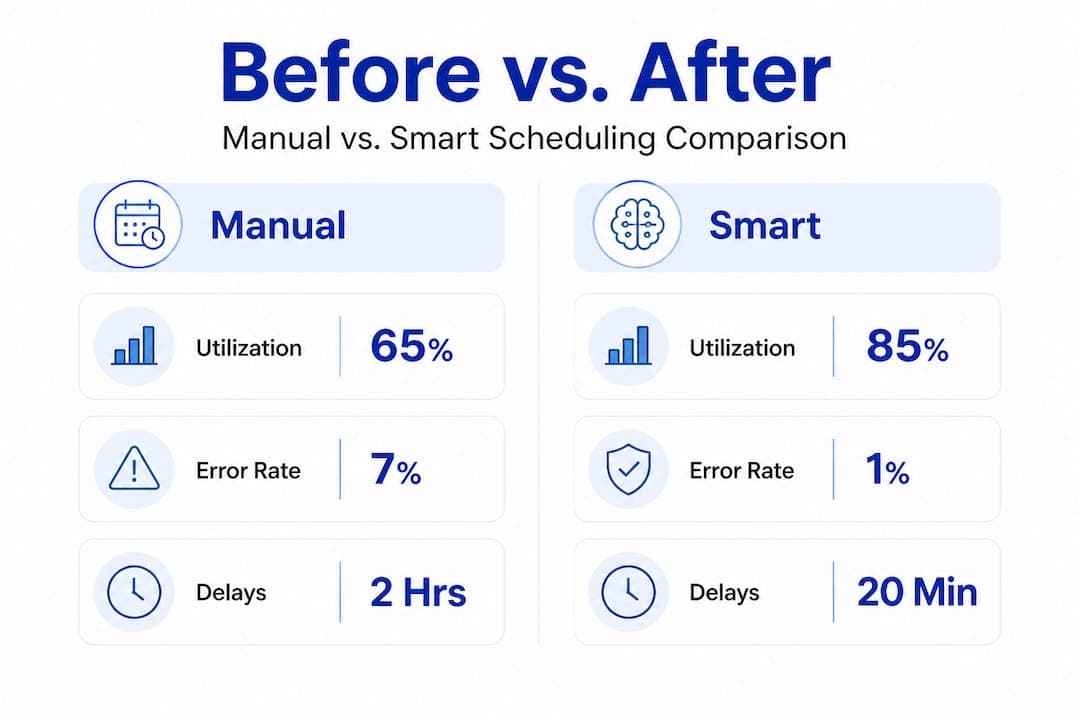
Pairing smart scheduling with strong rental inventory management practices compounds these gains further, particularly for operators managing 20 or more vehicles.
Implementing smart fleet scheduling in your operation
Now that the advantages are clear, see how to put smart fleet scheduling to work in your business.
Transitioning to automated scheduling can start with cloud-based systems and simple integration with existing processes, which means you do not need to rebuild your entire operation before seeing results. The process is incremental by design.
Step-by-step implementation guide:
- Assess your current state. Document how scheduling is currently handled. Count how many staff hours go into booking management weekly. Identify where conflicts, delays, and errors occur most frequently. This baseline makes your results measurable later.
- Clean your data. Before moving to any automated platform, ensure your vehicle records, maintenance histories, and customer data are accurate and complete. Garbage in means garbage out. Poor data hygiene is the most common reason early adoption fails.
- Select a cloud-based platform. Evaluate platforms based on your fleet size, booking volume, and integration needs. Look for API connectivity with your existing payment tools, GPS systems, and customer management software.
- Run a pilot with a subset of your fleet. Start with 30 to 40 percent of your vehicles on the new system while the rest continue as normal. This limits risk and gives your team time to learn the platform without full operational pressure.
- Train your team before full rollout. Scheduling software only delivers results when your staff uses it correctly. Build training sessions before the transition date, not after problems emerge.
- Expand to full fleet and measure results. Once the pilot is stable, roll out to your entire fleet. Track utilization, error rate, and staff time weekly for the first 90 days to confirm the gains are materializing.
"The biggest implementation mistake rental businesses make is rushing the data migration. A clean, well-structured fleet record is worth more than any feature list on a software brochure."
Common pitfalls to avoid:
- Skipping the data audit: Incomplete vehicle records will generate incorrect assignments and undermine staff confidence in the new system.
- Neglecting maintenance integration: If maintenance windows are not embedded into the scheduling logic from day one, you will recreate the same conflicts you were trying to eliminate.
- Underestimating staff training needs: Even intuitive platforms require structured training. Assume two full training sessions minimum before going live.
- Setting unrealistic timelines: Expect 30 to 60 days for a stable pilot. Rushing the transition produces avoidable errors and creates resistance among staff.
Pro Tip: Use fleet reporting in car rental dashboards to set a utilization benchmark in the first week of your pilot. That number becomes your reference point for every improvement decision going forward.
Reviewing car rental fleet optimization examples from businesses similar to yours provides concrete benchmarks and realistic expectations before you commit to a full rollout.
A smarter mindset: Why fleet scheduling is really about maximizing opportunities
Here is something that most software vendors will not tell you directly: the majority of rental businesses that adopt automated scheduling see modest early gains, then plateau. Not because the technology stops working, but because they used it to automate their old process instead of rethinking the process itself.
Conventional wisdom in this industry focuses on occupancy. Fill the calendar. Get utilization as high as possible. That logic is not wrong, but it is incomplete. Occupancy is a lagging indicator. It tells you what happened, not what you could have captured.
The businesses that extract the most value from smart scheduling shift their focus to dynamic responsiveness. They use real-time vehicle management insights not just to fill existing demand, but to identify demand they were previously invisible to. When your scheduling system surfaces that a specific vehicle class is consistently available on Tuesday afternoons while demand exists in a different channel, that is a pricing and marketing signal, not just a scheduling gap.
Pre-emptive conflict resolution is another capability that gets underused. Most operators configure automated scheduling to block conflicts reactively. Smarter operators configure it to flag risk windows proactively, periods where a late return overlapping with a confirmed pickup could generate a conflict based on historical return patterns. That distinction, reacting versus anticipating, separates good operations from outstanding ones.
There is also the question of customer segments. Businesses that move beyond just automating old processes discover that reliable, conflict-free scheduling opens doors to corporate accounts and subscription customers who require guaranteed availability. These customers have higher lifetime value and lower acquisition cost than walk-in or impulse bookers. You cannot reliably serve them on a manual system.
The mindset shift is this: smart scheduling is not a back-office efficiency tool. It is a strategic asset that expands what your business can offer, who it can serve, and how predictably it can deliver.
Power your rental business with automated fleet scheduling
Ready to put these ideas into action? Here's how Nomora makes it simple.
Nomora is a cloud-based rental management platform built specifically for operators who want to move beyond spreadsheets and manual processes. The platform connects reservations, fleet management, payments, and customer data in one integrated system designed for real-time visibility and automation.
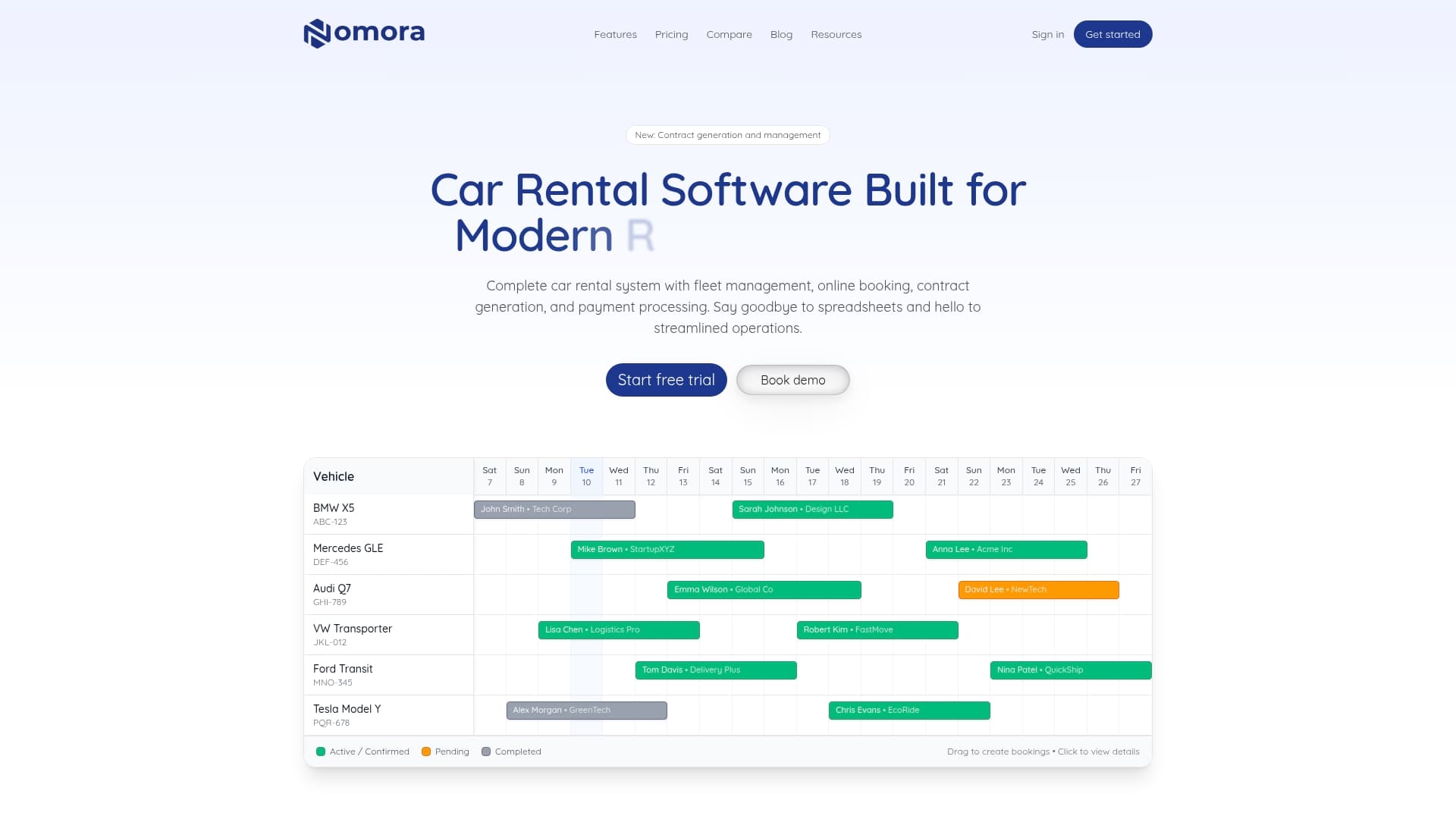
Nomora's use cases show how rental businesses across sizes and models have improved utilization and reduced errors after adoption. The platform is configured to actively prevent double bookings through rules-based assignment logic, and it handles automated rental payments to reduce the administrative load on your team even further. Setup takes 24 to 48 hours, and the onboarding process is structured to get your fleet operational on the platform quickly, without requiring technical expertise from your side.
Frequently asked questions
How does smart fleet scheduling prevent double bookings?
Automated fleet scheduling uses real-time data and rules-based logic to block assignment conflicts before confirmation, protecting both your revenue and your customer relationships.
Can smart fleet scheduling integrate with my current rental software?
Yes. Most cloud-based fleet solutions are designed with API connectivity to work alongside existing systems and centralize your scheduling and inventory data in one place.
How fast can a rental business implement smart scheduling?
With cloud tools, automated scheduling implementation can often begin within days using a pilot rollout approach, with full deployment typically completed within 30 to 60 days.
What measurable results can I expect from smart fleet scheduling?
Most operators see higher utilization rates, fewer scheduling errors, and improved customer satisfaction within the first few weeks. Asset utilization gains often range from 10 to 25 percentage points compared to manual scheduling baselines.
Recommended