TL;DR:
- The best rental management platform depends on your vertical, billing, and integration needs.
- Most operators should choose a platform that matches their specific workflow to avoid daily friction.
What are the best Rentificial alternatives right now?
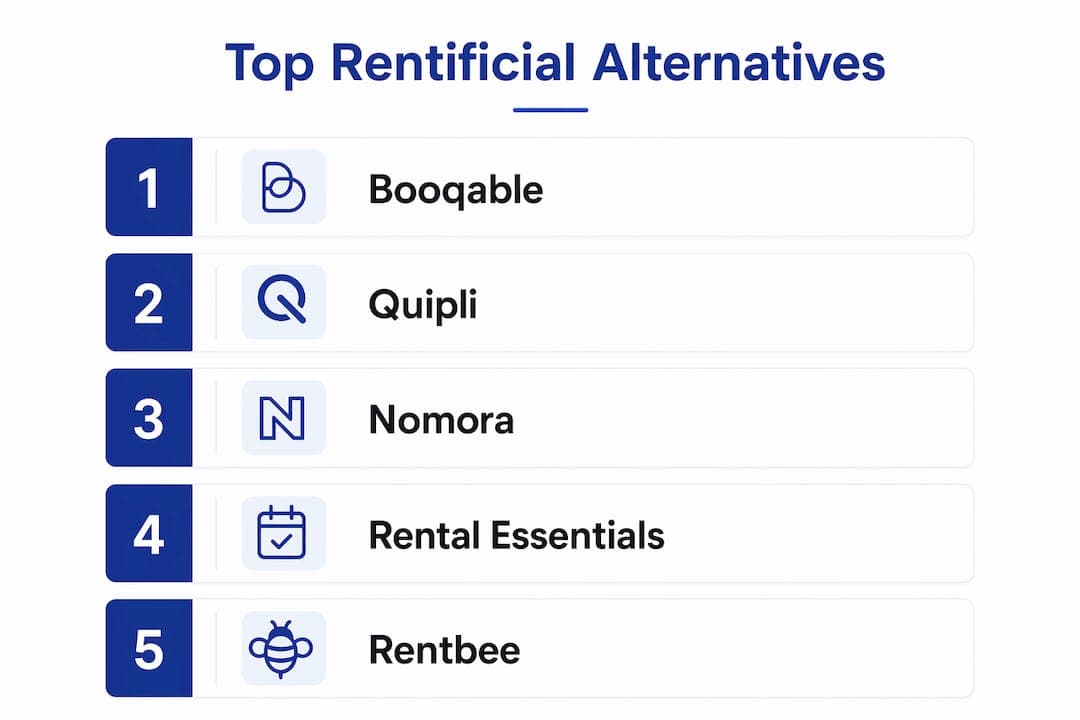
The strongest Rentificial alternatives for equipment and vehicle rental management in 2026 are Booqable, Quipli, Rental Essentials, Rentman, Texada SRM, EZRentOut, Renthub, HQ Rental Software, Rently, RentSyst, Toprent.app, AiRentoSoft, ATOM, Myrentcar, Rentbee, CLOUDERCAR, RENTALL, Rentgine, FleetWire.io, CAMASYS, and Nomora. Each targets a different slice of the rental market, so the right pick depends on your rental vertical, billing model, and integration requirements.
| Platform | Best For | Core Features | Pricing | Ease of Use | Customer Support | Integrations |
|---|
| Booqable | Small equipment rental | Online booking, inventory tracking | Tiered, public | High | Email/chat | Shopify, Zapier |
| Quipli | Equipment dealers | Quoting, e-commerce storefront | Custom | Moderate | Phone/email | QuickBooks |
| Rental Essentials | Entry-level operations | Reservations, basic reporting | Low-cost tiers | High | Email | Limited |
| Rentman | AV and event rental | Scheduling, crew management | Per-user | Moderate | Chat/email | Xero, QuickBooks |
| Texada SRM | Heavy equipment | Maintenance, telematics | Enterprise | Moderate | Dedicated rep | ERP systems |
| EZRentOut | Multi-vertical rental | Asset tracking, mobile app | Tiered | High | Chat/email | Stripe, QuickBooks |
| Renthub | Property and vehicle | Lease management, payments | Subscription | High | Email | Payment gateways |
| HQ Rental Software | Vehicle rental | Fleet management, online booking | Tiered | Moderate | Phone/email | GPS, payment |
| Rently | Self-service vehicle | Keyless access, IoT | Custom | High | Chat | IoT hardware |
| RentSyst | Car rental | Fleet tracking, contracts | Subscription | High | Chat/email | GPS, payments |
| Toprent.app | Car rental | Booking engine, fleet calendar | Tiered | High | Email | Payment gateways |
| AiRentoSoft | Vehicle rental | AI-assisted booking, reporting | Custom | Moderate | Email | Limited |
| ATOM | Equipment rental | Inventory, billing | Subscription | Moderate | Email | Accounting tools |
| Myrentcar | Car rental | Fleet and contract management | Tiered | High | Email/chat | GPS |
| Rentbee | Small vehicle rental | Online reservations, invoicing | Low-cost | High | Email | Payment gateways |
| CLOUDERCAR | Car rental | Cloud fleet management | Subscription | Moderate | Email | GPS, payments |
| RENTALL | Multi-vehicle rental | White-label booking, fleet ops | Custom | Moderate | Phone/email | API, payments |
| Rentgine | Vehicle rental | Booking, contract automation | Tiered | High | Email | Payment gateways |
| FleetWire.io | Fleet management | Telematics, maintenance alerts | Subscription | Moderate | Email | GPS, IoT |
| CAMASYS | Car rental | Reservations, reporting | Custom | Moderate | Phone | Limited |
| Nomora | All-size vehicle rental | Full fleet ops, GPS, payments | Flexible tiers | High | Onboarding + chat | GPS, CRM, payments |
Quick verdict: Platforms like Booqable and EZRentOut suit equipment-focused operators who need fast setup. Vehicle-centric businesses get more depth from RentSyst, HQ Rental Software, or Nomora. Texada SRM and Rentman serve niche verticals (heavy equipment and AV events) with specialized workflows that general platforms cannot replicate.
Table of Contents
Detailed comparison of Rentificial alternatives
Choosing among these rental management platforms requires looking past the feature checklist. The platforms above split into two clear camps: those built around vehicle fleet operations and those designed for equipment inventory and scheduling.
Feature sets and vertical fit
Vehicle-oriented platforms (RentSyst, HQ Rental Software, Myrentcar, CLOUDERCAR, Rentgine, Nomora) prioritize sub-metering, insurance handling, GPS integration, and fast checkout flows. Equipment-oriented platforms (Rentman, Texada SRM, EZRentOut, ATOM, Quipli) emphasize maintenance scheduling, complex inventory hierarchies, and crew or project management. Mixing these up is a common and costly mistake. A car rental operator running on an equipment platform will fight the software every day, because vertical specialization shapes every workflow from contract generation to damage reporting.

Pricing and trial availability
Most platforms in this field offer tiered subscription pricing, with entry-level plans accessible to independent operators and enterprise tiers for franchise networks. Trial periods and demos are widely available across these alternatives, which is the single best way to validate fit before committing. Texada SRM and CAMASYS quote custom enterprise pricing, so budget conversations happen before you see a live demo. Booqable, EZRentOut, and Rentgine publish their pricing publicly, making initial budget comparisons straightforward.
User satisfaction and support quality
Verified user reviews across platforms like GetApp and Capterra consistently flag support responsiveness as a top differentiator. Phone support is relatively rare at the entry level; most platforms default to email and chat. Texada SRM and HQ Rental Software stand out for dedicated account management at the enterprise tier. Platforms with active user communities (Rentman, EZRentOut) tend to have faster peer-to-peer troubleshooting, which reduces dependency on vendor support queues.
Integration capabilities
Deep integration with accounting tools (QuickBooks, Xero), payment processors (Stripe, Braintree), and GPS or IoT hardware separates mature platforms from lighter-weight options. White-label booking engines give rental businesses full control over their customer-facing brand experience, while platforms that rely on third-party website plugins introduce friction and limit customization. RENTALL and Nomora both offer white-label booking capabilities. Platforms without native GPS integration require workarounds that add cost and complexity, particularly for vehicle fleets where real-time location data drives utilization decisions.
Key differentiators worth verifying before you sign:
- Mobile inspection apps: Platforms without native offline-capable inspection tools force paper-based damage reporting, which creates disputes and data gaps. Mobile inspection capability is non-optional for any field-heavy operation.
- Billing interval support: Hourly, daily, and weekly billing must be native, not a workaround. Platforms that lack this create hidden cost risks through manual rate adjustments.
- Data export formats: CSV and SQL export for contracts, customer records, and asset data protects your business if you ever need to switch again.
- Security and compliance: GDPR compliance and role-based access controls are table stakes for any platform handling customer payment and identity data.
Scalability across business sizes
Rental Essentials, Rentbee, and Booqable are well-suited for operators running small fleets or single-location equipment inventories. Mid-market operators with 50–500 assets typically get the best return from EZRentOut, RentSyst, or Nomora, where automation reduces administrative overhead without requiring a dedicated IT team. Large franchise networks and corporate fleets need the enterprise-grade configuration of Texada SRM or HQ Rental Software, where multi-location management and ERP connectivity justify the higher cost.

How to choose the right rental management software alternative
The right platform is not the one with the most features. It is the one that fits how your business actually operates today and where it needs to go in the next two years.
Start by mapping your operational cadence. Short-term vehicle rental runs on speed: fast checkout, instant contract generation, and real-time fleet availability. Equipment rental runs on reliability: accurate inventory counts, maintenance windows, and project-based scheduling. Choosing a platform optimized for the wrong cadence creates friction at every step. Operational workflow alignment matters more than feature quantity.
Evaluate these factors before requesting a demo:
- Rental model fit: Does the platform natively support your billing intervals (hourly, daily, weekly, monthly)? Ask for a live demonstration of rate configuration, not just a screenshot.
- Vertical-specific functionality: Vehicle platforms need insurance tracking, sub-metering, and GPS. Equipment platforms need maintenance scheduling and complex asset hierarchies. Confirm which camp the software was built for.
- Mobile and offline capability: Field staff need inspection and damage reporting tools that work without cell coverage. Platforms without offline sync create data gaps that become disputes.
- Trial experience: Use the free trial or demo to run your actual workflows, not the vendor's scripted demo scenarios. Import a sample of your real asset and customer data.
- Support responsiveness: Test support during the trial. Send a technical question and measure response time and quality. This predicts your experience post-sale.
- Data portability: Ask the vendor directly: "What formats can I export my contracts, customer records, and asset data in?" A vendor that hedges on this answer is a long-term risk. Data sovereignty requires clear exit strategies with standard export formats.
- Scalability path: Confirm that the plan you start on can grow with your fleet without a full platform migration.
Pro Tip: Before you migrate to any new platform, audit and clean your existing data first. Standardize asset naming conventions, remove duplicate customer records, and verify contract histories. Auditing data before migration reduces go-live errors, which translates directly to fewer operational disruptions in the first weeks after launch.
Avoid the trap of choosing based on price alone. Platforms that lack native billing interval support create hidden costs through manual workarounds that compound over time.
What is Rentificial and why are operators looking for alternatives?
Rentificial is a cloud-based rental management platform designed to handle reservations, fleet tracking, contract generation, and customer data for vehicle and equipment rental businesses. It positions itself as an accessible entry point for operators moving away from spreadsheets and manual processes.
Operators typically start evaluating alternatives when Rentificial's feature depth or integration options no longer match their growth stage. Common triggers include the need for deeper GPS hardware integration, more flexible billing configurations, white-label booking engines, or enterprise-grade support. The rental software market has expanded considerably, and platforms now exist that are purpose-built for specific verticals, which raises the bar for what "good enough" looks like.
Rentificial works well for operators in early growth phases who need a structured system without heavy configuration overhead. The decision to switch usually comes when operational complexity outpaces what the platform was designed to handle.
Expert insights on switching rental management software
Switching rental management platforms is not a weekend project. The operational risks are real, and most of them come from underestimating what lives inside the old system.
The most common pitfalls operators encounter:
- Underestimating data migration complexity: Asset taxonomies, contract histories, and customer records rarely transfer cleanly between platforms. Taxonomy mismatches between systems cause asset duplication and contract errors that take weeks to untangle.
- Skipping parallel system runs: Running the old and new platforms simultaneously for at least one full billing cycle catches discrepancies in contract calculations and rate configurations before they affect customers. Parallel system operation is the single most effective safeguard against go-live failures.
- Ignoring vertical mismatch: A vehicle rental operator adopting an equipment-first platform will encounter friction in insurance handling, sub-metering, and checkout speed. The vertical origin of a platform shapes its core architecture, not just its feature list.
- Overlooking GPS and IoT integration: For vehicle fleets, real-time location data drives utilization decisions and damage accountability. Platforms without native GPS connectivity require third-party middleware that adds cost and failure points. Nomora's native GPS and payment gateway integrations address this directly, reducing the middleware layer for vehicle operators. You can review integration depth options before committing to a platform.
- Neglecting user training: Configuration drift, where staff revert to old habits and bypass new workflows, is the leading cause of failed implementations. Structured onboarding with role-specific training reduces this risk.
Platforms that offer structured onboarding, like Nomora's 24–48 hour setup process, reduce implementation debt by getting operators productive faster. For broader context on how automotive rental platforms compare across European and global markets, the rentalnow.gr alternatives analysis offers useful perspective on feature prioritization across different operator profiles.
Nomora fits where Rentificial leaves gaps
Rental businesses that have outgrown Rentificial's feature set, or that need tighter GPS integration, automated payment processing, and conflict-free fleet visibility, get a direct upgrade path with Nomora. The platform handles reservations, contract generation, fleet management, and customer data in one cloud-based system, with setup completed in 24–48 hours rather than weeks.
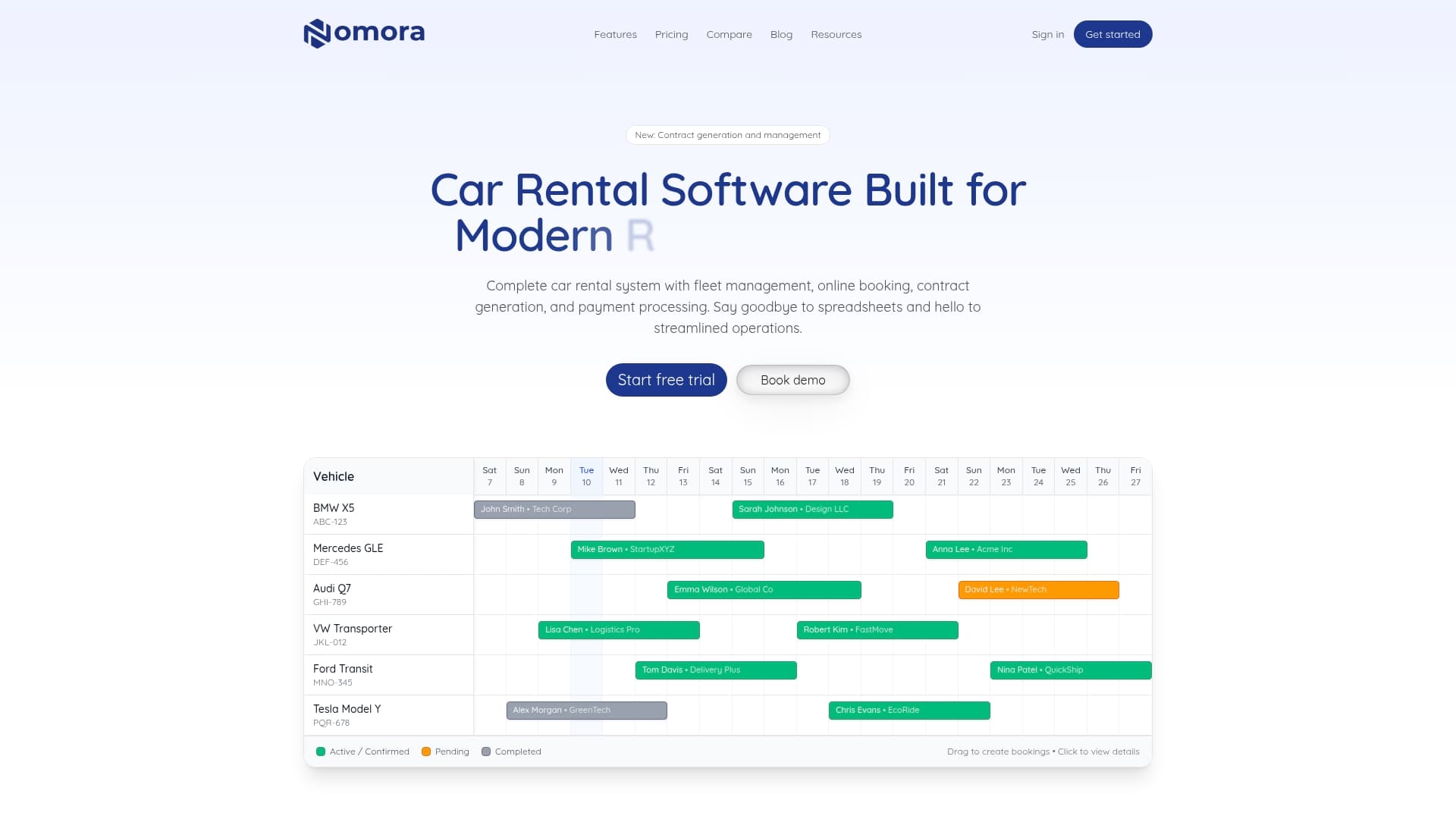
Nomora suits independent operators, franchise networks, and corporate fleet managers equally well, because its pricing tiers scale with fleet size rather than locking operators into enterprise contracts before they need enterprise features. GDPR compliance and role-based access controls are built in, not add-ons. For vehicle rental businesses specifically, native GPS tracking and payment gateway integration eliminate the middleware workarounds that plague lighter platforms.
If you are evaluating your options, the Nomora use cases page maps specific platform capabilities to rental business types, so you can confirm fit before booking a demo. For operators ready to see the full platform, Nomora's rental management software covers every workflow from booking to fleet return.
Key Takeaways
The most effective Rentificial alternative is the one aligned with your rental vertical, billing model, and integration requirements, not the one with the longest feature list.
| Point | Details |
|---|
| Vertical fit is decisive | Vehicle and equipment platforms have fundamentally different architectures; choosing the wrong one creates daily friction. |
| Data migration needs preparation | Auditing and cleaning data before switching reduces go-live errors by over 40%. |
| Mobile and offline tools matter | Platforms without native inspection apps force paper-based processes that create disputes and data gaps. |
| Trial periods are widely available | Most alternatives offer demos or trials; use them with your real data, not vendor scripts. |
| Nomora covers the full vehicle rental workflow | From reservations and GPS tracking to contract generation and payments, with setup in 24–48 hours. |
Recommended
Ready to streamline your car rental business?
Book 30 minutes with the founder. We set up everything in this guide on your own vehicles, and migrate you out of Excel for free.