Every car rental operator should run four checks before handing over keys: identity verification, driver's-license and MVR status, fraud/identity screening, and prior rental or accident history. If a third-party vendor supplies any of that data, the Fair Credit Reporting Act requires written consent and a documented adverse-action process. The single best protection you have is not the check itself but the paper trail behind it, so standardize the process now, ideally inside a rental-management system like Nomora.
TL;DR:
- Car rental operators should run identity verification, driver's license validation, fraud screening, and prior rental history checks for every renter.
- Using third-party vendors requires written consent and adherence to FCRA and Red Flags Rule, with documented procedures and regular process reviews.
- Check rental histories selectively based on risk factors like vehicle class, renter age, or suspicious visuals, escalating or refusing rentals for red flags.
- Centralizing verification records in a system like Nomora ensures compliance, speeds onboarding, and provides audit trails for legal and insurance needs.
- Automated, integrated verification workflows reduce counter friction and help staff follow standardized procedures to prevent negligent-entrustment claims.
Table of Contents
What Renter Background Checks Cover for Car Rental Operators
Renter background checks in the vehicle rental industry look nothing like tenant screening for an apartment. There's no credit pull, no eviction history, no landlord references. Instead, you're verifying that the person standing at your counter, or submitting documents remotely, is who they claim to be and legally permitted to drive.
Four categories do the real work:
- Identity verification (KYC): matching a photo, date of birth, and name against the presented ID to catch mismatches before keys change hands.
- Driver's-license validation and MVR status: confirming the license is current and checking motor vehicle records for suspensions, revocations, or violations that affect insurability.
- Fraud and identity screening: flagging stolen or synthetic ID indicators, along with device signals that suggest the booking itself is fraudulent.
- Prior rental and accident history: reviewing your own internal records for prior incidents, chargebacks, or damage claims tied to that renter.
How Do FCRA and the Red Flags Rule Apply to Rental Checks?
Compliance obligations kick in the moment you bring in outside help. If your business uses a third-party vendor to pull an MVR or a criminal record, the FCRA requires written consent before the check and a specific notice sequence around any adverse decision. That sequence has two halves: a pre-adverse action notice with a copy of the report and a summary of rights, followed by a post-adverse action notice once the final decision is made.
Separately, the FTC's Red Flags Rule asks businesses with covered accounts to run a periodic identity-theft risk assessment and maintain a written prevention program, including procedures for monitoring any outside vendors who touch customer data.
Statistic Callout: Courts have generally declined to impose a blanket duty on rental companies to investigate every renter's driving history, but Auto Rental News reporting on license verification law shows that state statutes and insurer contracts often fill that gap with specific, mandatory steps.
Build a compliance checklist around these pieces:
- A written policy describing exactly which checks apply to which rental scenarios.
- Staff training on ID inspection and signature comparison.
- Documented consent language for any third-party report.
- Standardized adverse-action notice templates.
- A recurring review cadence, at least annually, to catch outdated procedures.
What Is the Step-by-Step Process for Checking a Renter's History?
The right sequence depends on whether the renter is standing in front of you or completing everything remotely.
- At booking, collect the license number, date of birth, and a photo of the ID. Run an automated identity check where your systems allow it, and flag anything that looks like a high-risk request, same-day pickup on a luxury vehicle paired with a brand-new account, for example.
- At the counter, visually inspect the license for tampering, match the signature, confirm the expiration date, verify the payment instrument matches the renter's name, and cross-check everything against the reservation on file.
- For remote or contactless handoffs, require a membership account or signed master agreement in advance, use a digital ID verification step, and place a hold on the payment method until that verification clears.
- Decide when an MVR pull is warranted. Reserve the DMV lookup for cases involving young drivers, higher vehicle classes, insurer requirements, or any visible inconsistency; a routine, low-risk rental with a clean visual check usually doesn't need one.
- Escalate ambiguous results to a manager, document the reasoning in writing, and follow a consistent, non-discriminatory refusal script if the rental can't proceed.
Pro Tip: Assign one manager-level escalation path for every ambiguous MVR or identity result, and require every refusal to be logged with the reason and the manager's initials. That single habit does more to defend against a negligent-entrustment claim than any single check on its own.
Recordkeeping and Retention: What to Keep and Why
Good documentation is what turns "we checked" into proof you checked. Maryland's driver-license verification statute is a useful template here: it requires lessors to inspect the license, compare the signature and physical description, confirm it hasn't expired, and keep specified records, including electronic copies where permitted.
At minimum, retain per rental:
- A copy or photo of the ID and license.
- The license number and a timestamped snapshot of its status at rental time.
- Verification notes, including who reviewed the ID and when.
- Signed consent forms for any third-party report.
- MVR report copies or a reference number to the vendor record.
- The signed rental contract.
Keep only what you need to defend a claim, delete on a schedule that matches your privacy obligations, and centralize everything by rental ID so a record isn't buried in someone's inbox when an insurer asks for it.
What Red Flags Mean You Should Refuse or Escalate a Rental?
Certain signals call for an immediate stop, not a judgment call:
- Refuse outright: an altered or expired license, a clear photo mismatch, a DMV suspension indicator, a failed identity verification, or any identity-theft marker like a name that doesn't match the payment instrument.
- Escalate to a manager: an MVR result that's ambiguous or slow to return, or a renter profile that trips one fraud signal but not others.
- Rent conditionally: cases resolved with an added deposit or a restricted vehicle class, once a manager has reviewed and documented the decision.
Log every refusal with the specific reason, and keep the customer-facing explanation brief and consistent to avoid any appearance of discriminatory treatment.
How Do You Build Renter Checks Into Your Rental Software?
Manual verification doesn't scale past a handful of vehicles, and every extra minute at the counter is friction your renter feels. An integrated platform changes that by pulling verification into the booking flow itself rather than treating it as a separate step.
The practical benefits show up fast:
- API-based MVR and ID verification pulls that run automatically at booking instead of at the counter.
- Automated consent capture, so the FCRA disclosure gets signed before the check runs, not after.
- Timestamped audit logs tied to each reservation, plus webhook alerts when a red flag trips.
- Pre-authorization holds and auto-generated contract notes that cut counter time without cutting corners.
Nomora centralizes reservations, contracts, payments, and customer records in one place, which means verification artifacts, consent forms, ID snapshots, MVR references, live next to the pricing plans and reservation data rather than scattered across spreadsheets and email threads.
Pro Tip: Pilot any new verification workflow on your highest-risk vehicle class first, luxury or specialty vehicles usually generate the most fraud attempts, then track verification time, refusal rate, and fraud incidents before rolling it out fleet-wide.
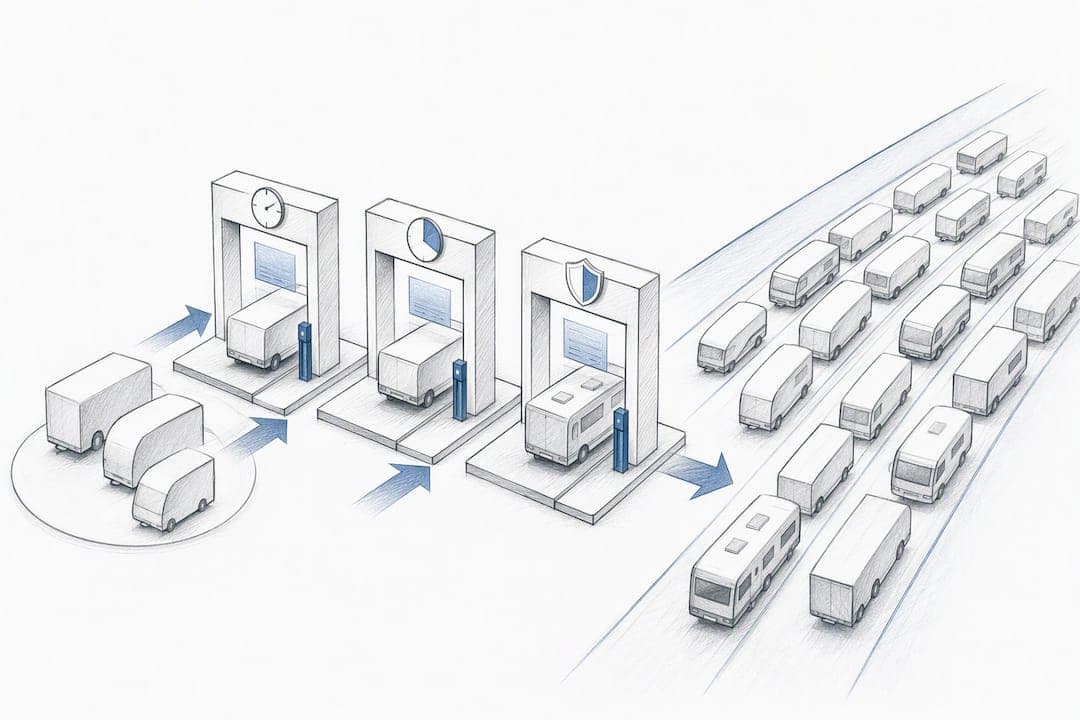
Standardize your ID checks so every location follows the same script. Capture digital verification artifacts at booking instead of scrambling at the counter. Run MVRs on high-risk or high-value rentals rather than trying to check everyone. Train staff to document consistently, since that documentation is your best defense in a claim. Then measure your refusal rate and fraud incidents, and tighten thresholds gradually instead of imposing blanket rules that frustrate good customers.
— Dizzy
Automate Verification and Cut Counter Friction With Nomora
Nomora is the alternative to juggling spreadsheets, paper consent forms, and a separate ID-scanning app at every location. It centralizes reservations, customer data, contracts, and payments in one system, so a renter's verification artifacts, ID snapshot, signed consent, and MVR reference live attached to their reservation instead of buried in a folder somewhere. Because onboarding can be handled quickly, you're not looking at a multi-month rollout to get audit trails and automated consent capture working across your fleet.
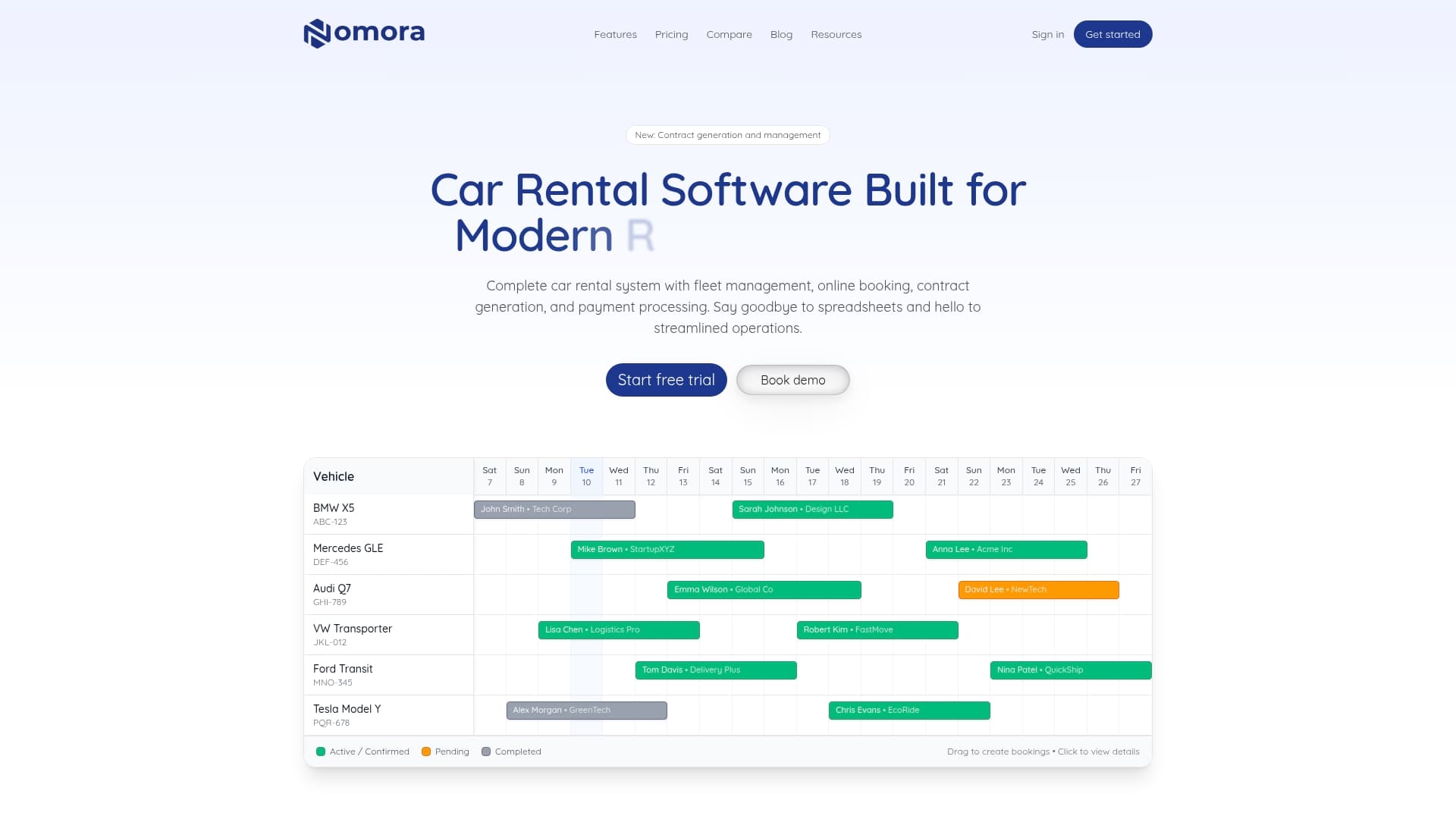
That matters most at the moments FCRA and the Red Flags Rule care about: capturing written consent before a check runs, and having a timestamped record if an insurer or a court asks how you verified a renter. Integrated GPS and payment processing round out the picture, giving you one system of record instead of three disconnected tools. Compare the Starter, Business, and Fleet plans against your current setup and see what fits your fleet size before your next renewal cycle.
Primary Sources and Industry Guidance
Sources
Not every check comes from the same place, and knowing where to look saves time at the counter.
FAQ
Do Car Rental Companies Have to Run Background Checks by Law?
No federal law mandates a background check for every rental, but courts have found liability where operators skipped documented verification and a negligent-entrustment claim followed, according to Auto Rental News. Several states, including Maryland, do require specific license-verification steps and recordkeeping.
What Consent Is Required Before Pulling a Renter's MVR?
If a third-party vendor supplies the report, the FCRA requires a standalone written disclosure and signed authorization before you run the check, per FTC guidance. Skipping that step exposes you to liability even if the MVR itself comes back clean.
What Should Happen After an Adverse Decision Based on a Report?
You need a pre-adverse action notice that includes a copy of the report and a summary of rights, followed by a final adverse action notice once the decision is confirmed. This two-step notice sequence comes directly from FCRA requirements and applies whenever a third-party consumer report factors into refusing a rental.
How Long Should Rental Operators Keep Verification Records?
Retain ID copies, consent forms, and MVR references at least as long as your state's statute of limitations for related claims, then delete per your privacy policy. Centralizing that record by rental ID, something a platform like Nomora handles automatically, makes retrieval far faster if an insurer or court requests it.
Does Nomora Run Background Checks Itself?
Nomora doesn't perform the MVR or identity check itself; it centralizes reservations, consent capture, and customer records so verification artifacts from your chosen vendor stay attached to each rental. Pricing for the Starter, Business, Fleet, and Enterprise plans is listed on the Nomora site.
Recommended
Ready to streamline your car rental business?
Book 30 minutes with the founder. We set up everything in this guide on your own vehicles, and migrate you out of Excel for free.