What driver behavior monitoring is and how systems capture data
Driver behavior monitoring works by pulling signals from several sources on the vehicle and turning them into structured events a manager can act on. A telematics device or smartphone app reads GPS position, accelerometer output, and often CANbus data straight from the engine, while some setups add an in-cab camera for context. That raw stream moves from the device to a cloud platform, where software applies thresholds to flag specific events, then surfaces them on a dashboard.
The value shows up when those events connect to the rest of the operation rather than sitting in an isolated report. Fleet managers get more out of the system when it links to dispatch, maintenance scheduling, and driver training records, since a hard-braking event that triggers a maintenance check or a coaching assignment is worth more than one that just gets logged. For a deeper look at how the underlying hardware works, see this explainer on vehicle tracking technology.
- GPS and accelerometer data establish speed, location, and the force behind sudden moves.
- CANbus integration pulls engine and braking data directly from the vehicle's own systems.
- In-cab cameras add visual context to confirm or dispute what the sensors report.
Which events fleets actually track and why calibration matters
Most monitoring platforms track a consistent set of behaviors: speeding relative to posted limits, hard braking, rapid acceleration, harsh cornering, excessive idling, distraction (often phone handling detected by camera or motion pattern), and seatbelt use. Each event is defined by a threshold, such as a deceleration rate measured in g-force, and those thresholds need calibration by vehicle class and route type or the system starts generating noise instead of insight.
Calibration matters because raw sensor data is messy. GPS jitter in urban canyons, road grade on hilly routes, and outdated speed-limit maps can all produce false readings that look like unsafe driving but are not. A UC San Diego survey of fleet safety professionals found that calibrating thresholds by vehicle class and route type markedly reduces false positives, and recommends reviewing a representative sample of flagged events during any pilot before scaling coaching programs.
- Speeding and harsh cornering are defined against posted limits and lateral g-force respectively.
- Idling and distraction events depend more on duration and pattern than a single threshold.
- Seatbelt status is typically a binary flag pulled from vehicle sensors rather than telematics inference.
Calibrated thresholds cut noise: fleet safety professionals surveyed rate manager-led review of a sample of flagged events, before scaling any coaching program, as a practical step that meaningfully reduces false positives.
Not every feature in a driver behavior monitoring platform carries equal weight for daily operations. Real-time alerts matter because they let a dispatcher or safety manager respond to a severe event within minutes rather than finding out during a weekly report. Event video capture, where cameras are part of the setup, gives a manager the context to confirm whether an alert reflects genuine risk or a road condition the sensor misread.
Scorecards and leaderboards translate individual events into a trend a manager can track over weeks, which matters more than any single flagged incident. The strongest platforms also automate the next step: assigning a short training module the moment a driver crosses a threshold, rather than waiting for a manual review. Finally, API access and data export matter for fleets that need to feed event data into insurance underwriting or a broader fleet management system.
- Real-time alerts flag severe events immediately instead of in a delayed report.
- Automated coaching assignment routes flagged drivers into training without manual triage.
- API and export access lets fleets share event data with insurers or internal systems.
Benefits and the ROI evidence actually supports
The clearest evidence on driver behavior monitoring comes from studies that combine monitoring with training rather than alerts alone. An automatically assigned, targeted web-based instruction program matched to onboard safety monitoring data was associated with a 73.93% reduction in excessive speeding in the study cohort. Separate field trials cited in that same research found onboard safety monitoring paired with coaching associated with a 38.1% overall reduction in safety-related events and a 59.1% reduction in severe events.
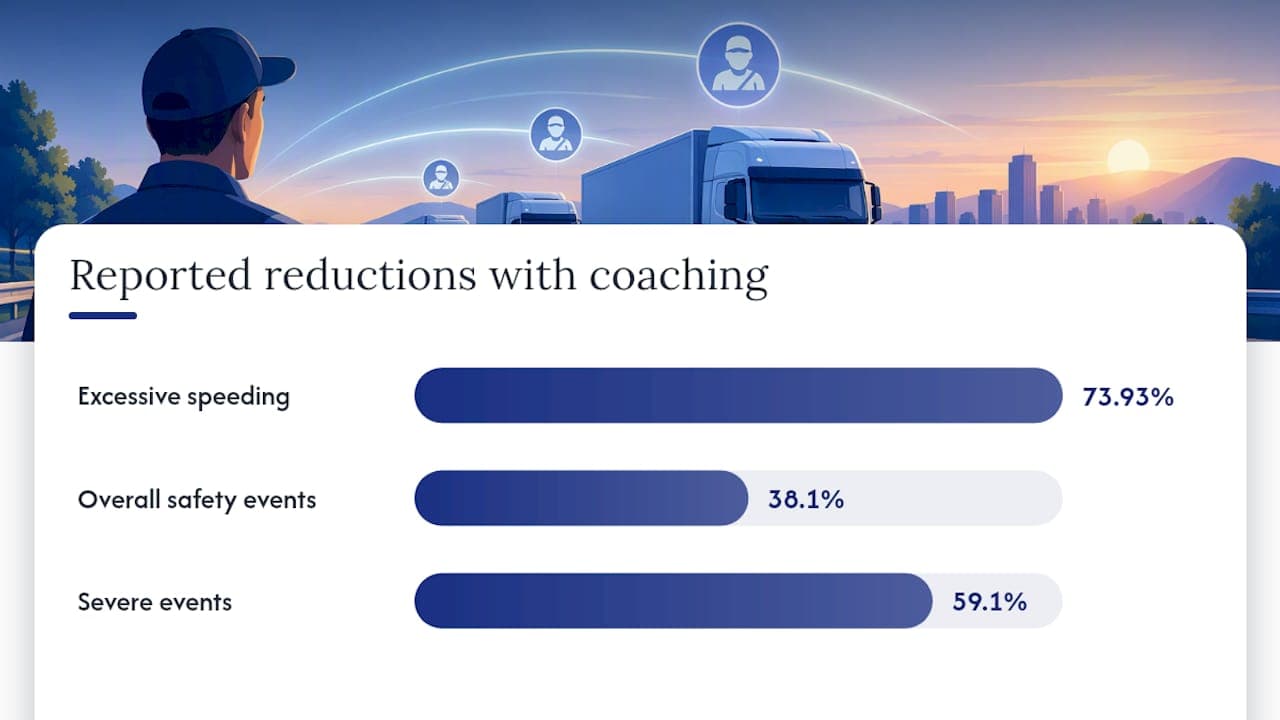
Those reductions in risky events translate into fewer insurance claims, lower repair frequency, and measurable fuel savings, since harsh acceleration and excessive idling both burn more fuel than steady driving. Expect the timeline to matter: early gains often show up within the first few weeks as obvious offenders get flagged, while sustained behavior change across the fleet takes longer and depends on consistent coaching rather than the monitoring system alone.
Field studies point to real gains: onboard safety monitoring combined with coaching has been linked to reductions of this scale, which is why pairing alerts with human follow-up matters more than the monitoring technology itself.
Running a pilot that leads to real behavior change
A pilot program works best when it is scoped tightly enough to produce a clear signal. Start with a defined group, run it for a set number of weeks, and track event rates before comparing them against the baseline rather than judging the program on isolated incidents.
- Select a pilot group that includes both higher-risk and average drivers so results reflect the full range of behavior.
- Set a review cadence, typically weekly, and track event counts against the same period's baseline.
- Combine in-cab alerts with manager-led coaching, since research on in-cab feedback shows that alerts alone rarely produce lasting change, while combined interventions do.
- Layer in targeted web-based instruction for lower-severity or first-time events to preserve coaching time for repeat or high-risk cases.
- Communicate the program's purpose clearly to drivers before launch, since transparency affects how they respond to the data.
Fair process matters as much as the data itself. Drivers who understand why they are being monitored and see the same standards applied across the team tend to engage with coaching rather than resist it. For workflow ideas on connecting alerts to a broader driver management process, this guide on driver management for rental fleets covers practical triage and escalation steps.
Pro Tip: Route only high-severity or repeat events to a manager for a live coaching conversation, and let automated web-based instruction handle first-time, low-severity flags.
KPIs to track and how often to review them
The most useful KPI for driver behavior monitoring is the event rate per 1,000 miles, since it normalizes for how much each vehicle is actually driven. Crash and claim frequency, along with average claim cost, remain the ultimate measures of whether the program is working, though they take longer to move than event rates.
Secondary measures matter for diagnosing the program itself: coaching completion rates, how often a coached driver repeats the same event (recidivism), and the false-positive rate on flagged incidents. Review event-level data weekly and claims data monthly or quarterly, since claims are rare enough that small samples can produce misleading swings.
- Event rate per 1,000 miles normalizes risk across vehicles with different mileage.
- Crash and claim frequency measures the outcome that ultimately matters to the business.
- Coaching completion and recidivism show whether interventions are actually changing behavior.
- False-positive rate flags when thresholds need recalibration before drivers lose trust in the system.
Privacy, DSMS, and using monitoring data defensibly
The FMCSA's Driver Safety Measurement System methodology clarifies an important limit: DSMS does not generate driver ratings for carriers and does not affect commercial driver licenses. Its outputs are intended for enforcement purposes, not as a carrier-facing score, which means a fleet's own monitoring program is a separate tool with its own rules for fairness and disclosure.
Sound practice starts with clear driver notice about what is monitored and why, followed by defined data retention limits and access controls so event footage and scores are not viewed casually. When using monitoring data in hiring, discipline, or claims defense, document the threshold that triggered the event and the coaching response, since a single flagged incident without context holds little weight on its own. The FMCSA's Safety Management Cycle guidance recommends evaluating monitoring as one piece of a broader safety program that also covers hiring, training, and policy.
- Driver notice should explain what is tracked and how the data will be used before monitoring starts.
- Retention and access controls limit who can view footage or scores and for how long.
- Documented context for each flagged event protects the fleet when data is used in disciplinary or claims decisions.
Choosing the right monitoring approach for your fleet
Before committing to a system, it helps to run through a short checklist that covers operational fit, technical fit, and day-to-day support burden. Vehicle types and driver mix matter, since a mixed fleet of vans and trucks may need different sensor configurations than a single-vehicle-class operation, and coverage in low-connectivity areas affects how reliably data actually reaches the cloud.
On the technical side, confirm what sensors are included, whether the platform offers API access for exporting event data, how video is stored and for how long, and what controls exist to reduce false positives. On the operational side, weigh the admin burden of running the system day to day against the coaching tools it provides and how its pricing model scales as the fleet grows.
- Operational fit covers vehicle types, driver mix, and connectivity in the areas the fleet operates.
- Technical fit covers sensor types, API access, video retention, and false-positive controls.
- Support and pricing cover the admin time required and how costs scale with fleet size.
Pro Tip: Ask any platform how it handles calibration by vehicle class before comparing dashboards or pricing, since a poorly tuned threshold undermines every other feature.
How Nomora connects telematics data to daily fleet operations
Some platforms centralize GPS and telematics events alongside reservations, driver records, and contracts, so a flagged event can trigger a training assignment or update a driver's file automatically. Onboarding can take only a few days, and integrations may extend to payment processing and fleet tracking, giving rental and fleet operators a comprehensive system instead of several disconnected tools.
What monitoring means for driver morale and retention
Driver behavior monitoring changes how drivers experience their job, and that effect cuts both ways. A program that surfaces every minor event without context or follow-up tends to feel punitive, and drivers who sense they are being scored rather than supported often disengage or look elsewhere for work. That risk is real in an industry already dealing with driver shortages and high turnover in some segments.
The programs that avoid this outcome share a common trait: they pair data with conversation rather than substituting one for the other. Manager-led coaching, delivered as a short, specific conversation rather than a generic lecture, tends to land better than a scorecard alone. The UC San Diego survey of fleet safety professionals found that brief, targeted manager sessions supported by video evidence are rated more effective than self-coaching through an app, and drivers appear to respond to that same directness.
Gamified feedback and incentive programs offer another path, particularly for drivers whose risk level sits in the middle of the pack. Research on gamified telematics and driver profiling found that incentive-based approaches work best for moderate-risk drivers, while high-risk drivers tend to need direct coaching rather than a leaderboard. Transparency about what is measured, consistent application of standards across the team, and visible recognition when scores improve all help a monitoring program build trust instead of eroding it.
Where these systems fall short
No monitoring system reads driving behavior perfectly, and fleet managers benefit from knowing where the gaps are before they build a program around the data. False positives remain the most common complaint: GPS jitter, road grade, and outdated speed-limit maps can all produce a flagged event that has nothing to do with unsafe driving. The UC San Diego research points to threshold calibration by vehicle class and route type as the main fix, but that calibration takes deliberate setup rather than arriving out of the box.
Data accuracy issues compound this problem. A camera-based distraction alert can misread a driver adjusting a mirror as phone handling, and accelerometer-based cornering events can vary by how a load is distributed in the vehicle. Reviewing a sample of flagged events during any pilot, rather than trusting the raw count, catches most of these issues before they undermine driver trust.
There is also a limit to what alerts alone can do. Research on in-cab feedback found that alerts by themselves frequently fail to produce statistically significant long-term change, which means a fleet that installs sensors and skips the coaching layer is likely to see initial improvement fade. Monitoring data is a diagnostic tool, not a fix on its own, and treating it as the whole solution is the most common way these programs underdeliver on their promise.
Where driver behavior monitoring is headed
The clearest trend in this space is the shift from generic alerts toward automated, targeted intervention. Rather than flagging every event and leaving a manager to sort through the list, newer systems increasingly assign a specific web-based training module the moment a driver crosses a threshold, reserving manager time for repeat offenders and severe events. That triage model, already associated with strong results in WBI research, is likely to become standard rather than a differentiator.

Segmentation is the second major shift. Instead of treating every driver the same way, platforms are starting to cluster drivers by risk profile and tailor the response accordingly, since gamified incentive research shows that moderate-risk drivers respond well to gamified feedback while high-risk drivers need direct coaching. Expect more platforms to build that segmentation into their default workflows rather than leaving it to manual analysis.
Fatigue and distraction detection continue to improve as camera-based systems get better at reading driver state rather than just vehicle motion, an area where NHTSA's research on drowsy driving underscores why the added signal matters. As these systems mature, the practical challenge shifts from collecting more data to acting on it faster and more fairly, which is where automation and coaching workflows will keep converging.
What fleet managers should prioritize first
Start small, measure honestly, and pair every alert with a human conversation before you scale. Automate the paperwork, not the relationship. A scorecard without coaching rarely changes behavior, and a punitive program without transparency loses driver trust fast.
— Dizzy
Turn monitoring data into daily operations with Nomora
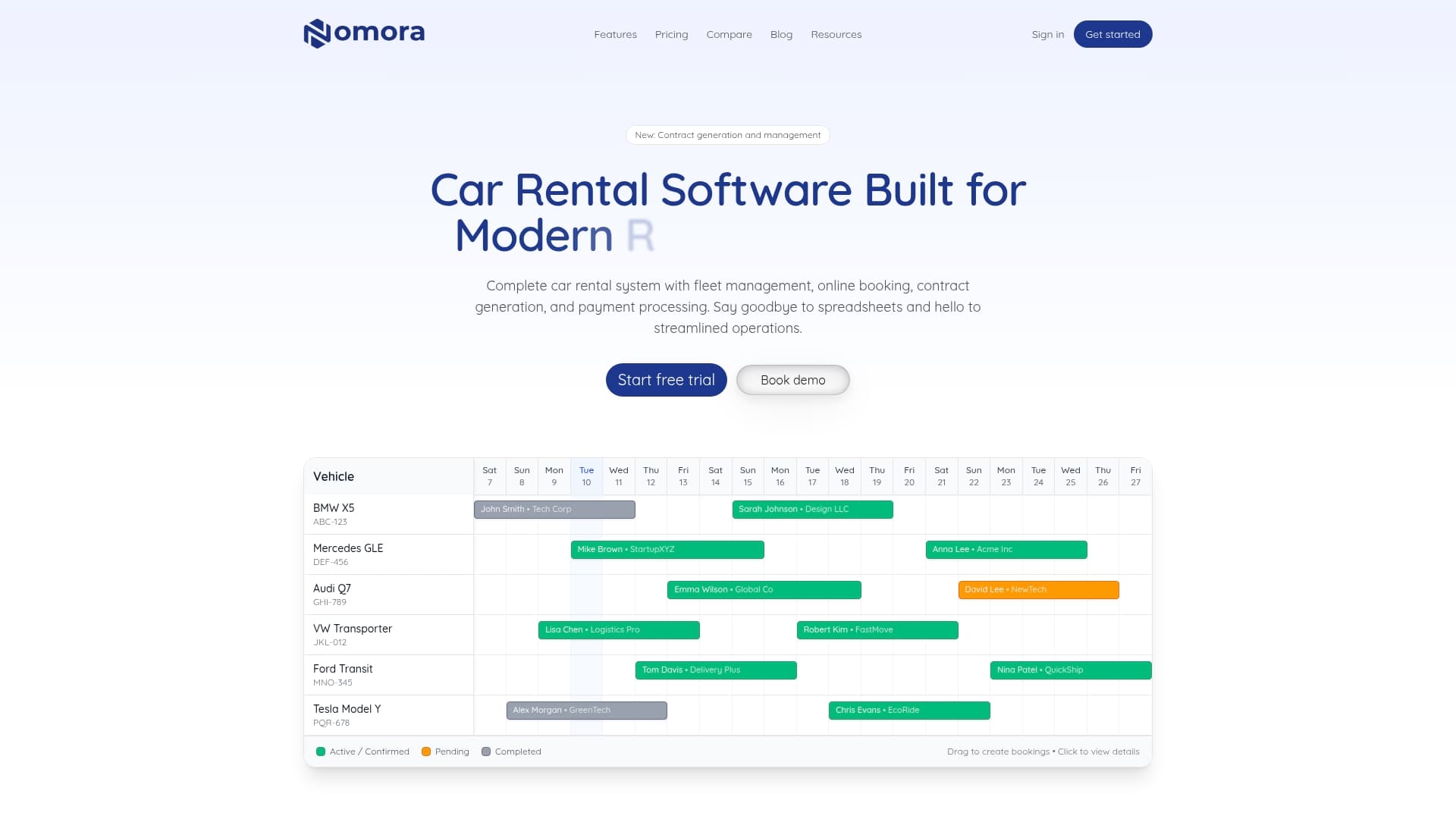
Nomora brings GPS and telematics events into the same system as reservations, driver records, and contracts, so a flagged event can trigger a training assignment without extra manual work. Most teams are fully operational within 24 to 48 hours.
 Explore Nomora's pricing plans or visit the product overview to see how telematics integration fits your fleet.
Sources
FMCSA DSMS methodology, peer-reviewed WBI research, and NHTSA drowsy driving data.
FAQ
What is driver behavior monitoring?
Driver behavior monitoring is the use of telematics devices, sensors, and sometimes cameras to record driving events like speeding, hard braking, and distraction. The data is analyzed on a cloud platform and typically paired with manager-led coaching to improve safety and reduce costs, as research on combined monitoring and coaching approaches shows alerts alone rarely produce lasting change.
What is an example of behavior monitoring?
A common example is a telematics device that flags a hard-braking event, triggering an automatic web-based training assignment for the driver involved. Fleets also use scorecards that track event rates over time, giving managers a trend to coach against rather than reacting to single incidents.
What are the five primary drivers in behavioral psychology?
Definitions vary across behavioral psychology literature, and no single authoritative list of "five primary drivers" applies specifically to driving behavior monitoring. In the fleet context, the behaviors that matter most are speeding, harsh braking, rapid acceleration, distraction, and idling, since these are the events most monitoring systems are built to detect.
Does driver behavior monitoring actually reduce crashes?
Field studies show meaningful reductions when monitoring is combined with coaching or training. One study found onboard safety monitoring paired with coaching associated with a 38.1% reduction in safety-related events and a 59.1% reduction in severe events, though monitoring alone without follow-up produces weaker, less durable results.
Does the FMCSA rate drivers based on monitoring data?
No. The FMCSA's DSMS methodology confirms that DSMS does not generate driver ratings for carriers and does not affect commercial driver licenses, since its outputs are limited to enforcement use. Any scoring a fleet uses internally comes from its own monitoring platform, not from DSMS.
Recommended