The most practical fuel policy is a transparent hybrid model: give customers a prepay option or a refueling service billed as a fixed service fee plus a per-gallon rate, and back every charge with a documented starting fuel level. Pair that policy with reservation software that captures fuel data automatically and shows the final amount before payment. Anything less invites disputes, chargebacks, and regulatory scrutiny.
TL;DR:
- The most effective fuel policy combines a transparent hybrid model with documentation of starting fuel levels and automated final charge calculations.
- Disclose fuel policy clearly at reservation, in the rental agreement, on counter signage, and before payment to comply with FTC regulations and avoid disputes.
- Reservation systems should treat fuel information as a core data field, automate charge computations, attach receipts, and integrate with payment and telematics for accuracy.
- Staff should follow routines for precise fuel inspections, clear communication, and prompt receipt verification to prevent disputes.
- Implement a fixed service fee plus per-gallon rate that reflects local retail prices, with itemized charges and consistent caps to ensure fairness and reduce complaints.
Table of Contents
Fuel policy types and operational pros and cons
Choosing a fuel policy is really a choice about which operational risk you can manage best. Each of the three common models shifts the friction to a different point in the rental cycle.
- Full-to-full: the customer returns the car with a full tank, which creates the lowest friction when start and return levels are documented, but breaks down without consistent inspection records.
- Prepaid or advance purchase: the customer pays for a full tank at checkout, giving you upfront revenue, but the fee must be disclosed clearly since unused fuel is typically forfeited.
- Refueling service: your team refuels the car and bills a fixed service fee plus a per-gallon rate, which is easy to enforce operationally but only stays fair when the pricing is visible before checkout.
Airport counters with high turnover tend to favor full-to-full with strict receipt rules, since return inspections happen fast and volume rewards simplicity. Local branches with slower-return customers often lean on the refueling service model because staff can verify tank levels in person. Short-trip fleets, where the reader might rent a car for two or three hours, need the tightest receipt and reversal workflow of the three, since a nearly full tank can look suspicious without a timestamped record.
Legal and disclosure obligations operators must follow
Fuel fees sit squarely inside a broader regulatory trend toward fee transparency. The FTC Rule on Unfair or Deceptive Fees requires businesses to disclose the total price or clearly disclose any excluded charges before asking for payment, and it explicitly warns against vague or misleading fee labels. The rule also lists which fee types must be folded into the total price shown upfront rather than surfaced later at the counter or on the final receipt.
The FTC has already enforced this in the rental industry. A past settlement with a major rental company required clear disclosure and barred misrepresentation after customers were charged automatic fuel fees even when they returned vehicles full.
Disclose your fuel policy at these four points:
- The reservation page, so the customer sees the fuel terms before they commit.
- The rental agreement face, in plain language rather than buried in fine print.
- Counter signage, so walk-up customers see the policy before signing anything.
- The final payment screen, showing the exact amount before the card is charged.
The operational rule underneath all of this is simple: never let a fuel charge appear as a surprise on the receipt. If a charge is optional, document that it was declined or accepted, and keep that record attached to the rental file.
Your reservation system needs a data model that treats fuel as a first-class field, not a note scribbled on a paper contract. At minimum, the contract record should carry a starting fuel level field, a fuel option selector, a per-gallon price, a service fee, and a slot for a receipt attachment.
- Automations: the system should compute the final fuel-related charge automatically, require the customer to acknowledge the starting level, and hold the charge until the final amount is visible on screen.
- Receipt handling: accept photo receipts on the return lot, attach them directly to the rental record, and apply reversal rules automatically when a receipt matches the policy terms.
- Integration points: connect the fuel workflow to your payment gateway so charges only fire after acknowledgment, and to fleet telematics where available so fuel-level readings can be cross-checked against agent entries.
- Reporting: export fuel-charge data alongside reversal and dispute outcomes so you can see whether the policy is working as intended.
Think of your rental software as the central nervous system of the operation: every fuel decision, from the counter agent's tablet to the return-lot photo, should route through it rather than living in a separate spreadsheet or a paper folder.
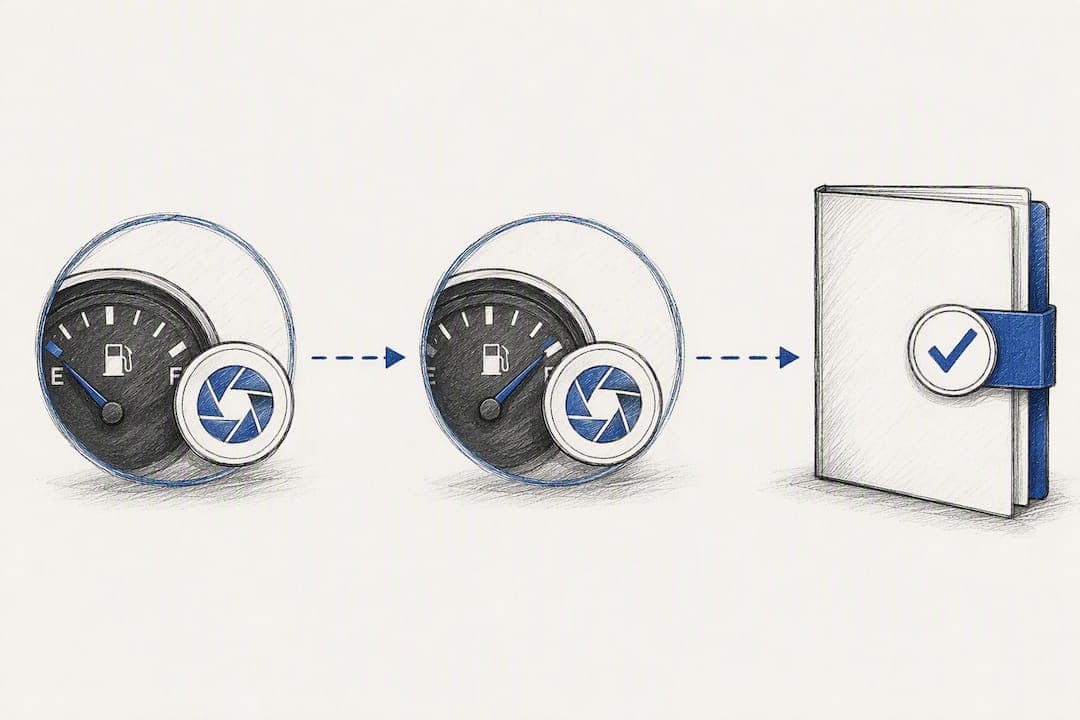
Pro Tip: Require a photo of the fuel gauge at both checkout and return before the contract can close. It takes seconds and removes most "he said, she said" disputes before they start.
Operational best practices for inspections, staff workflow, and customer communication
A fuel policy is only as strong as the paperwork behind it. Build the inspection and communication steps into a routine your staff can repeat without thinking twice.
- Ready-to-rent inspection: record the exact fuel fraction, take a photo of the gauge, and get both the agent's and the customer's initials or digital signature before the keys change hands.
- Counter script: explain the fuel options in plain terms and tell the customer exactly how to avoid the refueling fee, rather than letting them discover the rule on the invoice.
- Return-lot receipt rules: for short trips especially, have a published policy for what receipts you accept and how quickly agents can verify and reverse a charge on the spot.
- Staff training and audits: sample a percentage of closed contracts each month to confirm agents are following the fuel checklist consistently, not just when a manager is watching.
Signed inspection records, once in place, tend to resolve most fuel disputes before they escalate, since both parties already agreed on the starting condition of the vehicle. A related rental vehicle inspection guide walks through the broader checklist that fuel documentation fits into.
Designing transparent pricing for refueling: fixed service fee plus per-gallon model
A hybrid pricing structure, a fixed service fee to cover the labor of refueling plus a per-gallon rate close to local retail, is the model industry guidance points to as the most transparent way to recover costs without inviting complaints. The fixed fee compensates staff time regardless of how much fuel is missing, while the per-gallon rate scales fairly with the actual gap.
- Setting the per-gallon rate: anchor it near local retail pricing rather than padding it heavily, since a large markup is the detail customers remember and complain about.
- Capping the service fee: keep it consistent across locations and check state-level limits where they apply, since some jurisdictions restrict ancillary fee structures.
- Presenting the charge: itemize the service fee and per-gallon cost separately on the final screen so the customer sees exactly what each dollar covers before authorizing payment.
Monitoring, reporting, and a dispute resolution playbook
Every fuel charge needs a paper trail: start and return fuel levels, photos or receipts, the agent ID who processed the transaction, timestamps, and the full charge history tied to that rental.
- Reversal rate, tracked monthly, to see how often fuel charges get disputed and reversed.
- Short-trip fee frequency, since same-day and hourly rentals carry the highest dispute risk.
- Dispute outcomes, logged by resolution type, to spot patterns tied to specific locations or agents.
| Record type | What it captures | Why it matters |
|---|
| Fuel level log | Start and return fraction, photo | Establishes the baseline for any charge |
| Receipt attachment | Customer-submitted fuel receipt | Supports on-lot reversal decisions |
| Charge history | Amount, timestamp, agent ID | Provides an audit trail for disputes |
When a dispute comes in, validate the receipt against the attached record, reverse the charge if it matches policy, and escalate with the documented evidence if it does not. Log the outcome either way so the next audit has a complete picture. A fraud prevention guide covers related risks around misrepresented fees and hidden charges worth reviewing alongside your dispute process.
Operator perspective: balancing revenue, compliance, and customer trust
Fuel fees can recover real costs, but chasing every extra dollar tends to backfire once complaints and regulatory attention start piling up. The operators who get this right treat disclosure as a competitive advantage rather than a compliance chore, and they pilot policy changes on a single location before rolling them out fleet-wide. Automation and clear pricing reduce disputes far more reliably than aggressive fee structures ever will.
— Dizzy
How Nomora implements fuel-policy controls and next steps to test the approach
Building the controls this article recommends by hand, across spreadsheets and paper contracts, is exactly the kind of manual work that creates fuel-fee disputes in the first place. Nomora replaces that with a single system built around the fields and automations described above.
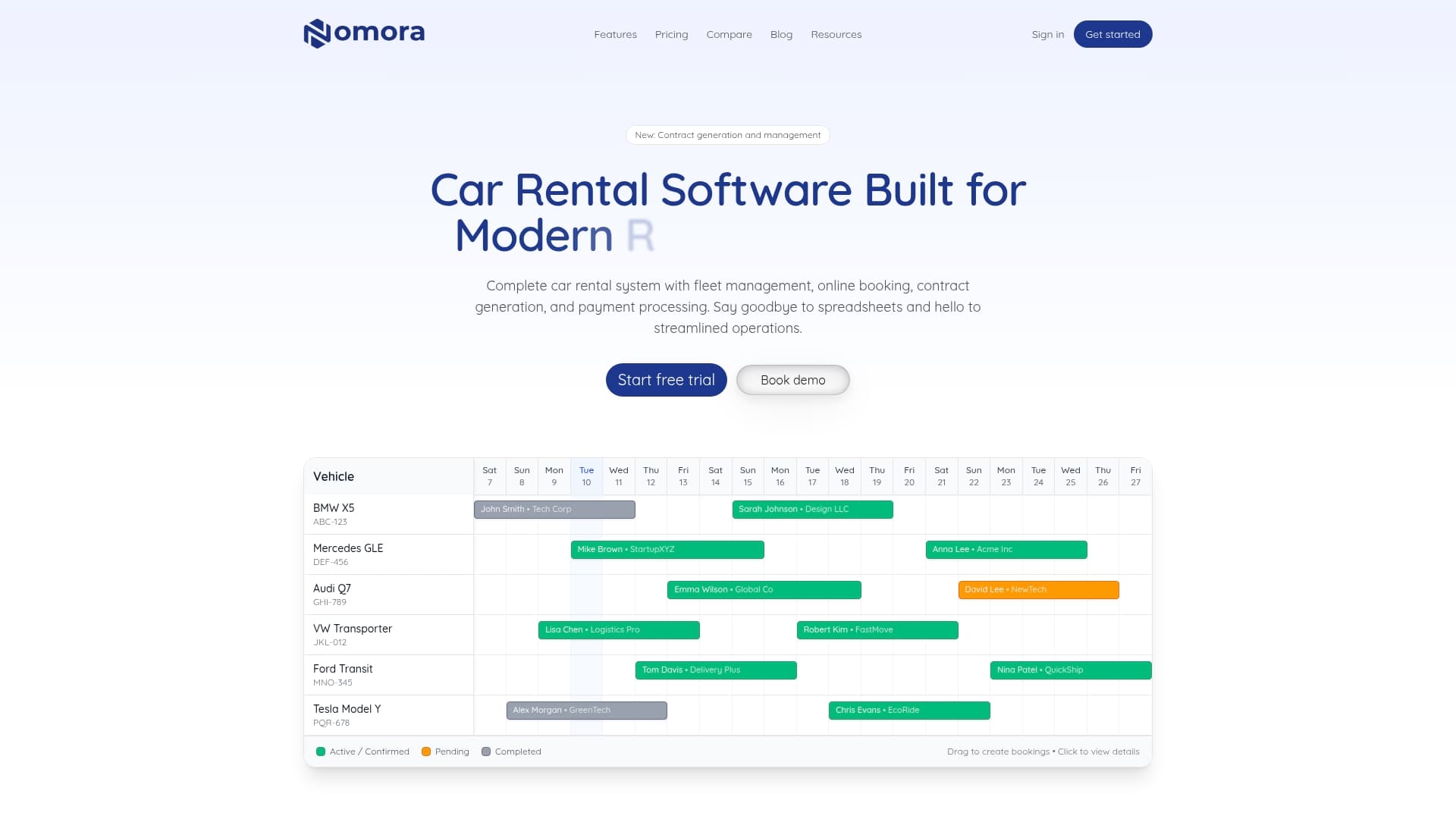
- Contract records carry a starting fuel level field, receipt attachments, and automated charge calculations that hold until the final amount is visible.
- Reversal rules apply automatically when a return-lot receipt matches your policy terms, cutting the manual back-and-forth out of disputes.
- Onboarding can be quick, which supports running a single-location pilot before wider rollout.
A sensible pilot runs one branch for 30 days, tracking reversal rate and short-trip fee frequency before expanding. Review the pricing plans, including Starter, Business, and Fleet tiers, or see how the platform fits your business type before you commit a full location to the test.
Sources
FAQ
What is the best fuel policy for a car rental business?
A transparent hybrid model, a fixed service fee plus a per-gallon rate for refueling, paired with documented starting fuel levels, gives operators the clearest defense against disputes. Full-to-full works well too, but only when inspection records are consistent.
Are car rental fuel fees legal?
Fuel fees are legal as long as they are clearly disclosed before payment, following the FTC Rule on Unfair or Deceptive Fees. Charging a fuel fee without proper disclosure, as seen in a past FTC enforcement action, can trigger regulatory action.
How should I document fuel levels to avoid disputes?
Record the exact fuel fraction with a photo at checkout and return, and get sign-off from both the agent and the customer. This record, once attached to the rental file, resolves most fuel disputes without further escalation.
How do I price a refueling service fairly?
Set a fixed service fee to cover labor, then add a per-gallon rate close to local retail pricing rather than a heavy markup. Itemize both charges separately on the final payment screen so the customer sees exactly what they are paying for.
Can rental software automate fuel policy enforcement?
Yes. Platforms like Nomora can capture starting fuel levels, attach return receipts, compute final charges automatically, and apply reversal rules without manual review, reducing the paperwork that leads to disputes.
Recommended
Ready to streamline your car rental business?
Book 30 minutes with the founder. We set up everything in this guide on your own vehicles, and migrate you out of Excel for free.