Rental pricing remains one of the most challenging aspects of running a profitable car rental business. Setting rates too high drives customers to competitors, while pricing too low leaves money on the table and erodes margins. With fluctuating demand, seasonal variations, local events, and aggressive competition, finding the sweet spot requires more than intuition. This guide walks you through proven strategies, advanced tactics, and technological tools that help rental businesses optimize pricing decisions and maximize profitability in 2026.
rental pricing optimization guide11 min read•
Rental pricing optimization guide to maximize profits in 2026
Learn proven rental pricing strategies to boost profits in 2026. Master dynamic pricing, overbooking, rate fences, and fleet optimization with data-driven tactics.
N
Nomora Team
Car Rental Software Experts

Table of Contents
Table of ContentsKey takeawaysUnderstanding rental pricing challenges and preparationEffective rental pricing strategies and executionHandling edge cases and advanced pricing tacticsVerifying pricing performance and continuous improvementOptimize your rental pricing with Nomora solutionsFAQRecommended
Key takeaways
| Point | Details |
|---|---|
| Dynamic pricing increases revenue | Implementing algorithmic pricing can boost revenue by 5-10% without adding inventory. |
| Overbooking improves utilization | Strategic overbooking based on no-show data minimizes idle fleet time. |
| Ancillary upsells drive profit | Add-ons like insurance and GPS contribute over $6,000 annually per location. |
| Rate fences segment customers | Physical and non-physical barriers help match pricing to willingness to pay. |
| Avoid panic pricing | Desperate rate cuts damage brand perception and long-term margins. |
Understanding rental pricing challenges and preparation
Rental pricing isn't static. Multiple market variables influence what customers will pay at any given moment. Demand fluctuates based on seasonality, with summer and holidays driving higher rates while winter months see softer pricing. Local events like conferences, concerts, and sports tournaments create sudden spikes in demand that savvy operators can capitalize on. Competitor pricing also shifts constantly, requiring real-time monitoring to stay competitive without racing to the bottom.
Before implementing sophisticated pricing strategies, you need reliable data sources. Accurate demand forecasting requires historical booking patterns, cancellation rates, and seasonal trends. Competitor rate intelligence helps you understand market positioning. Demand forecasting software automates much of this data collection, eliminating manual spreadsheet tracking. You also need visibility into your fleet availability, maintenance schedules, and vehicle turnover rates.
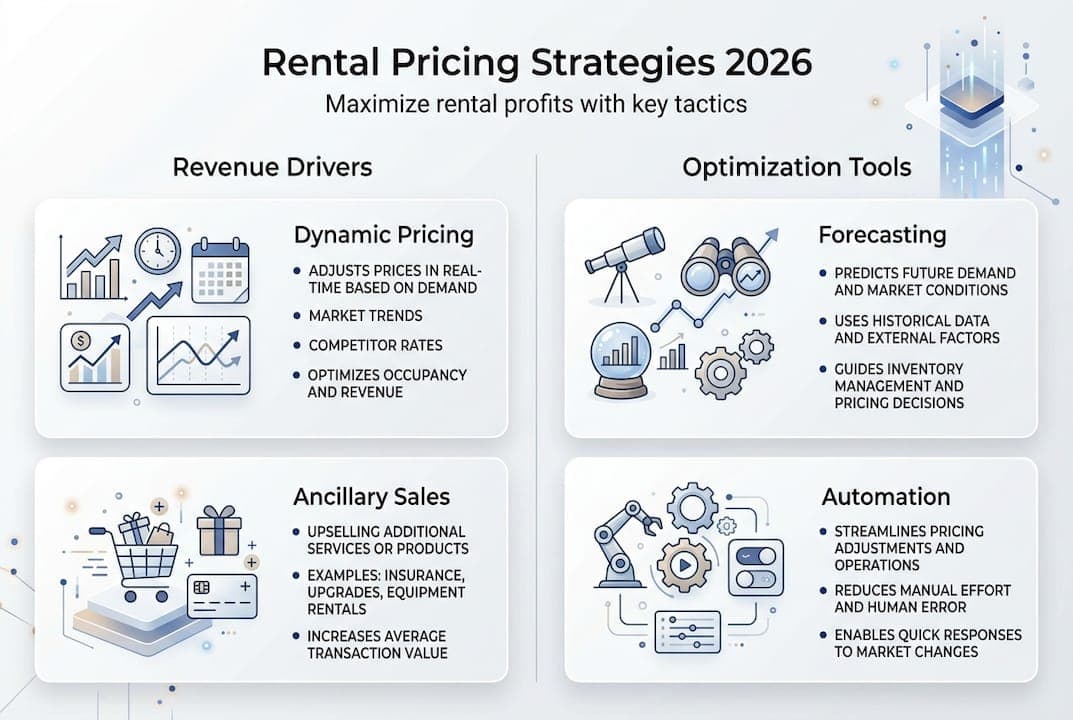
Technological readiness matters. Dynamic pricing algorithms adjust rates in real-time based on demand, competitor prices, fleet availability, booking time, seasonality, local events, and historical data to maximize revenue. Without proper software infrastructure, executing these strategies manually becomes impossible at scale. Cloud-based platforms integrate booking systems, inventory management, and pricing engines to enable automated decision-making.
Pro Tip: Start by auditing your current data collection capabilities. If you're relying on manual rate adjustments or gut feelings, you're leaving significant revenue on the table. Invest in systems that capture booking patterns, customer behavior, and market conditions automatically.
Key preparation steps include:
- Establish baseline metrics for current utilization rates and average daily rates
- Identify seasonal patterns and local demand drivers in your market
- Set up competitor rate monitoring across key vehicle classes
- Ensure your booking system can handle dynamic rate changes without manual intervention
- Define customer segments based on booking behavior and price sensitivity
Effective rental pricing strategies and execution
Surge pricing delivers substantial returns during high-demand periods. Weekends, holidays, and local events justify premium rates because customers have fewer alternatives and higher urgency. Rather than maintaining flat pricing year-round, implement tiered rate structures that reflect actual demand. A 20-30% weekend premium is standard in most markets, while major events can support 50% or higher increases.
Ancillary products represent low-hanging profit opportunities. Insurance upgrades, GPS navigation, child seats, and additional driver fees add incremental revenue without increasing fleet costs. Dynamic pricing lifts revenue by 5-10%; ancillary upsells add over $6,000 per year; focusing on high-ADR vehicles like SUVs and luxury improves margins. Train staff to present these options as value-adds rather than pushy upsells. Customers appreciate convenience and peace of mind when framed properly.
Fleet composition directly impacts profitability. Economy cars generate volume but deliver thin margins. SUVs and luxury vehicles command higher daily rates and attract less price-sensitive customers. Analyze your market demographics and adjust your fleet mix accordingly. A suburban location near affluent neighborhoods justifies more premium inventory, while airport locations require balanced coverage across all segments.

Pro Tip: Track which ancillary products have the highest attachment rates and focus your sales training on those items. GPS typically converts better than insurance in markets where customers use smartphones for navigation, so adjust your pitch based on actual data.
Avoid panic pricing when utilization dips. Slashing rates to fill inventory creates a race to the bottom that damages brand perception and trains customers to wait for discounts. Instead, implement these strategic approaches:
- Offer value-added packages that bundle services at attractive prices without cutting base rates
- Target marketing to specific customer segments rather than broad discounting
- Adjust minimum rental periods to improve overall yield
- Focus on operational efficiency to reduce costs rather than sacrificing revenue
Rate fences segment customers based on their willingness to pay and booking behavior. Physical rate fences include vehicle type, age restrictions, and mileage limits. Non-physical fences cover advance booking requirements, cancellation policies, and loyalty program tiers. By implementing multiple fence types, you capture value from both price-sensitive customers who book early and last-minute renters willing to pay premiums.
| Strategy | Implementation | Expected Impact |
|---|---|---|
| Surge pricing | 20-50% weekend/event premiums | 5-10% revenue increase |
| Ancillary upsells | GPS, insurance, child seats | $6,000+ annual per location |
| Fleet mix optimization | Shift toward SUVs and luxury | 15-20% margin improvement |
| Rate fences | Advance booking discounts | Better yield management |
Car rental software boosts profits by automating these pricing decisions and ensuring consistent execution across all channels. Manual rate management introduces errors and missed opportunities, while integrated systems adjust pricing continuously based on real-time conditions. Understanding your car rental marketing ROI helps you allocate promotional budgets effectively rather than relying solely on price cuts to drive demand.
Handling edge cases and advanced pricing tactics
Overbooking maximizes utilization by accounting for no-shows and cancellations. Most rental businesses experience 5-15% no-show rates depending on customer segment and booking channel. By accepting slightly more reservations than available inventory, you minimize idle cars without creating service failures. Overbooking can boost utilization safely by leveraging no-show probabilities; weather and local events can trigger price hikes of 30-50%.
Successful overbooking requires sophisticated forecasting. Track historical no-show rates by customer segment, booking channel, and lead time. Corporate accounts typically have lower no-show rates than leisure travelers. Direct bookings show better reliability than third-party aggregators. Build safety buffers based on these patterns and maintain upgrade inventory to accommodate overflow when predictions miss.
Pro Tip: Never overbook during peak demand periods when you're likely to sell out anyway. Overbooking works best during shoulder seasons when you need to protect against cancellations but still have reasonable availability.
Physical rate fences create clear product differentiation. Vehicle class, age, and features justify price variations that customers easily understand. A luxury sedan commands higher rates than an economy compact because the value difference is tangible. Non-physical fences are subtler but equally effective. Early booking discounts reward advance planning while preserving higher rates for last-minute renters. Loyalty program tiers provide preferential pricing to repeat customers without broadly discounting.
Weather-triggered pricing captures opportunity during unexpected demand spikes. Snowstorms increase SUV and AWD vehicle demand, justifying immediate rate increases. Summer heatwaves drive convertible rentals. Monitor local weather forecasts and adjust rates proactively rather than reactively. Event-driven pricing follows similar logic. Concerts, festivals, and sporting events create predictable demand surges weeks in advance, allowing you to implement premium pricing early.
State-dependent versus time-dependent pricing models offer different advantages:
- State-dependent pricing adjusts based on current inventory levels and booking pace
- Time-dependent pricing follows predetermined seasonal calendars and advance booking windows
- Hybrid approaches combine both for maximum flexibility
Advanced tactics to consider:
- Implement minimum rental periods during peak demand to improve overall yield
- Use geographic pricing zones to reflect location-specific demand patterns
- Create dynamic upgrade pricing that adjusts based on inventory availability
- Establish partner rate fences for corporate accounts and travel agencies
| Tactic | Best Use Case | Risk Level |
|---|---|---|
| Overbooking | Shoulder seasons with predictable no-shows | Medium |
| Weather pricing | Markets with variable climate | Low |
| Event pricing | Locations near venues and convention centers | Low |
| State-dependent | High-volume operations with real-time data | Medium |
Preventing double bookings becomes critical when implementing overbooking strategies. Integrated systems sync inventory across all channels instantly, eliminating the manual coordination that creates conflicts. Automating rental bookings ensures pricing changes propagate immediately to your website, phone reservations, and partner channels without delay.
The 42-Point Car Rental Operations Checklist
The exact checks profitable rental operators run every week — free, straight to your inbox.
- Fleet readiness & handover
- Bookings & no-show prevention
- Pricing & revenue reviews
- Contracts & compliance
- Payments & invoicing
- Maintenance & fleet health
One email with the checklist. No spam, unsubscribe anytime.
Verifying pricing performance and continuous improvement
Tracking the right metrics tells you whether pricing optimization actually works. Utilization rate measures the percentage of your fleet generating revenue versus sitting idle. Target 70-85% utilization depending on your market and fleet size. Revenue per available car per day (RevPAC) combines utilization and pricing into a single performance indicator. Average daily rate (ADR) shows pricing trends but ignores utilization, so use it alongside other metrics.
Margin analysis reveals profitability beyond top-line revenue. Calculate gross profit per rental by subtracting direct costs like fuel, cleaning, and maintenance from rental revenue. Achieving dynamic pricing and appropriate fleet mix can lead to EBITDA nearing $788,000 and IRR improvements of 30%. These benchmarks provide targets for evaluating your pricing performance against industry standards.
Fleet mix adjustments drive returns when data shows which vehicle types deliver the best margins. If luxury vehicles maintain 80% utilization at premium rates while economy cars struggle at 60% despite aggressive pricing, shift your capital allocation accordingly. This doesn't mean abandoning economy segments entirely, but rather optimizing the ratio based on actual demand patterns in your specific market.
Key performance indicators to monitor:
- Utilization rate by vehicle class and season
- Average daily rate trends across customer segments
- Revenue per available car per day
- Ancillary product attachment rates
- Customer acquisition cost versus lifetime value
Continuous refinement separates good pricing from great pricing. Review performance weekly during high seasons and monthly during slower periods. Test pricing hypotheses systematically rather than making random adjustments. If you believe weekend rates can support a 10% increase, implement the change and measure booking pace. If reservations slow significantly, you've found the ceiling. If they remain steady, you've discovered additional profit.
| Metric | Target Range | Action Threshold |
|---|---|---|
| Utilization rate | 70-85% | Below 65% review pricing |
| RevPAC | $40-80 (market dependent) | Track month-over-month trends |
| EBITDA margin | 15-25% | Below 10% indicates structural issues |
| Ancillary revenue per rental | $15-30 | Below $10 improve sales process |
Pro Tip: Create a pricing scorecard that tracks these metrics in a single dashboard. Weekly reviews take 15 minutes when data is centralized and accessible, but provide the insights needed for informed decision-making.
Car rental software pricing varies based on fleet size and feature requirements, but the ROI typically pays back within 3-6 months through improved utilization and rate optimization. Understanding how to optimize your car rental fleet ensures you're making data-driven decisions about vehicle acquisition, disposition, and allocation across locations.
Optimize your rental pricing with Nomora solutions
Manual pricing management becomes impossible as your fleet grows and market complexity increases. Nomora's comprehensive platform integrates dynamic pricing algorithms with real-time inventory management, eliminating the spreadsheets and guesswork that limit profitability. Our software tracks competitor rates, monitors demand patterns, and adjusts pricing automatically across all booking channels.
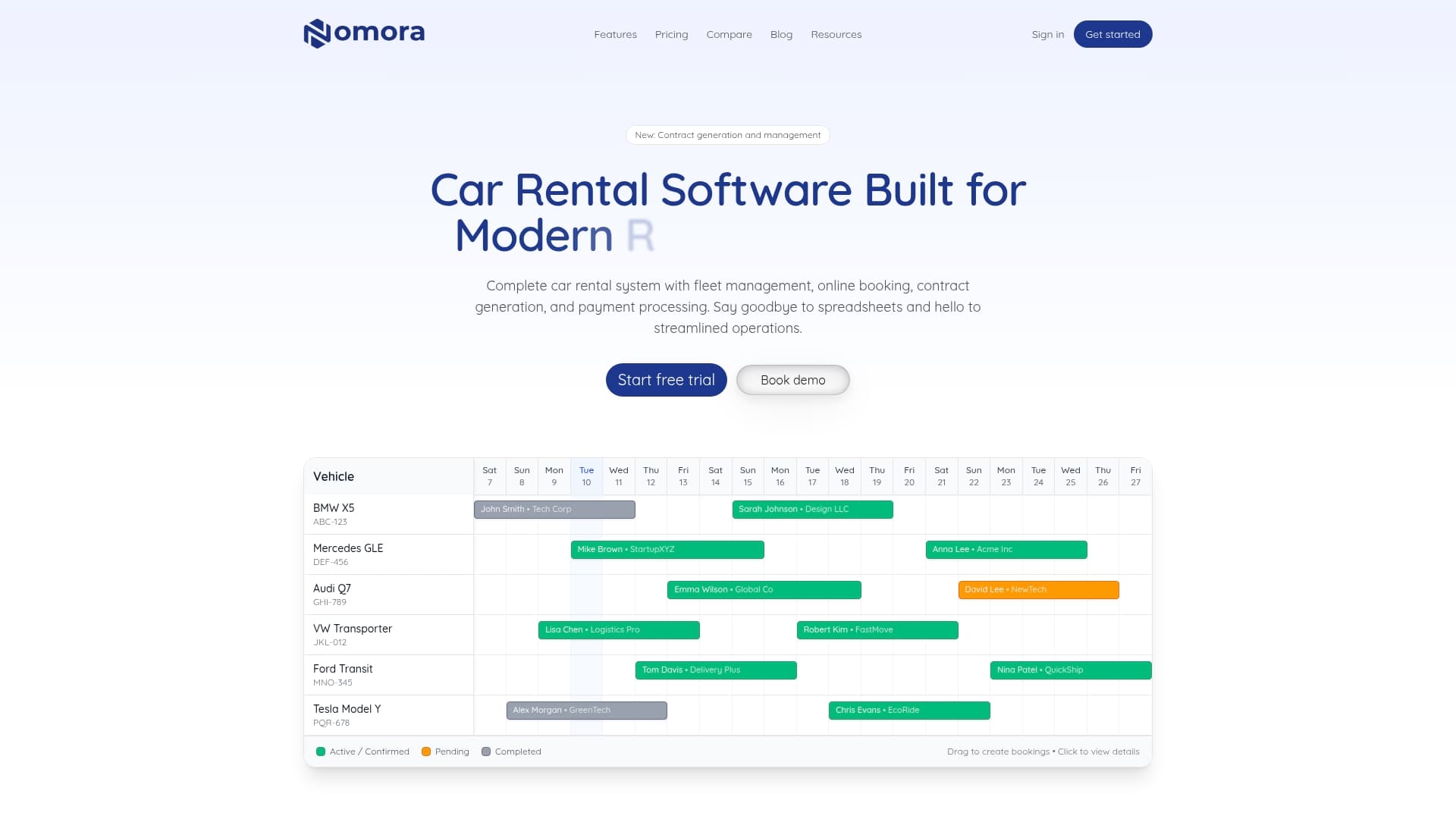
Fleet management tools provide visibility into vehicle utilization, maintenance schedules, and turnover rates. Car rental software use cases demonstrate how businesses like yours have increased revenue by 15-25% within the first year of implementation. Our fleet management software centralizes operations, reducing administrative overhead while improving decision quality. Preventing double bookings protects customer satisfaction and operational efficiency, especially when implementing advanced tactics like strategic overbooking. Setup takes 24-48 hours, and our team provides hands-on training to ensure smooth adoption.
FAQ
What is dynamic pricing in car rentals?
Dynamic pricing uses algorithms to adjust rental rates automatically based on current demand, competitor pricing, fleet availability, and booking timing. This approach maximizes revenue by charging premium rates during high-demand periods while remaining competitive during slower times. Unlike static pricing that relies on manual rate cards, dynamic systems respond to market conditions in real-time without requiring constant human intervention.
How can overbooking improve rental car utilization?
Overbooking accepts slightly more reservations than available inventory to offset predictable no-shows and cancellations. By analyzing historical patterns, rental businesses can safely increase bookings by 5-10% without creating service failures. Proper software manages these risks by tracking no-show probabilities across customer segments and maintaining upgrade inventory as a safety buffer. Learn more about preventing double bookings while implementing overbooking strategies.
What are rate fences and why are they important?
Rate fences segment customers based on characteristics or behaviors that correlate with price sensitivity. Physical fences include vehicle type, age restrictions, and mileage limits that create clear product differentiation. Non-physical fences use booking timing, cancellation policies, and loyalty status to offer different rates to different customers. These mechanisms help rental businesses capture maximum value from each customer segment without broad discounting that erodes margins.
How do ancillary upsells impact rental profitability?
Ancillary products like insurance upgrades, GPS devices, child seats, and additional driver fees generate significant incremental revenue with minimal additional cost. Industry data shows these add-ons contribute over $6,000 annually per location, often at margins exceeding 70%. Beyond direct profit, ancillaries enhance customer convenience and satisfaction when presented as value-adds rather than mandatory fees. Discover strategies for boosting profits through car rental upsells and integrated software solutions.
Recommended
Ready to streamline your car rental business?
Book 30 minutes with the founder. We set up everything in this guide on your own vehicles, and migrate you out of Excel for free.