TL;DR:
- Effective rental business negotiations depend on preparation, data, and strategic supplier segmentation. Using documented performance metrics and timing negotiations during slow periods can lead to better terms and partnerships. Digital platforms like Nomora enhance negotiation strength through real-time data, contract management, and analytics.
Rental business supplier negotiation directly determines your profit margins, benefiting from expert auto dealer SEO services that help show inventory and sell more cars. The most effective approach combines three elements: entering every conversation with verified performance data, segmenting suppliers by strategic value before choosing a tactic, and framing every request as a trade rather than a demand. Rental profitability depends heavily on supplier pricing and terms, and the companies that negotiate well do so because they prepare systematically, not because they negotiate aggressively.
Here is what that looks like in practice:
- Define your objectives before any conversation: target price, payment terms, volume commitments, and service levels
- Gather spend history, fill rates, and OTIF data to anchor requests in facts
- Use the Negotiation Tier Matrix to segment suppliers and match tactics to each category
- Frame requests as mutual wins, not one-sided demands
- Time negotiations to supplier slow periods for maximum flexibility
- Document every agreed change in writing before it takes effect
- Use an integrated platform like Nomora to consolidate procurement data and track whether negotiated terms actually hold
How to prepare effectively for supplier negotiations
Preparation is where most rental operators lose before the conversation starts. Walking in without data forces you to negotiate from opinion, and suppliers know the difference.
- Establish your BATNA. Your Best Alternative to a Negotiated Agreement is the floor below which you walk away. Without one, you will accept terms you should not.
- Pull your spend data. Purchase price variance history, order volumes, and payment records give you a factual baseline for every ask.
- Quantify supplier performance. OTIF and fill rate data convert vague frustrations into concrete negotiation points. A supplier with a fill rate below full has left some of your orders short. That is a specific, documented opening.
- Forecast your rental volume growth. Communicating projected growth gives suppliers a reason to offer better pricing now in exchange for future volume.
- Map supplier interests. Understand what the supplier values: long-term contracts, consistent order cycles, early payment. Aligning your offer to their priorities creates room for trades.
- Assign negotiation roles. Decide who leads, who handles data, and who has authority to agree or pause. Clarity within your team prevents mixed signals.
- Prioritize your asks by business impact. Know which terms matter most before you sit down.
Pro Tip: Signal payment terms as your primary focus and treat MOQs as a secondary issue. Suppliers resist less when they know you are not trying to renegotiate everything at once.
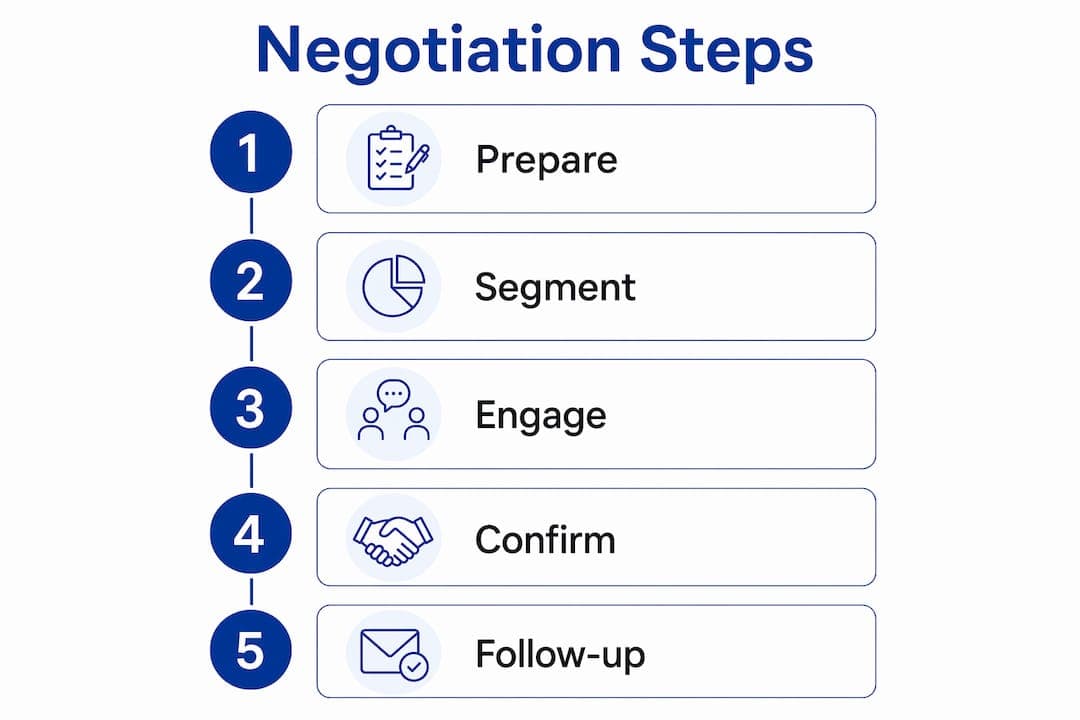
Using the Negotiation Tier Matrix to categorize suppliers
Not every supplier deserves the same approach. The Negotiation Tier Matrix gives rental businesses a structured way to match tactics to supplier type, replacing ad hoc negotiation with a repeatable system.
- Strategic partners are high-value, high-risk suppliers tied to your core operations. Negotiate through collaboration, joint planning, and multi-cycle engagement. Pushing too hard here damages relationships that are difficult to replace.
- Leverage suppliers operate in competitive markets where alternatives exist. Use structured sourcing events, competitive tension, and performance benchmarks to drive better pricing and terms.
- Transactional vendors are low-risk, low-complexity suppliers. Automate routine interactions, standardize terms, and spend your negotiation energy elsewhere.
The practical benefit of this segmentation is focus. Rental operators who treat every supplier the same waste time on transactional vendors and under-invest in strategic ones. Knowing which tier a supplier falls into tells you how much preparation to invest, which tactics to use, and what a good outcome looks like. Modern procurement platforms operationalize this model by surfacing spend, risk, and performance data by supplier, so the segmentation stays current rather than becoming a one-time exercise.
Best practices for conducting supplier negotiations
The conduct of a negotiation often matters more than the preparation. Framing requests as trades rather than demands keeps suppliers engaged and reduces defensiveness.
- Name the specific ask. "We'd like to move from Net 30 to Net 60" is easier to respond to than "can you be more flexible on terms?" Specific asks can be accepted, countered, or declined. Vague ones produce vague responses.
- Anchor on evidence. Fill rate history, lead time actuals, and purchase price variance are not accusations. They are shared operational context that invites problem-solving.
- Offer something in return. A longer contract in exchange for better pricing, or a volume commitment in exchange for reduced minimums, feels fair to both sides.
- Limit simultaneous asks. Pushing on price, terms, lead times, and minimums in one conversation signals that you will be difficult to work with. Focus on one or two items per session.
- Confirm every change in writing. Verbal agreements are fragile and rarely enforceable. Any agreed change should appear in a signed document before the next order.
Pro Tip: Approach the conversation by recognizing the supplier's business pressures. A supplier facing end-of-quarter targets or excess inventory is far more motivated to deal than one operating at full capacity.

Timing your negotiation for better results
Timing is one of the most underused levers in supplier relationship management. Negotiations during off-peak periods consistently produce more favorable terms because supplier motivation rises when their capacity or inventory sits idle.
Identify each supplier's slow season and plan your outreach accordingly. A fleet parts supplier with excess inventory in january is a different conversation than the same supplier in peak summer demand. Rental supply chain management improves when you treat timing as a deliberate input, not an afterthought.
Start conversations 60–90 days before contract renewals. Waiting until the last week removes your ability to walk away and signals to the supplier that you have no real alternative. Situational leverage matters too: a supplier whose listings have aged, whose inventory is stacking up, or who is behind on quarterly targets will move more than one operating from a position of strength. Watch for those signals and act on them.
How Nomora strengthens your negotiation position
Nomora functions as the central nervous system of a rental operation, consolidating reservations, fleet management, contracts, payments, and customer data in one cloud-based platform. That consolidation has a direct impact on supplier negotiations.
- Real-time data visibility means you enter every supplier conversation with current, accurate performance metrics rather than estimates pulled from spreadsheets.
- Automated tracking of purchase price variance, fill rates, and lead times gives you the objective evidence base that converts complaints into documented facts.
- Digital contract management within Nomora ensures every negotiated term is recorded, tracked, and enforceable, eliminating the verbal agreement risk that causes most supplier disputes.
- Cloud accessibility and GDPR compliance support remote team collaboration and protect sensitive procurement data.
- Flexible onboarding gets rental businesses up and running in 24–48 hours, so you gain negotiation-ready data quickly regardless of company size.
Rental operators who use fleet analytics tools to track supplier performance month over month build a negotiation brief automatically. The scorecard from the last conversation becomes the preparation for the next one.
Common negotiation pitfalls and how to avoid them
Most failed negotiations share the same mistakes. Recognizing them before you sit down is half the battle.
Negotiating without data is the most common error. Walking in with opinions instead of fill rate history or purchase price variance puts you on the defensive immediately. Suppliers who sense you lack documentation will hold their position.
Overloading the conversation with too many simultaneous asks signals desperation or inexperience. Pick your two most important terms and let the rest wait for a follow-up session.
Accepting verbal commitments without written confirmation is where most disputes originate. A supplier who agrees to Net 60 terms verbally but invoices on Net 30 has not technically broken a written agreement. Get it on paper.
Negotiating at the wrong time reduces your leverage before you start. Approaching a supplier during their peak season, or right after they have just closed a large contract, removes the flexibility you need. Timing and preparation work together.
Contract terms to watch for in supplier agreements
Supplier contracts contain terms that look standard but carry real operational risk for rental businesses.
Price escalation clauses allow suppliers to raise rates unilaterally, often tied to vague indices. Push for a cap on annual increases and a defined notice period before any change takes effect.
Auto-renewal provisions lock you into another contract cycle without active consent. Know your renewal dates and set calendar reminders 90 days out so you negotiate from choice, not inertia.
Minimum purchase commitments that exceed your actual consumption create carrying costs and cash flow pressure. Negotiate minimums against your real order history, not the supplier's preferred volume.
Exclusivity clauses limit your ability to source from alternatives, which removes the competitive tension you need for future negotiations. Avoid them unless the supplier offers a meaningful price concession in return.
Dispute resolution terms determine how conflicts get resolved and where. Favor clauses that allow mediation before litigation, and confirm jurisdiction aligns with your operating state.
Handling supplier price increases and disputes
Price increases are inevitable. How you respond determines whether you absorb the cost or negotiate it down.
Request documentation before accepting any increase. A supplier citing "market conditions" should be able to show the specific input cost changes driving the request. Compare their proposed increase against relevant commodity indices or published benchmarks. If their increase outpaces the underlying cost movement, you have a factual basis to push back.
Counter with a phased increase tied to volume commitments. Offering to guarantee a higher order volume in exchange for a smaller or delayed price increase gives the supplier a reason to negotiate rather than hold firm. For cost reduction strategies that go beyond individual negotiations, building a supplier scorecard that tracks price changes over time gives you the historical context to challenge future increases with evidence rather than frustration.
When disputes arise, address them at the operational level first. Escalating immediately to legal or executive contacts damages relationships that took time to build. Document the issue, reference the written agreement, and propose a specific resolution with a timeline.
Using data and analytics to strengthen your position
Data converts a negotiation from a conversation about preferences into a conversation about facts. The rental operators who consistently win better terms are the ones who arrive with documented evidence, not just requests.
Supplier scorecards built on spend data, OTIF performance, fill rates, and lead time actuals give you a preparation brief that updates automatically with each order cycle. Tracking purchase price variance per supplier shows whether invoices match agreed pricing and surfaces patterns of minor adjustments that consistently favor the supplier. That pattern is a legitimate negotiation input.
Platforms that integrate with your rental pricing strategy give you a clearer picture of how supplier costs flow through to customer pricing, which sharpens the business case for every negotiation ask. Agentic AI tools are beginning to automate parts of this analysis, flagging pricing anomalies and recommending negotiation priorities without manual review. For small and mid-sized rental companies, even basic analytics applied consistently produce a compounding advantage: each negotiation builds on the documented outcomes of the last.
Key Takeaways
Effective rental business supplier negotiation requires preparation, segmentation, and documented follow-through to produce lasting cost reductions and stronger supplier partnerships.
| Point | Details |
|---|
| Prepare with performance data | Use OTIF, fill rates, and purchase price variance to anchor every ask in documented facts. |
| Segment suppliers before negotiating | Apply the Negotiation Tier Matrix to match tactics to strategic, leverage, or transactional suppliers. |
| Frame requests as trades | Offer longer contracts or volume commitments in exchange for better pricing or payment terms. |
| Time negotiations strategically | Approach suppliers during their slow seasons or when inventory is aging for maximum flexibility. |
| Document every agreed change | Verbal commitments are unenforceable; require a signed document before the next order cycle. |
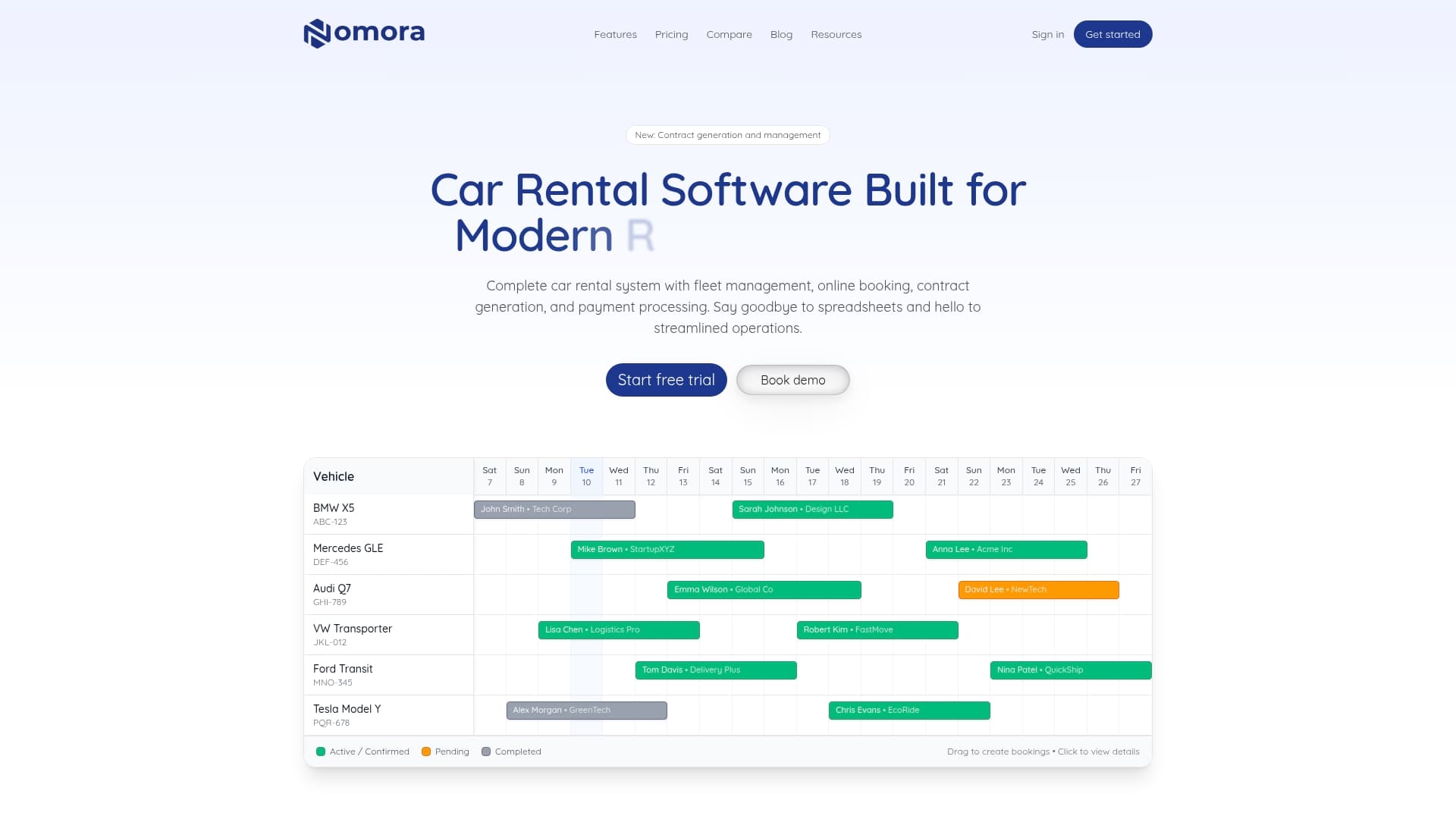
Nomora gives rental businesses the data infrastructure to negotiate from a position of strength. From real-time fleet analytics to digital contract management, the platform consolidates everything you need to prepare, execute, and track supplier agreements. Explore how Nomora supports rental operations across every business type, or see how automated payment tools can improve your cash flow and strengthen your position on payment terms.
Recommended
Ready to streamline your car rental business?
Book 30 minutes with the founder. We set up everything in this guide on your own vehicles, and migrate you out of Excel for free.