TL;DR:
- Rental business review management involves collecting, responding to, and analyzing customer feedback to boost bookings and reputation. Automating review requests within 48 hours of rental return significantly increases review volume and search visibility. Responding thoughtfully to reviews using AI and insights improves customer trust and guides operational improvements.
Rental business review management is the systematic process of collecting, responding to, and using customer feedback to increase bookings and build a stronger reputation. 87% of travelers check reviews across multiple platforms before booking, and businesses that actively display those reviews see 23% higher conversion rates. That single statistic reframes reviews from a "nice to have" into a core revenue driver. Online reputation management for rentals is the industry term for this discipline, and it covers everything from the moment you request a review to how you act on the data it contains.
How does rental business review management actually work?
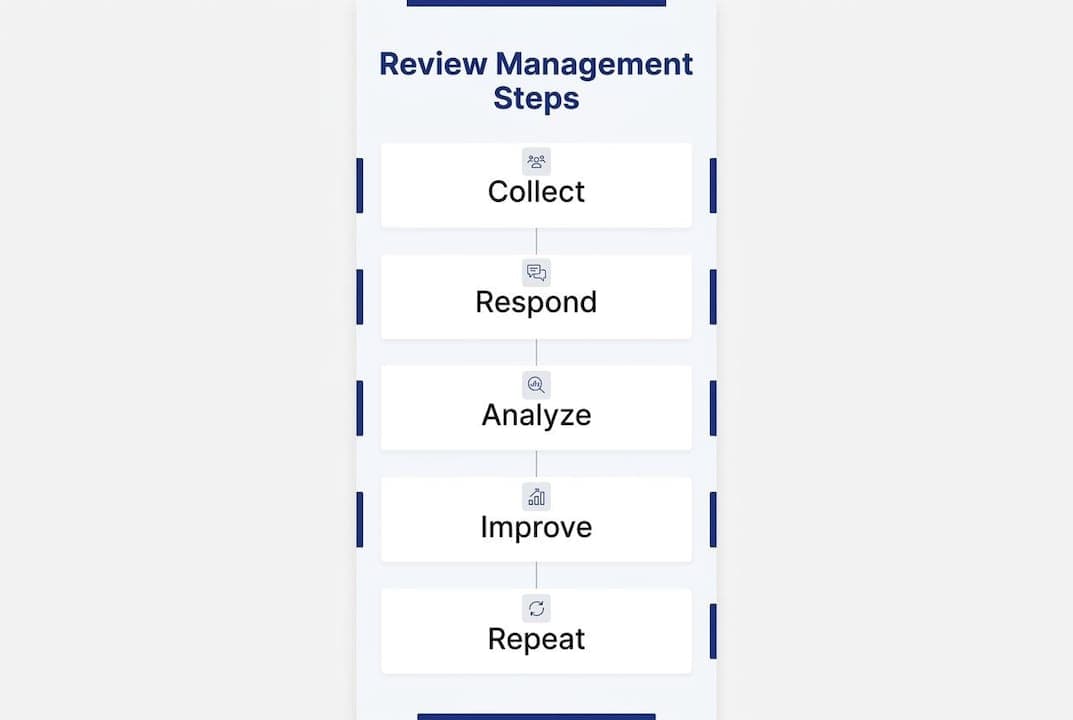
Review management in the rental industry operates across three distinct phases: collection, response, and analysis. Most rental operators focus only on the first phase and leave significant value on the table. The full cycle, when run as a repeatable process, functions like the central nervous system of your customer experience operation. Every review you collect, respond to, and analyze feeds back into better service, higher search rankings, and more direct bookings.

The volume and timing of your reviews are process problems, not service quality problems. Review intent decays rapidly after a rental return, meaning a customer who would have left a five-star review on day one may not bother by day five. Building a reliable process around that window is what separates high-volume review profiles from thin ones.
How to consistently collect authentic customer reviews
The single most effective change you can make is shifting from manual to automated review requests. Automated review collection yields 47 reviews from the same customer volume where manual efforts produce only 4. That is a tenfold difference driven entirely by consistency and timing, not by having better customers.
The 48-hour solicitation window
The best timeframe to request a review is within 48 hours after the rental return. The experience is still fresh, the customer is back in their normal routine, and the emotional peak of a good rental is still accessible. Waiting longer lets that window close.
A high-converting review request message includes three elements:
- Personalization: Use the customer's name and reference the specific vehicle or rental date.
- A direct review link: Remove every extra click between the customer and the review form.
- A clear, single ask: One platform, one action. Asking for reviews on Google, Yelp, and Facebook in the same message reduces completion rates.
Pro Tip: Automate review requests as a triggered event tied to rental returns in your booking system. When a contract closes, the request goes out automatically, with no manual follow-up required.
Starting review solicitation early compounds over time. A rental business that begins automating requests in january will have a significantly stronger review profile by june than a competitor who starts in april. The gap widens every month.
How should you respond to customer reviews?
Responding to reviews is not optional. Customers read your responses as much as they read the original reviews. A well-written reply to a negative review often influences future customers more than a string of positive ones, because it demonstrates how you handle problems under pressure.
AI-powered review response tools achieve a 92% approval rate, saving 10–15 minutes per response while maintaining authentic, policy-based replies. That time saving matters when you are managing a fleet of 20 or 200 vehicles and responses need to go out across Google, TripAdvisor, and your direct booking site.
The most effective response workflow for rental operators looks like this:
- Positive reviews: Use AI-generated drafts to respond quickly and at scale. Personalize with a specific detail from the review when possible.
- Negative reviews: Route AI drafts through a manual approval step. A human should read every negative response before it publishes.
- Neutral reviews: Treat these as conversion opportunities. Acknowledge what went well and address any concern raised.
Maintaining human approval on AI-generated replies balances efficiency with brand authenticity, especially when the feedback is sensitive. Automated speed without human judgment is where brands make public mistakes.
Pro Tip: Build your internal policies, refund terms, and service standards directly into your AI response engine. Responses grounded in your actual policies read as transparent and trustworthy, not generic.
Calm, factual replies to negative reviews demonstrate professionalism that builds trust. Defensive or dismissive responses do the opposite, and they stay visible to every future customer who reads that thread.
How do review insights improve your rental business?
Reviews contain operational data that most rental managers never extract. Sentiment analysis identifies specific, recurring issues across your review portfolio. For example, a pattern of complaints about vehicle cleanliness appearing with high negative sentiment tells you exactly where to direct your pre-rental inspection process.
| Review insight type | What it reveals | Business action |
|---|
| Recurring negative themes | Specific service or vehicle issues | Target operational fixes |
| Positive sentiment clusters | What customers value most | Highlight in marketing copy |
| Platform-specific patterns | Where your weakest reviews appear | Prioritize response effort |
| Rating trend over time | Whether changes are working | Validate process improvements |
Sentiment analysis can identify priority fix areas with enough specificity to guide budget decisions. If WiFi issues in a camper van fleet show 60% negative sentiment, that is a maintenance ticket, not a customer service problem. The review data tells you which problems to solve first.
Aggregating review data across platforms, Google, Yelp, Facebook, and your direct booking site, gives you a complete picture rather than a partial one. Displaying verified reviews on your direct booking page also directly supports conversion. Customers who see real, recent feedback on the page where they book are more likely to complete the reservation.
For rental operators who want to connect fleet utilization and customer experience, review data is one of the clearest signals available. A vehicle that consistently generates complaints about reliability is a fleet management problem with a review trail.
Common pitfalls in review management for rental operators
Most rental businesses underperform on reviews not because their service is poor, but because their process is broken. Manual, inconsistent review requests produce erratic and low review counts, which skews your online reputation and undercuts search visibility. The review count reflects your bandwidth, not your actual customer satisfaction.
The four most common mistakes rental operators make:
- Inconsistent solicitation: Asking for reviews only when staff remember to do it creates gaps that hurt your review velocity and local search rankings.
- Ignoring negative reviews: An unanswered negative review signals to future customers that you do not care. Every negative review is a public conversation.
- Generic responses: Replies that could apply to any business in any industry signal that no one actually read the review. Customers notice.
- Treating review management as a separate task: When it is not built into your daily workflow, it gets deprioritized. Integration is the only way to make it consistent.
Consistent review velocity matters more to local search rankings than a one-time burst of reviews. Google's local algorithm favors a steady flow of recent reviews over a large but stale collection. This means your process needs to run every week, not just during busy season.
A practical guide on managing online reputation for small and midsize businesses confirms that the businesses with the strongest review profiles treat solicitation as a non-negotiable operational step, not a marketing activity.
What features should review management software include?
Choosing the right technology depends on where your current process breaks down. The table below maps common feature categories to the problems they solve.
| Feature category | Core function | Best for |
|---|
| Automated solicitation | Sends timed review requests post-rental | Operators with high booking volume |
| AI response generation | Drafts replies based on company policies | Businesses managing multiple platforms |
| Review aggregation dashboard | Pulls reviews from Google, Yelp, and others into one view | Multi-location or multi-fleet operators |
| Booking and CRM integration | Triggers requests from rental return events | Any operator replacing manual follow-up |
| Sentiment analysis reporting | Identifies recurring themes and rating trends | Operators using reviews to guide operations |
Entry-level tools typically cover automated solicitation and basic dashboards. Enterprise platforms add AI response generation, deep CRM integration, and cross-platform sentiment analysis. The right choice depends on your fleet size, the number of platforms you manage, and whether you need human approval workflows for negative reviews.
AI-powered review monitoring and response tools have become standard for rental businesses that manage more than a few dozen reviews per month. The efficiency gains compound quickly at scale.
Key Takeaways
Effective rental reputation management requires a consistent, automated process for collecting reviews, a structured workflow for responding to them, and a habit of turning review data into operational decisions.
| Point | Details |
|---|
| Automate review requests | Automated solicitation produces up to 10x more reviews than manual efforts from the same customer base. |
| Use the 48-hour window | Request reviews within 48 hours of rental return to capture feedback while the experience is still fresh. |
| Respond to every review | AI drafts save 10–15 minutes per response; route negative replies through human approval before publishing. |
| Extract operational insights | Sentiment analysis pinpoints specific service failures so you fix the right problems first. |
| Build it into your workflow | Review management only works consistently when it is integrated into daily operations, not treated as a separate task. |
Why I think most rental operators are solving the wrong problem
Rental operators spend a lot of energy trying to deliver a perfect experience so the reviews take care of themselves. That instinct is not wrong, but it misses the bigger issue. Reviews are a process output, not a service output. I have seen well-run businesses with thin review profiles and mediocre operations with hundreds of five-star reviews, simply because one had a system and the other did not.
The operators who build review management into their booking workflow from day one compound an advantage that is very hard to close later. A competitor who starts six months after you will never fully catch up on review volume, and local search rankings reflect that gap directly in booking traffic.
My honest advice: stop waiting until your service is "good enough" to ask for reviews. Start asking now, automate the request, and let the volume build. The reviews will reflect your actual service quality over time. The process just makes sure you capture them.
— Dizzy
How Nomora supports your review management process
Nomora's car rental management platform is built to replace the manual steps that break review management workflows. Automated triggers tied to rental return events send review requests at the right moment, without requiring staff to remember. AI-powered response drafts, grounded in your business policies, keep replies consistent and on-brand across every platform.
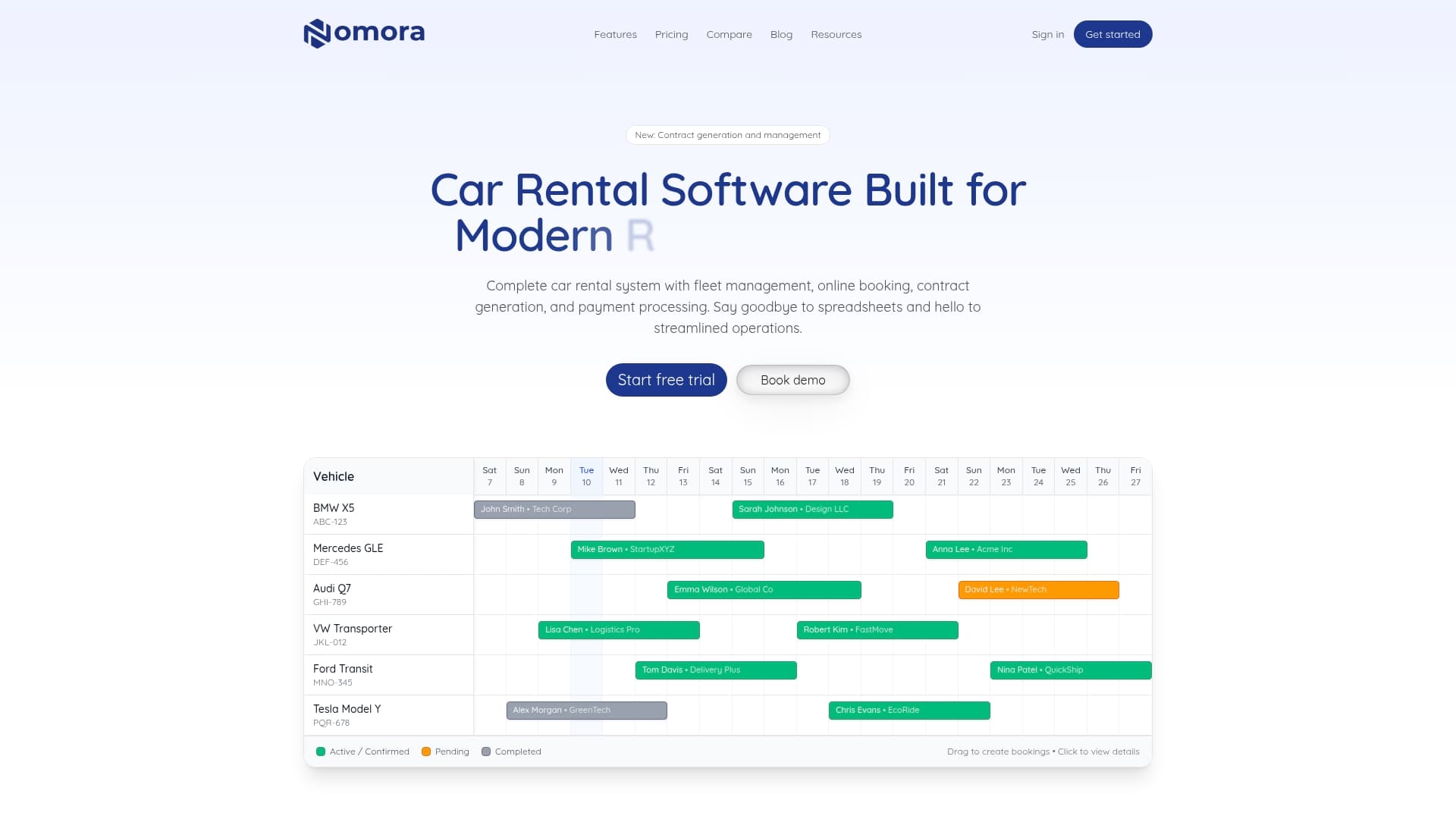
Nomora also aggregates customer data and booking history in one place, giving you the context to personalize every review request and response. Rental operators across fleet sizes use Nomora to connect operations with reputation. See how it applies to your business type at Nomora's use case library.
FAQ
What is rental business review management?
Rental business review management is the process of systematically collecting, responding to, and analyzing customer reviews to improve reputation and increase bookings. It covers solicitation timing, response workflows, and using review data to guide operational decisions.
How many more reviews does automation produce?
Automated review requests produce up to 47 reviews from the same customer volume that generates only 4 through manual efforts. The difference comes from consistent timing and delivery, not from having more customers.
When is the best time to ask for a review?
The best time to request a review is within 48 hours of the rental return. Customer recall and motivation to leave feedback decline sharply after that window closes.
Does responding to negative reviews actually help?
Calm, factual responses to negative reviews build trust with future customers who read them. Unanswered negative reviews signal indifference, while professional replies demonstrate accountability.
What should review management software include?
The core features are automated solicitation, AI-powered response generation, a multi-platform aggregation dashboard, and integration with your booking or CRM system. Sentiment analysis reporting is a strong addition for operators using reviews to guide service improvements.
Recommended