Rental businesses must track operating expenses like maintenance, insurance, taxes, utilities, mileage, and depreciation to ensure financial accuracy. Separating trust and operating accounts, reconciling bank statements regularly, and monitoring KPIs such as time and dollar utilization are essential for compliance and profitability. Automated systems streamline expense recording, improve accuracy, and support better decision-making.
Rental business expense tracking is the practice of systematically recording and categorizing every cost tied to rental operations so owners can protect profits and stay compliant. Without a structured system, deductible expenses slip through, cash flow becomes unpredictable, and tax season turns into a scramble. The IRS recognizes specific deductible categories under Schedule E, and industry KPIs like time utilization and dollar utilization only become meaningful when your expense data is clean and current. This guide gives rental business owners and financial managers a practical framework for building that system from the ground up.
What expenses does a rental business need to track?
Rental expense management covers every cost that affects your net operating income. The IRS groups these into deductible operating expenses and non-deductible capital items, and knowing the difference directly affects your tax liability.
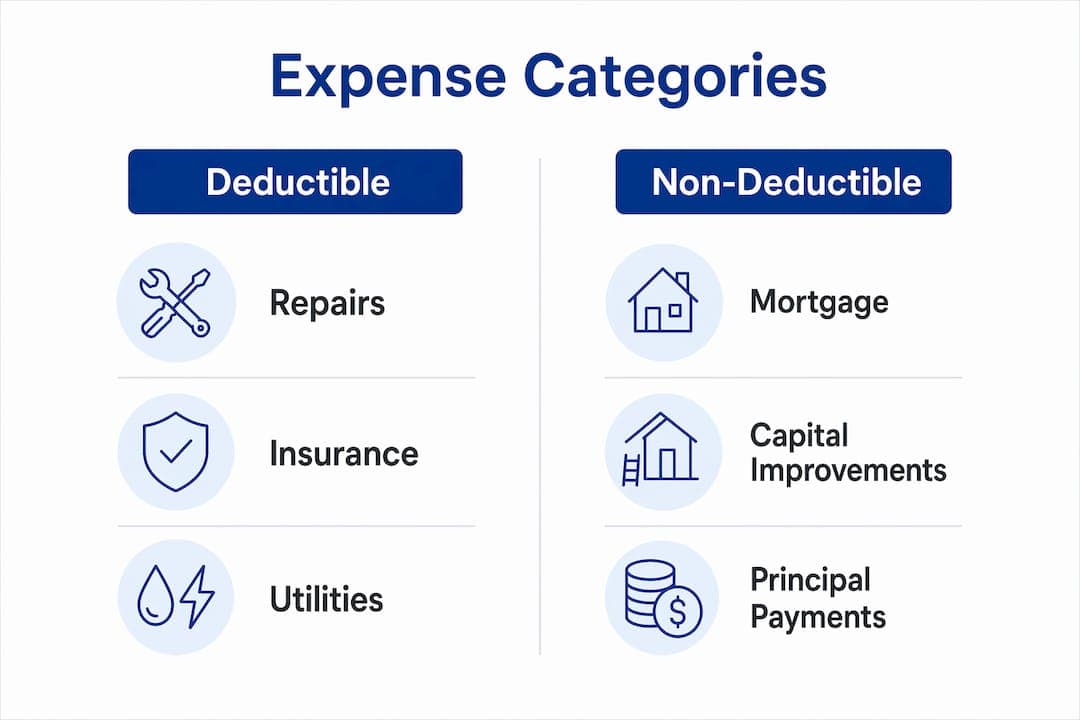
Deductible operating expenses include:
Maintenance and repairs on vehicles, equipment, or property
Insurance premiums covering liability, property damage, and fleet coverage
Property taxes and licensing fees for each asset in your portfolio
Utilities for any physical location tied to the rental operation
Mileage for business travel related to managing rentals. The IRS mileage rate sits at 70 cents per mile as of june 2026. That rate applies to every qualifying trip you make to inspect, repair, or manage a rental asset.
Depreciation on rental property over 27.5 years, or on equipment per the applicable MACRS schedule
Non-deductible items include mortgage principal payments and capital improvements. A new roof or a vehicle engine replacement adds to the asset's value and must be capitalized, not expensed in the current year.
Pro Tip:Keep a separate mileage log app or a dedicated GPS tracker for every vehicle used in your management activities. Mileage is one of the most commonly missed deductions in rental operations.
Rental businesses that manage vehicles benefit from integrating fleet GPS monitoring directly into their expense records. That data captures fuel costs, maintenance triggers, and mileage automatically, removing the need for manual logs.
How to set up a system for rental business expense tracking
The foundation of any reliable expense system is a standardized chart of accounts. Standardizing your chart of accounts across all rental properties or assets makes automated reconciliation and consolidated reporting possible. Without that consistency, comparing performance across units or locations becomes guesswork.
Spreadsheets vs. dedicated rental accounting software
Spreadsheets work for a single rental unit with low transaction volume. They break down fast once you add more assets, more tenants, or more payment types. Dedicated rental accounting platforms connect directly to bank feeds, scan invoices automatically, and match transactions to leases or contracts using reference numbers. That automation eliminates the manual entry that causes errors.
The table below compares the two approaches across key operational factors:
Factor
Spreadsheet-based tracking
Dedicated rental software
Data entry
Manual, error-prone
Automated via bank feeds
Reconciliation
Manual matching
Reference-based auto-matching
Scalability
Breaks down past 5–10 units
Handles large portfolios
Audit readiness
Low
High
Reporting speed
Slow
Real-time
Separating trust and operating accounts
Every rental business that holds tenant deposits or advance payments must keep those funds in a dedicated trust account. Mixing trust funds with operating funds is a common cause of audit failures and non-compliance. Open two separate bank accounts from day one and never transfer between them without a documented reason.
Pro Tip:Enter expenses weekly, not monthly. Weekly expense entry for a small portfolio takes only 10–15 minutes and prevents the data gaps that cause missed deductions at year-end.
How does bank reconciliation work for rental businesses?
Bank reconciliation is the process of matching every transaction in your accounting records to the corresponding entry on your bank statement. For rental businesses, this is not optional. Monthly reconciliation is a legal requirement for trust accounts, and high-volume operations with 50 or more units need weekly or even daily reconciliation to stay compliant.
The process follows a clear sequence:
Pull your bank statement for the period and open your accounting ledger side by side.
Match each deposit to a recorded rental payment, using the lease or invoice number as the reference.
Match each withdrawal to a recorded expense, vendor payment, or owner distribution.
Identify outstanding items. These are transactions that appear in one record but not the other. Flag them and investigate before closing the period.
Clear all matched items and confirm that your adjusted bank balance equals your adjusted book balance.
Document the reconciliation with a signed report and file it with your period-end records.
Leaving unresolved open items when closing your books produces an inaccurate general ledger. A cleared balance approach, where every item is tracked until matched, is the professional standard for rental financial statements.
Reference-based reconciliation using lease or invoice numbers is the most reliable method for rental businesses. It ties each payment directly to a specific tenant or contract, which eliminates allocation errors and makes audits straightforward. Manual reconciliation in Excel signals incomplete system implementation and delays your view of actual cash position. Automated reconciliation tools close that gap and accelerate your month-end cycle.
How does expense tracking connect to KPI monitoring and financial reporting?
Expense data is the raw material for every meaningful performance metric in a rental business. Without accurate cost records, your KPIs tell an incomplete story.
Two KPIs matter most for equipment and vehicle rental operations:
Time utilization measures the percentage of time an asset is actively rented versus sitting idle. Time utilization below 65% signals a profitability problem that requires either better marketing or fleet reduction.
Dollar utilization compares actual rental revenue to the replacement cost of the asset. A dollar utilization rate under 35% means the asset is not generating enough revenue to justify its cost.
Both metrics require accurate expense data to calculate net yield per asset. Tracking these KPIs weekly gives you the visibility to make pricing and fleet decisions before problems compound. Rental businesses that monitor fleet utilization weekly consistently outperform those that review performance only at month-end.
Reports every rental manager should generate monthly
Your expense tracking system should produce three core reports each month:
Profit and loss statement (P&L): Shows total revenue minus total expenses for the period. This is your primary profitability check.
Budget vs. actual report: Compares planned spending to real spending by category. Variances above 10% in any category warrant investigation.
Owner statement: Summarizes income collected, expenses paid, and net distributions for each property or asset owner.
Break-even analysis ties directly to these reports. You calculate your break-even point by dividing total fixed costs by your gross margin per rental day. That number tells you exactly how many rental days you need each month to cover costs before generating profit. Expense tracking makes that calculation possible. For a deeper look at controlling costs at the unit level, the cost-saving strategies used by experienced rental operators provide a practical starting point.
What are the most common expense tracking mistakes rental businesses make?
Most expense tracking failures come from process gaps, not software limitations. The mistakes below are predictable and preventable.
Skipping mileage logs. Mileage is fully deductible but requires contemporaneous records. A log created from memory three months later will not survive an IRS audit.
Delaying data entry until tax season. Manual month-end entry misses 15–20% of deductible expenses compared to weekly recording. That gap translates directly into higher tax liability.
Commingling trust and operating funds. Mixing these accounts creates compliance violations that can cost more to resolve than the original tax savings.
Overrelying on spreadsheets. Spreadsheets do not flag duplicate entries, missing transactions, or reconciliation gaps. They require perfect human execution every time.
Ignoring uncleared reconciliation items. Open items left unresolved when closing books corrupt your general ledger and make financial statements unreliable.
Pro Tip:Set a fixed weekly time block of 15 minutes to enter expenses and flag any bank transactions that do not match a recorded invoice. Consistency here prevents every problem on the list above.
The 42-Point Car Rental Operations Checklist
The exact checks profitable rental operators run every week — free, straight to your inbox.
Fleet readiness & handover
Bookings & no-show prevention
Pricing & revenue reviews
Contracts & compliance
Payments & invoicing
Maintenance & fleet health
One email with the checklist. No spam, unsubscribe anytime.
Key Takeaways
Accurate rental business expense tracking requires consistent weekly data entry, strict account separation, and automated reconciliation tied to real KPI monitoring.
Point
Details
Categorize expenses correctly
Separate deductible operating costs from capital improvements to maximize IRS Schedule E deductions.
Separate trust and operating accounts
Commingling funds is a leading cause of audit failures; open two accounts from day one.
Reconcile monthly at minimum
High-volume operations need weekly or daily reconciliation to stay compliant and maintain accurate cash records.
Track KPIs weekly
Time utilization below 65% and dollar utilization below 35% signal profitability problems that require immediate action.
Automate where possible
Automated bank feeds and reference-based matching reduce errors and accelerate month-end close.
Why most rental businesses get expense tracking wrong
The honest truth is that most rental operators treat expense tracking as a tax-season task rather than a weekly operational discipline. I have seen businesses with solid revenue lose significant profit simply because they could not prove their deductions or reconcile their accounts under audit pressure.
The operators who get this right share one habit: they treat their accounting system the same way they treat their fleet. They check it regularly, they fix problems immediately, and they never let deferred maintenance pile up. A rental business is a capital recycling operation. Every dollar tied up in an untracked expense or an unreconciled account is a dollar that cannot be reinvested in fleet growth or better pricing.
The technology argument is also simpler than most owners realize. Integrated platforms that connect bank feeds, lease references, and KPI dashboards do not require accounting expertise to operate. They require consistency. The businesses that adopt these tools early and use them every week build a financial picture that supports better decisions at every level, from daily pricing to annual tax strategy. The ones that wait until something goes wrong pay more to fix it than they ever would have spent preventing it.
— Dizzy
How Nomora supports rental expense control and financial reporting
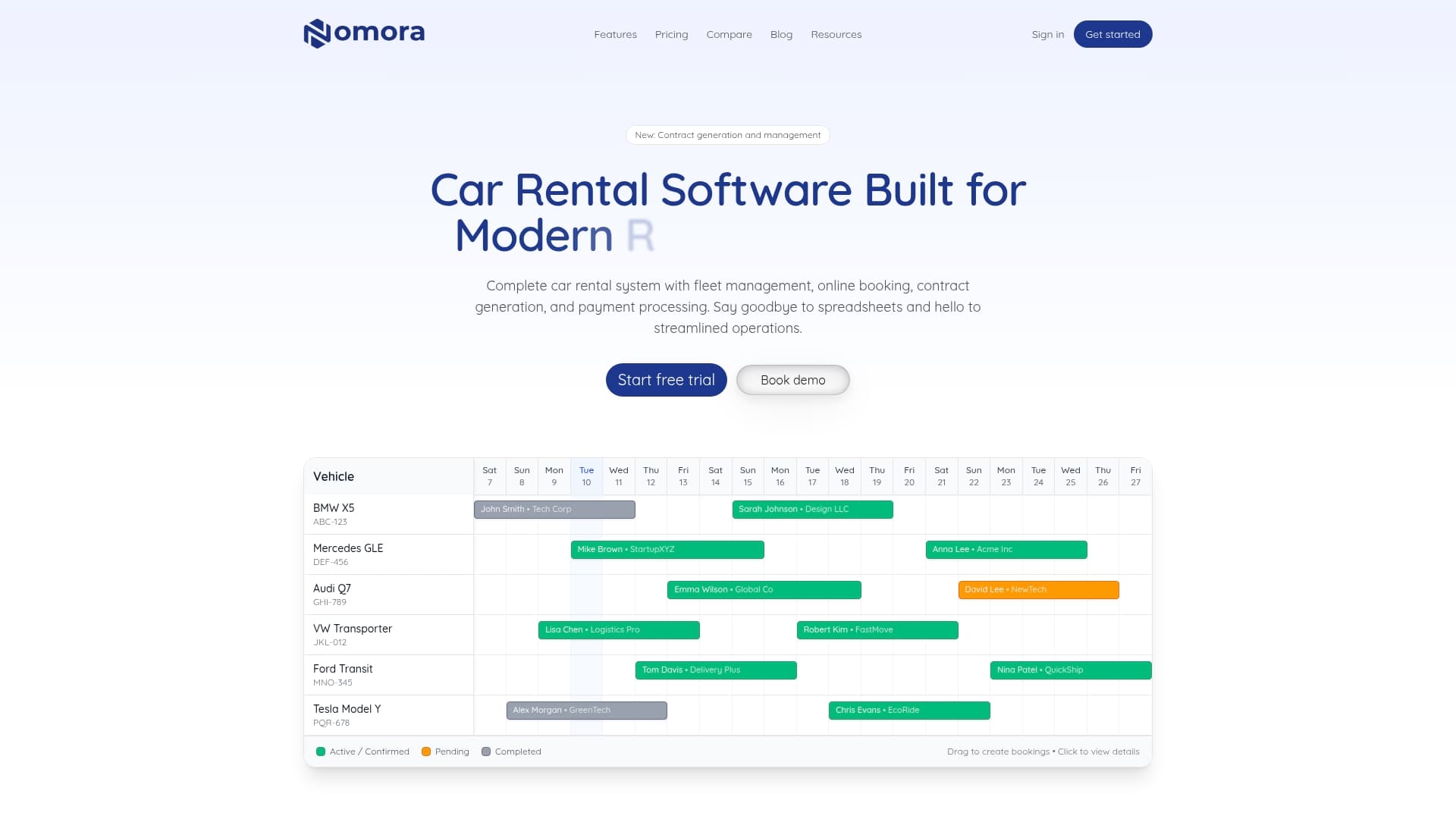
Nomora functions as the central nervous system of a rental operation, connecting bookings, fleet data, payments, and financial records in one cloud-based platform. Rental business owners who need tighter expense control and faster financial reporting use Nomora's integrated tools to automate payment reconciliation, monitor KPI dashboards in real time, and generate owner statements without manual data assembly.
The platform supports businesses of all sizes, from single-vehicle operators to large franchise networks, with onboarding completed in 24–48 hours. Explore Nomora's rental management software to see how automated expense tracking and reconciliation work in practice, or review use cases by business type to find the configuration that fits your operation.
FAQ
What is rental business expense tracking?
Rental business expense tracking is the systematic recording and categorization of all costs related to rental operations, including maintenance, insurance, depreciation, and mileage, to support accurate financial reporting and tax compliance.
How often should a rental business reconcile its bank accounts?
Monthly reconciliation is the legal minimum for trust accounts. Operations managing 50 or more units should reconcile weekly or daily to maintain compliance and accurate cash visibility.
Which rental expenses are tax deductible?
Operating expenses such as repairs, insurance, property taxes, utilities, mileage at 70 cents per mile, and depreciation are deductible under IRS Schedule E. Mortgage principal and capital improvements are not deductible in the current year.
What KPIs should rental businesses track alongside expenses?
Time utilization and dollar utilization are the two primary KPIs. Time utilization below 65% and dollar utilization below 35% indicate that an asset is not generating sufficient return relative to its cost.
Why is separating trust and operating accounts so important?
Mixing trust funds with operating funds violates fiduciary standards and is a leading cause of audit failures in rental property management. Strict account separation protects both the business and its clients.