TL;DR:
- Rental add-on services, such as early check-in and late checkout, generate significant revenue with minimal effort. Pricing add-ons below 25% of the base booking and framing them as solutions boosts conversion rates. Automating calendar-driven offers first creates operational efficiency before adding more complex, service-based upsells.
Rental add-on services are optional upgrades and extras that guests purchase alongside a base booking to improve their experience. The industry term for this practice is ancillary revenue, and it represents one of the most direct paths to profit growth available to rental operators. 71% of travelers consider booking packages with extra services, and properties that display value-added options see Average Daily Rates rise by up to 11%. Strategic add-ons can generate over $2,000 in additional revenue per property annually without adding a single vehicle or unit to your fleet. This guide covers the most effective examples of rental add-on services, with pricing logic and operational guidance built in.
1. What are the highest-impact rental add-on services to offer?
The add-ons below are ranked by revenue potential, ease of delivery, and guest appeal. Each one has been proven to convert across multiple property types and rental markets.
-
Early check-in. This is the single best place to start. Early check-in and late checkout carry near-100% margins when no same-day turnover is scheduled. They cost nothing to fulfill and see uptake rates of 15–30%. No inventory. No vendor. Pure margin.
-
Late checkout. Average late checkout prices range from $25 to $75 per instance. Uptake rates of 20–30% mean a property with 100 annual bookings can realistically add $500–$1,800 per year from this single add-on alone.
-
Welcome baskets and grocery delivery. Grocery baskets cost $10–$30 to stock and sell for $25–$75. The margin is strong, and the guest satisfaction impact is immediate. Guests arriving after a long trip value this more than almost any other add-on.
-
Mid-stay cleaning. For stays over five nights, mid-stay cleaning converts well when offered proactively after booking. Pricing typically runs $50–$100 per session, and you can use your existing cleaning crew to fulfill it.
-
Experience packages. Partner with local tour operators, activity providers, or restaurants. You earn a referral commission of 10–20% over provider cost with zero labor beyond the initial vendor setup.
-
Equipment rentals. Baby gear, bikes, beach chairs, kayaks, and ski equipment all convert well when matched to the property type. These require upfront inventory investment but deliver recurring revenue across every booking.
-
Pet packages. A pet fee is standard. A pet package that includes a welcome treat, a local dog-walking referral, and a pet-friendly amenity guide is a premium rental add-on that guests pay more for and remember.
-
Hot tub prep and firewood delivery. Seasonal, high-margin, and easy to outsource. Guests booking mountain or rural properties expect these options and will pay for the convenience of having them ready on arrival.
Pro Tip: Start with early check-in and late checkout before adding any other service. They require zero vendor coordination, zero inventory, and generate immediate revenue from your existing booking calendar.
2. How to price and market rental add-on services effectively

Pricing is where most rental operators leave money on the table. The rule is straightforward: add-ons should not exceed 25% of the base booking price. Above that threshold, guests treat the purchase as a second major buying decision, and conversion drops sharply.
The framing of your offer matters as much as the price. Psychological framing that presents an add-on as a convenience rather than a fee consistently produces higher acceptance rates. Compare these two messages:
- "Add early check-in for $35."
- "Flying in early? Secure your room from 10 AM for $35 and skip the wait."
The second message solves a problem. The first just names a price. Guests respond to the first version with indifference and to the second with a purchase.
Timing is the other critical variable. Pre-stay messaging sent 72 hours before check-in, offering two or three specific add-ons, produces significantly higher conversion than offers sent at booking or on arrival. Guests are mentally engaged with their trip at the 72-hour mark and are actively thinking about what they need.
Limiting add-on menus to one or two items per touchpoint increases conversion by preventing choice overload. Do not send a guest a menu of twelve options. Send them two, chosen specifically for their stay type and property.
Pro Tip: Segment your pre-stay messages by booking length. Guests staying two nights get early check-in and late checkout offers. Guests staying seven nights get mid-stay cleaning and an experience package. Relevance drives conversion.
3. Operational considerations for implementing rental add-on services
Not all add-ons are equal from an operational standpoint. The clearest distinction is between calendar-driven upsells and service-based upsells.
-
Calendar-driven upsells include early check-in and late checkout. These are fully automatable. Your booking software checks for same-day turnover conflicts and either approves or declines the request without any manual input. Nomora's reservation management tools handle this type of logic natively, connecting availability data directly to the upsell offer.
-
Service-based upsells include grocery delivery, experience packages, and equipment rentals. These require vendor coordination, fulfillment tracking, and sometimes inventory management. They deliver strong revenue but demand more setup work before they run reliably.
Operators should automate calendar-driven add-ons before layering on service-based ones. This sequencing keeps operations manageable and lets you build confidence in your upsell system before adding complexity.
For service-based add-ons, the key operational steps are:
- Identify and contract two or three local vendors per category.
- Set clear fulfillment timelines and guest communication scripts.
- Build a simple tracking method, whether inside your rental management platform or a shared document, so nothing falls through the cracks.
- Review fulfillment quality monthly and replace underperforming vendors quickly.
The rental revenue management principle that applies here is the same one that governs fleet decisions: start with the highest-return, lowest-complexity option, prove the model, then expand.
4. How to choose the right add-ons for your rental market
The best add-on for one property is the wrong add-on for another. Matching your service enhancements to your property type, location, and guest profile is what separates operators who see strong uptake from those who offer add-ons nobody buys.
-
Urban properties. Guests are typically business travelers or short-break visitors. Private chef dinners, guided city tours, and airport transfer packages convert well. These guests value time above everything else, so convenience-framed offers perform best.
-
Coastal properties. Surfboard rentals, kayak hire, snorkeling gear, and beach chair packages are the top performers. Guests arrive expecting activity, and removing the friction of sourcing equipment locally is a genuine service.
-
Mountain and rural properties. Ski gear delivery, guided fishing trips, firewood bundles, and hot tub prep are the highest-converting options. Seasonal timing matters here. Pool heating and hot tub prep in shoulder season can extend your effective booking window and lift revenue during otherwise slow periods.
-
Family-focused properties. Baby gear packages, including cribs, high chairs, and strollers, convert at high rates because traveling families face real logistical pain. A well-priced baby gear bundle removes a significant source of trip stress.
Guest demographics also shape which add-ons to prioritize. Younger guests traveling in groups respond well to experience packages and activity rentals. Couples on anniversary or honeymoon trips convert on welcome baskets, private dinners, and spa referrals. Corporate travelers want airport transfers and workspace amenities. Knowing your guest mix lets you build a focused rental services list rather than a generic catalog that nobody reads.
Pro Tip: Review your guest reviews for the past 12 months and note every time a guest mentioned something they wished had been available. That list is your add-on development roadmap.
Key takeaways
Rental add-on services deliver the highest return when they are matched to guest needs, priced below 25% of the base booking, and delivered through automated or well-coordinated vendor systems.
| Point | Details |
|---|
| Start with pure margin add-ons | Early check-in and late checkout cost nothing to fulfill and convert at 15–30%. |
| Price below the friction threshold | Keep add-ons under 25% of the base booking price to maintain strong conversion. |
| Frame offers as convenience | Guests buy add-ons framed as solutions to travel pain points, not as extra fees. |
| Automate before you complicate | Set up calendar-driven upsells first, then layer in service-based add-ons. |
| Match add-ons to your market | Coastal, urban, mountain, and family properties each have distinct high-converting offers. |
Why most rental operators undervalue their add-on potential
Most rental operators I have worked with treat add-ons as an afterthought. They add a late checkout option to their booking confirmation email and call it a upsell strategy. That approach captures maybe 5% of the available revenue.
The operators who consistently generate $2,000 or more per property in ancillary revenue treat add-ons as a product line. They test offers, track conversion rates, and iterate. They know which add-ons convert for which guest segments. They use rental data analytics to identify which touchpoints produce the most revenue and double down on those.
The framing shift that matters most is moving from "what can I charge for" to "what problem does this guest have that I can solve." Grocery delivery is not a revenue line. It is a solution for a guest who lands at 11 PM and does not want to find a supermarket. When you communicate it that way, the conversion rate changes.
The emerging technology trend worth watching is automated pre-stay messaging integrated directly with booking management platforms. When your system automatically sends a personalized, timed offer based on booking length, property type, and check-in date, you remove the manual effort that stops most operators from executing consistently. That is where the gap between average and high-performing rental businesses is widening fastest in 2026.
— Dizzy
How Nomora supports rental add-on management and payments
Collecting payment for add-ons manually creates friction for guests and administrative work for your team. Nomora's automated car rental payment tools handle add-on charges within the same booking workflow as the base rental, so guests pay once and operators collect everything in one transaction.
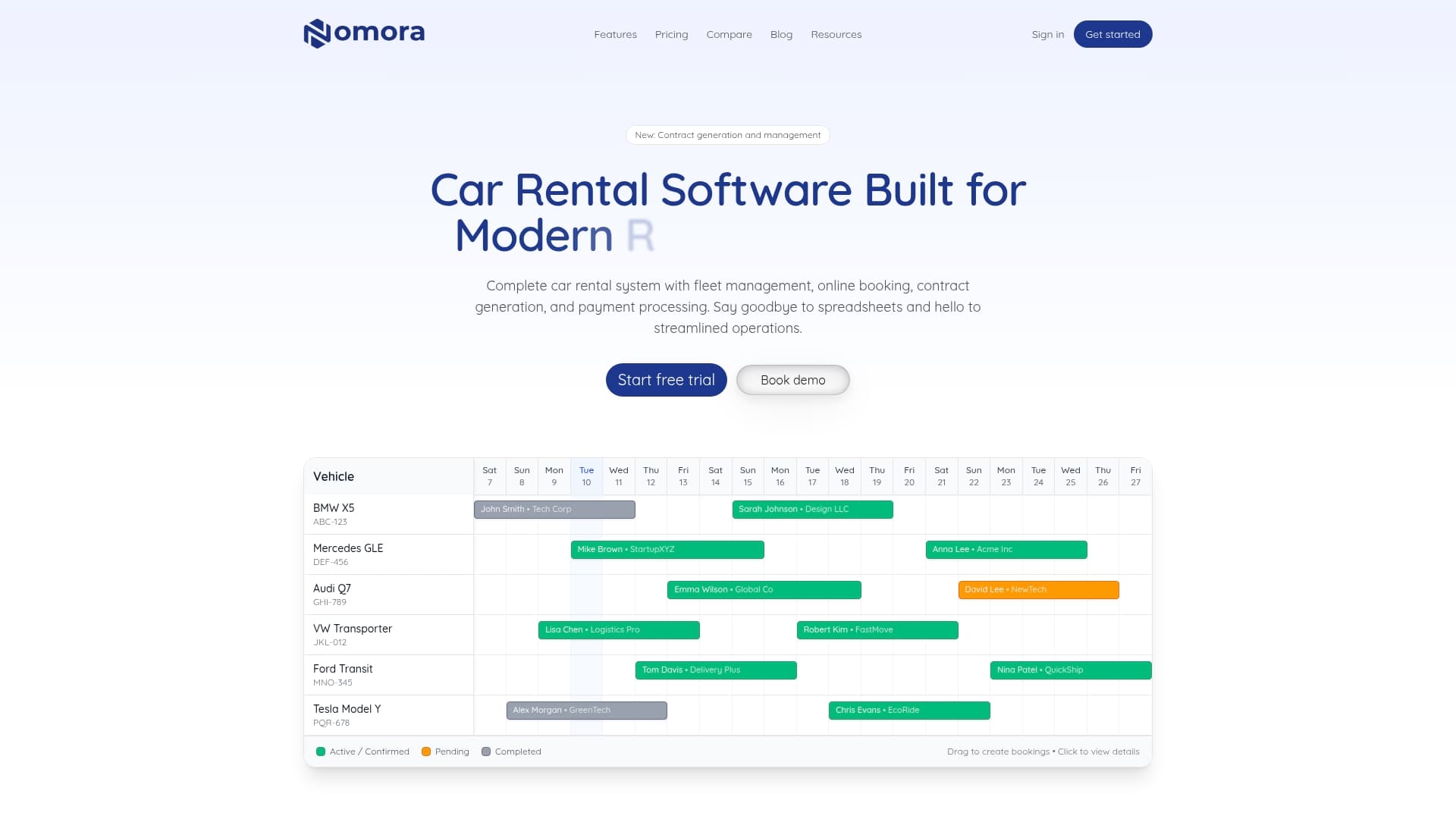
Nomora connects reservation data, fleet availability, and payment collection into a single system. That means calendar-driven add-ons like early check-in are checked and approved automatically, without manual review. For rental businesses ready to build a structured add-on program, Nomora's use cases by business type show exactly how the platform supports operators from independent owners to multi-location fleets. Setup takes 24–48 hours, and the payment integration works from day one.
FAQ
What are rental add-on services?
Rental add-on services are optional extras that guests purchase alongside a base booking, such as early check-in, welcome baskets, equipment rentals, or experience packages. They generate ancillary revenue without requiring additional inventory or units.
How much revenue can add-ons generate per property?
Strategic add-on programs can generate over $2,000 per property annually, with late checkout alone contributing $500–$1,800 per unit depending on uptake and pricing.
What is the best pricing rule for rental add-ons?
Add-ons should not exceed 25% of the base booking price. Above that threshold, guests treat the purchase as a major second decision and conversion drops significantly.
When should I send add-on offers to guests?
Send pre-stay add-on offers 72 hours before check-in, with no more than two or three options per message. This timing aligns with peak guest engagement and avoids choice overload.
Which add-ons work best for car rental businesses?
For car rental operators, the highest-converting add-ons include GPS navigation units, child safety seats, additional driver coverage, and fuel prepayment packages. These address direct guest pain points and carry strong margins relative to their fulfillment cost.
Recommended
Ready to streamline your car rental business?
Book 30 minutes with the founder. We set up everything in this guide on your own vehicles, and migrate you out of Excel for free.