Pre-authorization is a temporary card hold that reserves funds without taking them. A charged deposit is a captured payment that must later be refunded. For most rental operators, pre-authorization delivers the same financial protection with less refund work and a smoother renter experience, though debit-only customers and certain vehicle classes still call for a captured deposit instead.
TL;DR:
- Pre-authorizations are preferred for credit card renters because they reserve funds without pulling cash, reducing operational overhead and refund work.
- Debit-only renters and high-risk vehicle classes still require charged deposits since holds are less reliable and behave more like cash transactions.
- Authorization holds typically last five to seven days, requiring prompt vehicle inspection and potential re-authorization for longer rentals before the hold expires.
- Automated payment tools streamline hold, capture, and release processes, minimizing manual tracking errors and disputes over refunds.
- Clear contract language specifying deposit amounts, payment methods, and refund timelines helps reduce post-rental disputes and ensures proper customer understanding.
Table of Contents
Preauthorization vs Deposit Rental: A Quick Comparison
The two methods protect your fleet the same way in theory, but they move money very differently in practice. A pre-authorization places a hold against the renter's available credit. A charged deposit actually pulls funds out of their account, which means you owe them back later.
| Factor | Pre-authorization | Charged deposit |
|---|
| Fund movement | Hold only, no transfer | Full capture, funds move immediately |
| Renter-facing effect | Reduced available credit | Reduced actual cash balance |
| Refund complexity | None on clean returns | Refund transaction required every time |
| Operational overhead | Low, mostly automated | Higher, manual review common |
| Best use case | Credit card, card-capable renters | Debit-only or no-card renters |
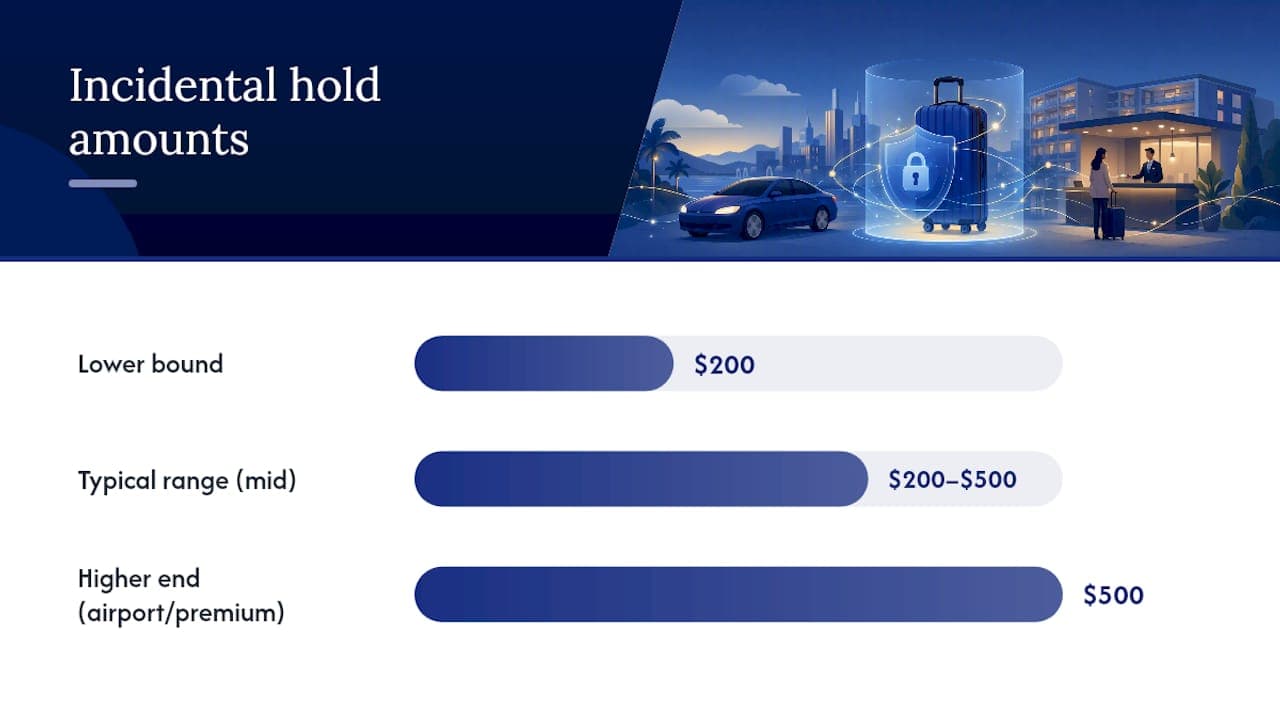
Card type drives most of this decision. Credit-card holds typically clear on their own within the issuer's authorization window, while debit transactions behave more like cash and take longer to unwind. Incidental hold amounts commonly run $200 to $500 depending on the rental company and card type, with airport pickups and premium vehicle classes often landing at the higher end.
Our recommendation: default to pre-authorization whenever the renter presents a credit card. Reserve charged deposits for debit-only customers or situations where your gateway can't support extended holds.
How Does Preauthorization Work, Step by Step?
A pre-authorization starts the moment your gateway sends an authorization request to the card network. The issuer checks available credit, places a hold, and returns an approval code, all in seconds. No money changes hands yet. An authorization hold reserves funds on the card without moving them; the issuer just reduces what the cardholder can spend elsewhere.
The catch is the clock. Most holds run on a window commonly cited as five to seven days before the issuer automatically releases it. That's fine for a weekend rental. For a two-week booking, you'll need a plan.
- Inspect the vehicle promptly at return and either release the hold or capture damage charges before the window closes.
- For longer rentals, ask your payment gateway whether it supports re-authorization mid-term.
- If a hold expires before return, you'll need documented consent to run a fresh charge for any damage found.
- Confirm your card network's specific expiration rules; they vary slightly by issuer and processor.
Gateway behavior isn't universal, so test your specific setup before rolling out a pre-auth policy at scale.
How Charged Deposits Actually Move Money
A charged deposit is a real transaction from day one. You capture the full amount, either at booking or at pickup, and that money sits in your account until you return it. There's no ambiguity about whether the funds are "available," but there's also no shortcut around the refund process.
- The renter's card or bank account is debited for the full deposit amount.
- At checkout, you initiate a separate refund transaction for any unused portion.
- Refunds then travel back through the same banking rails the original charge used, which takes time on both ends.
- Every refund is a manual or semi-manual step that somebody on your team has to trigger and track.
Operators still choose this route deliberately in some cases. Debit-only customers are the most common reason. Since debit transactions pull real cash rather than reserving credit, a captured deposit is often the only workable option when a renter shows up without a credit card.
Pros and Cons of Each Method for Rental Businesses
Every rental business weighs the same handful of tradeoffs when deciding between these two approaches. Here's how they stack up on the metrics that actually affect your day-to-day operations:
- Administrative time. Pre-auth wins decisively here. A release requires no refund transaction, so clean returns close themselves out. Deposits require someone to process a refund on every single rental, whether or not anything went wrong.
- Renter experience. Renters generally prefer seeing a hold disappear from their statement rather than waiting days for a refund to post. Fewer support calls asking "where's my money" is a direct byproduct.
- Cash guarantee. Deposits win here. Captured funds are actually in your account, immune to a hold expiring at an inconvenient moment.
- Dispute exposure. Pre-auth requires tighter timing discipline. Miss the authorization window on a high-value rental and you may need documented consent to re-bill later.
Pro Tip: Match the method to the asset, not just the customer. A compact sedan and a $150,000 exotic car probably shouldn't run the same deposit policy, even for the same renter.
Implementation Checklist for Deposit and Preauthorization Policies
Turning a policy decision into a working process takes more than picking one method. Here's what actually needs to be in place before you flip the switch.
- Set a default policy. Pre-authorization for any renter with a qualifying credit card; charged deposit as the fallback for debit-only or no-card situations.
- Write the contract clause. State the exact hold or deposit amount, the payment method it applies to, and the release or refund timeline in plain language.
- Standardize inspection timing. Photograph the vehicle at pickup and return, and log timestamps so damage claims hold up if a hold has already expired.
- Configure your gateway. Set capture windows, automatic release rules, and re-authorization triggers so staff aren't manually tracking hold expirations.
- Train staff on exceptions. Debit cards, prepaid cards, and corporate accounts each need a documented fallback procedure.
| Checklist item | Why it matters |
|---|
| Default to pre-auth | Fewer refund transactions on clean returns |
| Document hold amount in contract | Reduces disputes over unexpected charges |
| Photograph at pickup/return | Backs up damage claims after a hold expires |
| Automate capture/release | Cuts manual tracking errors |
Automation platforms built for rental operators, including deposit automation tools from Nomora, handle the hold, capture, and release sequence without someone manually watching a calendar. Most of the real time savings come from automating exception handling, not the clean-return path that already runs itself.
Pro Tip: Run a two-week pilot on your slowest rental class before switching your entire fleet to a new deposit policy. It's easier to spot gateway quirks with ten transactions than with five hundred.
How Long Do Holds and Refunds Actually Take?
Set renter expectations correctly and you'll cut a meaningful chunk of your support inbox. Credit-card holds typically clear within two to ten business days, depending on the issuing bank's own processing schedule, not yours. Debit refunds move slower, often taking five to fifteen business days or more to post back to an account.
Here's the practical dividing line for handling customer complaints:
- If you released the hold or processed the refund on your end and it's within the stated window, the delay sits with the renter's bank.
- If it's past the window with no movement, that's when you escalate to your payment processor.
- Send a confirmation email the moment you release a hold or issue a refund, including the expected posting window, so renters have something concrete to check against rather than calling you on day three.
Debit, Credit, and Prepaid Cards: What Changes
Payment method changes almost everything about how a deposit or hold plays out. Credit cards support true pre-authorization because the issuer is reserving credit, not cash. Debit cards pull directly from a checking account, which is why debit-card customers often face different front-counter checks or a charged deposit instead of a hold.
Prepaid and virtual cards raise their own complications, since many don't support extended holds and some networks reject preauthorization requests outright.
- Require a credit card for pre-authorization wherever your policy allows it.
- Build a hybrid path: charged deposit plus ID and itinerary verification for debit-only renters.
- Flag prepaid and virtual cards for manual review before accepting them as the sole payment method on a rental.
Contract Wording That Reduces Disputes
Vague deposit language is where most post-rental disputes start. Clear contract clauses that ties deposit terms to reduced disputes should spell out four things: the exact hold or deposit amount, the payment method it applies to, the release or refund timeline, and who covers any bank fees tied to processing.
- State the amount and method in the booking flow, not just buried in a printed contract at the counter.
- Repeat the terms in the confirmation email so there's a paper trail before the renter arrives.
- Include explicit consent language for post-rental charges, especially damage found after a pre-auth window has closed.
- Get legal review on the consent clause specifically. That's the language most likely to get challenged in a dispute.
Why We Default to Pre-Authorization
Most operators overthink this decision. The math almost always favors pre-authorization once you factor in refund labor across hundreds of clean returns a month. The exceptions are narrow: debit-only renters, gateways that can't handle extended holds, or high-risk vehicle classes where guaranteed cash matters more than convenience. Build your default policy around pre-auth, then carve out documented exceptions rather than running two systems in parallel with no clear rule.
— Dizzy
Automate Your Deposit and Hold Workflow With Nomora
Manually tracking authorization windows across a growing fleet is where most rental businesses start losing money to missed captures and forgotten releases. Nomora replaces that spreadsheet juggling with automated payment workflows that handle holds, captures, and releases on schedule, every time, without someone watching a calendar.
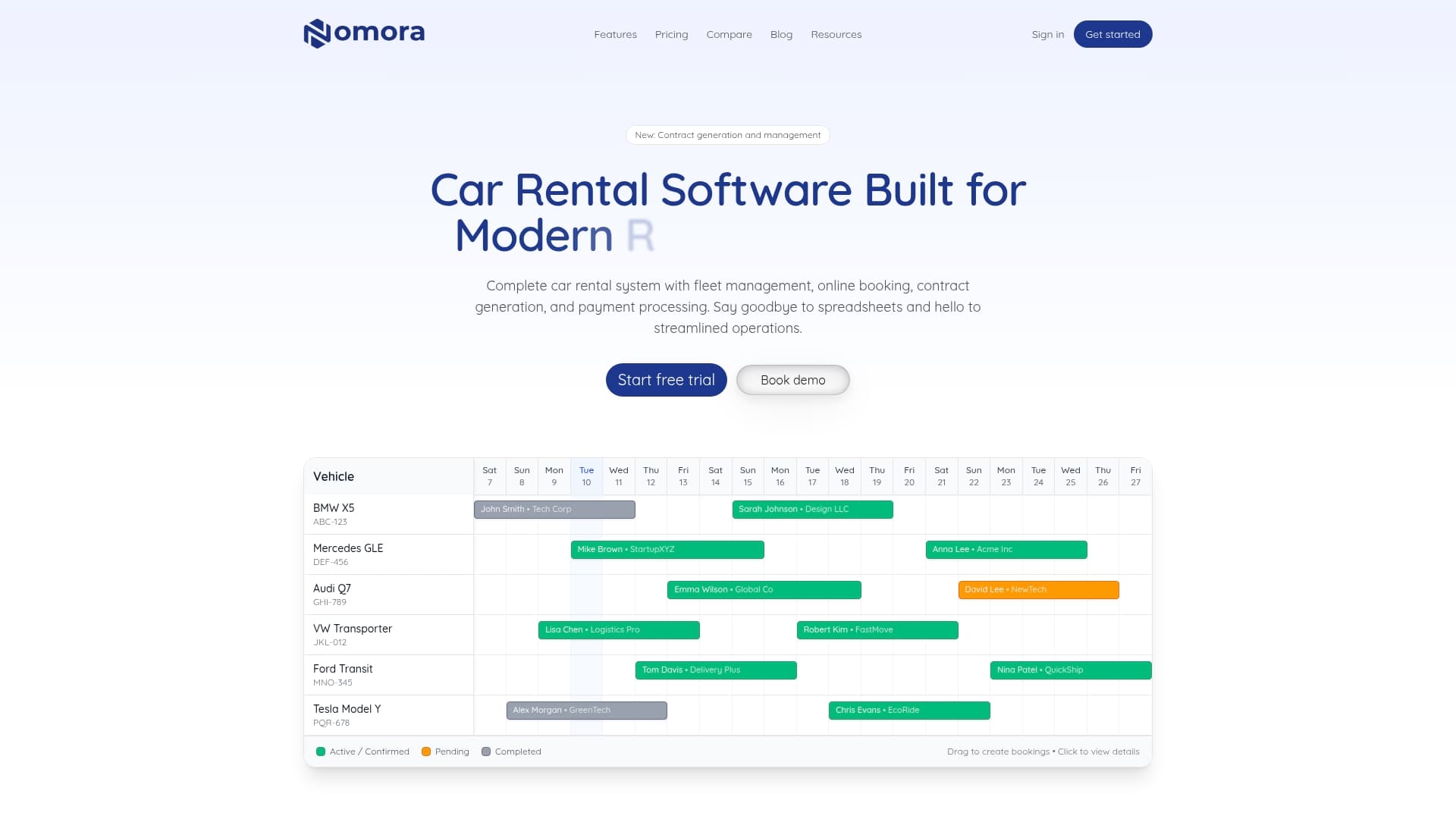
The platform ties directly into your contract templates and reservation records, so hold amounts, renter consent language, and inspection photos live in one place instead of scattered across email threads and paper folders. That centralization is what actually cuts refund disputes, not just the automation itself. Onboarding can be fast, and plans often include a comprehensive feature set with no hidden add ons. Check Nomora's pricing plans to see which tier fits your fleet size, or explore the full car rental software overview to see how payment automation fits alongside reservations and fleet tracking.
Sources
FAQ
What Is a Pre-Authorization Deposit?
A pre-authorization deposit is a temporary hold placed on a renter's credit card that reserves funds without actually charging them. It's released automatically if no damage or extra charges apply, and Nomora's automated payment tools manage the hold and release process without manual tracking.
Is It Normal to Pay a Deposit Before Seeing a Lease?
Yes, it's standard practice to disclose the deposit or hold amount in the booking confirmation before the renter ever signs a full contract at the counter. Reputable operators state the exact figure and payment method upfront rather than surprising renters at pickup.
Why Do Some Rental Companies Require a Fixed Deposit Amount?
Companies set a fixed incidental hold, commonly $200 to $500, to cover fuel, tolls, and minor damage without running a new transaction for every small charge. The exact figure varies by vehicle class, pickup location, and whether the renter is using a credit or debit card.
What Is the Point of a Deposit When Renting?
A deposit or hold protects the rental business against unpaid charges like damage, missing fuel, or toll violations discovered after the renter has already left. It gives the operator a guaranteed source of funds to draw from instead of chasing payment after the fact.
Recommended
Ready to streamline your car rental business?
Book 30 minutes with the founder. We set up everything in this guide on your own vehicles, and migrate you out of Excel for free.