TL;DR:
- Managing a luxury vehicle fleet requires balancing high costs with optimized utilization rates of 35-55 percent.
- Implementing digital booking, telematics, and AI tools improves efficiency and reduces operational costs.
- Cost control, customer vetting, and fleet rightsizing are key to maintaining profitability and high service standards.
Managing a luxury vehicle rental fleet is one of the most demanding operations in the transportation industry. High acquisition costs, discerning clients, and utilization rates between 35-55% that trail economy fleets by a wide margin create real pressure on margins. Yet the opportunity is equally significant: premium daily rates, loyal corporate accounts, and strong brand differentiation reward operators who get the fundamentals right. This article walks you through fleet strategy, cost control, technology adoption, and customer management so you leave with a clear framework for running a profitable, high-quality luxury rental operation.
Table of Contents
Key Takeaways
| Point | Details |
|---|
| Rightsize your luxury fleet | Keep luxury vehicles under 10% of your total fleet to optimize utilization and margins. |
| Track critical KPIs | Use clear benchmarks for utilization, RevPACD, and ADR to guide operational decisions. |
| Adopt smart technology | Implement digital bookings, telematics, and AI to reduce costs and streamline operations. |
| Vigilantly control costs | Rigorously budget for maintenance and depreciation; use predictive analytics to minimize downtime. |
| Prioritize client vetting | Set strict age, deposit, and insurance policies to protect your assets and maintain premium service standards. |
Define your luxury fleet strategy and KPIs
Before you can optimize, you need a clear picture of what success looks like. Luxury vehicles should represent less than 10% of your total fleet, with economy and SUV models filling the remaining 60-70%. This balance protects cash flow while keeping premium inventory available for high-value bookings.
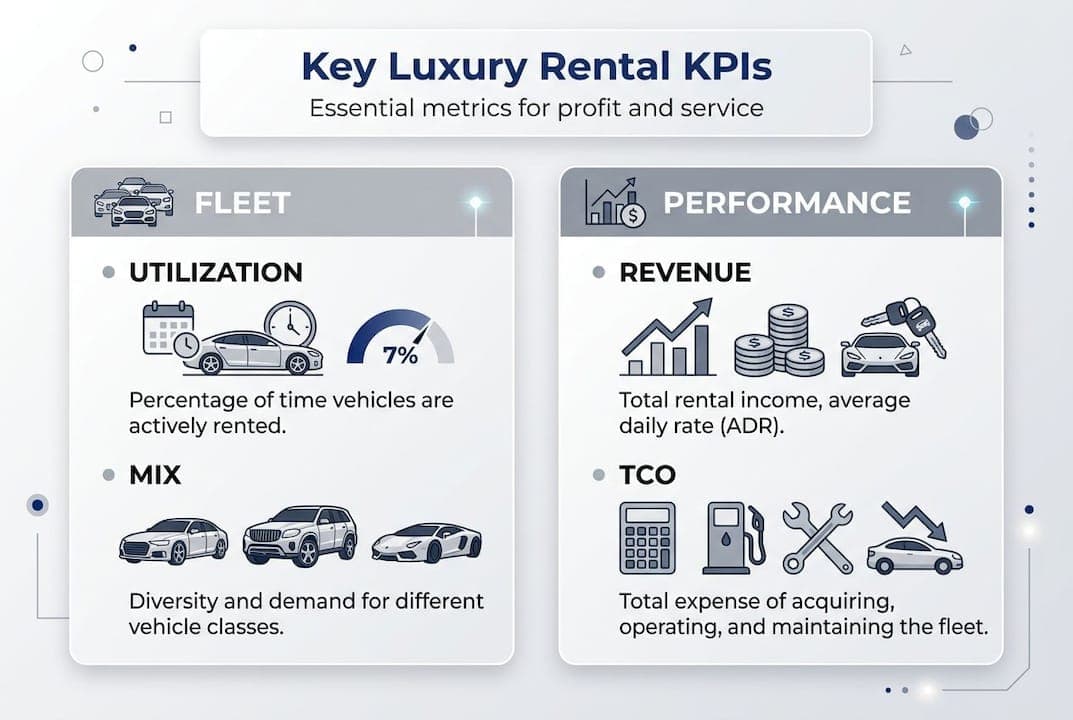
Setting the right key performance indicators (KPIs) is equally important. KPIs are the measurable targets that tell you whether each vehicle and each segment is pulling its weight. For luxury operations, the benchmarks that matter most are:
| KPI | Definition | Luxury benchmark |
|---|
| Utilization rate | Days rented / days available | 35-55% |
| RevPACD | Revenue per available car per day | >$1,000 |
| Gross margin (GM) | Revenue minus direct costs | ~80% |
| Average daily rate (ADR) | Average revenue per rental day | $400-$1,500 |
These figures from luxury rental service metrics give you a realistic baseline. If your RevPACD is consistently below $1,000 or your ADR sits at the lower end of the range, that signals either pricing or demand issues worth investigating.
Vehicle selection also shapes your KPI outcomes. Models with strong reliability records and manageable parts costs perform better over a multi-year ownership cycle. Top choices for luxury fleets include:
- Mercedes-Benz E-Class and S-Class: Strong brand recognition, broad corporate appeal
- BMW 5 Series and 7 Series: Performance-oriented clients and executive travelers
- Audi A6 and A8: Popular with corporate accounts seeking understated luxury
- Porsche Cayenne and Macan: SUV demand continues to grow in the premium segment
- Cadillac Escalade: Dominant in the US market for group and VIP transport
Reviewing fleet optimization examples from comparable operators can sharpen your model mix decisions. Pair that with consistent fleet reporting best practices to track each vehicle's contribution to overall revenue. Understanding car rental fleet management fundamentals also helps you align acquisition timing with seasonal demand cycles. For broader context on car rental market fundamentals, reviewing industry-level data helps you position your fleet competitively.
Master cost control and predictive maintenance
Luxury vehicles are expensive to own and expensive to fix. In the early years of operation, you should budget 50-110% of revenue for depreciation and maintenance combined. That figure surprises many new operators, but it reflects the reality of high-end vehicles: parts are costly, labor rates at authorized dealers are steep, and depreciation accelerates with mileage and age.

Understanding your total cost of ownership (TCO) for each model is the foundation of smart budgeting. TCO covers acquisition price, financing costs, insurance, scheduled maintenance, unplanned repairs, and residual value at disposal. A rough comparison:
| Vehicle | Est. annual depreciation | Est. annual maintenance | Notes |
|---|
| Mercedes S-Class | $18,000-$25,000 | $4,000-$7,000 | Higher parts cost, strong resale |
| BMW 7 Series | $16,000-$22,000 | $3,500-$6,500 | Reliable but complex electronics |
| Cadillac Escalade | $12,000-$18,000 | $2,500-$4,500 | Lower parts cost, high demand |
| Economy sedan (baseline) | $4,000-$7,000 | $800-$1,500 | For comparison only |
Predictive analytics changes the maintenance equation significantly. By monitoring telematics data such as engine hours, brake wear, and fluid levels, predictive analytics can cut downtime by 25-30%. That translates directly to higher utilization and fewer emergency repair bills.
Pro Tip: Track cost per mile (CPM) for every vehicle in your luxury tier. If a model's CPM climbs above your target threshold two months in a row, schedule a full inspection before the next rental cycle. Catching problems early is far cheaper than roadside breakdowns and unhappy clients.
Common cost mistakes that erode luxury rental margins include:
- Over-ordering exotic or ultra-high-end vehicles before demand is proven
- Skipping predictive analytics and relying on mileage-only service intervals
- Failing to negotiate fleet service agreements with authorized dealers
- Ignoring residual value trends when planning vehicle disposal timelines
For a deeper look at how fleet management explained principles apply to cost control, and how data analytics for fleet optimization can surface hidden cost drivers, both resources offer practical guidance you can apply immediately.
Implement digital booking, telematics, and AI optimization
Manual booking processes are a liability in luxury rentals. A double booking on a $1,200-per-day vehicle damages your reputation and your revenue in one moment. Digital-first operations eliminate that risk while creating new opportunities to optimize pricing and fleet deployment.
A case study involving a 150-car luxury fleet found that combining online and app-based booking with telematics and AI-driven fleet management reduced operational costs by up to 35%. That is a meaningful margin improvement for any segment, but especially for luxury where fixed costs are already high.
Here is a practical sequence for building your digital infrastructure:
- Deploy a cloud-based reservation system that prevents double bookings and syncs availability in real time across all channels
- Install telematics units in every luxury vehicle to track location, mileage, driver behavior, and mechanical alerts
- Integrate AI-driven pricing tools that adjust ADR based on demand signals, competitor rates, and seasonal patterns
- Connect your booking platform to accounting and insurance systems so every rental generates compliant records automatically
- Use customer-facing apps or portals to streamline pickup, return, and communication for premium clients who expect frictionless service
Pro Tip: When evaluating platforms, prioritize tools that offer native integration with your accounting software and insurance providers. Compliance gaps in luxury rentals can trigger audits and liability exposure. Your software integrations guide is a useful reference for mapping your current tech stack against what a modern platform should offer.
For ongoing performance visibility, fleet reporting tools give you the dashboards needed to spot underperforming vehicles before they become a drag on overall results. Staying current on luxury car rental digital trends also helps you anticipate where client expectations are heading next.
Enhance customer experience and risk management
Luxury rental clients expect more, and they also represent more risk. A single damage incident on a high-value vehicle can wipe out weeks of rental revenue. Structured qualification and personalization practices protect your margins while building the loyalty that drives repeat business.
Start with a clear requirements checklist for every luxury rental:
- Minimum driver age of 25 to qualify for standard rates and coverage
- Valid driver's license with a clean record verified at booking
- Security deposit of $5,000 or more held on a credit card at pickup
- Comprehensive damage insurance required, with high deductibles for certain incidents
These customer vetting requirements are non-negotiable for protecting asset value. Skipping any of them introduces financial exposure that no premium daily rate can offset.
Mileage controls are equally important. Daily mileage caps of 75-150 miles are standard practice, and coverage for glass, wheels, and tires is often excluded from standard policies. Make sure clients understand these terms before they sign.
Important: Always structure contracts with explicit exclusions for glass, wheel, and tire damage. High deductibles on these items protect your margins and set clear expectations with clients from the start.
On the personalization side, loyalty programs and VIP services are powerful retention tools. Repeat clients who feel recognized and rewarded book more frequently and refer others. Consider offering:
- Dedicated account managers for corporate clients
- Customized vehicle preparation (preferred scent, temperature, music presets)
- Priority vehicle availability during peak periods
- Tiered loyalty discounts tied to annual spend
For pricing structures that support both retention and margin, luxury pricing strategies and a solid rental revenue guide provide frameworks you can adapt to your market. Understanding how clients evaluate luxury rentals from the consumer side also sharpens your service design.
Why focusing only on fleet size can hurt luxury rental success
Many operators assume that adding more luxury vehicles automatically grows revenue. The data tells a different story. Profitably running luxury fleets depends on keeping fleet size disciplined, targeting 35-55% utilization, and using data to justify every vehicle decision.
Expanding too quickly creates idle capital. A $120,000 vehicle sitting unused for 15 days a month is not an asset, it is a liability. The smartest operators treat their luxury tier as a precision instrument, not a growth lever. They set strict utilization benchmarks before adding any new model, and they retire vehicles that consistently underperform.
Investing in data-driven technology and service upgrades almost always delivers better returns than simply expanding the car list. Fleet rightsizing, combined with superior client experience and predictive cost management, is what separates consistently profitable luxury operators from those who struggle with margin erosion. Review fleet rightsizing case studies to see how comparable businesses have applied this discipline.
Pro Tip: Use your rental management software to monitor the lifetime value to customer acquisition cost (LTV:CAC) ratio for each client segment. If your luxury segment's LTV:CAC is lower than your economy segment, that is a signal to invest in retention rather than fleet expansion.
Streamline your luxury rental operations with Nomora
Putting these best practices into action requires more than good intentions. It requires a platform that connects reservations, fleet data, cost tracking, and customer management in one place.
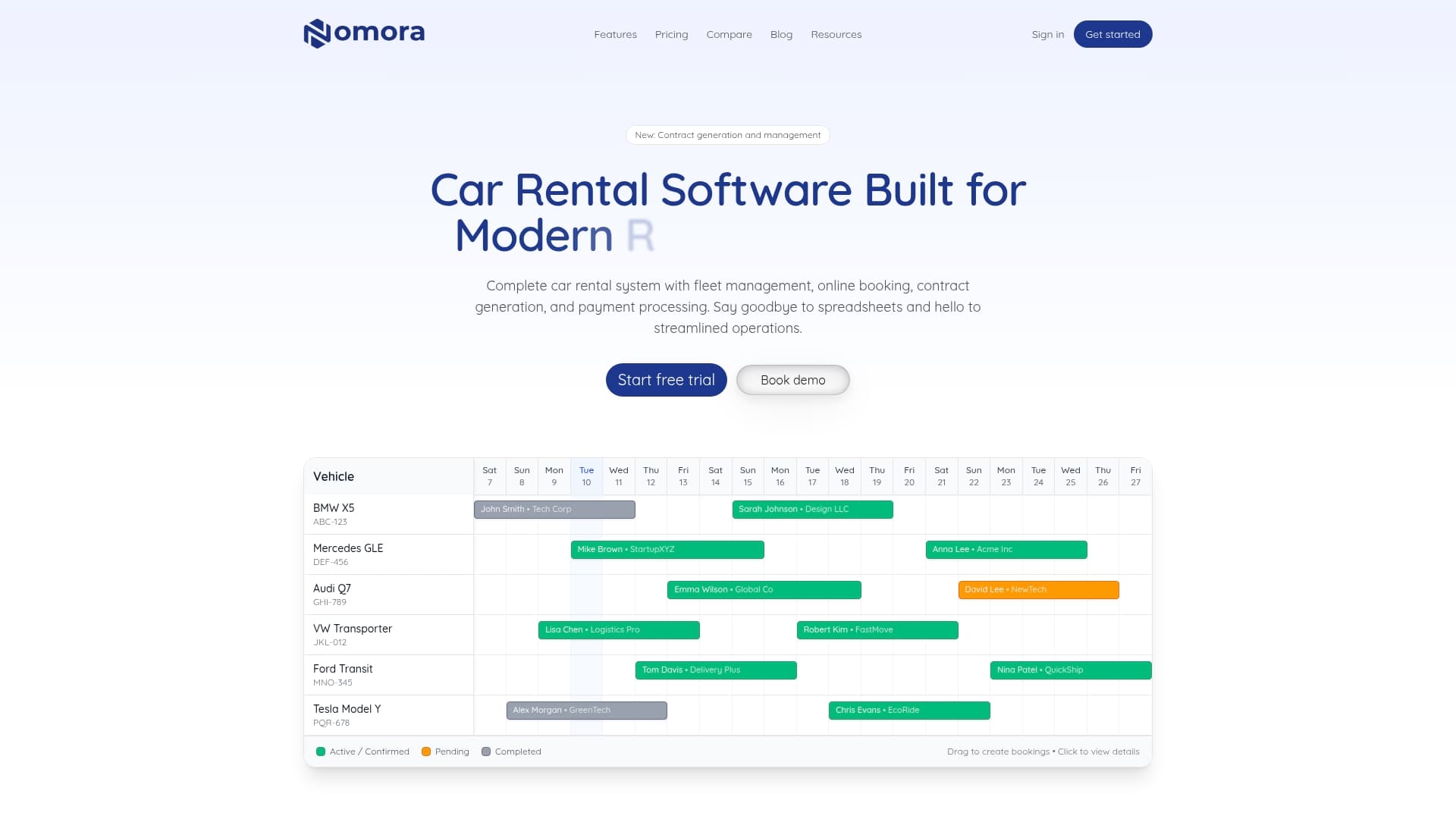
Nomora's car rental management software acts as the central nervous system of your rental operation, giving you real-time visibility into utilization, maintenance alerts, and revenue performance across every vehicle. From conflict-free digital booking to automated contract generation and GPS-integrated fleet tracking, Nomora supports the specific demands of luxury and corporate fleet operators. Whether you manage 10 vehicles or 500, the platform scales with your business. Explore the car rental use cases to see how operators like you are using Nomora to reduce overhead and grow profitably.
Frequently asked questions
What is a good fleet utilization rate for luxury vehicle rentals?
Aim for a luxury fleet utilization rate of 35-55%, as luxury vehicle benchmarks confirm this range is realistic and sustainable. Higher rates are achievable in markets with consistent corporate or event-driven demand.
How should I budget for luxury vehicle maintenance and depreciation?
Plan to allocate 50-110% of first-year revenue toward depreciation and maintenance, then refine that figure as your actual cost data accumulates over time.
What insurance requirements are best practice for luxury fleet rentals?
Require drivers to be at least 25 years old, present a valid license, carry comprehensive insurance, and provide a security deposit of $5,000 or more, following customer vetting best practices for high-value vehicles.
How can technology reduce costs for luxury vehicle rental companies?
Digital booking, telematics, and fleet management software can deliver up to 35% cost reduction in a 150-car fleet by eliminating manual errors and enabling smarter vehicle deployment.
Recommended
Ready to streamline your car rental business?
Book 30 minutes with the founder. We set up everything in this guide on your own vehicles, and migrate you out of Excel for free.