TL;DR:
- Data-driven management and telematics optimize vehicle utilization and reduce costs.
- Regularly review fleet metrics to align vehicle mix with demand and improve profitability.
- Cloud platforms enable real-time insights, proactive decisions, and better driver and asset management.
Managing a high-value fleet is one of the most demanding jobs in the rental industry. Every vehicle represents a significant capital investment, and every idle day costs you real money. Luxury rental operators face a unique set of pressures: unpredictable demand cycles, higher maintenance costs, elevated customer expectations, and razor-thin windows for scheduling errors. Getting fleet management right means combining operational discipline with technology that gives you visibility across every asset, every booking, and every dollar spent. This article covers the core best practices that top-performing luxury fleet owners use to stay efficient and grow their margins.
Table of Contents
Key Takeaways
| Point | Details |
|---|
| Data drives decisions | Embracing fleet telematics and analytics maximizes utilization and profit. |
| Right-size for success | Align your luxury vehicle mix with demand and avoid idle costs. |
| Coach drivers efficiently | Telematics-based training lowers fuel expenses and enhances safety. |
| Cut operational costs | Tackle major expenses with proactive fuel management and smart maintenance. |
| Leverage advanced tools | Modern cloud solutions turn your fleet data into a true business advantage. |
Establishing data-driven fleet operations
The foundation of any high-performing luxury fleet is reliable data. Without it, you're making decisions based on gut feeling rather than evidence, which is a costly habit when your assets are worth six figures apiece. Telematics systems and cloud-based analytics platforms have changed this entirely, giving operators real-time visibility into how their vehicles are being used, where they are, and what they're costing.
The metrics that matter most for luxury fleets include:
- Utilization rate: The percentage of time each vehicle is actively earning revenue versus sitting idle.
- Downtime per vehicle: How many days each asset spends out of service due to maintenance or scheduling gaps.
- Cost per mile (or per trip): Total operating costs divided by mileage or reservations, giving you a true profitability picture.
- Reservation lead time: How far in advance bookings are made, which helps with staffing and logistics planning.
- Customer satisfaction scores tied to specific vehicles: Which models generate repeat bookings and which ones generate complaints.
Tracking these metrics consistently allows you to spot patterns. You'll notice which vehicles underperform, which months drive your highest margins, and where your team's time is being consumed. Platforms that surface rental fleet analytics in a single dashboard cut the time it takes to find these answers dramatically.
Think of your fleet management software as the central nervous system of your operation. Everything connects through it: bookings, maintenance records, driver assignments, billing, and reporting. When that system is cloud-based, you can access every data point remotely, in real time, whether you're at the office or traveling.
For luxury vehicle rental best practices, the goal is to move from reactive to proactive. Instead of reacting to a vehicle breakdown or a double booking, you use data to prevent them.
Pro Tip: Set up automated weekly reports from your cloud dashboard that flag any vehicle with a utilization rate below 60%. This single habit helps you identify underperforming assets before they become a long-term drag on profitability. Your fleet reporting for profit tools should make this easy to configure.
Optimizing fleet size and vehicle mix
Accurate data fuels informed decisions, and one of the most valuable decisions you'll make is determining exactly how many vehicles to operate and which models to carry.
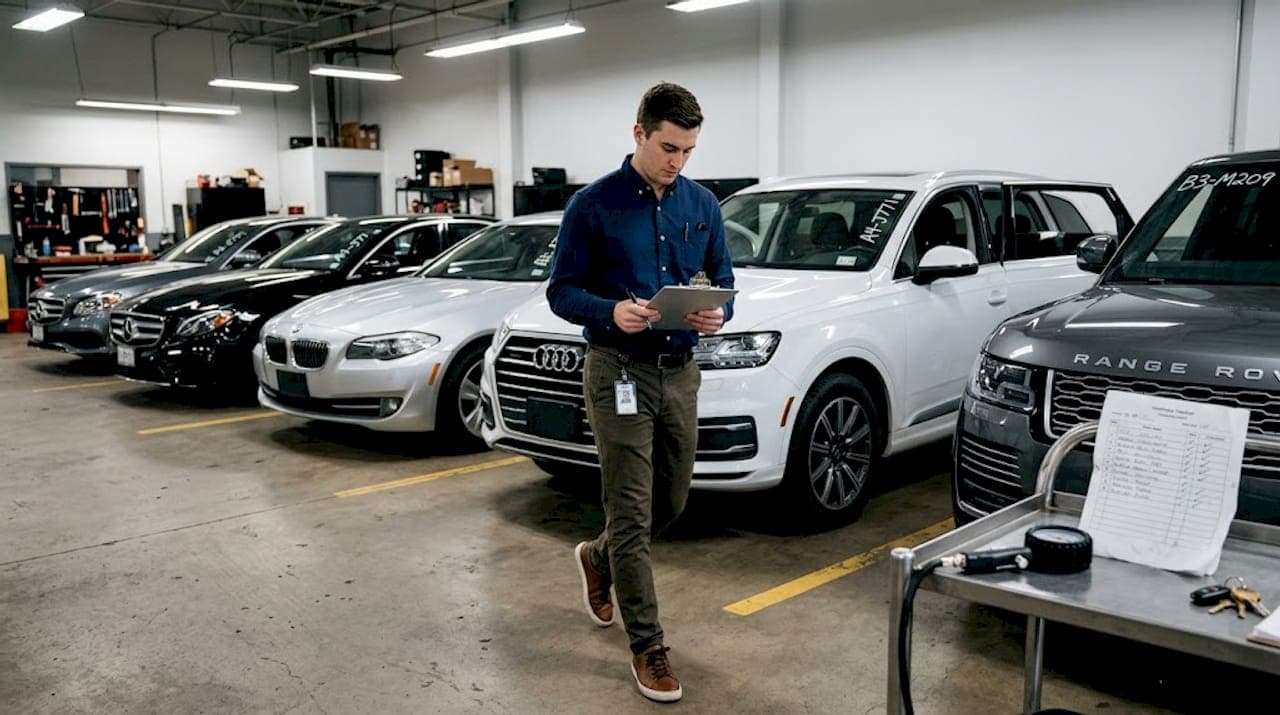
Over-fleeting and under-fleeting are both expensive mistakes. Carrying too many vehicles means higher insurance, depreciation, and storage costs with no corresponding revenue. Too few vehicles means you're turning away customers and leaving bookings on the table. Fleet right-sizing based on utilization data is the discipline that keeps you in the profitable middle.
| Scenario | Under-fleeting impact | Over-fleeting impact |
|---|
| Revenue | Lost bookings, unmet demand | Revenue diluted across too many assets |
| Customer experience | Unavailability frustrates clients | No direct impact, but margin suffers |
| Operating costs | Lower, but opportunity cost is high | Insurance, depreciation, and storage inflate costs |
| Fleet health | Vehicles overworked, faster wear | Some vehicles rarely used, still depreciating |
Using fleet utilization best practices as your guide, here's a practical process for finding your ideal fleet size and mix:
- Audit current utilization by vehicle model over the last 12 months. Any model averaging below 55% utilization is a candidate for retirement or replacement.
- Map demand peaks using booking history. Identify which months or seasons drive the highest requests and which vehicle categories dominate.
- Research your market's preferences. Luxury SUVs, sports cars, and executive sedans each serve different customer profiles. Make sure your lineup reflects actual demand, not assumptions.
- Retire underperformers on a set schedule. Don't hold onto a vehicle because of attachment. Use data from car rental fleet optimization examples to guide decisions.
- Reinvest in high-demand models. When one vehicle category consistently books out weeks in advance, that's a signal to expand it.
Refer to a solid fleet management guide when building out your process, and make rental inventory management part of your monthly review routine.
Pro Tip: Adjust your fleet mix seasonally. If summer demand shifts toward convertibles or SUVs for travel, arrange short-term vehicle leases to meet that demand without committing to a permanent purchase.
Advanced fuel and cost management strategies
Once your fleet is the right size, controlling costs becomes even more essential. Fuel is one of the largest variable expenses in luxury fleet operations, and it's often one of the least managed.
Telematics systems don't just track location. They monitor driver behavior in real time, including hard acceleration, excessive idling, and high-speed cruising, all of which drive fuel consumption up sharply. According to consistent industry research, fuel costs can drop by 20 to 30% when operators use telematics data to coach driver behavior actively.
| Cost area | Without tech tools | With tech tools |
|---|
| Fuel | Unmonitored, high variance | Reduced 20-30% via behavior coaching |
| Preventive maintenance | Reactive (breakdown-driven) | Scheduled by mileage and usage data |
| Detailing and condition | Ad-hoc, inconsistent | Systematic, tied to rental cycles |
| Scheduling inefficiency | Manual coordination delays | Automated assignment reduces gaps |
Beyond fuel, there are several high-impact cost-reduction moves that top luxury fleet operators use regularly:
- Preventive maintenance scheduling: Use your management platform to trigger service reminders based on mileage rather than time, which is far more accurate for variable-use luxury fleets.
- Vendor consolidation: Negotiate volume rates with detailers, tire services, and mechanical shops. Exploring detailing packages for fleets can provide substantial savings compared to paying retail rates per visit.
- Fuel card programs: Fleet-specific fuel cards provide detailed transaction data and often include volume discounts.
- Automated billing for damage and extras: Manual invoicing delays cost you both time and recovery rates. Automating this step improves cash flow.
- Route and logistics optimization: Coordinating pickups and drop-offs efficiently reduces repositioning miles and driver overtime.
Cost control in luxury fleet management isn't about cutting corners. It's about eliminating waste while maintaining the premium experience your customers expect. That distinction is critical. You can reduce spending without reducing quality. You can boost fleet profitability through smarter systems, not cheaper service.
Elevating driver standards and customer service
Managing costs sets you up for profitability. But the people behind the wheel are what ultimately define your brand in the luxury space.
Luxury rental customers are not just paying for a vehicle. They're paying for an experience. A single poor interaction with a driver can cost you a repeat client worth thousands of dollars per year. Driver professionalism is not optional in this segment. It's a revenue driver.
Telematics gives you something you never had before: objective data on how each driver operates a vehicle. You can see speeding events, hard braking, rapid lane changes, and idling time. This information feeds directly into coaching conversations. Rather than relying on complaints or guesswork, you have telematics-supported driver coaching that is specific, measurable, and fair.
Combine that with clear written protocols and you have a driver management system that protects both your vehicles and your reputation. Key protocols every luxury fleet should enforce include:
- Mandatory pre-trip inspections with digital documentation submitted before each rental
- Strict dress code and communication standards for customer-facing interactions
- Zero-tolerance policies for phone use while driving tracked and enforced via telematics
- Post-rental condition reports submitted immediately after vehicle return
- Quarterly performance reviews using telematics scores alongside customer feedback ratings
For more structured guidance, reviewing fleet vehicle maintenance best practices alongside your driver protocols creates a cohesive standard of care for your assets and your clients.
Data-backed results show that structured driver behavior coaching tied to telematics data consistently improves safety scores, reduces incident rates, and increases customer satisfaction ratings across luxury fleet operations. The discipline of measurement creates the discipline of behavior.
A strong rental fleet driver standards program isn't bureaucratic overhead. It's a competitive advantage that protects your assets, your brand, and your repeat business.
Our perspective: The hidden ROI in luxury fleet management precision
Most operators adopt telematics, run utilization reports, and train their drivers because these are recognized best practices. That's the baseline. Where elite luxury fleet operators separate themselves is in how relentlessly they act on what the data tells them.
The complacency trap is real. You set up dashboards, glance at them periodically, and assume that awareness equals action. It doesn't. The highest-performing owners we observe are the ones who treat every micro-trend as a decision trigger. A vehicle's utilization drops 8% over six weeks? That's a conversation about pricing, positioning, or retirement, not a footnote.
Think about fleet performance terminology not as dry vocabulary, but as the language of your competitive edge. Owners who understand the nuance behind metrics like revenue per available vehicle or cost per available day make fundamentally better decisions than those who only track total revenue.
Pro Tip: The operators who outperform their peers aren't necessarily the ones with the newest vehicles or the largest fleets. They're the ones who review their data weekly, act on outliers within days, and treat their cloud platform as a strategic tool rather than a reporting formality.
Precision in fleet management doesn't just reduce costs. It compounds over time into a business that is genuinely harder to compete against.
Unlock your luxury fleet's full potential with Nomora
Putting these strategies into practice requires the right infrastructure. Nomora's cloud-based platform is built to support exactly the kind of data-driven, precision-focused management that luxury fleet operators need to stay competitive.
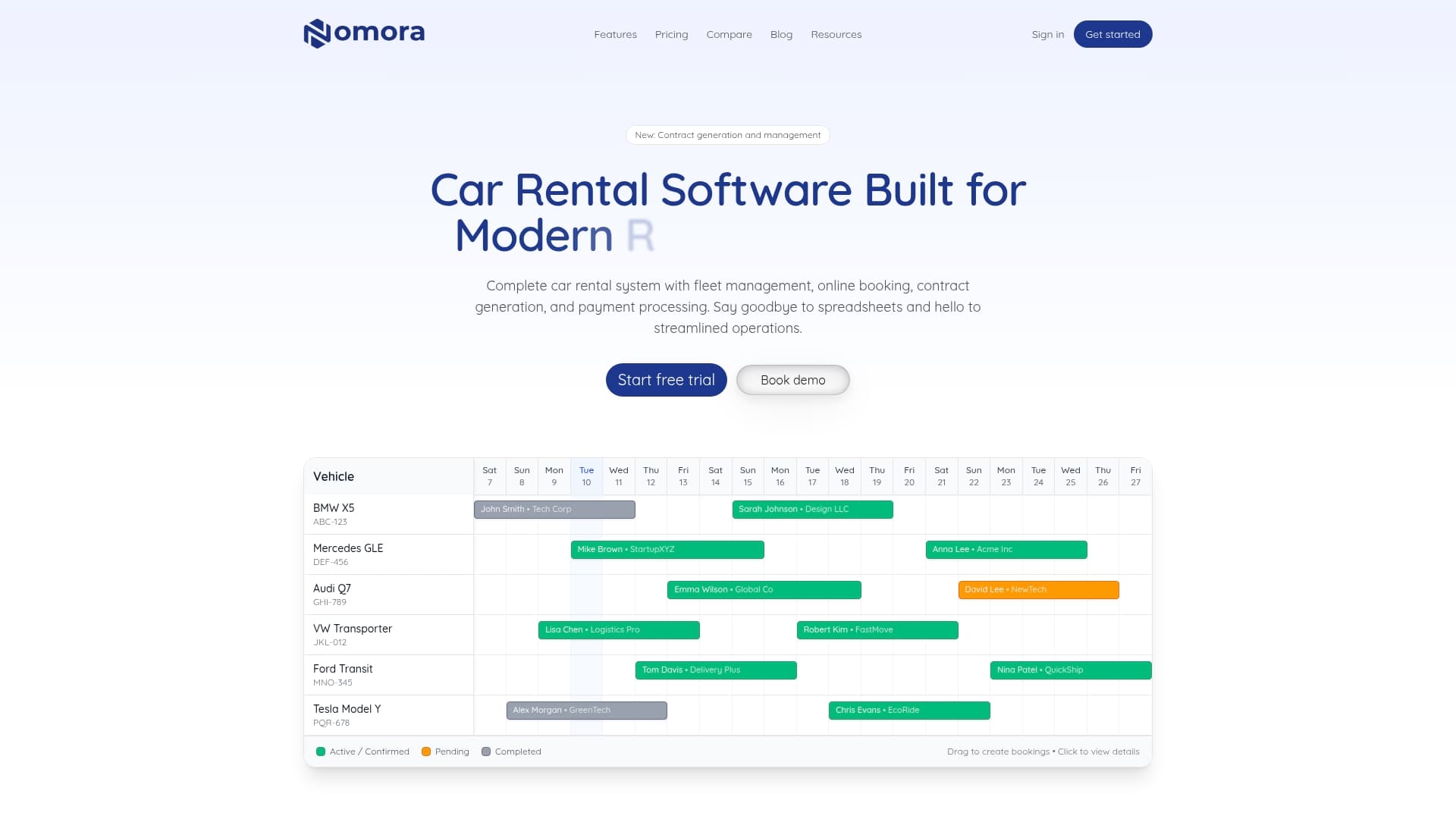
From real-time fleet dashboards and automated car rental payments to inventory control and tools that prevent double bookings, Nomora centralizes every operational layer into one accessible system. You can explore the full range of car rental software use cases to see how operators across fleet sizes are using Nomora to reduce administrative overhead and grow their margins. Setup takes as little as 24 to 48 hours, so you can start acting on better data faster than you might expect.
Frequently asked questions
What is the most important metric for luxury fleet management?
Utilization rate is the most critical indicator, showing how effectively your vehicles are generating revenue versus sitting idle. Right-sizing your fleet around this metric is the fastest path to better margins.
How can driver training reduce costs in a luxury fleet?
Telematics-based coaching can reduce fuel and operational costs by 20 to 30%, while simultaneously improving safety outcomes and protecting your vehicles from unnecessary wear.
Cloud platforms deliver real-time data access, automated workflows, and centralized reporting, giving you the visibility and speed needed to make smarter fleet decisions without being tied to a desk.
How often should I reevaluate my luxury fleet mix?
Review your utilization data and market demand trends at least quarterly to keep your fleet aligned with what customers actually want and what your business needs to stay profitable.
Recommended
Ready to streamline your car rental business?
Book 30 minutes with the founder. We set up everything in this guide on your own vehicles, and migrate you out of Excel for free.