Your late return policy should require company approval for any extension, apply a short measurable grace period similar to the industry standard of about half an hour, and charge clear, predetermined fees once that window closes. Document every approved extension with a timestamp and staff sign-off, and spell out what happens next: hourly billing, an extra day's charge, or escalation. That structure protects revenue without turning a five-minute delay into a customer relations disaster.
TL;DR:
- Implement a clear, industry-standard half-hour grace period before late charges accrue, with documented approval for any extensions granted beyond this window.
- Use explicit contract clauses specifying the rental end time, extension policies, hourly late fees up to a cap, and recovery procedures to prevent disputes and legal issues.
- Enforce uniform staff procedures for communication, approval, and documentation of late returns, supported by scripts and timestamped records.
- Set late fees based on demand, booking density, recovery costs, and after-hours expenses, ensuring transparency and minimizing customer disputes.
- Automate reminders, approval workflows, GPS recovery, and fee posting through software to consistently enforce policies and reduce manual errors.
Table of Contents
Late Return Policy Rentals: Core Contract Clauses You Need
A late return policy only works if the contract language backs it up. Vague terms like "please return the vehicle on time" leave enforcement difficult and no firm basis if a renter disputes a fee. The fix is specific, unambiguous clause language that defines the rental period, the grace window, and exactly what happens when a customer runs over.
Here are the four clauses every rental agreement needs, written so you can adapt them directly:
- Rental period and check-in clause: "The rental period ends at the date and time specified on this agreement. A grace period of about half an hour applies after the stated return time before late charges accrue. Major national brands use a similar grace period. Enterprise's public policy references this industry benchmark.
- Extension request clause: "Extensions to the rental period are granted solely at the company's discretion and may be billed at a different daily or hourly rate than the original agreement." This line matters more than most operators realize. Without it, renters who ask for "just a few more hours" will expect their original promotional rate, even during a demand spike.
- Fee calculation clause: "Late returns are charged in hourly increments up to [X] hours, after which the full daily rental rate applies. An administrative fee of $[amount] applies to any unapproved late return." Hertz's rental terms illustrate the underlying logic: charges run in 24-hour blocks from the agreement's start time, so a late return can trigger a fresh billing period at the standard daily rate rather than a prorated hourly charge.
- Recovery and notification clause: "If the vehicle is not returned or an extension approved within [timeframe], the company reserves the right to initiate recovery procedures and charge all associated costs to the renter." Budget's return policy confirms this is common practice across the industry, including the right to keep billing until the vehicle physically comes back.
Pair these clauses with a broader review of your rental contract essentials to make sure nothing else in the agreement contradicts your return terms.
What Should Staff Do When a Return Runs Late?
Contract language means nothing if your front-line staff apply it inconsistently. One agent waives a fee because the customer seemed nice; another charges full price for a 10-minute delay. That inconsistency is what turns a fair policy into a source of chargebacks and one-star reviews. A repeatable procedure closes that gap.
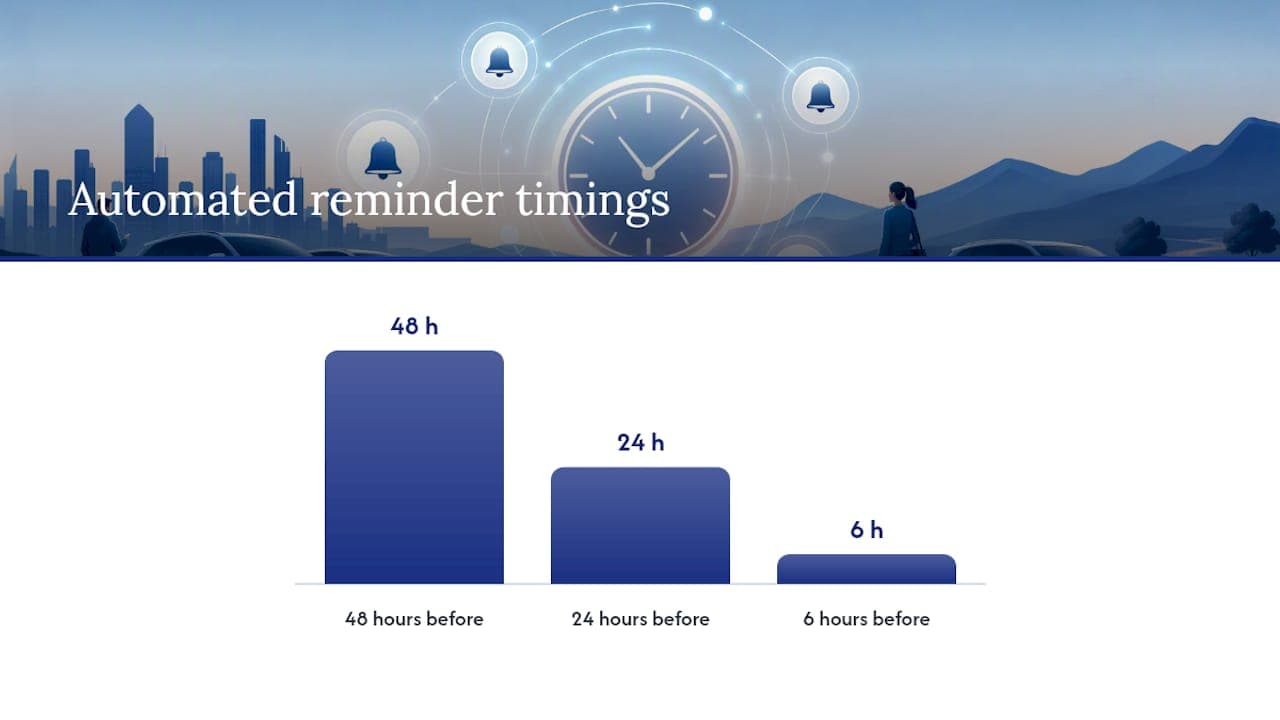
- Send automated reminders at 48 hours, 24 hours, and 6 hours before the scheduled return. This gives renters time to request an extension before they're already late, and it gives your team a heads-up on which vehicles need attention.
- Route extension requests through one approval channel. Whoever approves it logs the agent ID, the timestamp, and the new due time directly in the reservation. No verbal-only approvals, no texts that disappear.
- Update the reservation system immediately so the vehicle's expected return time and any rate change are visible to the next shift.
- Inspect and timestamp at check-in. Note the exact return time, current mileage, fuel level, and any visible damage, then post the late fee before the customer leaves the counter.
- Escalate if the renter goes unresponsive. Place a hold on stored payment charges, document every contact attempt, and only initiate recovery or police reporting once you've crossed your predefined threshold (more on that below).
Note that vehicles returned outside business hours often can't be officially checked in until the next morning, and Enterprise's own FAQ states the renter stays responsible for the vehicle until that check-in happens. Your procedure should clearly state the renter's continuing responsibility until official check-in occurs, especially for vehicles returned after hours.
Pro Tip: Give every staff member the same three-line script for approving, denying, and explaining a late fee. A consistent phrase spoken by five different agents feels like policy. Five different explanations feel like negotiation, and negotiation is what triggers disputes.
How Do You Calculate Late Fees Without Triggering Disputes?
The market-standard structure is simple: a short grace period, then hourly charges up to a defined ceiling, then a full extra day's charge. Both Budget and Enterprise use a similar grace period, which many renters now anticipate.
Set your actual dollar figures using four factors:
- Fleet demand: a vehicle booked back-to-back with zero buffer justifies a steeper hourly rate than one sitting idle.
- Booking density: high-turnover locations lose more revenue per late hour than low-volume ones.
- After-hours exposure: if a late return means paying a staff member overtime to process it, that cost belongs in your fee.
- Recovery cost: unapproved lateness that requires phone calls, holds, or dispatch time should cost more than an approved five-minute grace overage.
A worked example: a compact car rents at $12 an hour or $65 a day. Set hourly late charges at $15 (a premium over the standard rate) up to four hours, after which the full $65 daily rate applies automatically, plus a flat $25 administrative fee for any unapproved lateness. Print this exact math on the contract clause and again on the final receipt. Fee structures that show up in the same numbers in two places generate far fewer disputes than ones customers only see once, buried in fine print.
What Happens If the Vehicle Is Never Returned?
Most operators use two escalation thresholds: 24 hours past due for internal recovery steps, and one week for law enforcement involvement or formal repossession. Those thresholds matter because they give your staff a bright line instead of a judgment call made under stress.
- At 24 hours: hold any charges still authorized on the renter's payment method, log every contact attempt with timestamps, and send a formal written notice.
- At one week (or your defined threshold): consider filing a police report for an unrecovered vehicle and activating GPS-based recovery if your agreement discloses that capability.
That disclosure step isn't optional in every state. California law, for example, requires renters to receive notice and to acknowledge in writing the possibility of GPS or electronic surveillance activation before an overdue vehicle triggers it, and the exact statutory language is worth reviewing with counsel if you operate there. Skipping disclosure exposes you to a wrongful repossession claim even when the renter genuinely never returned the car. Before any recovery action, preserve your documentation: contact logs, the signed disclosure, GPS activation records, and photos of the vehicle's last confirmed location. A checklist like Nomora's risk checklist for fleet owners helps make sure nothing gets missed under pressure.
What Records and Scripts Reduce Late-Return Disputes?
Keep five pieces of documentation for every late return: the original due timestamp, the extension approval (agent name and time, if one was granted), the new due time, inspection photos, and odometer or fuel notes at check-in. Store these attached to the reservation record and the signed contract, not scattered across texts and sticky notes, and retain them at least as long as your state's contract dispute statute allows.
Three short scripts keep staff language consistent:
- Approving an extension: "I can extend your rental to [time]. Note that extensions are billed at [rate], which may differ from your original rate."
- Denying an extension: "I'm not able to extend this rental due to the next reservation. Please return the vehicle by [time] to avoid additional charges."
- Explaining a late fee: "Your return was logged at [time], which is [X] hours past your due time. Per your signed agreement, that's billed at [amount]."
Digital contracts with e-signatures make every one of these steps easier to defend. When the grace period, the extension clause, and the fee schedule are all signed off electronically at booking, a renter has already agreed to the number before the dispute even starts. Nomora's guide to digital rental agreements covers how to set that up.
Turning Your Policy Into Software Settings
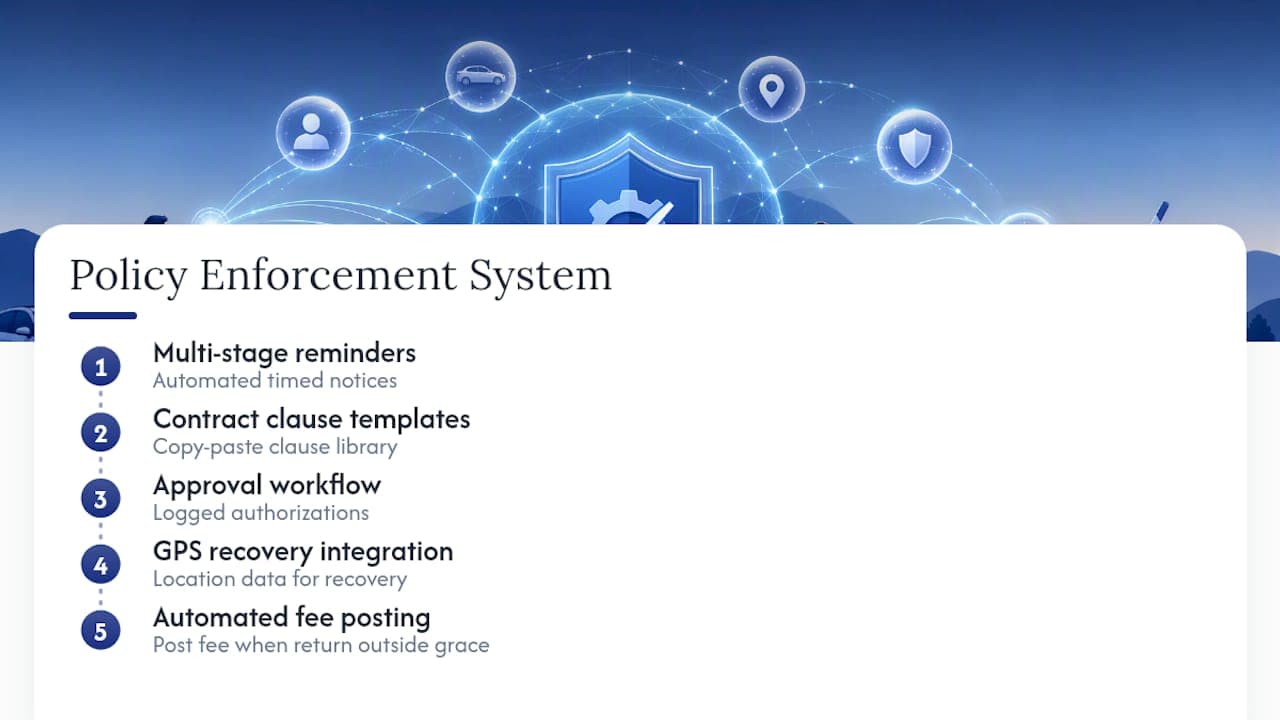
Written policy only holds up when your software enforces it the same way every time. Look for platforms that support automated multi-stage reminders, built-in contract clause templates, an approval workflow that logs who authorized what, GPS integration for recovery scenarios, and automated fee posting the moment a return timestamp lands outside the grace window. That combination turns your late return policy for rentals from a document into a system, with an audit trail attached to every exception. Migrating existing terms usually takes a short onboarding window rather than a full rebuild, since most of the work is mapping clauses to settings rather than writing new policy from scratch.
Where Strict Enforcement Helps, and Where It Backfires
Tighter rules boost utilization on high-demand fleets where every late hour bumps the next booking. They can cost you repeat renters at smaller operations with drop-box check-ins and no overnight staff, where a little flexibility builds loyalty. Run any policy change for 60 to 90 days and watch utilization, dispute volume, and chargebacks before locking it in permanently.
— Dizzy
Let Nomora Enforce the Policy You Just Wrote
Writing a strong late return policy is one project. Applying it the same way on every single reservation, at 2 a.m. and on a holiday weekend, is a different problem entirely, and it's the one that actually costs owners money. Nomora closes that gap by turning your grace period, extension rules, and fee schedule into settings the system runs automatically instead of rules staff have to remember under pressure.
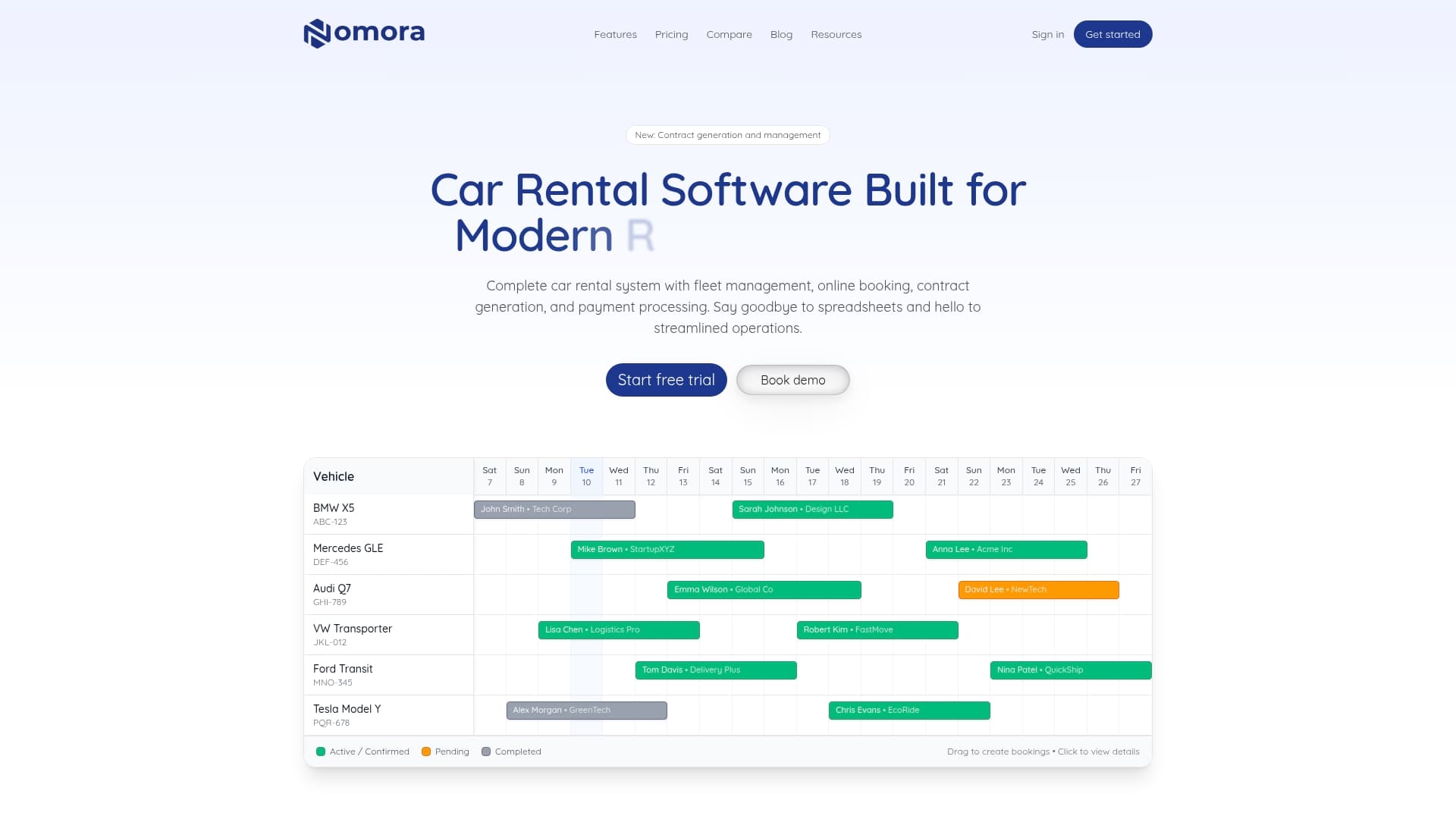
The platform's contract templates hold your clause language and signature requirements, while automated reminders, approval workflows, GPS integration, and billing automation post fees the moment a return crosses your grace window, with a timestamp and agent ID attached to every exception. The system can be set up quickly, minimizing delays between deciding on a policy and enforcing it. Visit the car rental software product page to see how the pieces fit together, or request a demo to walk through your current contract and map it directly into the platform.
Sources
Recommended
Ready to streamline your car rental business?
Book 30 minutes with the founder. We set up everything in this guide on your own vehicles, and migrate you out of Excel for free.