TL;DR:
- Effective fleet security combines physical, digital, and operational measures to prevent theft and breaches. Proper enforcement of layered controls, cybersecurity policies, and driver training is essential for success.
Fleet security best practices are the coordinated physical, digital, and operational measures that rental and corporate fleets use to prevent vehicle theft and security breaches. The industry term for this approach is fleet risk management, and it covers everything from hardware controls to cybersecurity policy enforcement. Victoria Police data shows that approximately 80% of stolen vehicles are recovered annually when proper tracking and information sharing are in place. That figure underscores a clear point: technology and process together determine outcomes. Fleets that treat security as a layered program, combining physical controls, cybersecurity standards like SOC 2 Type II and ISO 27001, and trained drivers, consistently outperform those relying on any single measure.
What are the core fleet security best practices for physical controls?
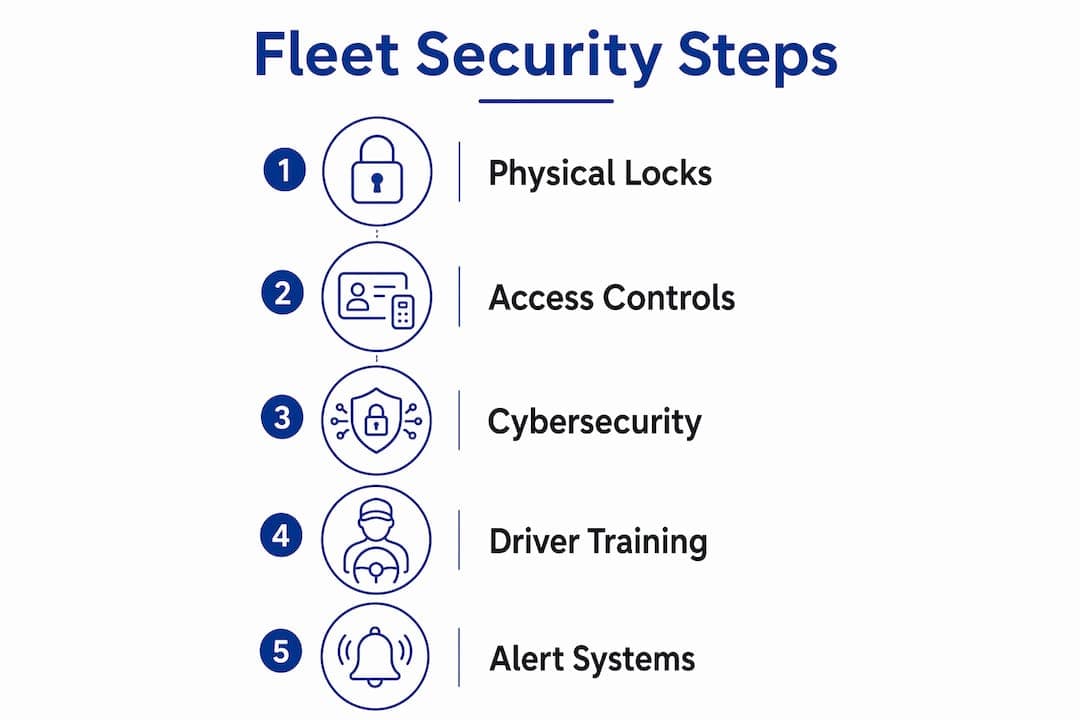
Physical security is the first line of defense for any fleet. Layered physical controls include door locks, trailer locks, hitch locks, and steering wheel locks working together to deter theft at every stage of vehicle operation. No single device stops a determined thief. The goal is to make each vehicle time-consuming enough to steal that the risk outweighs the reward.

Master key systems and access control
A master key system with restricted keys provides centralized control, prevents unauthorized duplication, and creates an auditable access record across all terminals. This matters enormously for rental fleets operating across multiple locations. When every site uses the same key system, you can track who accessed which vehicle and when. That auditability is what separates a real security program from a collection of locks.
Standardized hardware specifications across all terminals prevent the gaps that arise when different locations use different brands or systems. Standardized fleet security programs reduce the risk of hardware inconsistency and key duplication, making the entire operation more auditable and scalable. A fleet with 12 locations using 12 different lock brands has 12 different vulnerabilities.
Practical physical security also means thinking about the vehicle when it is not moving. Dropped trailers in overnight lots need cargo locks and kingpin locks. Vehicles parked at remote sites need wheel boots or secondary immobilizers. The physical security program should account for every scenario where a vehicle sits unattended.
Pro Tip: Avoid mixing hardware brands across your fleet. Consistent hardware from a single manufacturer maintains key control integrity and simplifies audits.
| Hardware category | Primary function | Effectiveness context |
|---|
| Restricted key system | Prevents unauthorized duplication | High: creates auditable access trail |
| Trailer and hitch locks | Secures dropped trailers and hitches | High: deters opportunistic cargo theft |
| Steering wheel locks | Visible deterrent against hot-wiring | Moderate: slows theft, not a standalone solution |
| Cargo locks | Protects freight in transit and at rest | High: critical for overnight and remote parking |
| Secondary immobilizers | Disables ignition without authorization | High: effective against relay and key cloning attacks |
How can cybersecurity policies protect connected fleet operations?
Connected fleets face a threat that did not exist a decade ago: digital attacks through the vehicle itself. Corporate cybersecurity policies for connected fleets must be reviewed and updated at least annually to address evolving threats to telematics, ELDs, and OBD-II port systems. Annual review is not optional. It is the minimum standard for any fleet operating connected vehicles in 2026.
The most overlooked entry point is the OBD-II port. Unauthorized devices plugged into OBD-II ports create a critical vulnerability that can expose vehicle data, location, and control systems to outside actors. Your policy must explicitly prohibit any device not approved by your IT and fleet security teams from connecting to any vehicle port.
Vendor selection is equally important. Technology vendors should comply with SOC 2 Type II and ISO 27001 to confirm secure data handling and identity management. These certifications are not marketing badges. They represent independently verified controls over how vendor systems handle your fleet data.
Identity management is a critical and frequently overlooked security vector. SCIM provisioning automates user lifecycle management, removing access for departed employees immediately rather than leaving credentials active for weeks or months. In large fleets with frequent personnel changes, lingering access credentials are a serious and preventable risk.
Key cybersecurity controls to enforce across your connected fleet:
- Annual policy review: Update all telematics, ELD, and OBD-II policies every 12 months at minimum.
- OBD-II port prohibition: Ban all unauthorized devices from vehicle ports through written policy and physical inspection.
- Vendor certification check: Require SOC 2 Type II and ISO 27001 compliance from every technology partner.
- SCIM provisioning: Automate user deprovisioning so access ends the moment an employee leaves.
- Telematics monitoring: Use your vehicle telematics platform to trigger alerts when unauthorized access attempts occur.
Pro Tip: Enforce cybersecurity policies through telematics-triggered alerts and vehicle inspections, not just written documentation. A policy that is not monitored is not a policy.
What role does driver training play in fleet security?
Drivers are simultaneously the first line of defense and the greatest security risk in any fleet. Consistent, documented driver training is as critical as physical hardware and software controls. A driver who leaves a vehicle unlocked in a high-risk area or fails to report a suspicious person near the lot can undo every other security measure you have put in place.
Effective training programs cover three core areas. First, lockup procedures: every driver must know the exact steps for securing a vehicle at the end of a shift, including checking all locks, activating immobilizers, and confirming cargo is secured. Second, cargo protection: drivers handling freight need specific protocols for overnight stops, fuel breaks, and drop-off locations. Third, suspicious activity reporting: drivers need a clear, low-friction way to report anything unusual, whether it is an unfamiliar person near the vehicle or a tampered lock.
Drivers as a security asset require ongoing reinforcement, not a single onboarding session. Telematics data on driver behavior, including after-hours vehicle use, unusual routes, and unauthorized stops, feeds directly into your risk management picture. Integrating that data into regular performance reviews keeps security front of mind without creating an adversarial environment.
Security-focused driver management best practices include:
- Documenting all training sessions with sign-off records for audit purposes.
- Linking training completion to vehicle access authorization.
- Using telematics alerts to flag behavior that warrants a follow-up conversation.
- Providing security-focused driver resources that cover both physical and cyber risks.
- Reviewing and updating training content whenever security policies change.
Rental fleets face a specific challenge here: drivers change constantly. Building training into the onboarding process for every new driver, not just permanent staff, closes the gap that opportunistic theft exploits. For more on reducing exposure from the driver side, the vehicle rental fraud prevention framework covers operational tactics that complement training programs.
How do you design an effective fleet security alert system?
Alert systems fail when they generate too much noise. Starting with a narrow, high-risk alert rollout with only the most relevant notifications improves security awareness and operational response. Flooding your dispatch team with low-priority alerts trains them to ignore the system entirely. That is the definition of alert fatigue, and it is a common failure mode in fleet security programs.
The right approach is to build alert coverage deliberately:
- Start with highest-risk assets. Configure alerts on your most valuable or most frequently targeted vehicles first.
- Set after-hours movement alerts. Any ignition event outside scheduled operating hours should trigger an immediate notification.
- Flag ignition tampering. Repeated failed ignition attempts indicate a theft attempt in progress.
- Monitor OBD-II port access. Any unauthorized device connection should generate an instant alert to your security team.
- Configure geographic exceptions. Set geofences around approved operating zones so alerts fire only for genuine anomalies, not routine operations.
- Integrate with dispatch systems. Alert data should flow directly into your fleet management platform so response teams have full context without switching between tools.
Alert fatigue is a documented problem in fleet security systems. Narrowly targeted alerts with verified response procedures produce better outcomes than broad coverage with no clear workflow. Once your core alerts are running and your team is responding correctly, expand coverage to lower-risk assets and secondary alert types.
Pro Tip: Before expanding alert coverage, run a two-week test of your response workflow on a small vehicle group. Verify that every alert reaches the right person and triggers the right action before scaling.
Key Takeaways
Effective fleet risk management requires layered physical controls, enforced cybersecurity policies, trained drivers, and a focused alert system working together as a single program.
| Point | Details |
|---|
| Layer physical controls | Combine restricted key systems, cargo locks, and immobilizers across every location for consistent protection. |
| Enforce cybersecurity annually | Review telematics and OBD-II policies every 12 months and require SOC 2 Type II and ISO 27001 from vendors. |
| Train drivers consistently | Document all training, link completion to vehicle access, and reinforce with telematics behavior data. |
| Start alerts narrow | Configure only high-risk alerts first to avoid fatigue, then expand after verifying response workflows. |
| Standardize hardware | Use one hardware brand across all terminals to maintain key control integrity and simplify audits. |
Why most fleet security programs fail before they start
The pattern I see most often is this: a fleet manager invests in good hardware, buys a telematics platform, and writes a cybersecurity policy. Then nothing is enforced. The policy sits in a shared drive. The telematics alerts go to an inbox nobody monitors. The hardware at three locations is different from the other seven because someone bought a cheaper brand two years ago.
Fleet security is an operational mandate, not a documentation exercise. The fleets that actually reduce theft and breach incidents are the ones that treat enforcement as a daily operational task, not an annual compliance checkbox. Identity management is the specific area I find most neglected. When a driver or technician leaves and their system access is not immediately revoked, that credential stays active. In a fleet with high turnover, that is a serious and entirely preventable exposure.
My honest recommendation is to start with a gap assessment before buying anything new. Map your current physical hardware, list every vendor with access to your telematics data, and audit your driver training records. You will almost certainly find that the gaps are in enforcement and consistency, not in the quality of the tools you already own. Build from there, systematically, and partner with vendors who can demonstrate SOC 2 Type II compliance rather than just claim it.
— Dizzy
How Nomora supports your fleet security program
Fleet security requires more than good intentions. It requires a platform that connects your booking data, vehicle status, driver records, and telematics alerts in one place.
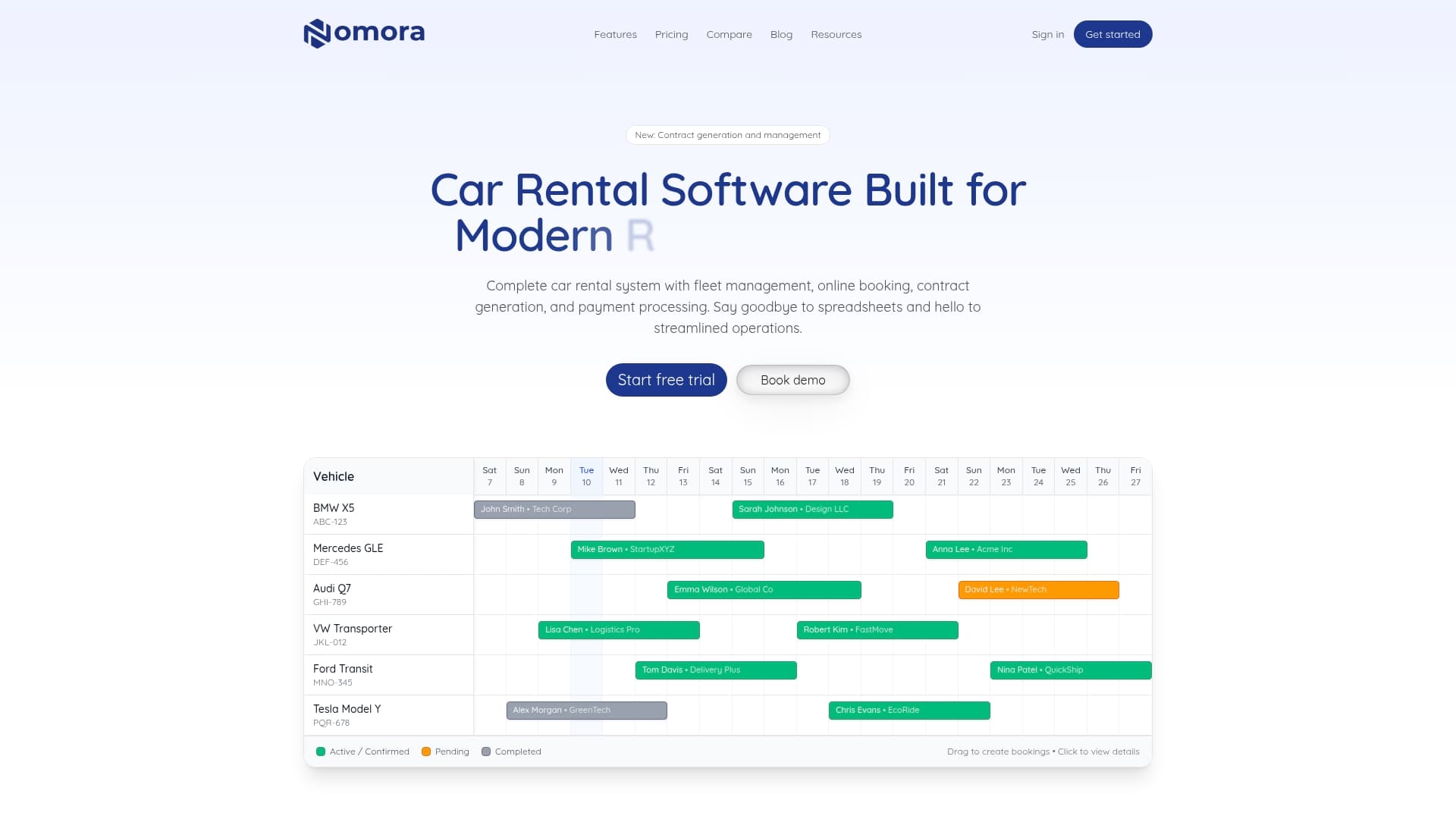
Nomora's car rental management software gives fleet managers real-time visibility across reservations, contracts, and vehicle status, with GPS tracking integration that feeds directly into your alert workflows. The platform supports fleet security use cases across rental businesses of all sizes, from independent operators to corporate fleet networks. GDPR compliance and cloud-based access mean your data is protected and available wherever your team operates. Setup takes 24–48 hours, so you can close security gaps without a long implementation cycle.
FAQ
What are fleet security best practices?
Fleet security best practices are the coordinated physical, digital, and operational measures that protect fleet vehicles and data from theft and unauthorized access. They combine hardware controls, cybersecurity policies, driver training, and monitoring systems into a single enforceable program.
How often should fleet cybersecurity policies be reviewed?
Industry standards require annual review of cybersecurity policies for connected fleets, covering telematics, ELDs, and OBD-II port protections. Policies should also be updated immediately after any security incident or significant technology change.
Why is driver training part of fleet security?
Drivers are both the first line of defense and the greatest risk in a fleet security program. Consistent, documented training on lockup procedures, cargo protection, and suspicious activity reporting directly reduces theft and breach incidents.
What certifications should fleet technology vendors hold?
Fleet technology vendors should hold SOC 2 Type II and ISO 27001 certifications to confirm they meet independent standards for data security and identity management. These certifications verify controls, not just policies.
How do you avoid alert fatigue in fleet monitoring?
Start with a narrow set of high-risk alerts, such as after-hours movement and ignition tampering, and verify your response workflow before expanding coverage. Broad alert configurations with no clear response process are the primary cause of alert fatigue in fleet security systems.
Recommended
Ready to streamline your car rental business?
Book 30 minutes with the founder. We set up everything in this guide on your own vehicles, and migrate you out of Excel for free.