TL;DR:
- Most rental fleet managers believe insurance and vehicle inspections fully cover their risks, which is a costly misconception. Implementing layered, proactive risk controls like telematics, predictive maintenance, and automation significantly reduces accident rates, costs, and regulatory penalties. Adopting an integrated, data-driven approach turns risk management into an operational advantage, enhancing safety, profitability, and asset protection.
Most rental fleet managers believe that carrying adequate insurance and running vehicle inspections covers their risk exposure. That assumption is costing them money, vehicles, and customers. Fleet risk management uses layered, proactive controls that cut accident rates, costs, and regulatory risks far beyond what insurance alone can achieve. This guide walks you through every critical layer of fleet risk management, from defining the fundamentals to building a step-by-step action plan specifically designed for rental operations. By the end, you will have a clear framework to reduce incidents, protect your assets, and run a safer, more profitable fleet.
Table of Contents
Key Takeaways
| Point | Details |
|---|
| Proactive strategies outperform | Data-driven, integrated safeguards deliver much stronger results than relying on insurance or reacting to incidents. |
| Rental fleets have unique risks | High customer turnover, possible misuse, and after-hours challenges demand tailored controls in the rental industry. |
| Technology drives results | Dash cams, telematics, and predictive maintenance can dramatically cut accidents, costs, and downtime. |
| Integration is essential | Connecting maintenance, compliance, and asset tracking data prevents blind spots that undermine safety and efficiency. |
| Step-by-step planning wins | Successful risk management comes from sequenced, scalable steps, not one-off fixes or piecemeal tools. |
What is fleet risk management?
Fleet risk management is the coordinated practice of identifying, evaluating, and reducing risks across every vehicle in your rental operation. It covers everything from preventing accidents and theft to maintaining compliance with local and national regulations. Think of it as the central nervous system of your operation: when it functions well, every part of your fleet stays connected, informed, and protected.
For rental fleets specifically, the risk profile is far more complex than it is for company-owned fleets. You are handing vehicles to customers you have never met, often with limited knowledge of their driving habits, experience, or intentions. Understanding fleet management fundamentals is the starting point before layering risk controls on top.
The main risk categories your fleet faces include:
- Collisions and accidents caused by customers or staff
- Theft and vandalism, including after-hours asset misuse
- Mechanical breakdowns from deferred or missed maintenance
- Compliance failures such as expired registrations, insurance lapses, or permit violations
- Customer misuse, including speeding, off-road use, or overloading
A strategic, proactive approach to these categories consistently outperforms the reactive model where you wait for an incident and then respond. Insurance reimburses losses. Risk management prevents them.
"Rental fleets face genuinely unique risk exposures. High customer turnover, unknown driver behavior, variable asset locations, and after-hours use all create gaps that traditional insurance and basic checklists simply cannot close."
Key risks faced by rental fleets
Understanding what makes your fleet's risk profile unique is the essential second step after defining the discipline. Rental fleets carry a distinct set of vulnerabilities that set them apart from corporate or government fleets.
The top risk types for rental operations break down into five areas:
- Accidents and collisions: Customer-caused incidents represent the highest frequency risk for most rental businesses
- Asset misuse: Unauthorized use outside agreed parameters, including geographic boundaries and vehicle type restrictions
- Unscheduled downtime: Breakdowns during active rentals that create customer service failures and lost revenue
- Theft: Particularly during after-hours periods or in high-risk geographic zones
- Regulatory fines: Local licensing, emissions compliance, and insurance documentation failures
Rental-specific risk factors go deeper than these standard categories. Rental fleets face unique challenges including customer misuse, after-hours geofence alerts, and compliance lockouts that most fleet managers underestimate when building their risk plans. High customer churn means you are constantly introducing new, unknown drivers into your vehicles. You often cannot verify driving skill during the booking process, and once a customer drives away, your visibility drops sharply without telematics in place.
Emerging risks are making this picture more complex. Data silos, where your telematics system does not talk to your maintenance platform or customer database, create dangerous blind spots. Regional compliance complexity, particularly for fleets operating across multiple states or jurisdictions, adds another layer of exposure.
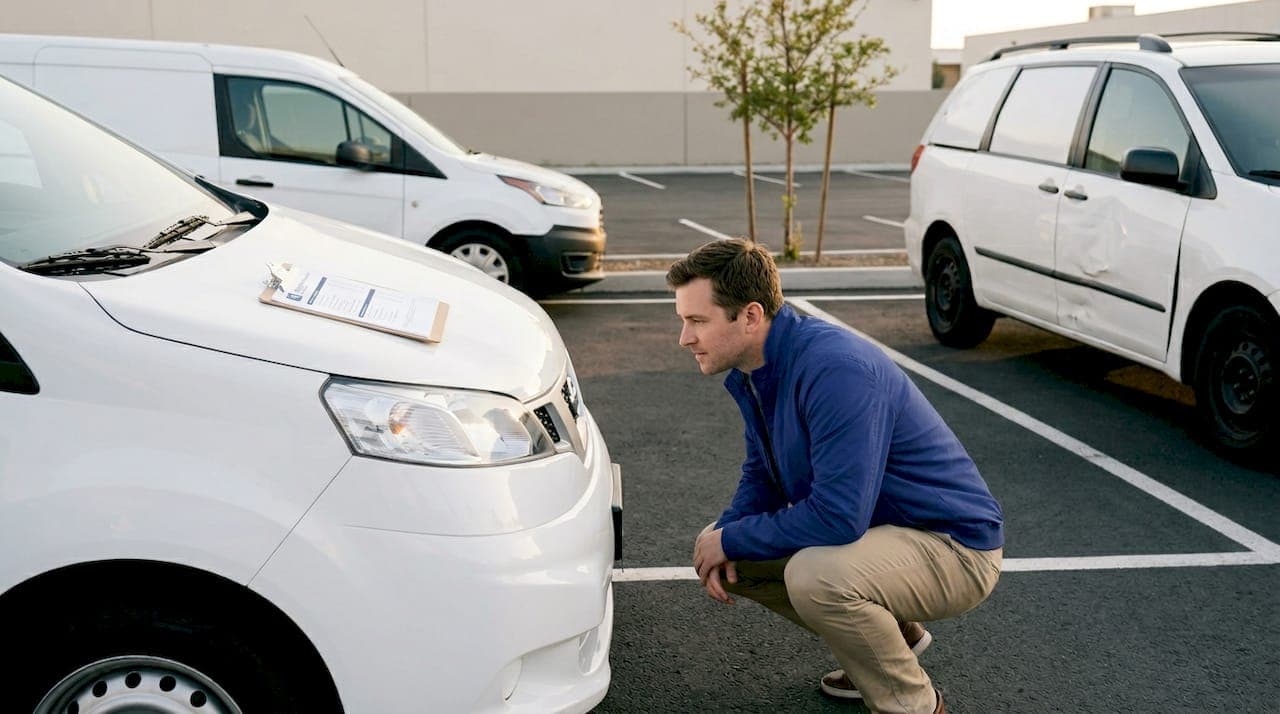
Smart practices for optimizing rental inventory reduce vehicle downtime, and using a rental fleet readiness checklist before every rental reduces incident rates and liability exposure considerably.
Pro Tip: Identify your five highest-risk vehicles and five highest-risk customers based on historical incident data. Targeted coaching and tighter monitoring for these segments can reduce your overall incident rate faster than broad fleet-wide changes.
Best practices for reducing fleet risks
With the risk picture clear, the next step is building high-ROI interventions that actually work. The evidence strongly favors technology-driven approaches combined with structured operational practices.
Here are the five most impactful practices you can implement:
-
Install telematics and dash cams: Real-time GPS tracking combined with dash cam footage gives you both prevention and evidence. Telematics reduces accidents by 20-30%, cuts fuel costs by 15-20%, and lowers insurance premiums by 10-25%. Dash cams alone reduce accident frequency by 25-40% because drivers adjust their behavior when they know they are being recorded.
-
Schedule predictive maintenance: Moving from reactive repairs to scheduled, data-driven maintenance cuts unscheduled downtime by 25-30%. That directly protects rental revenue and customer satisfaction.
-
Integrate your data streams: Connecting telematics, maintenance records, customer data, and compliance tracking in one system eliminates blind spots. Separate platforms create gaps where risk signals go unnoticed until an incident occurs.
-
Customize safety programs by risk segment: Not every driver or vehicle carries the same risk. Use incident history and telematics scores to identify high-risk segments and deliver targeted interventions, not generic fleet-wide communications.
-
Automate compliance and geofencing alerts: Setting automated alerts for after-hours movement, out-of-zone travel, or document expirations catches violations before they become fines or theft losses.
| Risk control | Impact on accidents | Cost reduction |
|---|
| Telematics systems | 20-30% reduction | 10-25% on insurance |
| Predictive maintenance | Indirect; reduces breakdowns | 25-30% less downtime |
| Dash cam installation | 25-40% reduction | Faster claim resolution |
| Geofencing and alerts | Reduces misuse incidents | Cuts theft-related losses |
| Driver safety coaching | 15-25% behavior improvement | Lower at-fault claim rates |
A well-rounded approach to vehicle presentation also matters. Maintaining vehicle branding durability with high-quality materials helps preserve asset value and makes identification easier in theft or damage situations.
Following fleet management best practices ensures that risk reduction strategies stay embedded in daily operations, not just policy documents. And referencing a comprehensive fleet management guide helps you build a layered framework rather than patching individual problems one at a time.
Pro Tip: Before investing in a full telematics rollout, test a dash cam only pilot on your ten most frequently rented vehicles. You will collect enough data in 60 days to justify the broader investment with real numbers from your own fleet.
Integrated vs. reactive risk models: What maximizes safety?
The difference between reactive and integrated risk management is not a matter of degree. It is a fundamentally different outcome. Most small to mid-sized rental operators run a reactive model without realizing it. They respond to incidents with new policies, add insurance coverage after major losses, and run inspections when damage is already visible.
Reactive risk management relies on incident reports, after-the-fact insurance claims, and manual checklists. It is better than nothing, but it treats every incident as a surprise rather than a predictable outcome of known risk factors.
Integrated, predictive risk management connects real-time telematics, maintenance schedules, driver behavior scores, compliance tracking, and customer data into a single operating picture. The result is not just fewer surprises. It is a fundamentally lower risk baseline.
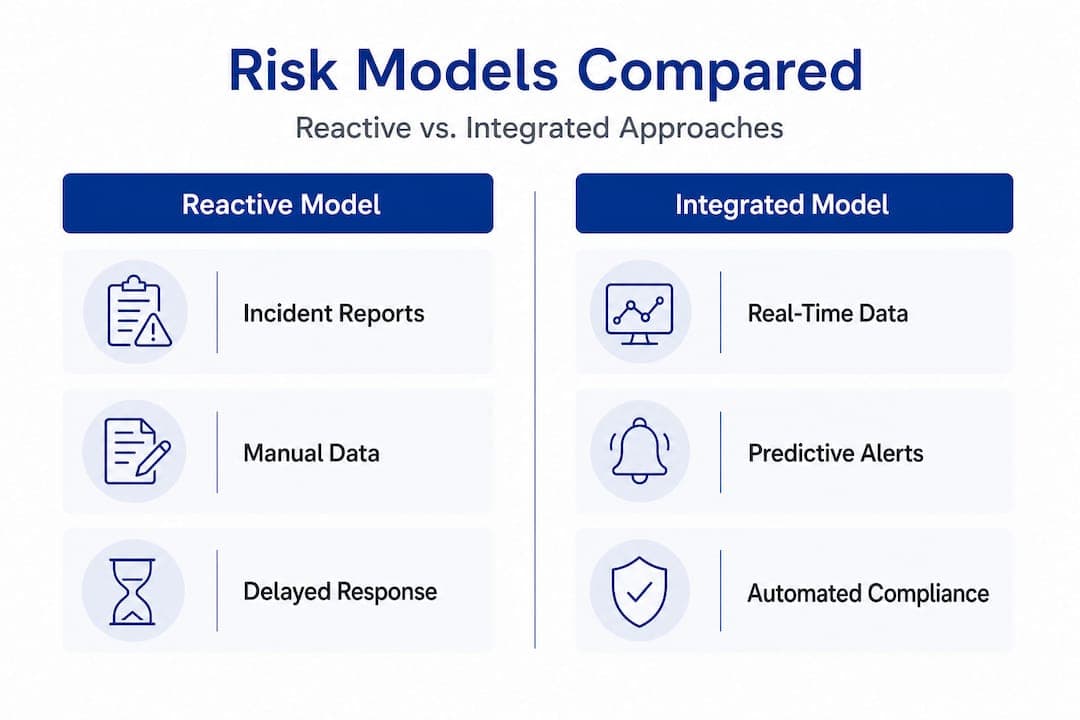
| Feature | Reactive model | Integrated model |
|---|
| Data use | Post-incident review | Real-time monitoring and alerts |
| Maintenance approach | Fix when broken | Predict and prevent |
| Compliance tracking | Manual, periodic | Automated, continuous |
| Driver risk visibility | Low or none | High; scored and monitored |
| Insurance outcomes | Claims-driven | Proactive, lower premiums |
| Overall safety | Baseline | 30-50% better outcomes |
Top-performing fleets using predictive, integrated platforms achieve 30-50% better safety outcomes than fleets relying on reactive, siloed approaches. That gap is not theoretical. It shows up in accident rates, insurance costs, asset utilization, and customer satisfaction scores.
Using fleet reporting for informed decisions is what turns raw telematics and maintenance data into actionable intelligence. Without structured reporting, even the best data sits unused and your risk picture stays blurry.
Implementing a fleet risk management plan: Step-by-step
Building a modern risk management plan does not require overhauling your entire operation at once. A phased, structured approach gets you to measurable results faster and with less disruption.
-
Assess your current risk profile: Pull historical incident data, maintenance records, and any available telematics reports. Benchmark against industry averages to identify where your operation sits relative to comparable fleets.
-
Prioritize controls by ROI and deployment speed: Not every risk control delivers equal value. Telematics and dash cams typically offer the fastest and largest returns. Rank your interventions before committing budget.
-
Invest in system integration: Link your maintenance tracking, GPS telematics, asset management, and compliance documentation in one place. Data silos and multi-jurisdictional compliance issues are among the most common and costly pitfalls in fleet risk management. Unified data and automated regulatory monitoring are the antidote.
-
Build safety coaching for both staff and customers: Staff training addresses internal risk factors like handling procedures and documentation accuracy. Brief, digital customer safety onboarding at the time of rental reduces misuse incidents significantly.
-
Automate compliance and reporting workflows: Manually tracking registration renewals, insurance documents, and permit deadlines across a growing fleet is error-prone. Automated alerts and centralized compliance dashboards catch issues before they become violations or fines.
-
Establish ongoing review cycles: Monthly risk reviews using current data keep your plan relevant and responsive. Quarterly benchmarking against your own historical data shows whether your interventions are actually working.
For fleets operating across multiple locations, multi-location compliance tips address the added complexity of varying state or regional regulations and how to stay compliant without creating separate manual workflows for each location.
Pro Tip: Start with a pilot program on a subset of 10-15 vehicles before scaling your full risk controls. Pilots reveal unexpected integration issues, staff training gaps, and customer behavior patterns that you would not catch by simply rolling out fleet-wide changes all at once.
Our take: The biggest mistake small fleet operators make
Here is the uncomfortable truth that most risk management guides do not say directly: the majority of small to mid-sized rental fleet operators are managing risk with lagging indicators. They look at last month's accidents, last quarter's maintenance costs, and last year's insurance premiums. Then they make decisions based on what already happened rather than what is about to happen.
Insurance and checklists are not risk management strategies. They are risk documentation strategies. They record what went wrong. They do not prevent the next incident.
The operators who consistently outperform their peers are the ones who have stopped treating risk as a finance and compliance function and started treating it as an operational intelligence function. They use telematics scores to identify which specific vehicles and which customer segments are generating disproportionate risk, then they intervene before the next incident occurs.
We have seen fleet operators who reviewed proven rental fleet examples shift from reactive to data-driven within a single quarter. The immediate wins, installing dash cams, setting up geofencing alerts, and implementing basic driver behavior scoring, delivered measurable reductions in incident rates within 60 days. But those wins only compounded because they were built on an integrated platform that turned raw data into clear, actionable signals.
The real leverage is not in any single tool. It is in building a system where your data streams connect and your risk decisions are driven by leading indicators rather than lagging ones. Small, sequential investments in integration pay far greater dividends than large, one-time insurance coverage increases.
Next steps: Power up your risk management
Managing fleet risk at scale requires more than good intentions and better checklists.
Nomora's cloud-based platform acts as the central nervous system for your rental operation, connecting fleet tracking, reservation management, contract generation, and payment automation in one integrated system. When your risk controls are embedded in the same platform that runs your daily operations, you get real-time visibility without extra administrative overhead. Explore car rental software use cases to see how operators like yours are reducing risk while improving fleet utilization. Learn how the platform handles preventing double bookings and delivers automated rental payment solutions that reduce manual errors and compliance gaps across every transaction.
Frequently asked questions
How does telematics improve rental fleet safety?
Telematics provides real-time location, speed, and behavior data that reduces accidents by 20-30% and enables immediate intervention when risky behavior or unauthorized use is detected.
What common mistakes lead to risk management failures?
Data silos and reactive controls are the most frequent causes of failure, because they leave safety blind spots and compliance gaps that only become visible after an incident has already occurred.
Why are rental fleets more at risk than company-owned fleets?
Rental fleets face customer misuse risks that company fleets do not, including frequent driver changes, after-hours use with no oversight, and limited ability to verify driver skill or behavior history before handing over the keys.
How can predictive maintenance cut costs for rental fleets?
Scheduling maintenance based on usage data and vehicle condition signals rather than fixed intervals cuts downtime by 25-30%, which directly protects rental revenue and reduces the compounding costs of emergency repairs.
Recommended