TL;DR:
- Effective utilization and maintenance criteria are vital for maximizing fleet efficiency.
- Telematics technology helps track vehicle health, reduce costs, and improve turnaround times.
- Managing vendor relationships, SOPs, and granular downtime tracking enhances fleet performance.
Every vehicle sitting idle in your lot is revenue you will never recover. Fleet managers at small to medium-sized rental companies face a constant balancing act: keep utilization high, hold maintenance costs down, and still deliver a reliable customer experience. The good news is that proven, data-backed strategies exist to help you do all three at once. This article walks through four core practice areas, from setting measurable criteria to vendor management, so you leave with a clear framework you can put to work immediately.
Table of Contents
Key Takeaways
| Point | Details |
|---|
| Set measurable criteria | Track fleet utilization and maintenance with clear, standardized metrics for better results. |
| Utilize real-time technology | Cloud-based GPS and telematics tools help reduce costs and improve availability. |
| Prioritize TCO analysis | Use total cost of ownership to make smart acquisition and replacement decisions. |
| Strengthen SOPs and vendor networks | Diversify vendors and implement SOPs to minimize downtime and increase revenue. |
Define clear utilization and maintenance criteria
Before you can improve fleet efficiency, you need to know exactly what you are measuring. Two metrics form the backbone of any solid utilization program: vehicle uptime (the percentage of time a vehicle is available and revenue-generating) and turnaround time (how quickly a returned vehicle is cleaned, inspected, and ready for the next rental). Without standardized definitions for these numbers, comparisons across your fleet become meaningless.
One of the most impactful frameworks for small and medium rental operations is Lean-TPM, which stands for Lean Total Productive Maintenance. It applies lean manufacturing principles to vehicle care, focusing on eliminating waste in maintenance workflows. Lean-TPM methodologies increase fleet availability by 10 to 20% for SMEs through simplified maintenance, with documented case studies showing improvements from 85.81% to 92.24% availability. That kind of gain translates directly into more rental days and higher revenue per vehicle.
On the maintenance side, structure is everything. Fleet management best practices consistently show that standard preventive maintenance schedules based on mileage or engine hours cut repair costs and downtime significantly. Rather than reacting to breakdowns, you schedule service at predictable intervals, which keeps vehicles on the road longer and reduces expensive emergency repairs.
Here is a practical criteria framework to get you started:
- Utilization rate target: Aim for 75 to 85% across the active fleet
- Turnaround time benchmark: Set a maximum of 90 minutes between return and re-rental
- Preventive maintenance trigger: Schedule service every 5,000 miles or 250 engine hours, whichever comes first
- Inspection checklist: Complete a standardized 20-point check at every return
- Downtime threshold: Flag any vehicle offline for more than 48 hours for management review
For a broader view of how these criteria fit into overall operations, the complete fleet management guide covers the full operational picture. You can also use a structured fleet rental checklist to standardize your inspection and turnaround process across every location.
Pro Tip: Schedule weekly VIN recall checks using the NHTSA database. A single unaddressed recall can ground a vehicle for days once a customer reports it, and proactive checks let you schedule dealership visits on your timeline rather than theirs.
Leverage technology: Telematics and real-time tracking
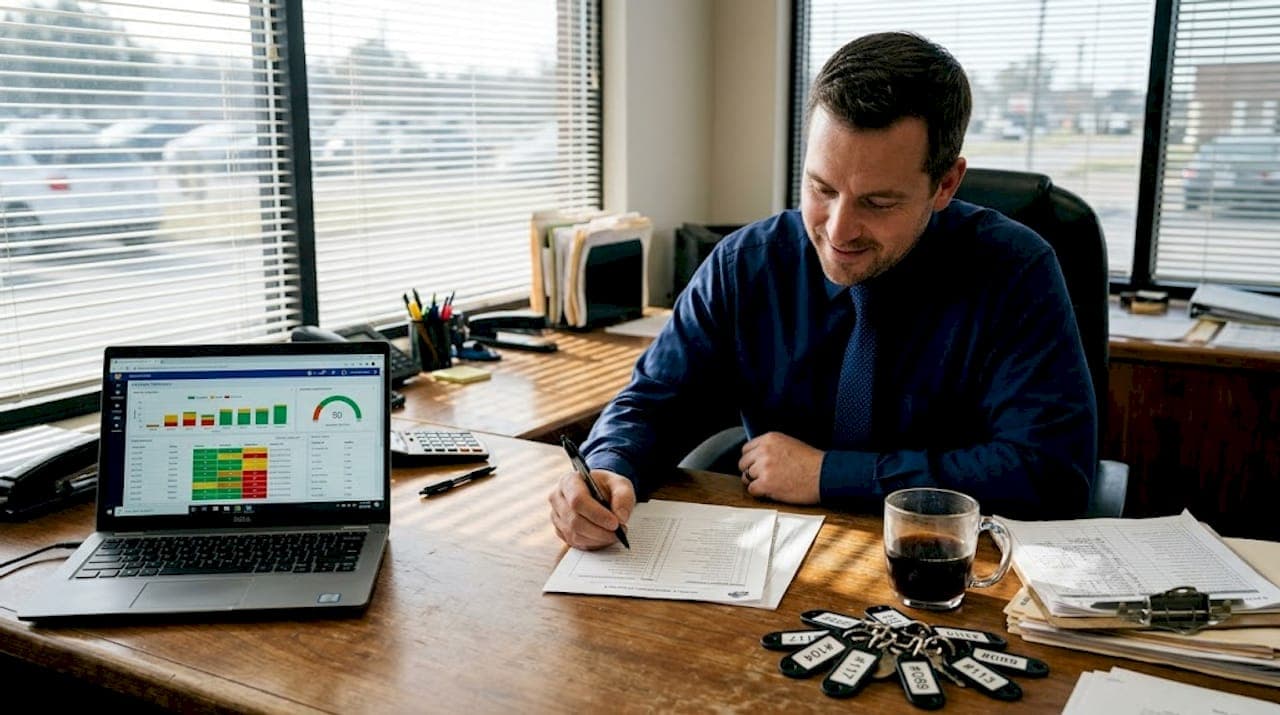
Once your criteria are defined, technology is what moves those standards from a spreadsheet into daily practice. Telematics systems combine GPS hardware with cloud-based software to give you a live view of every vehicle's location, condition, and usage patterns. For rental fleets, this means you can monitor idle time, detect harsh braking events that signal wear, and confirm vehicle returns without waiting for a phone call.

The financial case is straightforward. Fleet management best practices show that cloud telematics and GPS tracking reduce maintenance costs by 18% by enabling condition-based servicing instead of calendar-based guessing. For a fleet of 30 vehicles, that saving adds up quickly.
Here is how the numbers typically look before and after telematics implementation:
| Metric | Pre-implementation | Post-implementation |
|---|
| Monthly maintenance cost per vehicle | $320 | $262 |
| Average turnaround time | 140 minutes | 85 minutes |
| Unplanned downtime incidents per month | 8 | 3 |
| Fleet utilization rate | 68% | 79% |
The features that matter most for small and medium rental operations include:
- Real-time GPS location for instant vehicle status and customer dispute resolution
- Automated mileage logging that feeds directly into maintenance triggers
- Driver behavior alerts (hard braking, rapid acceleration) to catch wear early
- Integration with reservation systems to flag vehicles approaching service intervals before they are booked
- Cloud-based reporting dashboards accessible from any device
Understanding the full scope of real-time tracking benefits helps you build the business case internally. Pairing telematics with strong inventory management strategies ensures that vehicle availability data stays accurate across your entire booking pipeline.
Total cost of ownership: Acquisition and replacement strategy
Technology optimizes what you already have, but your acquisition and replacement decisions determine the long-term cost structure of the entire fleet. Total Cost of Ownership, or TCO, is the practice of accounting for every dollar a vehicle costs over its useful life, not just the sticker price. Fleet management best practices: TCO analysis confirm that TCO guides vehicle acquisition, replacement, and leasing decisions more reliably than purchase price alone.
For rental fleets, TCO typically includes purchase or lease payments, insurance premiums, fuel costs, scheduled maintenance, unplanned repairs, registration fees, and depreciation. When you compare two vehicles side by side using TCO rather than upfront cost, the more expensive option often wins on a per-rental-day basis.
Here is a step-by-step process for running a TCO analysis:
- Gather baseline data: Collect 12 months of actual maintenance, fuel, and insurance costs for comparable vehicles already in your fleet.
- Project depreciation: Use market data to estimate residual value at 36 and 60 months for each option you are evaluating.
- Model lease versus buy: Calculate total outlay under each scenario, including opportunity cost of capital tied up in a purchase.
- Add hidden costs: Factor in downtime days (lost revenue), recall-related service visits, and any brand-specific parts premiums.
- Set a replacement trigger: Define the mileage or age threshold at which TCO per day exceeds the cost of a newer vehicle.
| Factor | Lease | Buy | Replace aging unit |
|---|
| Upfront cost | Low | High | Medium |
| Monthly flexibility | High | Low | Medium |
| Maintenance risk | Shared | Owner bears | Reduced |
| Residual value exposure | None | High | Eliminated |
| Ideal for | Growth phases | Stable fleets | High-mileage units |
For real-world examples of how operators have applied these frameworks, fleet optimization examples provide detailed case studies. When you are ready to model costs for your own fleet, the pricing and TCO advice section offers practical guidance on structuring your analysis.
Pro Tip: Never leave insurance and depreciation out of your TCO model. These two line items routinely account for 40 to 50% of a vehicle's true lifetime cost, yet many managers only track fuel and repairs.
Vendor management and SOPs for maximum uptime
Even the best maintenance schedule fails if your repair partners cannot deliver fast turnaround. Vendor diversification, meaning working with multiple repair shops, tire suppliers, and detailers rather than a single provider, is one of the most underrated strategies in fleet management. How to manage rental fleet expenses and scale business makes clear that vendor diversification and SOPs minimize downtime and maximize revenue opportunities.
Standard Operating Procedures, or SOPs, are written step-by-step instructions for recurring tasks. In a rental fleet context, they remove ambiguity and keep turnaround times consistent regardless of which staff member handles a vehicle. Here are the SOPs that deliver the most uptime impact:
- Return inspection SOP: Standardized damage documentation with timestamped photos taken within 15 minutes of return
- Cleaning and prep SOP: Defined sequence and time targets for interior and exterior preparation
- Maintenance scheduling SOP: Automatic service booking triggered by mileage data from telematics
- Recall response SOP: Weekly VIN check protocol with a 24-hour dealership contact requirement for any open recall
- Vendor escalation SOP: Clear criteria for when to shift a job to a backup repair partner if the primary cannot meet a 48-hour turnaround
"Rapid recall response is one of the highest-leverage actions a fleet manager can take. Scheduling affected vehicles at the dealership proactively, rather than waiting for a customer complaint, keeps your liability low and your utilization rate intact."
For managers running multiple locations or larger fleets, fleet reporting best practices show how to surface SOP compliance data through reporting dashboards. Connecting SOPs to measurable outcomes is also a core theme in profitability tips for rental operators.
Why most fleet strategies overlook downtime traps
Most guides on fleet efficiency focus on the obvious levers: buy better vehicles, track mileage, and negotiate maintenance contracts. What they miss is the cumulative drag of small, recurring downtime events that never appear in a monthly report. A vehicle grounded for three days because of an unaddressed recall, another delayed two days waiting for a single repair part, a third sitting clean and ready but not visible in the booking system because of a data sync issue. None of these look dramatic in isolation, but together they can quietly erode your utilization rate by 8 to 12 percentage points.
Smart managers treat turnaround at a granular level. They track individual VINs, not fleet averages. They measure the gap between a vehicle's return timestamp and its next booking confirmation, not just whether it was booked that week. They build vendor relationships before they need them urgently, so a Saturday breakdown does not mean a Monday repair.
The quiet drivers of profitability in rental operations are not the headline strategies. They are the SOPs nobody reads until something goes wrong, the vendor backup list that gets used twice a year, and the real-time data feed that catches a maintenance overdue flag before a customer does. Multi-location management insights show how this granular approach scales across larger operations without losing visibility.
Connect with smarter fleet solutions
Putting these best practices into action requires tools that work as hard as you do. Nomora's cloud-based platform is built specifically for rental fleet operators who want to replace manual tracking with automated, real-time visibility across every vehicle, booking, and maintenance event.
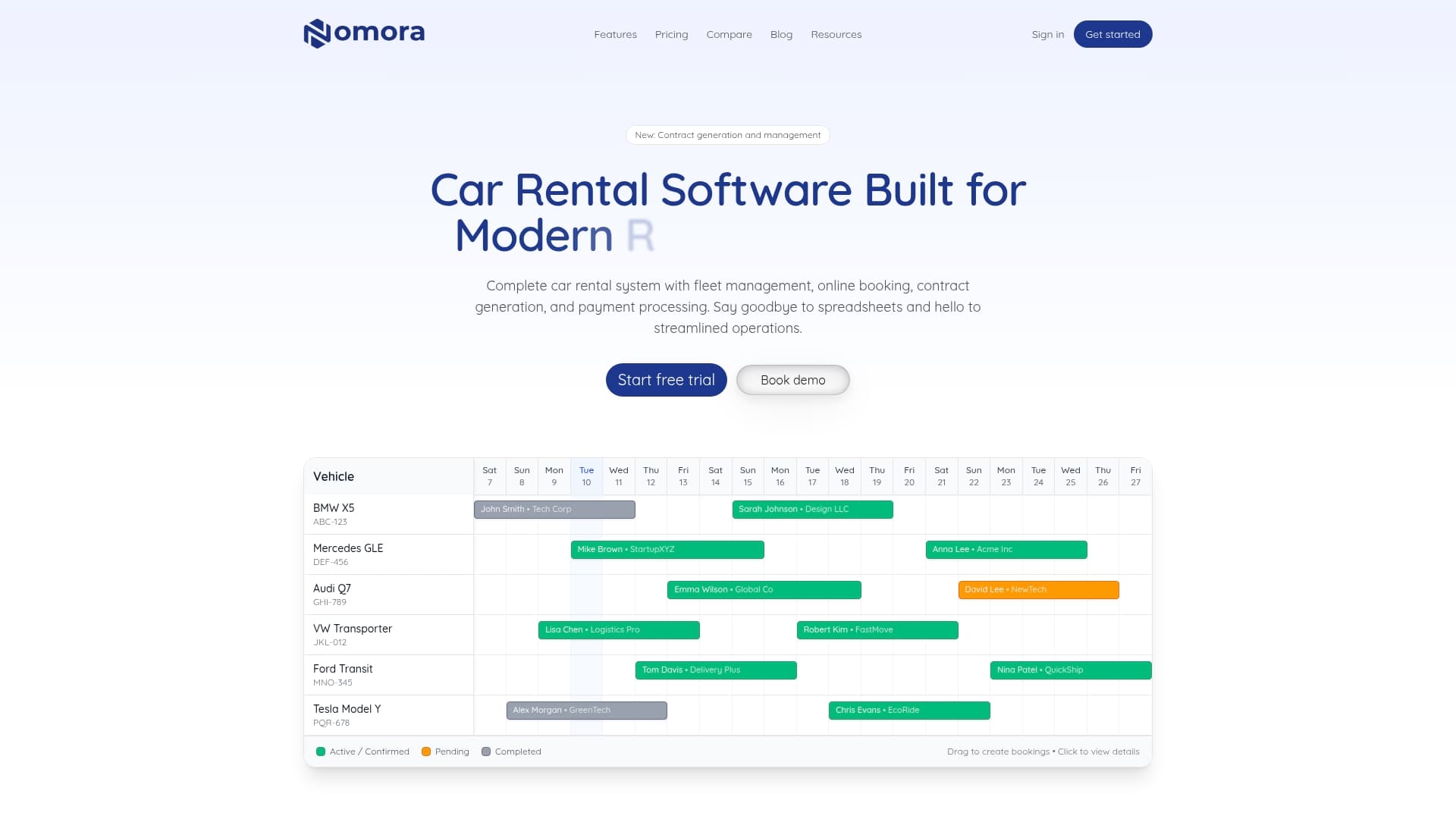
From fleet software use cases that mirror the strategies covered here, to built-in features that prevent double bookings and automated rental payments that reduce administrative overhead, Nomora gives your team the infrastructure to execute SOPs consistently and make TCO-informed decisions with confidence. Setup takes 24 to 48 hours, so you can move from strategy to execution without a lengthy onboarding process.
Frequently asked questions
How can I reduce unplanned downtime in a small rental fleet?
Diversify your repair vendors, document SOPs for every recurring task, and run weekly VIN recall checks so disruptions are addressed before they ground a vehicle. Vendor diversification and SOPs are consistently cited as the most direct path to higher uptime for small operators.
What are the best metrics to track fleet utilization?
Prioritize vehicle uptime, turnaround time between rentals, maintenance frequency, and revenue per vehicle per day. Lean-TPM methodologies show that tracking these at the VIN level, rather than fleet averages, reveals the gaps that aggregate data hides.
Is GPS tracking worth it for small fleet operations?
Yes. Even for fleets under 20 vehicles, GPS and telematics pay for themselves through reduced maintenance costs and faster turnaround times. Cloud telematics and GPS reduce maintenance costs by 18%, making the ROI clear for operations of any size.
How do I calculate TCO for vehicle acquisition?
Start with purchase price or lease payments, then add insurance, scheduled maintenance, unplanned repairs, depreciation, and lost revenue from downtime days. TCO analysis gives you a true per-day cost that makes acquisition and replacement decisions far more reliable than sticker price comparisons alone.
Recommended
Ready to streamline your car rental business?
Book 30 minutes with the founder. We set up everything in this guide on your own vehicles, and migrate you out of Excel for free.