Automated booking systems streamline reservations, reduce no-shows, and prevent double bookings through real-time synchronization. They also enable 24/7 customer self-service, increasing satisfaction while saving staff time and boosting revenue. Full integration of workflows maximizes these benefits, delivering measurable cost savings and growth opportunities for vehicle rental businesses.
Automated booking systems are software platforms that replace manual reservation handling with real-time scheduling, instant confirmations, and synchronized fleet availability across every sales channel. The benefits of automated bookings for vehicle rental businesses are direct and measurable: less administrative labor, fewer no-shows, and a customer experience that runs around the clock without staff intervention. Platforms like Nomora and Booking.com have demonstrated that automation cuts processing time and operational costs significantly, making the case for adoption clear for any rental operator still relying on phone calls and spreadsheets.
1. Benefits of automated bookings: time savings and reduced admin workload
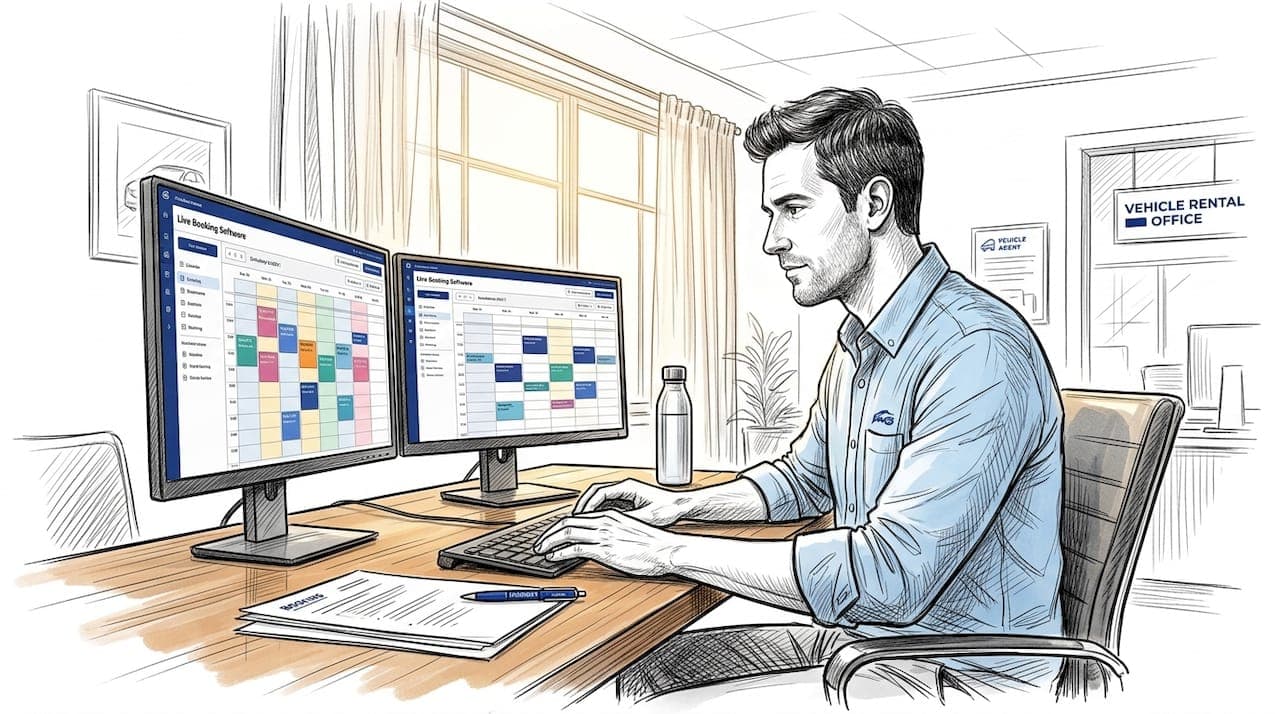
The most immediate benefit of booking automation is the elimination of repetitive manual coordination. When a customer books, modifies, or cancels a reservation, the system handles the entire workflow without a staff member picking up the phone or updating a spreadsheet. Calendars update in real time, confirmations go out instantly, and your team is freed from reactive scheduling tasks.
The time savings are quantifiable. Teams using automated scheduling save an average of 5.2 hours weekly on coordination alone. For executive assistants and operations staff, that figure climbs to 8 to 12 hours per week. In a vehicle rental business where a single coordinator might manage dozens of reservations daily, that reclaimed time translates directly into capacity for higher-value work like fleet planning, customer retention, and business development.
Key administrative tasks that automation replaces:
Manual booking entry across phone, email, and walk-in channels
Availability checks before confirming each reservation
Sending confirmation emails and rental agreement reminders
Updating fleet status after returns, damage reports, or maintenance holds
Processing cancellations and releasing vehicles back into inventory
Pro Tip:Set up automated post-rental follow-up messages alongside your booking confirmations. This single addition captures reviews and repeat bookings without any manual effort from your team.
2. How automated reminders reduce no-shows and cancellations
No-shows are a direct revenue loss in vehicle rental. A car sitting idle because a customer forgot their reservation or chose not to cancel is a cost you absorb entirely. Automated reminder sequences address this problem at the behavioral level, not just the logistical one.
The data on reminder effectiveness is compelling. Automated reminders reduce no-shows by 29 to 39% in standard deployments. AI-assisted front desk systems push that figure to 40 to 60% within 60 days, while simultaneously lifting revenue by 20 to 35%. That is not a marginal improvement. For a rental fleet with consistent no-show rates, this single automation can recover a meaningful portion of annual revenue.
A proven multi-step reminder sequence for vehicle rental looks like this:
Booking confirmation sent immediately after reservation, including vehicle details, pickup location, and contract summary
T-7 reminder sent seven days before pickup, confirming reservation and offering a simple reschedule link
T-2 reminder sent two days out, reinforcing pickup time and providing key rental information
T-1 or same-day reminder sent the morning of pickup, with directions, contact details, and a final reschedule option
The reschedule option within each reminder is critical. Multi-touch reminders with interactive confirms turn likely no-shows into rescheduled bookings, recovering the slot rather than losing it entirely. This is the difference between a cancellation that costs you nothing and a no-show that costs you everything.
"Successful no-show reduction hinges on multi-step interventions with interactive reminders enabling easy rescheduling." — Twig.so research on AI front desk deployments
3. Preventing double bookings through real-time fleet synchronization
Double bookings are one of the most damaging operational failures in vehicle rental. Assigning the same car to two customers on the same day creates immediate service failures, reputational damage, and often a refund obligation. Manual systems and disconnected booking channels make this error almost inevitable at scale.
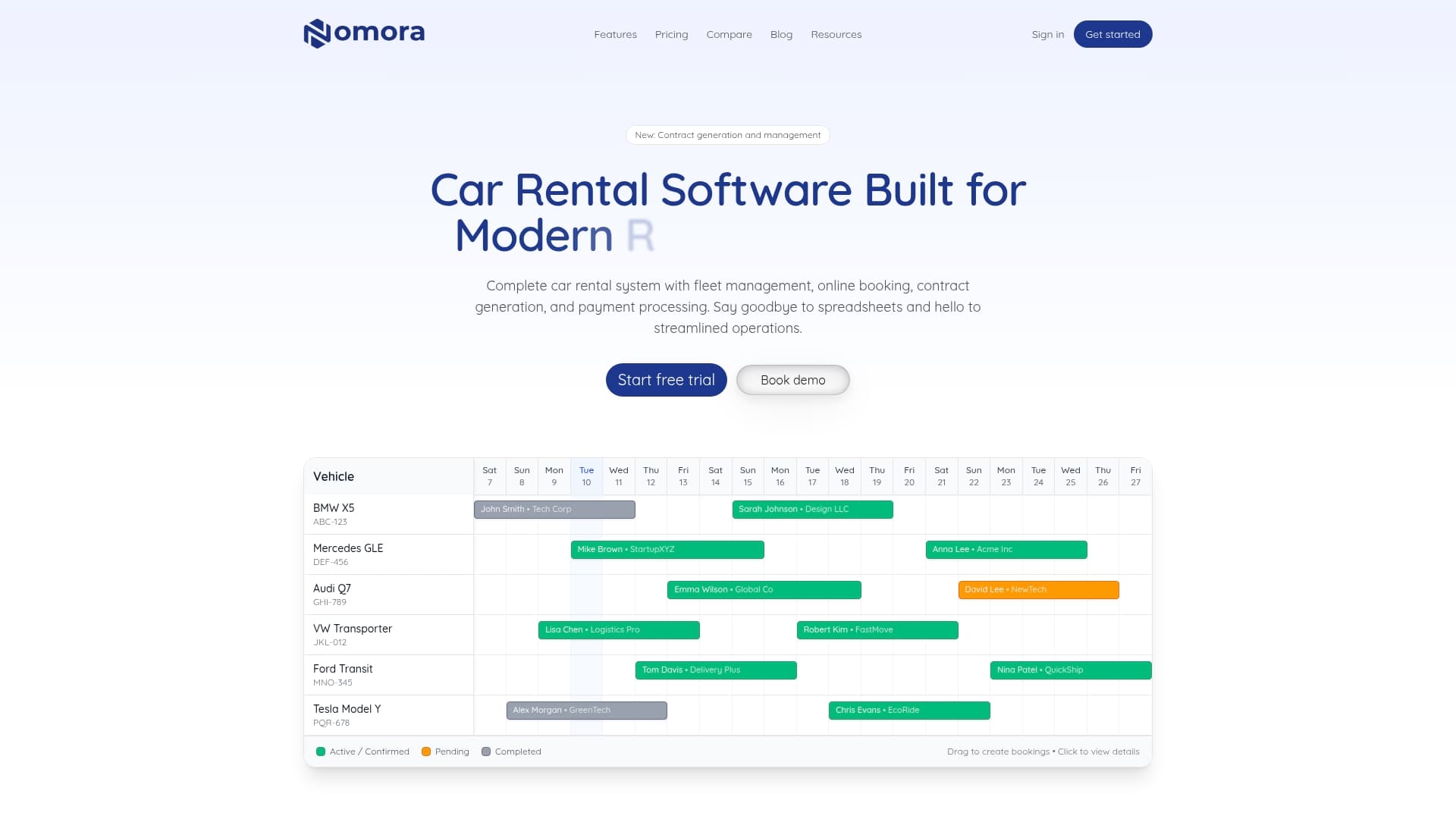
Automated booking systems prevent this by synchronizing inventory in real time across every channel where reservations can originate. Whether a booking comes through your website, a phone call logged by staff, an OTA like Booking.com, or a corporate account portal, the system updates availability instantly and blocks the vehicle from being reserved again.
Booking method
Manual system risk
Automated system outcome
Website reservation
No real-time update to phone bookings
Instant availability block across all channels
Phone booking by staff
Requires manual calendar update
Auto-logged and synced immediately
OTA or third-party portal
Separate inventory, high conflict risk
API integration keeps inventory unified
Corporate account portal
Often managed in separate spreadsheet
Centralized fleet view, no oversell
For rental operators managing multiple vehicle categories or locations, real-time booking workflows are the foundation of reliable fleet utilization. A detailed breakdown of prevention strategies is available in Nomora's guide on preventing double bookings in car rental operations.
4. 24/7 customer self-service and always-on accessibility
Customers do not book vehicles exclusively during business hours. A significant share of reservations happen in the evening, on weekends, or during travel planning sessions that occur outside any staffed window. An automated booking portal captures this demand without requiring a staff member to be available.
The benefits of online booking portals extend beyond convenience. Customers who can book, modify, and cancel on their own terms report higher satisfaction and generate fewer inbound support calls. Booking.com's AI car rental helper demonstrated this directly: early testing showed measurable reductions in customer support calls, reservation changes handled by staff, and disruptions at pickup when customers had 24/7 access to vehicle, contract, and insurance information.
Key self-service capabilities that reduce staff burden:
Online booking with instant confirmation at any hour
Self-service modification and cancellation with automated rebooking options
AI chat support answering common questions about pickup procedures, fuel policy, and insurance
Digital contract delivery so customers review terms before arrival
Pre-arrival checklists sent automatically to reduce pickup friction
Pro Tip:Add a frequently asked questions module to your booking portal covering fuel policy, late returns, and damage procedures. This single addition eliminates the most common pre-rental support calls without any staff involvement.
5. Revenue growth and measurable cost savings
Booking automation does not just reduce costs. It actively increases revenue by converting more inquiries into confirmed reservations and reducing the losses associated with no-shows and idle fleet time. Booking rates improve 15 to 30% with automation in place, show rates improve 25 to 40%, and close rates improve 10 to 20%. Each of these metrics compounds across a full rental season.
On the cost side, automation reduces processing time per trip from 15 hours to 3.5 hours and cuts per-trip costs from $1,240 to $970 in travel operations. For vehicle rental businesses, the parallel savings appear in reduced staff hours, fewer booking errors requiring correction, and lower customer service overhead. The integration of contract and payment software with booking automation compounds these savings further by eliminating manual agreement generation and payment reconciliation.
Revenue and cost metric
Without automation
With automation
Booking conversion rate
Baseline
15 to 30% improvement
No-show rate
Baseline
29 to 60% reduction
Admin hours per week
High
5+ hours saved per staff member
Processing cost per booking
Higher
Reduced through workflow consolidation
Revenue per available vehicle
Lower
Higher through better utilization
The financial case for booking automation in vehicle rental is not theoretical. Rental inventory management tied to automated booking produces measurable gains in fleet utilization, which is the single largest driver of profitability in this industry.
The 42-Point Car Rental Operations Checklist
The exact checks profitable rental operators run every week — free, straight to your inbox.
Fleet readiness & handover
Bookings & no-show prevention
Pricing & revenue reviews
Contracts & compliance
Payments & invoicing
Maintenance & fleet health
One email with the checklist. No spam, unsubscribe anytime.
Key takeaways
Automated booking systems deliver their greatest value when they operate as the central nervous system of a rental business, connecting reservations, fleet availability, customer communication, and payments in one synchronized workflow.
Point
Details
Admin time savings
Automation saves 5+ hours per staff member weekly by replacing manual coordination with real-time updates.
No-show reduction
Multi-step reminder sequences reduce no-shows by 29 to 60%, directly recovering lost revenue.
Double booking prevention
Real-time inventory sync across all sales channels eliminates fleet conflicts and overbooking errors.
24/7 customer access
Self-service portals capture off-hours bookings and reduce inbound support calls without staff involvement.
Revenue impact
Booking rates improve 15 to 30% and show rates 25 to 40% with automation deployed across the rental workflow.
What I've learned about automation priorities in vehicle rental
After working closely with rental operators across fleet sizes and business models, one pattern stands out: businesses that implement booking automation primarily to save time end up discovering that the revenue recovery from no-show reduction is the bigger win. Most operators underestimate how much idle fleet time costs them annually until they see the before-and-after data from a structured reminder sequence.
The second lesson is about integration depth. A booking system that does not connect to your fleet management, payment processing, and contract generation is only solving half the problem. The administrative savings are real but limited. The full return on investment appears when a confirmed booking automatically triggers a contract draft, blocks the vehicle in your fleet calendar, and queues a payment collection. That is when you stop managing bookings and start managing a business.
My practical advice: do not deploy automation in phases if you can avoid it. Operators who go live with booking, reminders, fleet sync, and payment integration simultaneously see faster ROI and fewer process gaps than those who add capabilities one at a time. The car rental software integration guide from Nomora is a useful reference for mapping out what a full deployment looks like before you commit to a vendor.
The one challenge to anticipate honestly is customer adoption of self-service portals. Some customer segments, particularly older corporate clients, will still prefer phone confirmation for the first few bookings. Build a short transition period into your rollout plan rather than assuming immediate behavioral change across your entire customer base.
— Dizzy
How Nomora puts these advantages to work for your rental business
Nomora is built specifically for vehicle rental operators who want the full benefits of booking automation without stitching together multiple disconnected tools. The platform handles reservations, fleet management, contract generation, and payment processing in one cloud-based system, with setup completed in 24 to 48 hours.
Whether you run a single-location independent fleet or a multi-site franchise network, Nomora's rental business use cases show how the platform adapts to your operation. Automated confirmations, reminder sequences, real-time availability sync, and automated payment processing are all included, giving you the infrastructure to reduce no-shows, prevent double bookings, and grow revenue from day one. Explore how Nomora fits your specific business type and fleet size to see the ROI potential in concrete terms.
FAQ
What are the main benefits of automated bookings for car rental?
Automated bookings reduce administrative workload, prevent double bookings through real-time fleet sync, cut no-show rates by 29 to 60%, and enable 24/7 customer self-service. The combined effect is lower operating costs and higher revenue per available vehicle.
How much time does booking automation actually save?
Teams using automated scheduling save an average of 5.2 hours weekly on coordination tasks. For operations staff managing high reservation volumes, savings can reach 8 to 12 hours per week.
Can automated reminders really reduce no-shows?
Yes. Structured multi-step reminder sequences reduce no-shows by 29 to 39% in standard deployments, and AI-assisted systems achieve 40 to 60% reductions within 60 days. Including a reschedule link in each reminder recovers bookings that would otherwise be lost entirely.
How does automation prevent double bookings across multiple channels?
Automated systems synchronize inventory in real time across your website, phone bookings, OTAs, and corporate portals. When a vehicle is reserved through any channel, availability updates instantly everywhere else, eliminating the manual update lag that causes conflicts.
Is booking automation worth it for smaller rental fleets?
The cost savings and revenue recovery from no-show reduction apply at any fleet size. Smaller operators often see the fastest ROI because automation replaces a disproportionately large share of their manual workload, freeing the owner or a single coordinator to focus on growth rather than daily booking management.