Key Takeaways
| Point | Details |
|---|
| Core contract clauses | A rental agreement should spell out parties, vehicle details, duration, payments, liability, and prohibited uses to prevent disputes. |
| Damage liability clarity | Define who pays for collision, theft, and vandalism and how costs are calculated to avoid arguments. |
| Regional contract norms | Know how terms and enforcement differ between US and EU markets to ensure compliance. |
| Contract software use | Using contract management software improves consistency, enforces standards, and speeds up compliance. |
What is a rental contract? Understanding its core definition
A rental contract in car rental is a legally binding agreement between the rental company (lessor) and the renter (lessee) outlining terms for temporary vehicle use, including parties, vehicle details, duration, payments, liabilities, and obligations. This document serves as your primary protection against disputes and clarifies what both parties can expect throughout the rental period.
Every effective rental contract includes several essential clauses:
- Parties information: Full names, contact details, and driver's license numbers for all authorized drivers
- Vehicle description: Make, model, year, VIN, license plate, and current condition documentation
- Rental duration: Start date, expected return date, and grace period policies
- Payment terms: Daily rate, deposit amount, accepted payment methods, and refund conditions
- Insurance coverage: What's included, deductibles, and optional coverage upgrades
- Prohibited uses: Activities that void the agreement, such as off-road driving or racing
- Damage liability: Who pays for what types of damage and how costs are calculated
These clauses establish mutual expectations and legal responsibilities. The renter gains temporary possession of your vehicle under specific conditions, while you retain ownership and set boundaries for acceptable use. This temporary transfer of possession, known legally as bailment, creates obligations for both parties. The renter must care for the vehicle reasonably, while you must provide a safe, functional vehicle as described.
Clarity in these definitions prevents disputes. When renters understand exactly what they're agreeing to, and you document conditions thoroughly, disagreements become rare. Vague language or missing clauses create gray areas where disputes thrive. For more comprehensive guidance on structuring these agreements, explore rental contract essentials car rental businesses to ensure your contracts cover all necessary elements.
Key contract mechanics: clauses that protect your business
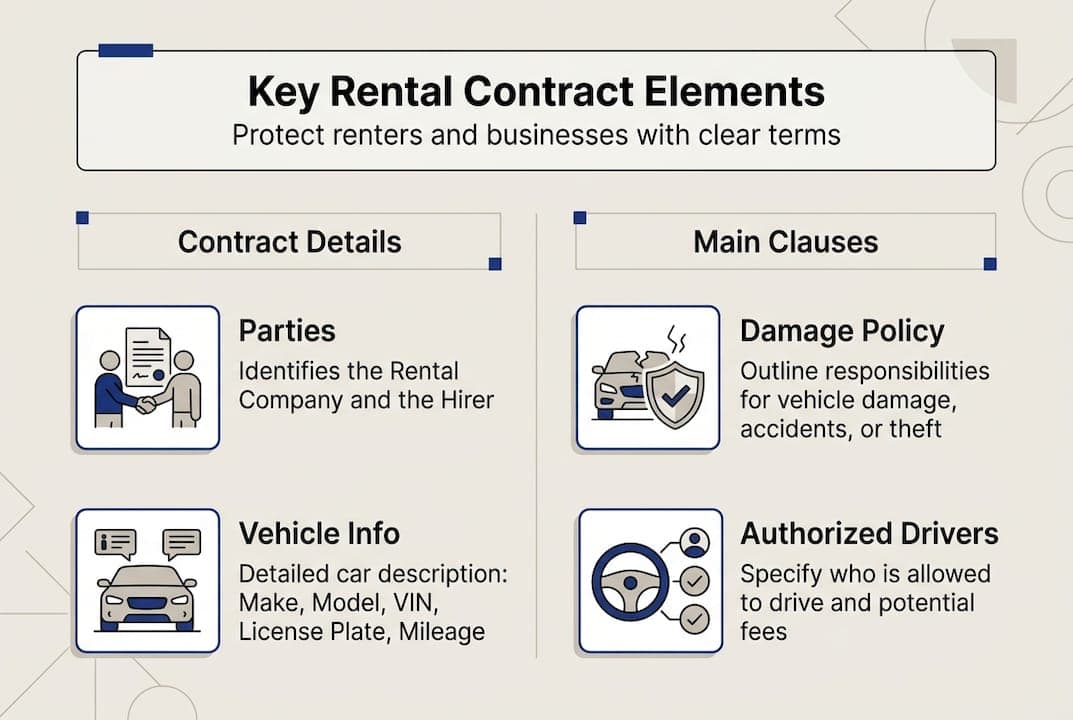
Protective clauses form the backbone of effective rental contracts. Key mechanics include clear liability clauses for damage (collision, theft, vandalism), fees (late return, fuel, diminished value), prohibited uses (off-road, racing, commercial without permission), and authorized drivers. These provisions shield your business from financial losses and operational disruptions.
Damage liability clauses specify who pays when vehicles are damaged, stolen, or vandalized. Most contracts hold renters responsible for damage occurring during their rental period, minus normal wear and tear. You should define collision damage (accidents with other vehicles or objects), theft (complete vehicle loss), and vandalism (intentional damage by third parties). Clear definitions prevent arguments about whether scratches constitute damage or normal use.

Fee structures must be transparent and comprehensive. Common charges include:
| Fee type | Typical amount | When applied |
|---|
| Late return (first hour) | $25-50 | After grace period expires |
| Daily late fee | Full day rate + 20% | Beyond first hour late |
| Fuel charge | Market rate + $15 service fee | Returned below agreed level |
| Diminished value | $500-2000 | Accident reduces resale value |
| Cleaning fee | $50-150 | Excessive dirt or odors |
| Toll violations | Actual toll + $25 admin fee | Unpaid tolls during rental |
Prohibited uses protect your fleet from high-risk activities. Standard restrictions include off-road driving, racing or speed contests, towing without authorization, transporting hazardous materials, and commercial use without proper insurance. Violating these terms typically voids insurance coverage, making renters personally liable for all damages.
Authorized driver clauses limit who can legally operate your vehicles. Only individuals listed in the contract and meeting your age and license requirements should drive. Unauthorized drivers create insurance complications and liability exposures. If an unlisted driver causes an accident, your insurance may deny the claim, leaving you to pursue the renter for full damages.
Edge cases require specific language. Late return after grace period results in hourly or daily charges, and failure to return after demand can lead to theft accusations. Your contract should specify exact grace periods (typically 29 minutes), when hourly charges begin, and when you'll report the vehicle as stolen. For pre-existing damage disputes, photo documentation taken during vehicle pickup becomes crucial evidence.
Pro Tip: Require renters to initial each major clause section during contract signing. This documented acknowledgment strengthens enforceability if disputes reach court, proving the renter understood specific terms.
Implementing these protective clauses through rental contract essentials car rental businesses frameworks reduces legal exposure significantly. When combined with modern tools from car rental management software boosts profits systems, your contracts become both protective and efficient.
Regional differences and challenges in drafting rental contracts
Rental contract norms vary significantly between regions, creating challenges for businesses operating internationally or serving diverse customers. US rentals typically offer unlimited mileage and lower deposits, while EU rentals have mileage caps, higher deposits, and insurance with high deductibles. Understanding these differences helps you craft contracts appropriate for your market and customer base.
| Contract element | US standard | EU standard |
|---|
| Mileage limits | Usually unlimited | Typically 100-200 km/day |
| Security deposit | $200-400 hold | €500-1500 hold |
| Insurance deductible | $500-1000 | €1000-2000 |
| Second driver fee | Often free or $10/day | €5-15 per day |
| Fuel policy | Full to full common | Full to full standard |
| Cross-border travel | Generally allowed | Often restricted or extra fee |
In the United States, rental contracts typically treat the arrangement as short-term bailment with minimal restrictions. Renters enjoy greater flexibility, and disputes often favor consumer protection laws. Contracts must comply with state-specific regulations, which vary considerably. California, for example, has strict disclosure requirements for insurance coverage and fee transparency.
European contracts reflect stronger consumer protection frameworks but also impose more restrictions on renters. Higher deposits and deductibles transfer more risk to renters, while mileage caps protect vehicle value. Cross-border travel often requires advance permission and additional fees, reflecting complex international insurance considerations.
Operational challenges for small to medium businesses include:
- Keeping contracts updated with changing local and national regulations
- Balancing protective language with customer-friendly terms that don't scare away renters
- Training staff to explain complex clauses clearly to diverse customers
- Managing multiple contract versions for different vehicle types or rental durations
- Ensuring translations maintain legal accuracy when serving international customers
You face a constant trade-off between strictness and flexibility. Overly restrictive contracts protect your business but may drive customers to competitors offering more lenient terms. Too much flexibility exposes you to abuse and financial losses. Finding the right balance requires understanding your local market, customer expectations, and risk tolerance.
Pro Tip: Schedule annual contract reviews with a local attorney specializing in rental law. Regulations change frequently, and outdated contracts can be unenforceable or expose you to penalties.
Automating compliance through software reduces this burden significantly. Modern platforms update contract templates when regulations change and can generate region-specific versions automatically. Explore how to optimize car rental fleet proven examples 2026 strategies integrate with contract management, and see how car rental management software boosts profits by handling these complexities.
Practical tips to optimize rental contracts for your SMB business
Improving your rental contracts doesn't require expensive legal overhauls. Strategic changes to documentation, staff training, and technology adoption deliver immediate benefits. Using software for automated compliant templates and documenting pre-existing damage with photos reduces disputes, while annual legal reviews are advised.
Follow these steps to optimize your contracts:
-
Adopt compliant software templates: Use platforms that automatically update contracts when regulations change, ensuring you're always compliant without constant manual revisions.
-
Photograph existing vehicle condition: Take timestamped photos of all four sides, interior, dashboard mileage, and fuel level at pickup and return. Store these digitally with the rental record.
-
Define fees clearly with examples: Instead of "late fees apply," specify "$35 for the first hour late, then full daily rate for each additional day."
-
Train staff on contract handling: Ensure every team member can explain key clauses in simple language and knows how to document damage properly.
-
Schedule annual contract reviews: Work with a rental law attorney to update language, remove unenforceable clauses, and add protections for new risks.
Documentation prevents most disputes. Poor documentation causes most disputes, while transparent fee definitions like loss of use calculations improve clarity. When renters see photographic evidence of damage they caused, arguments evaporate. When your contract clearly explains how you calculated a fee, customers accept charges more readily.
Communicating terms effectively matters as much as writing them well. Walk renters through key clauses verbally, highlighting damage liability, fuel policy, and late return fees. Ask if they have questions. This personal interaction builds trust and ensures understanding, reducing the "I didn't know that was in there" disputes.
Software delivers multiple benefits beyond templates. Digital signatures create legally binding agreements instantly. Audit trails show exactly when contracts were signed and what version was used. Automated reminders notify renters about upcoming return times, reducing late returns. Integration with fleet management systems ensures vehicle condition documentation flows seamlessly into contracts.
Pro Tip: Invest in mobile apps that let renters photograph vehicle condition themselves during pickup. This shared documentation process increases their awareness of existing damage and creates mutual accountability.
Implementing these practices through car rental software use cases demonstrates real-world applications. Combine contract optimization with comprehensive vehicle rental checklist small medium fleets 2026 procedures for maximum protection. Return to foundational principles through rental contract essentials car rental businesses whenever you revise your agreements.
Enhance your car rental contracts with Nomora software
Implementing the contract strategies outlined above becomes effortless with the right technology partner. Nomora's car rental contract software automates contract creation, ensuring every agreement includes all required clauses and complies with current regulations. You'll eliminate manual errors and save hours of administrative work.
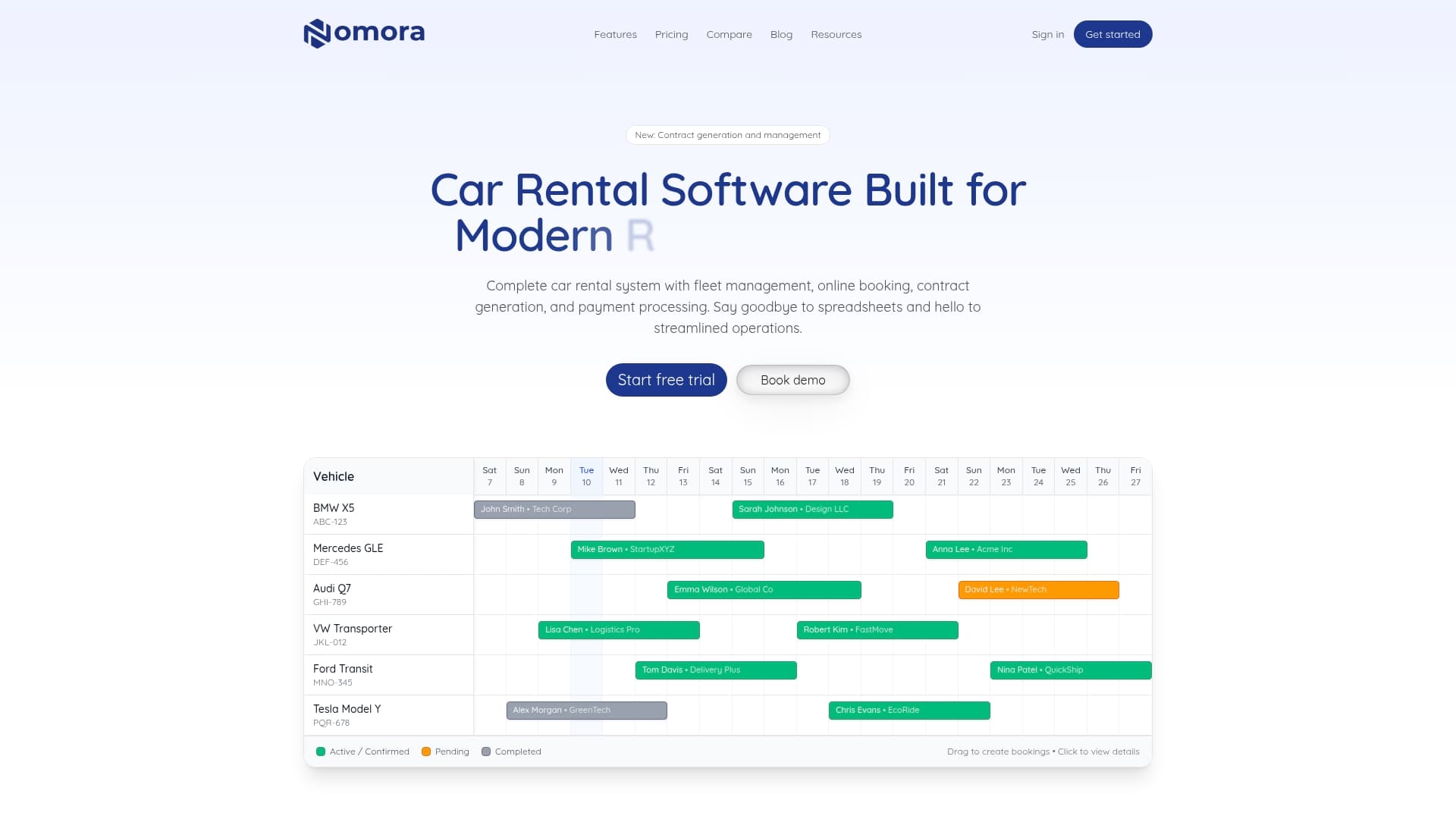
The platform handles photo documentation seamlessly, capturing vehicle condition at pickup and return with timestamps and GPS coordinates. Digital signatures provide legal validity while speeding up the rental process. Fee management tools calculate charges automatically based on your defined rules, ensuring consistency and transparency. Explore car rental software use cases to see how businesses like yours have reduced disputes by 60% and cut contract processing time in half. The fleet management software module integrates vehicle maintenance records directly into rental contracts, ensuring you never rent a vehicle with outstanding safety issues. Nomora becomes your partner in operational efficiency and legal clarity.
What is included in a car rental contract?
A rental contract includes parties' information (lessor and lessee details), vehicle description (make, model, VIN, condition), rental duration (start and end dates), payment terms (rates, deposits, methods), insurance coverage details, liability clauses for damage and theft, prohibited uses, authorized drivers list, and fee schedules for late returns or violations. These elements create a comprehensive agreement protecting both parties. Additional sections may cover mileage limits, fuel policies, cross-border travel restrictions, and dispute resolution procedures. For complete details on structuring these agreements, review rental contract essentials car rental businesses resources.
How does a rental contract handle pre-existing damages?
Contracts typically address pre-existing damage through detailed documentation at vehicle pickup. You should photograph all existing scratches, dents, or mechanical issues and have the renter acknowledge these in writing or digitally. This documentation establishes baseline condition, preventing disputes when the vehicle returns. Clear language in your contract should state that renters are only liable for new damage occurring during their rental period, not pre-existing conditions properly documented.
What happens if a renter returns the vehicle late?
Most contracts include grace periods (typically 29 to 59 minutes) before late fees apply. After the grace period, hourly charges begin, often $25 to $50 for the first hour. If the delay extends beyond a few hours, full daily rates plus penalties may apply. Extreme lateness without communication can result in the vehicle being reported as stolen. Your contract should specify exact timeframes and escalating consequences to ensure renters understand the seriousness of timely returns.
Are mileage limits standard in rental contracts?
Mileage limits vary significantly by region and rental type. US contracts commonly offer unlimited mileage for standard rentals, making them attractive for road trips. European contracts typically impose daily caps of 100 to 200 kilometers, with per-kilometer fees for excess usage. Luxury or specialty vehicle rentals often include mileage restrictions regardless of location. Your contract should clearly state whether mileage is limited, what the cap is, and the per-mile or per-kilometer charge for overages.
Can unauthorized drivers use the rental vehicle?
No, only drivers specifically listed and approved in the rental contract should operate the vehicle. Unauthorized driver use violates the agreement and typically voids insurance coverage, making the renter personally liable for all damages, theft, or injuries occurring while an unlisted person drives. Your contract should explicitly state this restriction and outline consequences, including full financial responsibility and potential criminal charges if the unauthorized use involves theft or fraud.
How can software improve rental contract management?
Software automates contract generation using compliant templates that update automatically when regulations change, eliminating manual revision work. Digital platforms provide integrated photo documentation, capturing vehicle condition with timestamps and GPS data. Digital signatures create legally binding agreements instantly while maintaining audit trails showing exactly when and what was signed. Fee management modules calculate charges consistently based on your rules, improving transparency. These tools reduce disputes by 40 to 60 percent while cutting administrative time significantly. Explore car rental contract software solutions to see specific features and benefits for small to medium businesses.
Recommended