TL;DR:
- Customer self-service reduces wait times and increases customer satisfaction in vehicle rentals.
- Self-service workflows automate routine tasks, lowering labor costs and boosting upsell opportunities.
- A hybrid approach combining automation with human support addresses complex situations effectively.
Customer self-service is reshaping how vehicle rental companies operate, and the numbers are hard to ignore. Self-service kiosks reduce wait times by up to 50%, enable 24/7 access, and boost customer satisfaction by 42%. For rental business owners managing busy locations, long counter lines, and stretched staff, that kind of impact is significant. This article breaks down exactly what customer self-service means in the rental context, how the workflow functions step by step, what measurable benefits you can expect, where the limits are, and how to implement it effectively. You will leave with a clear framework for making self-service work for your operation.
Table of Contents
Key Takeaways
| Point | Details |
|---|
| Clear self-service definition | Customer self-service in rentals uses kiosks or digital channels to automate reservations, check-in, and pickup. |
| Major operational benefits | Rental operators can expect dramatic labor savings, faster service times, and increased transaction values. |
| Hybrid approach works best | The most effective rental businesses blend self-service with professional staff for handling exceptions. |
| Measure and optimize adoption | Success depends on matching self-service tools to your environment and tracking customer adoption rates. |
Understanding customer self-service in vehicle rentals
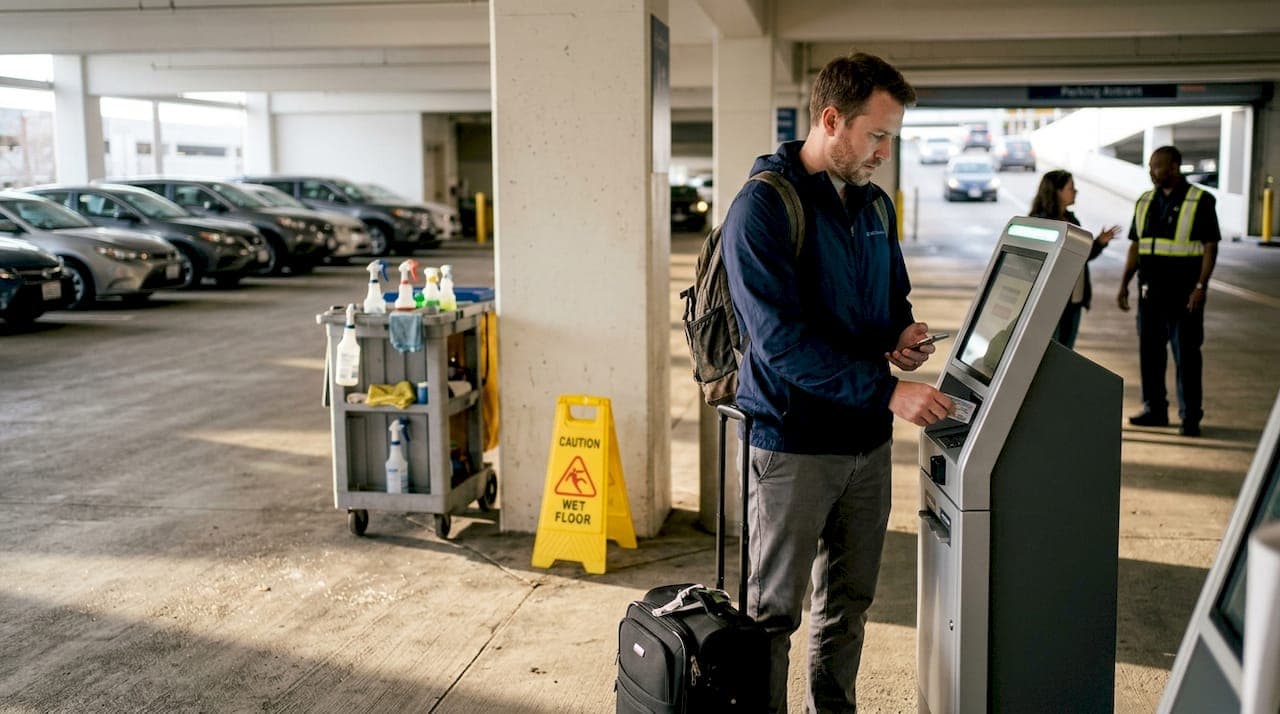
Customer self-service in vehicle rentals refers to systems that allow renters to complete key parts of their rental journey with minimal or no staff involvement. These systems typically include kiosks (standalone terminals at pickup locations), mobile apps, and web-based portals. Each of these tools connects to a real-time database that holds booking information, fleet availability, pricing, and customer records.
The goal is straightforward: let customers handle routine tasks on their own, freeing your staff to focus on exceptions, upselling, and complex situations. Think of the self-service layer as the central nervous system of your front-of-house operation. It processes the high volume of standard transactions so your team can operate at a higher level.
Self-service fits best in high-volume locations where transaction speed matters most. Airports are the clearest example. Travelers arriving after a long flight want their car quickly. A kiosk or app that retrieves their booking in seconds and walks them through the process in under five minutes is a genuine competitive advantage.
A typical self-service workflow follows these core steps:
- Locate the booking using a confirmation number or loyalty account
- Verify personal details and driver's license
- Review vehicle selection and pricing
- Select optional add-ons (insurance, GPS, child seats)
- Complete payment
- Print or receive the rental agreement digitally
The technologies making this possible include touchscreen kiosks with integrated card readers, document scanners for license verification, real-time fleet management APIs, and cloud-based reservation systems. Understanding rental software profit benefits is essential before investing in any self-service infrastructure, because the software layer is what ties all these components together.
"Self-service is not just about speed. It is about giving customers control over their own experience while giving operators the data visibility to manage their fleet more effectively."
For smaller operators, web-based self-check-in tools can deliver many of the same benefits as a physical kiosk without the hardware investment. The right approach depends on your location type, customer profile, and existing technology stack.
Workflow: How customer self-service really works
With a clear definition in mind, it is time to unpack how a typical self-service rental experience actually unfolds from both the customer and business side.
A standard kiosk workflow moves from confirmation lookup through document printing and vehicle pickup. Here is how that looks in practice:
- Booking retrieval: The customer enters their confirmation number, scans a QR code, or logs into their account.
- Identity verification: The kiosk prompts a driver's license scan or manual entry, cross-referencing the reservation.
- Vehicle and rate review: The system displays the reserved vehicle, current pricing, and any applicable promotions.
- Add-on selection: The customer chooses extras like roadside assistance, additional drivers, or fuel options.
- Payment processing: The system charges the card on file or prompts a new payment method.
- Agreement output: A digital or printed rental agreement is generated and the customer proceeds to vehicle pickup.
On the backend, each step is pulling from and writing to your fleet management system in real time. This means the moment a vehicle is assigned, it is removed from the available inventory pool, preventing double bookings.
One often-overlooked opportunity in this workflow is upselling. Because the customer controls the pace, they are more likely to read and consider add-on options than they would be at a busy counter. Reviewing 2026 car rental software options can help you identify platforms with built-in upsell logic that surfaces the right offers at the right moment.
Pro Tip: Position your highest-margin add-ons (like premium insurance or GPS) on the add-on selection screen with a single clear benefit statement. Customers moving at their own pace convert on upsells at measurably higher rates than those at a staffed counter.
| Step | Traditional counter | Self-service kiosk/app |
|---|
| Booking retrieval | Staff looks up manually | Instant via QR or confirmation number |
| Identity check | Staff reviews documents | Automated scan and verification |
| Add-on presentation | Verbal pitch by agent | Visual screen with pricing |
| Payment | Staff processes | Customer-initiated, instant |
| Agreement | Printed by staff | Digital or self-printed |
| Average time | 8 to 15 minutes | 2 to 5 minutes |
Benefits for rental businesses and customers
Understanding the process, let's explore why self-service has become a strategic asset for both rental companies and their renters.

The business case for self-service is built on measurable outcomes. Kiosks cut labor needs by 25 to 40%, boost upsell revenue by 20%, deliver ROI in 7.5 to 11 months, and push customer satisfaction scores up by 42%. These are not marginal gains. They represent a structural shift in how rental operations generate value.
For operators, the key benefits include:
- Labor cost reduction: Fewer staff are needed at peak hours, or existing staff can be redeployed to higher-value tasks.
- Extended operating hours: Kiosks and apps work around the clock without overtime costs.
- Higher transaction values: Automated upsell prompts consistently outperform verbal pitches in conversion rate.
- Fewer errors: Automated data entry reduces mistakes in agreements, billing, and fleet records.
- Real-time data: Every transaction feeds directly into your reporting, giving you live visibility into revenue and fleet status.
For customers, the benefits are equally clear:
- Shorter wait times, especially during peak periods
- Flexibility to complete check-in before arriving at the location
- Privacy and control over their own transaction
- Consistent experience regardless of which staff member is on shift
Effective cloud fleet management is what makes these benefits sustainable. Without a reliable cloud backbone, self-service terminals cannot access real-time inventory, and the whole system breaks down. Similarly, rental fleet optimization becomes significantly more accurate when self-service data feeds directly into your utilization reporting.
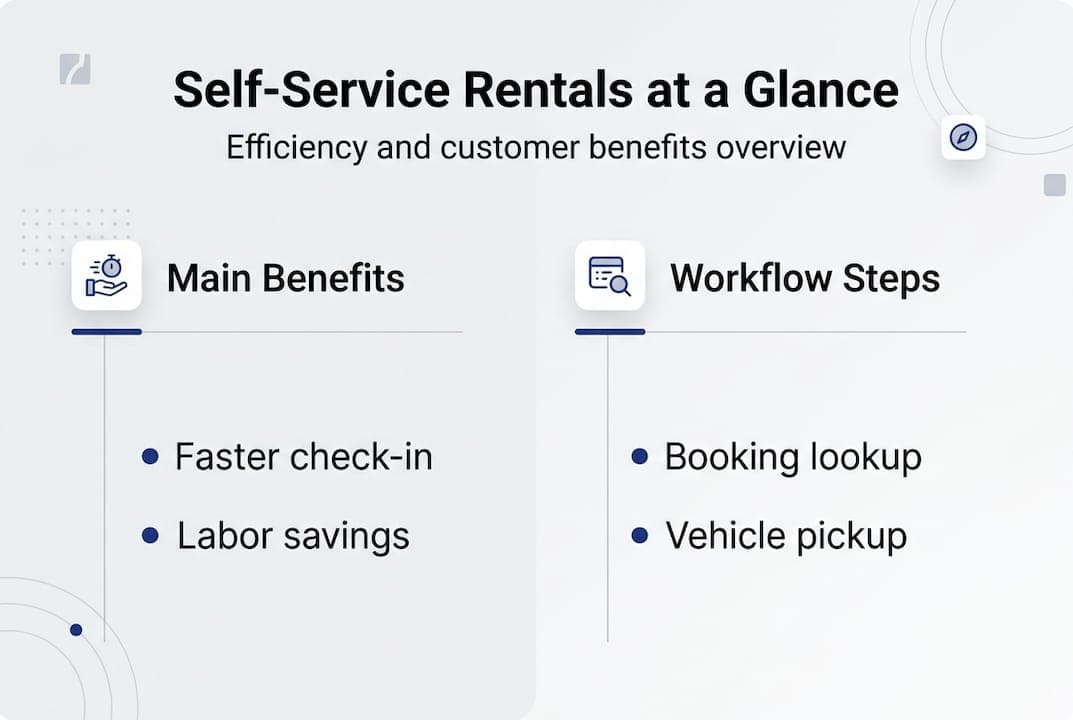
| Metric | Before self-service | After self-service |
|---|
| Average check-in time | 10 to 15 minutes | 2 to 5 minutes |
| Labor cost per transaction | High | Reduced by 25 to 40% |
| Upsell conversion rate | Baseline | Up 20% |
| Customer satisfaction score | Baseline | Up 42% |
| ROI timeline | N/A | 7.5 to 11 months |
Challenges and when human service matters
While the advantages are clear, self-service is not perfect, and the best rental operations still blend automation with high-caliber human skills.
Self-service works extremely well for routine transactions. But a meaningful share of your customers will encounter situations the system was not designed to handle smoothly. Kiosks excel at routine tasks but struggle with complex needs, which is why a hybrid approach is the recommended standard.
Situations where self-service consistently falls short include:
- Booking disputes or pricing discrepancies that require manager authorization
- Last-minute vehicle changes when the reserved class is unavailable
- Accessibility needs for customers who cannot use a touchscreen independently
- International customers with unfamiliar document formats
- First-time renters who need guidance through the process
- Technical failures at the kiosk or app level
Industry data suggests that 20 to 30% of transactions will still require some level of human involvement, even in highly automated environments. That is not a failure of self-service. It is a reminder that the goal is a better overall experience, not the elimination of human contact.
"The best self-service implementations are designed so that moving from the kiosk to a staff member feels seamless, not like a failure."
Pro Tip: Train your staff to treat kiosk handoffs as opportunities, not interruptions. A customer who needed help is more likely to remember a warm, efficient resolution than the technology that stumbled. Staff who act as ambassadors for the self-service system, guiding customers back to it when appropriate, accelerate adoption over time.
Using a structured rental checklist guide during staff training helps ensure that human touchpoints are consistent and professional, even when they occur as part of a self-service flow.
Our perspective: How to get self-service right in rentals
The evidence and frameworks above show what works, but what separates top-performing rental businesses goes one step further.
Most guides treat self-service as a binary choice: implement it or do not. The reality is more nuanced. Blanket self-service does not work for every rental operation. A small, relationship-driven operator in a rural market serves a different customer than a high-volume airport franchise. The technology should match the context.
The operators who see the strongest results start by identifying which locations have the highest transaction volume and the most predictable customer profiles. They prioritize those sites first, measure adoption rates closely, and use that data to refine the experience before expanding.
What most how-to articles miss is the importance of the first 30 seconds at the kiosk. If a customer cannot find their booking or gets confused by the first screen, abandonment rates spike sharply. Design for the most common customer task, not the most complex one. Make the default path obvious and fast.
Hybrid is not a fallback strategy. It is the strategy. Operators who switch from spreadsheets to integrated platforms and then layer self-service on top are building a system where automation handles volume and people handle value. That combination is what drives sustainable growth.
If you are ready to reap the full rewards of customer self-service, the right technology partner can make all the difference. Nomora is purpose-built for rental businesses that want to move beyond manual processes and deliver a faster, smarter customer experience.
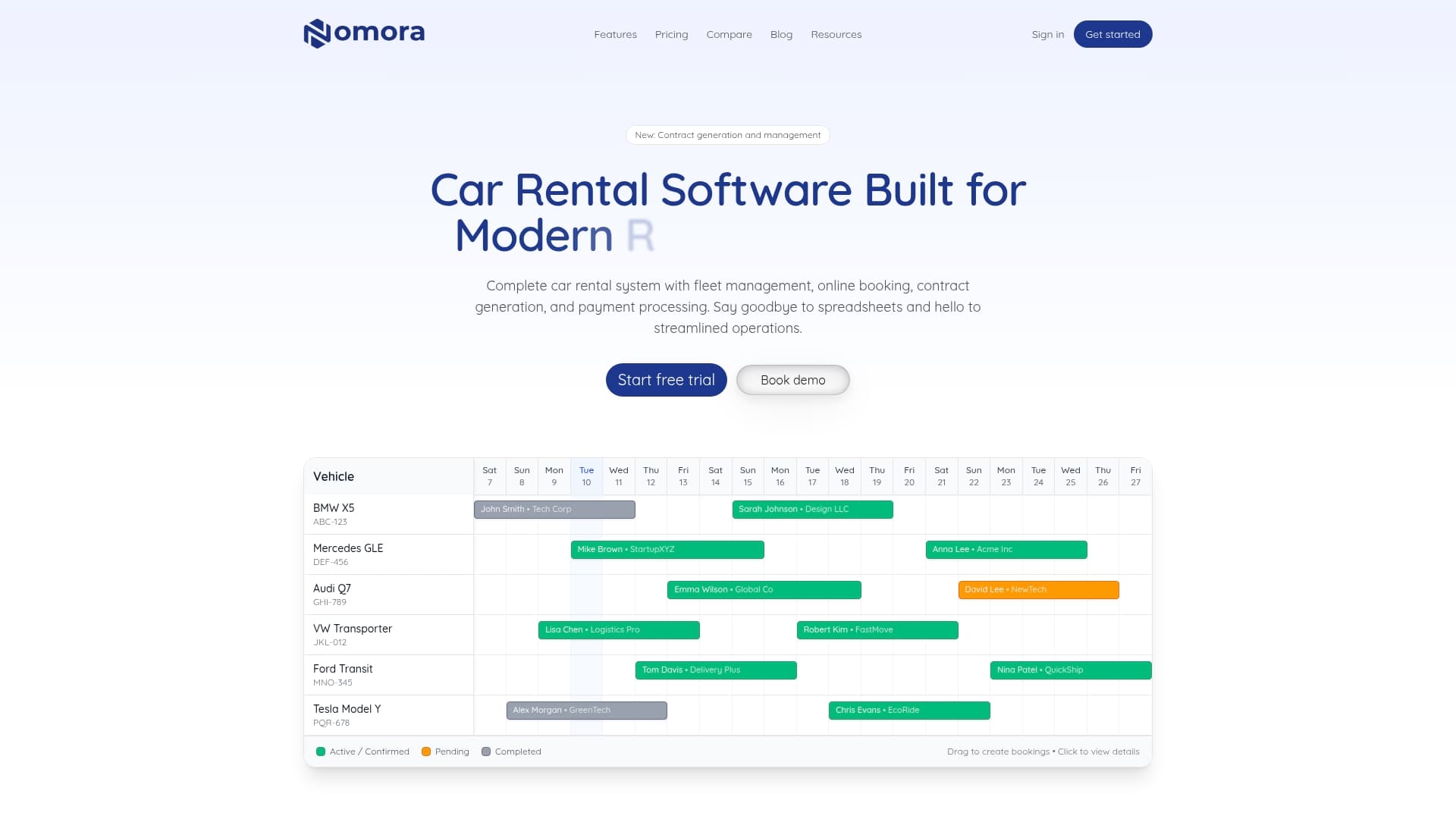
From automated rental payments that integrate directly with your self-service workflow, to a platform designed for the full range of rental software use cases, Nomora gives you the infrastructure to run self-service at scale. Explore car rental software pricing to find the plan that fits your operation, and get set up in as little as 24 to 48 hours.
Frequently asked questions
What is customer self-service in car rentals?
Customer self-service lets renters complete reservation, check-in, payment, and pickup with minimal staff involvement via kiosks, apps, or web portals. Self-service kiosks automate core workflows and significantly reduce wait times at high-volume locations.
What are the main benefits of self-service for rental businesses?
The primary benefits are faster service, 25 to 40% labor savings, higher upsell conversion, and a 42% improvement in customer satisfaction scores. These gains compound over time as adoption increases.
When should human staff step in during the self-service process?
Staff should assist with disputes, complex booking changes, accessibility needs, or when a customer abandons the kiosk. A hybrid model handles exceptions effectively while keeping the self-service flow intact for the majority of transactions.
How soon can a rental business expect ROI after implementing self-service kiosks?
ROI typically arrives within 7.5 to 11 months of launch, driven primarily by labor cost reductions and increased upsell revenue from automated prompts.
Recommended
Ready to streamline your car rental business?
Book 30 minutes with the founder. We set up everything in this guide on your own vehicles, and migrate you out of Excel for free.