TL;DR:
- Dynamic pricing can boost revenue by 5 to 30% through real-time rate adjustments.
- Maximizing fleet utilization and shifting to higher-margin vehicle types improve profitability.
- Combining automation tools with staff training drives sustained profit growth in car rental businesses.
Margins in the car rental industry are under real pressure. Rising vehicle acquisition costs, fuel volatility, and aggressive pricing from app-based competitors are squeezing operators who rely on outdated methods. Simply cutting costs is not a sustainable path forward. The businesses that will thrive in 2026 are those that combine smarter pricing, tighter fleet management, targeted upselling, and the right technology to tie it all together. This article walks you through four proven, research-backed strategies to increase profitability without simply adding more vehicles to your lot.
Table of Contents
Key Takeaways
| Point | Details |
|---|
| Adopt dynamic pricing | Real-time rate adjustments can increase car rental revenue by up to 30 percent. |
| Optimize fleet utilization | Maintaining a utilization rate between 70 and 85 percent achieves the best profit balance. |
| Upsell ancillaries | Offering services like insurance and GPS adds 10 to 20 percent extra revenue with minimal cost. |
| Automate with technology | Using car rental software cuts admin costs and boosts operational efficiency. |
| Invest in staff training | Success relies on both smart technology and well-trained personnel for lasting profitability. |
Leverage dynamic pricing for higher revenue
Static pricing, where you set a rate and leave it unchanged for weeks, leaves significant money on the table. Dynamic pricing is the practice of adjusting rental rates in real-time based on demand signals, competitor rates, and fleet availability. Think of it as the airline industry's approach applied to your lot. When demand spikes on a holiday weekend, your rates rise automatically. When mid-week inventory sits idle, rates drop to stimulate bookings.
For small and medium-sized operators, a hybrid approach works best. Start with rule-based adjustments: set minimum and maximum rate boundaries, then allow automated tools to move prices within that range. This gives you control while capturing revenue opportunities you would otherwise miss. Dynamic pricing adjusts rates in real-time based on demand, competitors, and availability, boosting revenue 5 to 30% while optimizing utilization to 70 to 85%.
The results from early adopters are hard to ignore. One car rental company using AI pricing generated millions in additional revenue with a return on investment achieved in under one year. That is not a large enterprise outcome. Operators of all sizes are replicating this by starting small and scaling.
Here is a practical four-step process to get started:
- Audit your current rates against competitors and local demand patterns for the past 12 months
- Set rule-based adjustments tied to occupancy thresholds (for example, raise rates 15% when utilization exceeds 80%)
- A/B test different pricing bands during peak and off-peak periods to identify your revenue ceiling
- Scale by integrating a pricing engine with your reservation system for fully automated adjustments
Pro Tip: Do not try to automate everything at once. Start with your two or three highest-demand vehicle categories and apply dynamic rules there first. Once you see results, expand to the rest of your fleet.
For a deeper look at rate structures, the pricing strategies for car rentals guide covers segmentation, seasonal tactics, and channel-specific pricing in detail.
Maximize fleet utilization and mix
Now that we have explored dynamic pricing, let's look at how your fleet itself can become a primary profit driver. Fleet utilization is the percentage of your available vehicles that are rented on any given day. It sounds simple, but it is one of the most powerful levers you have.
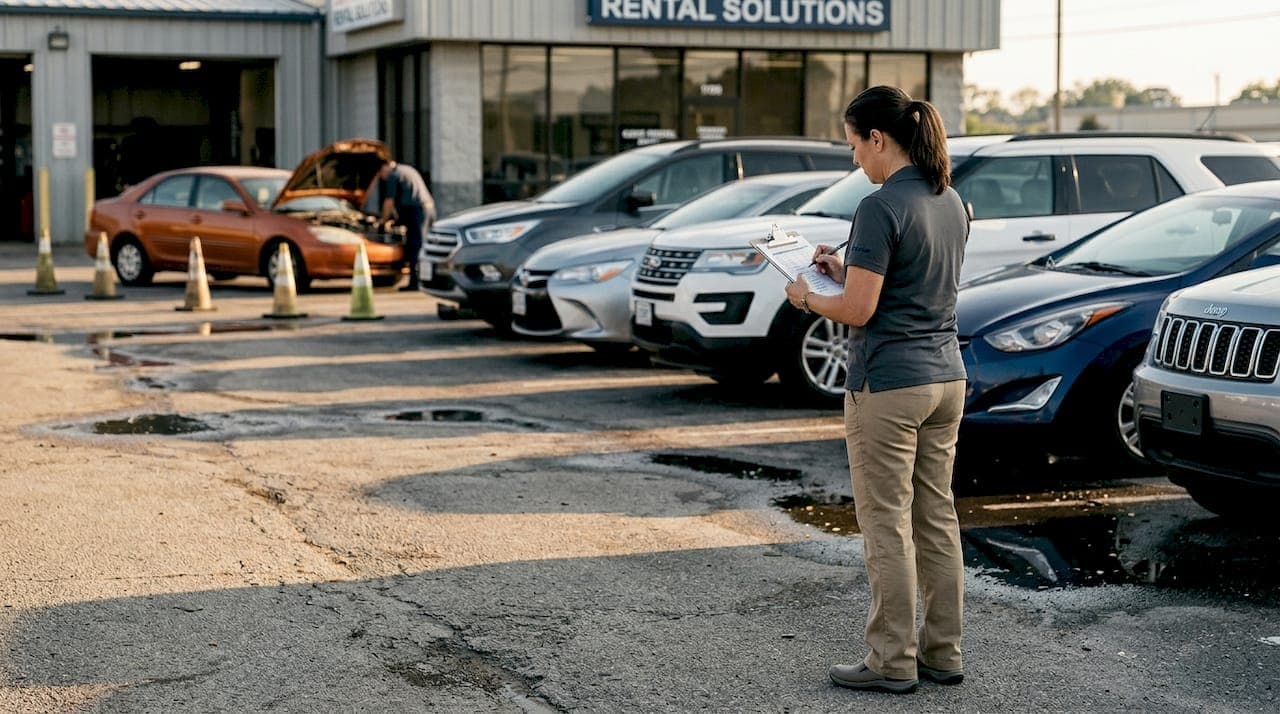
The math is straightforward: divide the number of rented vehicle days by the total available vehicle days, then multiply by 100. A fleet of 20 cars rented for an average of 15 days per month produces 75% utilization. The fleet utilization target of 70 to 85% balances revenue and availability, with benchmarks showing 60 to 80% or 216 to 288 rental days per vehicle annually as healthy performance.
But utilization alone does not tell the full story. The composition of your fleet matters just as much. A shift toward higher average daily rate (ADR) vehicles improves margins significantly. Shifting fleet mix to SUVs and luxury vehicles improves margins by 15 to 20%, while economy cars yield lower profitability per unit.
| Vehicle type | Avg. daily rate | Utilization target | Margin contribution |
|---|
| Economy | Low | 75-85% | Lower |
| SUV | Medium-high | 70-80% | Higher |
| Luxury | High | 60-70% | Highest per unit |
To optimize your fleet mix and utilization, follow these steps:
- Analyze demand data by vehicle category, season, and booking channel over the last 12 months
- Adjust fleet composition by gradually replacing low-margin economy units with higher-ADR categories where demand supports it
- Track utilization KPIs weekly, not monthly, so you can respond to idle inventory faster
- Review acquisition decisions using forward-looking demand data rather than gut instinct
Pro Tip: Slight overbooking based on historical no-show rates can minimize idle time. Manage it carefully with clear upgrade or partner-referral protocols to avoid customer friction.
For more on this topic, explore fleet utilization best practices, rental fleet optimization examples, and the complete fleet management guide.
Increase ancillary revenue through upselling
Alongside optimizing your core fleet, the next profit lever is boosting revenue per transaction through smart upselling. Ancillary revenue refers to income generated beyond the base rental rate, including items like collision damage waivers, GPS units, child seats, prepaid fuel, and roadside assistance packages.
The appeal here is the margin profile. Ancillary revenue from upsells like insurance, GPS, and child seats adds 10 to 20% to total revenue with low marginal costs. You are not buying more vehicles. You are earning more from the customers you already have.
Here are the highest-impact ancillary products ranked by revenue potential:
- Collision damage waiver (CDW): Highest uptake and margin; most customers want peace of mind
- Prepaid fuel option: Easy to explain, high margin, reduces return-time friction
- GPS navigation: Still popular in markets with inconsistent mobile coverage
- Child safety seats: Lower volume but high margin and strong customer need
- Roadside assistance: Low cost to offer, perceived high value by renters
| Ancillary product | Typical uptake rate | Margin contribution |
|---|
| CDW / insurance | 55-70% | Very high |
| Prepaid fuel | 30-45% | High |
| GPS unit | 15-25% | Medium-high |
| Child seat | 10-20% | High |
| Roadside assistance | 20-35% | High |
Effective upselling does not happen by accident. It requires a structured approach across three channels: the online booking funnel, the counter interaction, and post-booking email sequences. Embed upsell prompts at the checkout step of your booking engine. Train counter staff with simple, benefit-led scripts. Bundle two or three ancillaries into a discounted package to increase average transaction value.
"Counter sales training for upsells, channel management, and demand forecasting enhance revenue without fleet expansion." Rate Highway
For operators running premium inventory, the luxury upselling strategies guide offers additional techniques tailored to high-value customer segments.
Harness automation and data-driven technology
Automating these profit levers multiplies your gains, and here is how technology delivers rapid returns. Car rental software acts as the central nervous system of your operation. It connects reservations, fleet tracking, pricing, payments, and customer data into one system, replacing the manual processes and spreadsheets that slow you down and introduce errors.
The operational impact is substantial. Car rental software automates bookings, fleet tracking, and dynamic pricing, reducing admin costs by 80% and boosting utilization by 25 to 40%. That is not a marginal improvement. It fundamentally changes how much time your team spends on low-value tasks versus revenue-generating activities.
Key benefits of automation for rental operators include:
- Fewer booking errors through real-time availability and conflict-free reservation management
- Better demand forecasting using historical data to anticipate peak periods and adjust pricing proactively
- Faster payment processing with integrated payment gateways reducing cash handling and reconciliation time
- Improved customer experience through automated confirmations, reminders, and digital contracts
- Actionable reporting that surfaces utilization, revenue, and margin data without manual spreadsheet work
Real-world results confirm the value. Russmann's data-driven transformation increased fleet utilization by 3%, achieved 95% demand forecast accuracy, and cut idle and transfer costs significantly. Those gains compound over time.
Pro Tip: Start with the integrations that address your biggest pain points first, whether that is online booking, GPS tracking, or payment processing. A phased rollout reduces staff resistance and makes adoption smoother. Explore software-driven profit growth and rental software use cases to identify where automation fits your operation.
Our perspective: Why a balanced tech-plus-training approach wins
Here is something most technology vendors will not tell you: automation is only as good as the processes it replaces. We have seen operators implement sophisticated pricing engines and reservation platforms, only to see modest gains because their counter staff still defaulted to manual overrides and their managers did not trust the data dashboards.
Technology accelerates what is already working. It does not fix a broken sales culture or compensate for undertrained staff. The businesses achieving the strongest margin growth in 2026 are those that invest in both directions simultaneously. They roll out software-driven profit tools while running parallel training programs on upselling, customer communication, and data interpretation.
For SMEs, this balance is especially important. You do not have the luxury of dedicated revenue management teams. Your front-line staff are your revenue managers. Equip them with the right tools and the skills to use them, and the results will outpace any technology-only investment. Automate the routine. Train for the human moments that close the sale.
Unlock your car rental profit potential with Nomora
Ready to turn strategic insights into measurable profit? Nomora is built specifically for car rental businesses like yours, bringing together real-time pricing, automated reservations, fleet management, and reporting in one cloud-based platform.
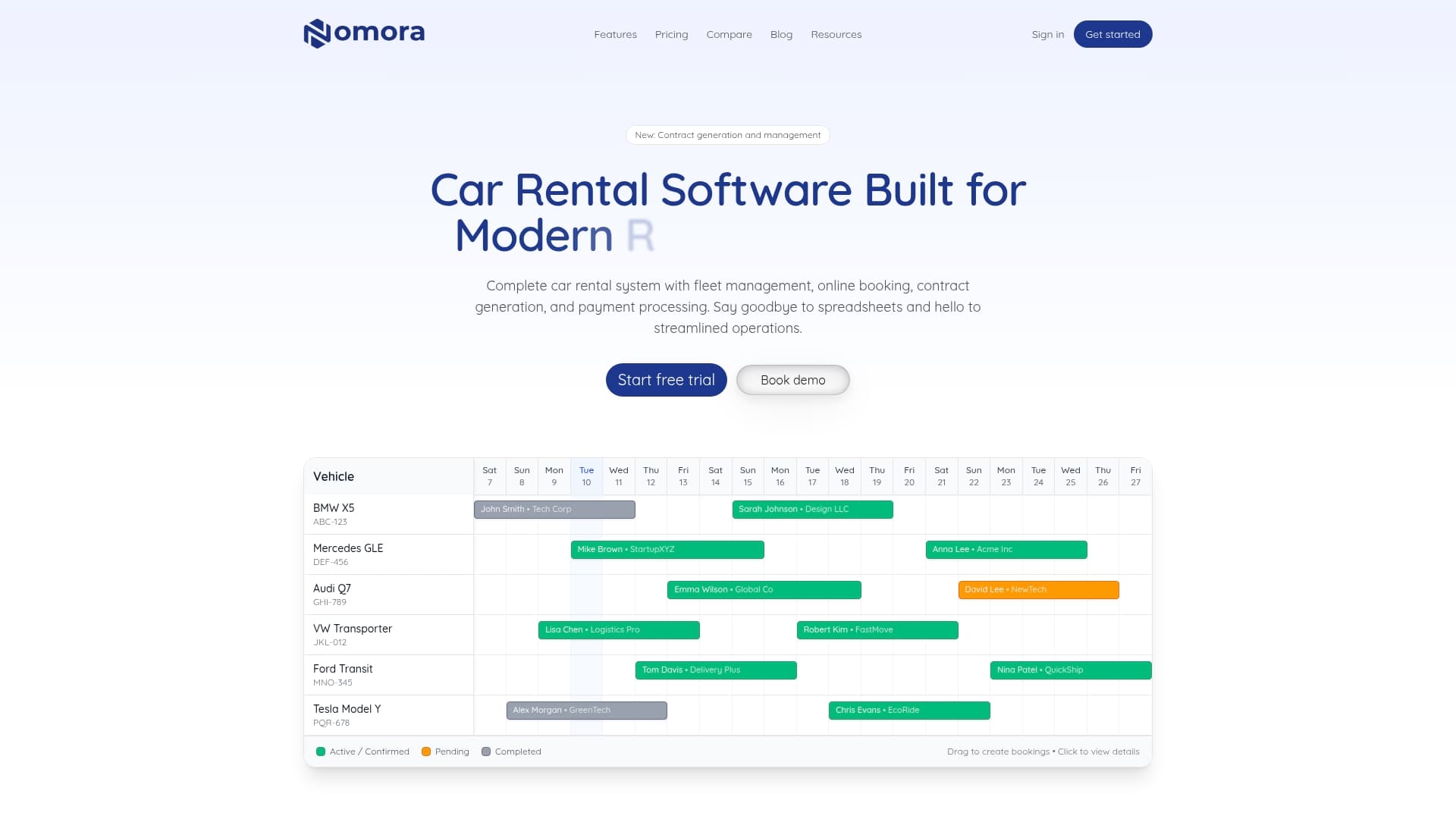
With setup taking as little as 24 to 48 hours, you can start capturing the gains from dynamic pricing, utilization tracking, and upsell automation almost immediately. Explore the software use cases for rentals to see how operators are applying these strategies in practice. Or visit Nomora's car rental management software to schedule a free demo and see the platform in action. Every strategy covered in this article is supported by tools already built into the platform.
Frequently asked questions
What is a good profit margin for a small car rental business?
Most small and medium operators should target EBITDA margins of 15 to 25% and net profit margins of 5 to 15%, with luxury fleet operators often achieving the higher end of that range.
How does dynamic pricing work in car rental?
Dynamic pricing uses real-time data on demand, fleet availability, and competition to adjust rates automatically, with revenue gains of 5 to 30% and utilization improvements to 70 to 85% reported by operators using it.
What are the key levers to increase profitability in car rentals?
The top levers are smart dynamic pricing, maximizing fleet utilization, upselling ancillaries, and leveraging automation, with admin cost reductions of 80% and utilization boosts of 25 to 40% achievable through integrated software.
Can technology alone guarantee higher profitability in car rental?
No. Technology provides the tools, but sustained profit growth requires staff training and process improvements to ensure those tools are used effectively at every customer touchpoint.
Should I focus on expanding fleet size or increasing revenue per vehicle?
Increasing revenue per vehicle through better pricing and upsells is typically more profitable, especially when utilization targets of 70 to 85% have not yet been reached with your existing fleet.
Recommended
Ready to streamline your car rental business?
Book 30 minutes with the founder. We set up everything in this guide on your own vehicles, and migrate you out of Excel for free.