TL;DR:
- Real-time rental data enables businesses to make swift pricing and fleet management decisions by continuously updating operational metrics. It reduces vacancy rates, improves accuracy in strategy, and provides daily KPIs that replace outdated monthly reports. Implementing centralized, automated data pipelines helps rental companies respond faster, scale efficiently, and avoid errors caused by siloed systems.
Real-time rental data is defined as the continuous, automated collection and display of operational metrics — occupancy, pricing, demand, and fleet status — updated within minutes or hours rather than days or weeks. The benefits of real-time rental data for car rental businesses are direct: faster pricing decisions, shorter vacancy windows, and tighter fleet utilization. Tools like Key Data Dashboard, AppFolio, and Nomora give rental managers live visibility into the numbers that drive revenue. This article breaks down the top advantages, with concrete examples and practical guidance you can apply immediately.
1. benefits of real-time rental data for pricing strategy
The single biggest pricing advantage real-time data delivers is the ability to respond to competitor moves and demand shifts the same day they happen. Traditional monthly reports tell you what the market looked like four weeks ago. Real-time analytics process new data continuously, so pricing and marketing adjustments can happen in near real time as occupancy or booking trends shift. That gap between old-school reporting and live feeds is where revenue is won or lost.
Dynamic pricing in car rental depends on three live inputs:
- Current competitor rates in your market segment
- Demand signals such as search volume and booking pace
- Your own fleet availability by vehicle class and location
When those three inputs update automatically, your pricing logic can respond without manual intervention. Nomora's dynamic pricing tools connect fleet availability directly to rate rules, so a sudden spike in SUV demand triggers a rate adjustment before your competitors even notice the shift.
Pro Tip: Set automated rate floor and ceiling rules inside your dashboard so that live pricing adjustments never drop below your cost threshold or spike beyond what your market will bear.
2. filling vehicles faster with live occupancy tracking
Vacancy is the most expensive line item in any rental operation. Every idle day on a vehicle is pure cost with zero return. A well-documented case study from RentViewer shows that a multifamily operator using an AppFolio data warehouse connected to Power BI filled vacant units 50% faster by comparing rents of similar occupied units in real time. The dashboard automatically calculated average rents for comparable units, removing the guesswork from pricing decisions entirely.

The same logic applies directly to car rental fleets. When you can see which vehicle classes are sitting idle and for how long, you can redirect promotions, adjust rates, or shift inventory between locations within hours rather than waiting for a weekly report to confirm what you already suspected.
Key occupancy metrics to track in real time include:
- Days on lot per vehicle class
- Utilization rate by location and day of week
- Booking lead time trends to anticipate demand gaps
Pro Tip: Combine live occupancy data with customer feedback scores by vehicle type. Low utilization plus low satisfaction scores on the same model is a clear signal to retire or reposition that asset.
3. centralizing rental data: why one source of truth matters
Most rental portfolio data is delayed or siloed. Lacking real-time connection between systems introduces decision latency that reduces the usefulness of data in operations. Manual CSV exports from your fleet management system, separate spreadsheets for payments, and a third tool for customer records create three versions of the truth. Errors compound quickly, and by the time someone reconciles the data, the market has already moved.
The solution is a centralized data environment with automated pipelines. Here is how siloed systems compare to an integrated approach:
| Approach | Data Freshness | Error Risk | Decision Speed |
|---|
| Manual CSV exports | Days to weeks old | High | Slow |
| Disconnected software tools | Hours to days old | Medium | Moderate |
| Automated integrated pipelines | Minutes to hours old | Low | Fast |
Centralizing data also requires more than just connecting software. Data normalization and avoiding duplicated records is critical to establishing a reliable source of truth. Simply plugging systems together without consistent data hygiene creates drift, where the same vehicle or booking appears differently across platforms. Nomora's cloud-based architecture addresses this by treating the platform as the central nervous system of your operation, with reservations, fleet status, contracts, and payments all feeding one unified record.
4. daily KPI tracking replaces monthly guesswork
Real-time dashboards offer daily visibility into KPIs like occupancy and collections, greatly shortening reaction times compared to traditional monthly reports. Data in these dashboards is at most 24 hours old, aggregated from multiple operational systems. That shift from monthly to daily visibility is not incremental. It changes how you manage cash, collections, and payables entirely.
James Moore & Company identifies the following as the core KPIs that benefit most from daily dashboard updates:
- Cash position and incoming payments
- Accounts receivable aging by customer
- Fleet utilization rate by vehicle class
- Booking conversion rate from inquiry to confirmed reservation
When investors or stakeholders ask for a performance update, you pull the dashboard instead of assembling a report. That transparency builds confidence and reduces the administrative back-and-forth that consumes hours every week. For rental businesses managing multiple locations, this visibility is the difference between reactive management and proactive control.
5. shortening the feedback loop between data and action
The real competitive advantage of real-time rental trends is not just seeing data quickly. It is translating those insights into actions that respond to short booking windows and volatile demand before the opportunity closes. Booking windows in car rental can be as short as 24–48 hours for leisure travelers. A pricing or availability change that takes three days to implement because of manual reporting cycles misses the window entirely.
This feedback loop compression shows up in measurable ways. Teams that act on daily data rather than weekly or monthly reports can respond to demand shocks, local events, or competitor promotions within the same business day. That speed is a structural advantage that compounds over time, because every fast response builds a more accurate picture of what your market actually does versus what historical averages suggest it should do.
Nomora's real-time fleet tracking connects GPS data, booking status, and contract information in one view, so your team sees the full picture without switching between systems.
6. scaling rental operations with confidence
Scaling a rental business without reliable data is a high-risk exercise. Adding vehicles, locations, or staff based on gut feel leads to over-investment in low-demand segments and under-investment where demand is strongest. Real-time rental market analytics remove that uncertainty by showing you exactly where utilization is high, where pricing has room to grow, and where idle assets are dragging down returns.
The benefits of centralized rental data become especially clear at scale. A single-location operator can manage gaps manually. A five-location fleet with 200 vehicles cannot. Automated data flows mean that a manager in one city sees the same live picture as a regional director reviewing the full network. Decisions about vehicle transfers, promotional pricing, and staffing levels are grounded in current facts rather than last month's summary.
Nomora supports this scaling need through its cloud-based SaaS architecture, which handles everything from small independent operators to large franchise networks without requiring additional IT infrastructure. You can explore how this works across different business types on the Nomora use cases page.
7. common pitfalls when implementing live data solutions
Real-time does not mean perfect. Actionability is prioritized over instantaneous accuracy in most well-designed rental analytics systems. Understanding this distinction prevents two common mistakes: over-trusting a single data point and dismissing a system because it is not updating every second.
The most frequent implementation errors rental managers make include:
- Relying on scraped data feeds instead of direct source integrations. Scraped rental data is intermittent and cannot track market changes continuously, causing gaps in pricing and underwriting workflows.
- Skipping data normalization after connecting systems, which creates duplicate records and conflicting metrics across locations.
- Ignoring refresh cadence settings, which determine how often your dashboard pulls new data. A dashboard set to refresh weekly is not a real-time tool regardless of the software behind it.
Batch processing and caching are standard in real-time rental analytics to maintain system stability. Scheduled batch updates reduce computing costs and keep the user interface responsive, while still delivering near-real-time operational visibility.
Pro Tip: Ask any data provider whether their feed is a direct API integration or a scrape. Direct feeds update as changes happen at the source. Scrapes update on a schedule and miss changes between cycles.
Key takeaways
Real-time rental data delivers its greatest value when automated pipelines, centralized records, and daily KPI tracking replace manual reporting and siloed systems.
| Point | Details |
|---|
| Pricing speed is a revenue driver | Live competitor and demand data lets you adjust rates the same day market conditions shift. |
| Vacancy shrinks with live occupancy alerts | Operators using real-time dashboards like AppFolio with Power BI filled units 50% faster. |
| Centralization prevents data drift | Automated pipelines with normalized records create one reliable source of truth across locations. |
| Daily KPIs replace monthly guesswork | Dashboards with data no older than 24 hours give managers control over cash, collections, and utilization. |
| Real-time means actionably fast, not perfect | Prioritize direct API feeds over scraped data and set refresh cadences that match your decision cycle. |
The feedback loop is the whole game
After working closely with rental operations data for years, the pattern I keep seeing is this: the managers who win are not the ones with the most data. They are the ones with the shortest gap between a market signal and a response.
Monthly reporting is not just slow. It trains your team to think in monthly cycles, which means demand spikes, competitor promotions, and fleet imbalances go unaddressed for weeks. When you shift to daily or near-real-time visibility, the entire culture of the operation changes. Decisions that used to require a meeting and a spreadsheet get made in minutes.
My honest advice: do not implement a real-time data tool and then keep your weekly review cadence. The tool will underperform your expectations because you are still operating on the old rhythm. Rebuild the review process around the data frequency you now have. That alignment between data speed and decision speed is where the real gains appear.
AI and automation will accelerate this further. Predictive demand models already exist in platforms like Nomora's demand forecasting tools, and they will only get sharper as more operational data feeds into them. The rental businesses that build strong data foundations now will have a compounding advantage as those models mature.
— Dizzy
How Nomora puts real-time data to work for your fleet
Nomora is built around the principle that every rental decision should be grounded in current data, not yesterday's spreadsheet. Its dashboards give you live visibility into bookings, fleet status, contracts, and payments from a single cloud-based interface. Automated conflict detection prevents double bookings before they happen, and GPS integrations keep your fleet location data current at all times.
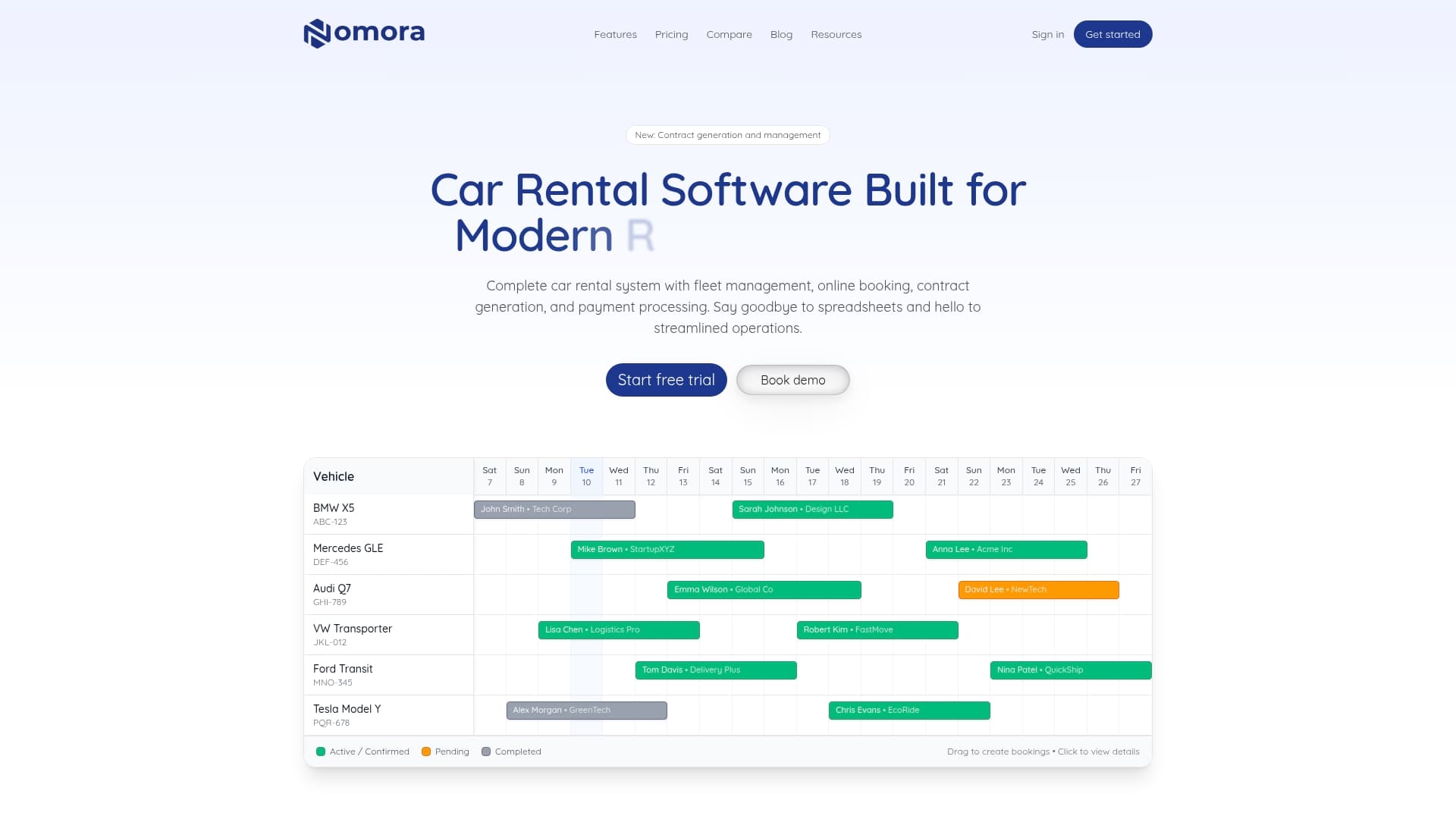
Whether you manage 10 vehicles or 500, Nomora's integrated platform connects the data points that matter most: utilization rates, booking pace, payment status, and contract compliance. The result is a rental operation that responds to market changes in hours, not weeks. See how Nomora works across different rental business types on the use cases page and find the setup that fits your operation.
FAQ
What are the main benefits of real-time rental data?
Real-time rental data reduces vacancy duration, improves pricing accuracy, and gives managers daily visibility into fleet utilization and cash flow. These advantages compound over time as faster decisions consistently outperform those based on delayed monthly reports.
How does real-time data improve rental pricing strategies?
Live feeds from competitor listings and booking platforms let managers adjust rates the same day demand shifts, rather than waiting for periodic market reports. Tools like Key Data Dashboard and Nomora automate this process by connecting market data directly to rate rules.
Is real-time data the same as perfectly accurate data?
No. Real-time in rental analytics means the lag between a market change and your visibility into it is measured in hours, not weeks. Actionability is the goal, and most well-designed systems use batch caching to balance speed with system stability.
Why does centralizing rental data matter for fleet managers?
Siloed systems introduce errors and delays that reduce the value of any data you collect. A centralized platform with automated pipelines and normalized records creates one consistent source of truth, which is critical for accurate pricing, utilization tracking, and investor reporting.
Cloud-based platforms like Nomora reduce setup time to 24–48 hours for most rental operations. The key requirement is choosing a provider that uses direct API integrations rather than scraped data feeds, which deliver more reliable and continuous data updates.
Recommended
Ready to streamline your car rental business?
Book 30 minutes with the founder. We set up everything in this guide on your own vehicles, and migrate you out of Excel for free.