GPS tracking's biggest advantage is simple: it turns guesswork into visibility. You know where a vehicle is, how it's being driven, and whether it needs service, in real time instead of after the fact. That single shift drives every other benefit fleets and individuals report.
According to Gps, GPS positioning already underpins safety and infrastructure systems across dozens of industries, and platforms like Nomora build on that same signal to run entire rental and fleet operations. The core advantages break down into a short list:
- Safety through driver behavior monitoring and coaching
- Fuel and cost savings from route optimization and idle reduction
- Faster dispatch and less administrative work
- Theft recovery through real-time location and geofencing
- Preventive maintenance alerts that cut downtime
- Compliance support for ELD, HOS, and mileage reporting
- Insurance savings tied to verified safe-driving data
Key Takeaways
GPS tracking's core value comes from converting location and behavior data into faster decisions across safety, cost control, dispatch, and asset recovery.
| Point | Details |
|---|
| Safety improves through visibility | Driver scorecards turn harsh-braking and speeding events into coaching opportunities, not just penalties. |
| Costs drop across multiple channels | Route optimization, idle reduction, and condition-based maintenance compound into measurable ROI within 60 to 90 days. |
| Dispatch gets faster | Real-time location cuts status calls and creates automated proof-of-service records for billing. |
| Theft recovery improves sharply | Geofence and no-power alerts speed recovery and deter theft before it happens. |
| Nomora integrates GPS into rental workflows | Nomora's platform bundles GPS-enabled fleet visibility with reservations, contracts, and maintenance alerts in one system. |
Table of Contents
Advantages of GPS Tracking for Safety and Compliance
GPS tracking improves safety by making driver behavior visible, and that visibility is what supports regulatory recordkeeping at the same time. Harsh braking, speeding, and rapid acceleration all show up as events a fleet manager can review, and driver scorecards turn those events into a pattern instead of a one-off complaint.
Continuous tracking also changes behavior on its own. Drivers who know their habits are recorded tend to drive more cautiously, which is one of the quieter but more consistent effects Linxup documents across fleet deployments. On the compliance side, GPS-enabled platforms support:
- Digital vehicle inspection reports (DVIRs) instead of paper checklists
- Automated ELD and HOS recordkeeping
- Mileage tracking for IFTA reporting across jurisdictions
Pro Tip: Use scorecards for coaching conversations first, not just write-ups. A driver who understands why an event triggered an alert corrects the behavior faster than one who only sees a penalty.
How GPS Tracking Reduces Operating Costs
GPS tracking reduces controllable operating costs, and fuel is usually the biggest line item it touches. Route optimization cuts unnecessary miles, idle-time reporting flags trucks burning fuel while parked, and behavior data highlights the aggressive driving that quietly inflates a fuel bill every month, a pattern Linxup's fleet research calls one of the largest controllable costs after payroll.
Maintenance savings work similarly. Integrating GPS with OBD-II diagnostics lets managers trigger service based on engine codes or actual usage instead of a calendar guess, catching small problems before they become costly breakdowns. Cost-saving channels typically include:
- Route optimization to cut unnecessary mileage
- Idle-time reduction alerts
- Aggressive-driving flags tied to fuel waste
- Condition-based maintenance scheduling
ROI often compounds across these streams rather than coming from one big win. Fuel savings, insurance discounts, and fewer major repairs stack together, and research on fleet tracking ROI suggests measurable payback within 60 to 90 days when paired with driver coaching. Nomora's guide to cost-saving strategies for fleet managers breaks down the routing and idle-reduction tactics that get fleets there.
Faster Dispatch and Lower Administrative Costs
Real-time location data means faster, smarter dispatch decisions. Instead of calling a driver to ask "where are you," a dispatcher looks at a live map and assigns the nearest available vehicle. That single change removes a surprising amount of friction from daily operations.
The administrative side benefits just as much. Trip logs with timestamps create auditable proof of service that resolves billing disputes without a phone call. A field service company uses this to confirm a technician arrived on time; a car rental operator uses it to prove a vehicle was picked up and returned exactly when the contract says it was, an example Nomora's real-time tracking guide covers in more detail.
Pro Tip: Pull utilization reports monthly, not just when something goes wrong. Idle vehicles and underused routes are easier to fix when you catch the pattern early instead of after a slow quarter.
GPS Tracking for Theft Recovery and Asset Protection
GPS tracking significantly improves the odds of recovering a stolen vehicle, and it deters theft in the first place simply by being visible on a windshield or dashboard. Real-time location data means a stolen vehicle can often be found within minutes rather than days, and geofence alerts flag the moment a vehicle leaves an approved zone.
Tamper detection adds another layer. No-power alerts and unexpected movement notifications trigger even when a thief attempts to disable a vehicle's electrical system. The same technology works on assets beyond vehicles, trailers, generators, and heavy equipment all carry standalone trackers now, which Nomora's asset-tracking guide for rental operators covers for businesses managing mixed fleets.
- Geofence breach alerts sent instantly to a manager's phone
- Movement-after-hours notifications
- No-power or tamper alerts on parked vehicles
- Standalone trackers for trailers and portable equipment
Pro Tip: File a police report the moment you get a geofence alert, and have your tracking data ready to hand over. Recovery teams move faster when they get exact coordinates instead of a last-known address from memory.
Advanced Telematics and Industry-Specific Applications
Basic location tracking is only the starting point. Advanced telematics layers, geofencing, driver scorecards, AI dash cams, and trailer tracking, extend that foundation into safety automation and operational analytics.
- Geofencing automates arrival and departure logging for billing accuracy and site control
- Driver scorecards convert raw event data into coaching material
- AI dash cams capture context around harsh-braking or collision events
- Trailer and equipment tracking extends visibility beyond powered vehicles
- EV and charging integration tracks range and charging status for electric fleets
A construction company uses geofencing to confirm equipment stayed on-site overnight. A delivery logistics operator uses dispatch integration to reroute drivers around traffic in real time. Most of these features connect directly into maintenance systems, ELD platforms, fuel-card programs, and dispatch software, so the data doesn't sit in a separate silo.
How GPS Tracking Actually Works
Active trackers transmit live data over cellular networks; passive devices simply log history to review later. That distinction determines whether a system supports real-time dispatch and recovery or only after-the-fact reporting.
A typical active setup includes:
- GPS positioning hardware (satellite based)
- A device installed via OBD-II port or hardwired connection
- Cellular uplink (4G or 5G) sending data to the cloud
- A cloud dashboard displaying live maps and reports
Reporting frequency involves trade-offs. More frequent updates drain battery faster on standalone units but give dispatchers near real-time visibility, which matters far more for theft recovery and live dispatch than for occasional trip history review.
Insurance Savings and Realistic ROI Timelines
Insurers often lower premiums when telematics data proves consistently safe driving, and that discount adds another line to the ROI equation alongside fuel and maintenance savings. The math tends to compound rather than deliver one big number upfront.
A conservative expectation, based on fleet tracking ROI research, is measurable payback within 60 to 90 days when a fleet pairs GPS data with active driver coaching and a maintenance workflow, not just passive monitoring. GPS.gov's overview of GPS's role across industries reinforces why insurers and safety regulators treat this positioning data as reliable enough to base decisions on.
- Fuel savings from route and idle optimization
- Insurance discounts tied to verified safe-driving scores
- Lower repair costs from condition-based maintenance
- Fewer claims disputes thanks to auditable trip records
GPS Tracking Advantages Beyond Fleets: Personal Use Cases
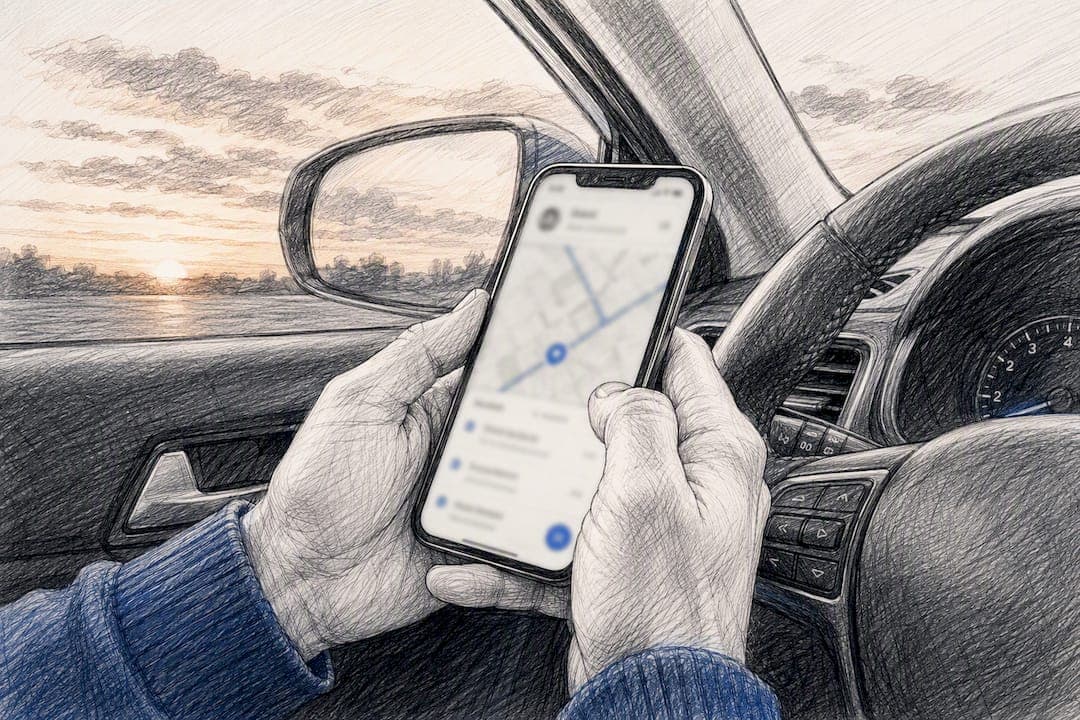
The advantages of GPS tracking aren't limited to commercial fleets. Individuals use the same underlying technology for a narrower but equally practical set of goals: knowing where family members are, recovering stolen belongings, and keeping tabs on a teen driver's habits.

Family safety is the most common personal application. A parent tracking a teen's first solo drives isn't just checking location, they're watching for the same harsh-braking and speeding events that fleet managers monitor, just at a much smaller scale. Wearable and phone-based trackers extend this to elderly family members who want independence without leaving loved ones in the dark during a medical event or a wrong turn on an unfamiliar route.
Personal belongings benefit from the same tamper and movement alerts that protect commercial trailers. A small tracker tucked into a suitcase, a bike frame, or a boat trailer sends the same no-power and geofence alerts a fleet manager relies on, just scaled down to one item instead of two hundred vehicles.
The privacy side deserves honest treatment. Personal trackers collect location history, and that data needs the same protections commercial platforms apply: encrypted transmission, restricted account access, and clear rules about who can view historical trips. Reputable consumer trackers disclose data retention policies and let owners delete history, details worth checking before buying, since not every budget device handles this the same way.
Author Perspective: When GPS Tracking Delivers the Most Value
GPS tracking pays off fastest for small fleets with high vehicle utilization and rental operators who need proof of service on every handoff. Nomora's integrations put that visibility directly inside daily rental and fleet workflows.
Get GPS-Enabled Fleet Visibility Built Into Your Rental Software
Running a rental fleet without integrated GPS data means chasing paper logs to settle a billing dispute or guessing when a vehicle was actually returned. Nomora folds GPS tracking directly into reservations, contracts, and fleet management, so location data isn't a separate system you have to reconcile by hand.
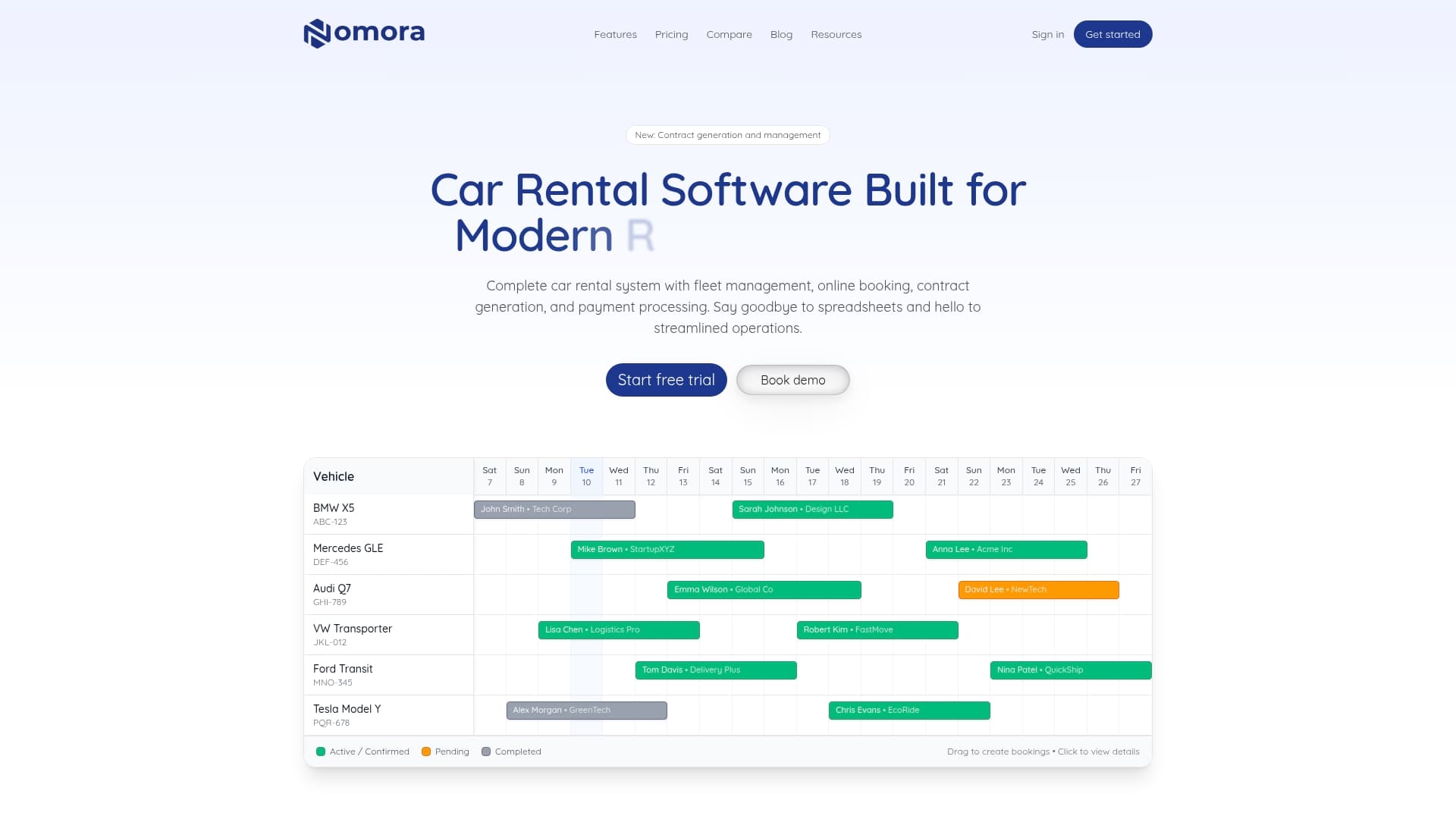
That integration shows up in three practical ways:
- Real-time vehicle visibility across your entire fleet from one dashboard
- Automated proof-of-service records tied to each rental contract
- Maintenance alerts that flag service needs before they become downtime
If you manage a rental fleet and want reservations, contracts, and GPS data working from the same system, check out Nomora's car rental software to see how the integration fits your fleet size.
Sources
Recommended
Ready to streamline your car rental business?
Book 30 minutes with the founder. We set up everything in this guide on your own vehicles, and migrate you out of Excel for free.