Key takeaways
| Point | Details |
|---|
| Automated booking management | Rental reservation systems handle real-time availability checks, payment processing, and inventory updates to eliminate manual errors. |
| Revenue optimization tools | Dynamic pricing and concurrency controls prevent double bookings while maximizing fleet utilization and income potential. |
| Edge case handling | Advanced systems manage cancellations, late returns, and overbooking scenarios to maintain customer satisfaction and operational flow. |
| Measurable business impact | Data-driven platforms increase fleet utilization by 3-7% and reduce operational costs through automation and demand forecasting. |
| Tailored solutions available | Small to medium rental businesses benefit from integrated systems offering payment gateways, OTA connections, and customizable features. |
What is a rental reservation system? Core features and benefits
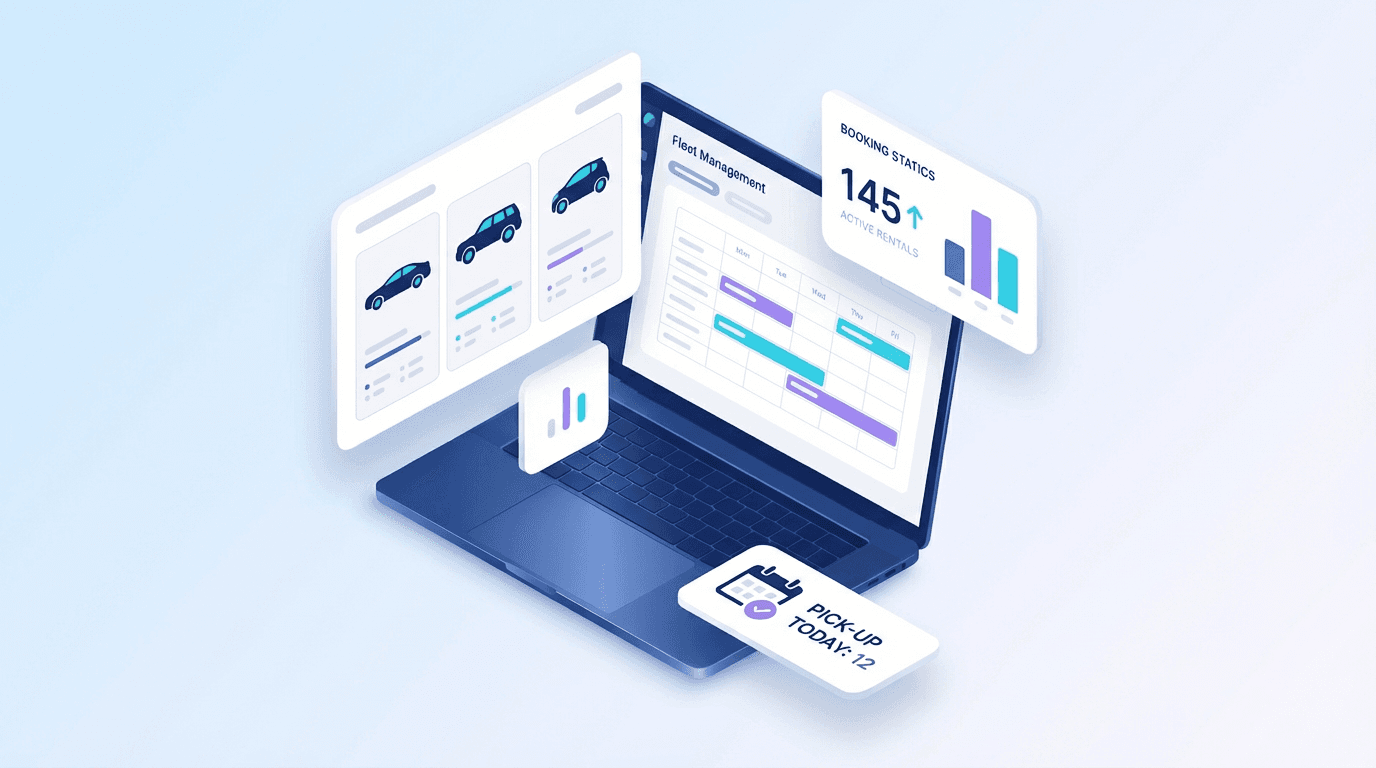
A rental reservation system is a digital platform managing vehicle bookings for rental companies, featuring real-time availability checks, online booking interfaces, secure payments, and backend inventory management. These platforms replace manual processes with automated workflows that handle everything from initial customer inquiry to vehicle return.
The system maintains a centralized vehicle inventory database that updates instantly when bookings occur. Real-time availability checks query this database before confirming reservations, ensuring no two customers can book the same vehicle for overlapping periods. This eliminates the double booking nightmare that plagues businesses using spreadsheets or paper logs.
Online interfaces let customers browse available vehicles, select rental periods, and complete bookings without staff intervention. Payment processing integrates securely within the platform, handling credit cards, digital wallets, and deposits automatically. Backend tools give you complete visibility into fleet status, showing which vehicles are rented, available, or undergoing maintenance at any moment.
Core system capabilities include:
- Automated conflict detection preventing simultaneous bookings
- Customer self-service portals reducing phone calls and emails
- Integrated payment gateways securing transactions and deposits
- Fleet tracking dashboards showing real-time vehicle status
- Contract generation creating legally compliant rental agreements
- Reporting tools analyzing utilization rates and revenue trends
These features dramatically improve operational efficiency by eliminating manual data entry and reducing human error. Staff spend less time managing spreadsheets and more time serving customers. Booking accuracy increases, customer satisfaction improves, and your business gains the scalability to handle growth without proportionally increasing administrative overhead.
Exploring rental software use cases reveals how different business models benefit from tailored system configurations.
Pro Tip: Prioritize systems offering mobile access so you can manage bookings and check fleet status from anywhere, especially valuable when handling customer inquiries outside office hours.
How rental reservation systems handle pricing and concurrency
Dynamic pricing adapts rates to market conditions using Strategy design patterns that switch between pricing algorithms based on demand signals, seasonality, and competitive positioning. Your system can implement multiple pricing models simultaneously, selecting the optimal rate for each booking request.
Pricing strategies include:
- Flat rate pricing maintaining consistent daily or weekly rates regardless of demand fluctuations
- Demand-based pricing increasing rates during peak periods like holidays and weekends when vehicle scarcity drives value
- Seasonal adjustments reflecting predictable demand patterns throughout the year
- Early booking discounts incentivizing advance reservations that improve cash flow and planning
- Last-minute pricing capturing revenue from otherwise idle vehicles approaching rental dates
Overbooking uses historical no-show data with probabilistic thresholds to accept more reservations than available vehicles, calculated to maximize utilization without exceeding capacity. The system analyzes cancellation patterns and no-show rates, determining safe overbooking percentages that increase revenue while maintaining service reliability.
Concurrency controls prevent duplicate bookings when multiple customers attempt reserving the same vehicle simultaneously. Database locking mechanisms like SELECT FOR UPDATE create exclusive locks on vehicle records during booking transactions, ensuring only one reservation completes successfully. Unique constraints at the database level provide a final safety net, rejecting any transaction that would create conflicting reservations.
Distributed locks using Redis Lua scripts handle high-traffic scenarios where thousands of users browse availability simultaneously. These techniques coordinate booking attempts across multiple application servers, preventing race conditions that could otherwise slip through standard database locks.
| Concurrency Method | Response Time | Scalability | Complexity | Best For |
|---|
| Pessimistic Locking | Slower | Moderate | Low | Small to medium traffic |
| Optimistic Locking | Faster | High | Moderate | High read, low conflict |
| Distributed Locks | Variable | Very High | High | Multi-server deployments |
| Queue Systems | Slower | Very High | High | Extreme peak demand |
Implementing these controls requires careful balance. Overly aggressive locking reduces system responsiveness, while insufficient protection risks double bookings. Modern systems combine multiple techniques, using lighter controls for browsing and stricter locks for final booking confirmation.
Understanding how to prevent double bookings through proper concurrency design protects your reputation and revenue. Advanced pricing and demand forecasting capabilities turn your reservation system into a profit optimization engine.
Pro Tip: Monitor your system's concurrency performance during peak booking periods to identify bottlenecks before they cause customer-facing issues or lost reservations.
Handling edge cases and operational challenges in vehicle rentals
Buffer times accommodate delayed vehicle returns by building flexibility into scheduling. Your system can automatically insert 30 to 60-minute gaps between consecutive bookings for the same vehicle, allowing time for late returns, cleaning, and inspection without disrupting the next customer's reservation. This prevents the domino effect where one delay cascades into multiple service failures.
Cancellation policies enforced by the system reduce revenue loss through automated refund calculations based on notice period and booking terms. The platform applies your defined rules consistently, processing partial refunds for early cancellations and retaining deposits for last-minute changes. This automation eliminates staff judgment calls and ensures fair, predictable treatment for all customers.

Overbooking resolutions require proactive management when actual demand exceeds available vehicles. Your system should flag potential shortages early, giving you time to arrange solutions. Compensation strategies include offering free upgrades to premium vehicle classes, providing discounts on future rentals, or coordinating vehicle relocation from other locations. These approaches maintain customer satisfaction while protecting your business reputation.
High-contention booking periods like holiday weekends create concurrent booking attempts that stress system capacity. Locking mechanisms serialize these requests, processing them sequentially to prevent conflicts. Queuing systems can smooth demand spikes by holding requests in an orderly line, providing customers with wait time estimates rather than system errors.
Edge case scenarios your system must handle:
- Vehicle breakdowns during active rentals requiring immediate replacement coordination
- Payment failures after booking confirmation necessitating automated retry logic and customer notification
- Conflicting maintenance schedules that temporarily reduce fleet availability
- Multi-day rentals spanning rate changes or promotional period boundaries
- Customer modifications to existing bookings affecting availability calculations
- Time zone complications for businesses operating across regions
Handling these complexities elevates operational efficiency by reducing emergency interventions and manual workarounds. Staff focus on genuine exceptions rather than routine complications that automated systems resolve independently. This professionalism distinguishes your business from competitors still struggling with basic booking management.
Robust double booking prevention techniques form the foundation for handling these operational challenges smoothly and maintaining customer trust.
Practical benefits and business impact of rental reservation systems
Data-driven rental systems boost fleet utilization by 3-7% through optimized scheduling and dynamic pricing that fills gaps in your booking calendar. Russmann car rental achieved 3% utilization increase and 95% demand forecast accuracy after digital transformation, while automating 90% of their distribution processes. These improvements directly translate to revenue growth without expanding your vehicle inventory.
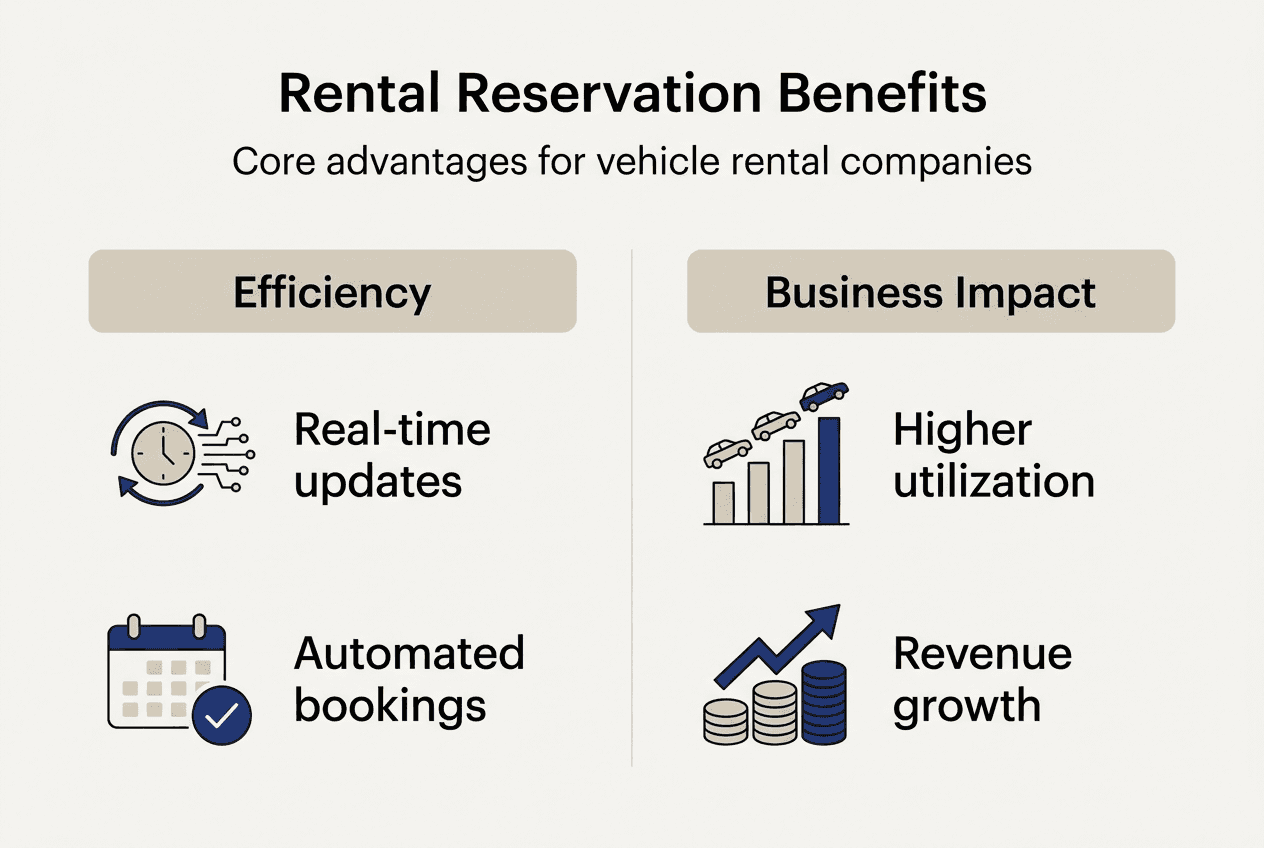
Europcar demonstrated even stronger results, generating 7.1% year-over-year revenue growth through dynamic pricing and revenue management capabilities, exceeding their target by five times. Fleet operations reported 35% cost reduction alongside 98.2% vehicle availability, proving that reservation systems deliver both revenue increases and expense decreases simultaneously.
| Metric | Before System | After System | Improvement |
|---|
| Fleet Utilization | 68% | 71-75% | 3-7% increase |
| Forecast Accuracy | 72% | 95% | 23% improvement |
| Distribution Automation | 15% | 90% | 75% increase |
| Operational Costs | Baseline | Reduced | 35% decrease |
| Vehicle Availability | 94% | 98.2% | 4.2% improvement |
Automation reduces manual work by eliminating repetitive data entry, phone tag with customers, and spreadsheet reconciliation. Staff productivity increases as they handle strategic tasks rather than administrative busy work. Booking mistakes decrease dramatically since the system enforces business rules consistently without fatigue or distraction.
Improved vehicle availability creates better customer experiences. Real-time inventory visibility means you never promise vehicles you cannot deliver, building trust and encouraging repeat business. Customers appreciate the convenience of online booking and instant confirmation, reducing friction in the rental process.
Measurable advantages include:
- Reduced no-show rates through automated reminders and confirmations
- Faster booking processing enabling higher transaction volumes
- Better cash flow from integrated payment collection and deposits
- Data insights revealing profitable vehicle types and rental patterns
- Scalability supporting business growth without proportional cost increases
Selecting the right system requires evaluating dynamic pricing capabilities, concurrency controls preventing double bookings, and integration options connecting payment gateways, GPS tracking, and online travel agencies. Prioritize platforms offering customization for your specific business model rather than rigid one-size-fits-all solutions.
"Digital transformation through reservation systems delivers compound benefits. Initial gains in efficiency and accuracy create foundation for advanced capabilities like predictive maintenance and dynamic fleet composition, multiplying returns over time."
Pro Tip: Analyze your booking and utilization data monthly to identify patterns in customer behavior and vehicle demand, then adjust pricing rules and inventory allocation to capture additional revenue opportunities the system reveals.
Understanding how software benefits boost profits helps justify investment and set realistic expectations for return timelines.
Explore rental reservation solutions tailored for your business
Choosing the right reservation platform determines your operational efficiency and growth potential. Nomora provides specialized software solutions for diverse rental business sizes, including medium fleet operations requiring balance between features and complexity. Their platforms incorporate real-time availability, dynamic pricing algorithms, and concurrency controls that prevent booking conflicts while maximizing revenue.
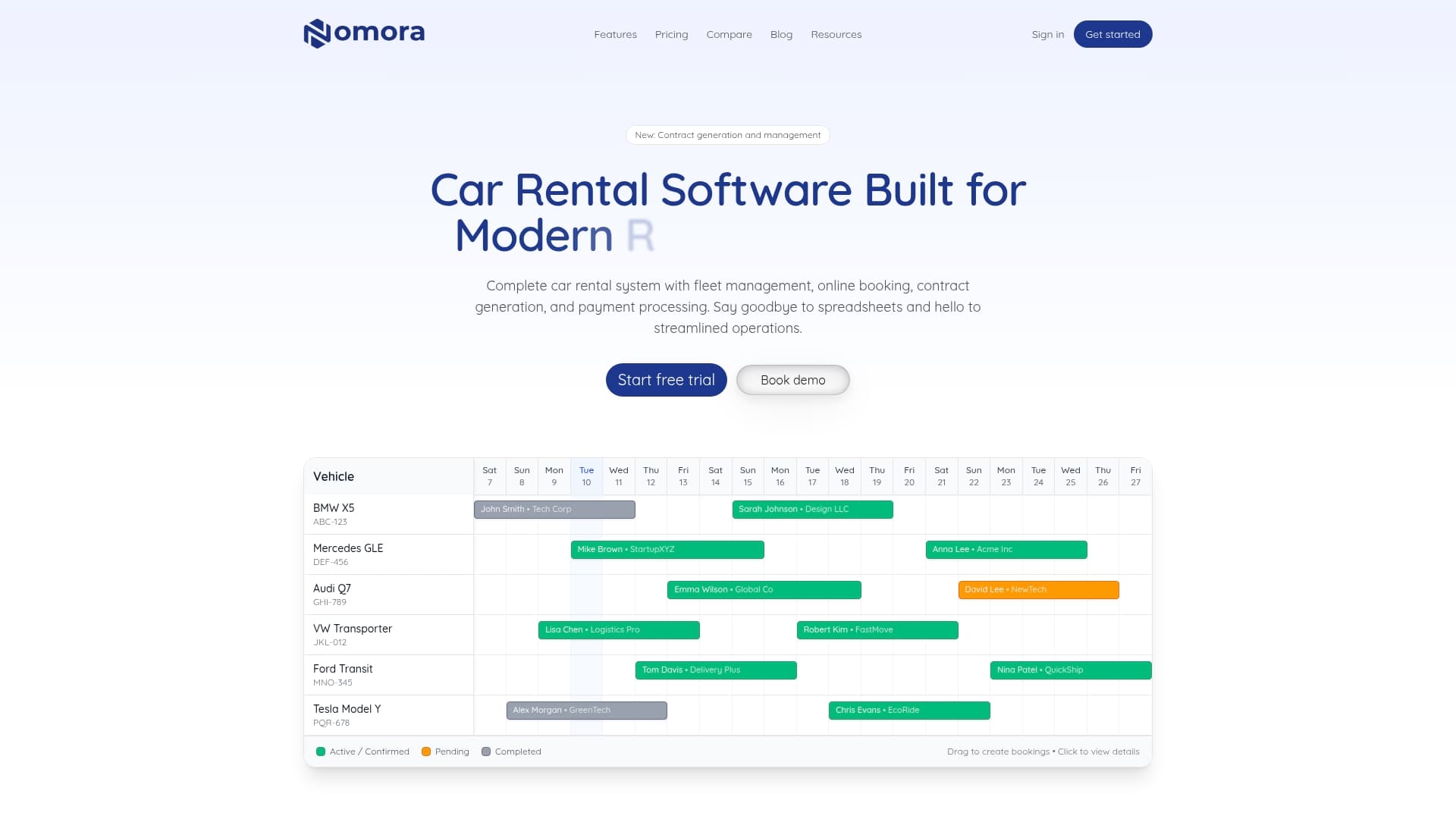
Exploring rental software use cases reveals how different business models configure systems to match their specific operational needs and customer expectations. Whether you operate a local fleet or multi-location business, tailored solutions address your unique challenges. Access proven tools and strategies to prevent double bookings while improving fleet utilization, transforming your reservation process from administrative burden into competitive advantage.
Frequently Asked Questions
How does a rental reservation system differ from general booking software?
Rental reservation systems specialize in vehicle-specific features like mileage tracking, maintenance scheduling, and fleet rotation that general booking software lacks. They handle complex rental scenarios including multi-day reservations, vehicle class upgrades, and location-based availability that generic platforms cannot manage effectively.
What are typical costs and ROI timelines for small to medium rental businesses?
Cloud-based rental systems typically cost $100 to $500 monthly depending on fleet size and features, with setup fees ranging from $500 to $2,000. Most businesses achieve positive ROI within 6 to 12 months through reduced administrative labor, fewer booking errors, and improved utilization rates that offset subscription costs.
Can rental reservation systems integrate with payment gateways and OTAs?
Modern platforms offer extensive integration capabilities connecting Stripe, PayPal, and other payment processors for seamless transaction handling. OTA integrations synchronize inventory with platforms like Booking.com and Expedia, automatically updating availability across all channels to prevent conflicts and expand your market reach.
How do these systems handle cancellations and no-shows?
Automated cancellation policies apply refund rules based on notice period, processing partial refunds or retaining deposits according to your terms. No-show tracking flags patterns in customer behavior, enabling overbooking strategies and waitlist management that recover revenue from unreliable reservations.
What essential features should small to medium vehicle rental companies prioritize?
Prioritize real-time availability checks, automated conflict prevention, integrated payment processing, and mobile access for remote management. Dynamic pricing capabilities, maintenance scheduling, and basic reporting provide foundation for growth, while API access enables future integrations as your business expands.