What Is Remote Immobilization and How Do Rental Fleets Use It?
Remote immobilization is not a kill switch. It is a delayed, conditional lock that blocks the next engine start after the vehicle stops on its own. The distinction matters because a "shut off while driving" feature does not exist in any credible commercial product. Every serious vendor, including Carchain's queue-until-stationary design, builds the safety constraint into the firmware itself so a fleet manager cannot override it by accident.
The control chain behind every disable command
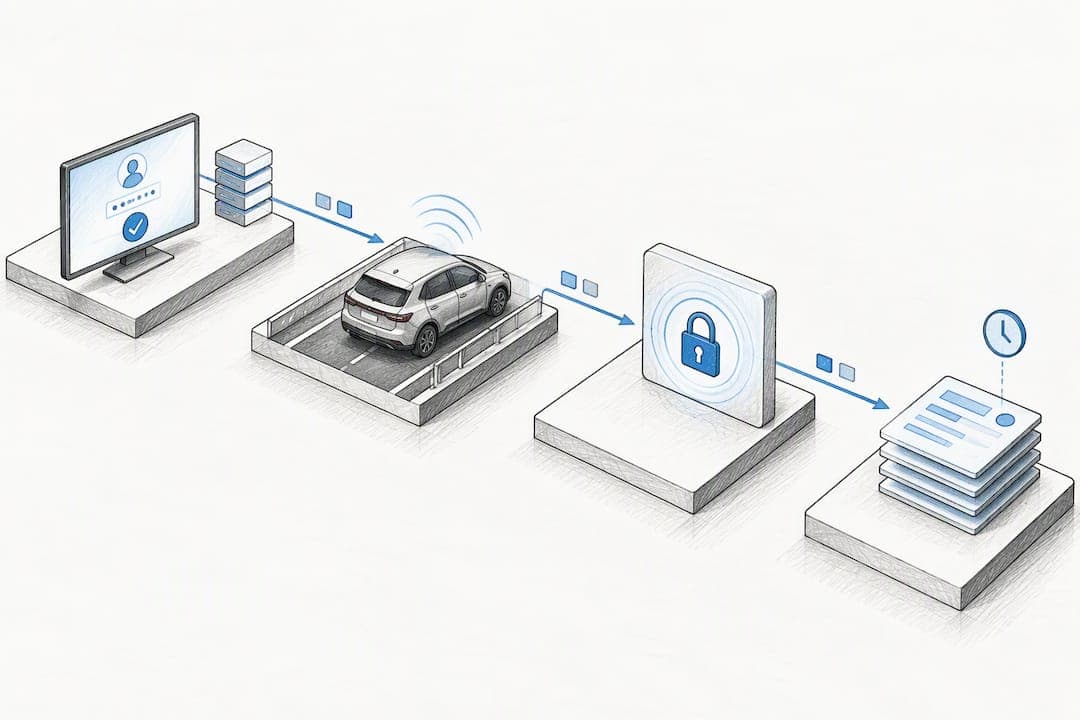
A remote immobilization command travels through several links before a vehicle actually locks out:
- A telematics device (often the same GPS unit already tracking the fleet) monitors ignition state, speed, and location.
- The device fires a digital output, usually labeled DOUT, that connects to a relay wired into the starter or fuel circuit, or in newer vehicles, to an OEM API endpoint.
- The cloud platform sends the disable command, which the device queues rather than executes immediately if the vehicle is moving.
- Once the vehicle stops and the ignition cycles off, the device acknowledges the command and applies the lock.
Different vendors implement this differently. Starter-relay setups are the most common and the most universal, but they require physical wiring. Fuel-cut approaches exist but carry more risk of stalling ambiguity on older vehicles. OEM-integrated methods, similar to what Ford's connected services expose to fleet customers through factory telematics, skip the relay entirely and use the manufacturer's own API, which tends to be cleaner but only works on vehicles the OEM supports.
GPS tracking alone does not give you any of this. A tracker tells you where a car is; immobilization requires a control output and a confirmed acknowledgment that the command actually executed. Frotcom's fleet documentation makes the same point: starter-interrupt immobilizers only apply once the vehicle is parked and require authorization codes tied to a specific user. Keyless start-stop systems and hybrid or electric drivetrains complicate the relay approach further, since the "ignition" signal doesn't behave the way it does on a traditional key-and-starter vehicle. That's a compatibility question you need answered before you sign a contract, not after.
What Is the Safe Workflow for Suspected Theft or Misuse?
A remote immobilization decision is a human decision supported by technology, not an automated trigger. Navixy's operational guidance is blunt about this: decision quality matters as much as device capability, and the fastest way to damage renter trust is to disable a car based on bad data.
- Detect and triage. A geofence breach, an unexpected speed pattern, or an ignition event outside the contract window should generate an alert, not an automatic command. Cross-check it against the reservation system.
- Verify before you act. Contact the renter directly. Confirm the vehicle's actual status against the contract, not just the telematics feed. Note the discrepancy in writing.
- Authorize and log. Only specific, named roles should be able to trigger immobilization. Every action needs an operator ID, a timestamp, and a documented reason attached to it.
- Queue the command. Send the disable instruction knowing it will wait until the vehicle is stationary. Do not attempt to force an immediate cutoff.
- Coordinate recovery. Loop in local police when the vehicle is confirmed stolen or the renter is unreachable, and hand over your evidence trail rather than acting unilaterally.
- Unblock fast when needed. If the renter turns out to have a legitimate explanation, an authorized unblock should take minutes, not hours, with the reversal logged the same way the lock was.
Pro Tip: Run a tabletop drill with your operations team using a fake theft scenario every quarter. Most wrongful immobilizations trace back to a step someone skipped under pressure, not a device malfunction.
Document every step. If a dispute ever escalates to law enforcement or a court, your audit log is the only thing standing between "we followed a documented process" and "we guessed."
What Technical Requirements Should You Demand From a Vendor?
Before you commit to any device or platform, get specific about what it can actually do, not what the sales page implies. The feature list that separates a fleet-grade immobilization system from a consumer gadget is short but non-negotiable:
- A digital output (DOUT) capable of driving a relay, plus support for OEM API integration on vehicles where the manufacturer allows it.
- Command queueing that holds a disable instruction until the vehicle registers as stationary.
- Acknowledgment messaging so the platform confirms the command executed, not just that it was sent.
- Tamper detection that flags when someone attempts to disconnect or bypass the device.
- Backup power that keeps the device reporting even if the vehicle's main battery is cut.
Installation is where a lot of programs go wrong. Modern vehicles, especially anything with keyless entry or start-stop, generally need professional installation rather than a plug-and-play kit. Carchain's installation guide for its pre-wired FMB965 kit is a useful reference point for how a repeatable, fleet-friendly install process should look, and it's a good illustration of why starter-relay methods hit real limits on some newer platforms.
Connectivity is the other failure point nobody plans for. Devices need a fallback mode, usually SMS, when cellular data drops, and the platform needs automatic retries rather than a single fire-and-forget command. Before you roll a device out fleet-wide, test it against every model you actually operate. Teltonika's SECO documentation describes how a secure cutoff feature is paired with relay wiring, and compatibility testing on your specific models, not the vendor's demo car, is what actually tells you whether it will hold up.
How Do You Verify an Immobilization Command Actually Worked?
Sending a command is not the same as confirming it executed. Run every new deployment through a stationary-only test before you trust it on a live rental: park the vehicle, issue the disable command, confirm the acknowledgment timestamp, attempt a restart to verify the lock, then issue the unblock and confirm restart succeeds. Log every timestamp.
Three telemetry signals should be non-negotiable in your monitoring dashboard:
- Ignition state at the moment the command was sent and at the moment it was applied.
- Speed or RPM confirmation showing the vehicle was fully stationary before the lock engaged.
- Device acknowledgment timestamps for both the disable and any subsequent unblock command.
The most common operational failure isn't a broken relay. It's stale data. Navixy's fleet guidance identifies synced reservation status as the leading cause of wrongful immobilization attempts, where a system still shows a vehicle as "active theft risk" after the renter already returned it or extended the contract through a channel the telematics platform never saw. Connectivity gaps and attempted bypass attempts are the other two patterns worth building alerts around specifically, since both tend to look identical to a normal offline device until you dig into the logs.
Keep every log. If police or an insurer ever need to reconstruct what happened, a documented recovery workflow with timestamps beats a verbal account every time.
What Legal and Privacy Rules Apply to Rental Immobilization?
Language matters more than most operators assume. Describe the feature to renters as something that "prevents restart after a safe stop," never as something that can "turn off the engine while driving." The second phrasing isn't accurate, and it's the kind of claim that turns a routine dispute into a liability problem.
Regulatory exposure is real, too. NHTSA has warned that aftermarket immobilizer installations must not knowingly make federally required safety equipment inoperative, and installers can carry "alterer" responsibilities under that framework. Confirm your installer or vendor understands this before wiring goes into a single vehicle.
A few practical guardrails cut most of your legal exposure:
- Get counsel to review your rental agreement language on immobilization, especially around state rules on using disablement as a repossession tool.
- Loop in local police departments proactively so they know your escalation process before you ever need them mid-incident.
- Restrict who can view renter location and personal data, and set a firm retention window rather than keeping it indefinitely.
- Wipe infotainment profiles between renters. NSF-backed research on connected-vehicle PII exposure found that automated wipe tools remove leftover paired-phone data effectively, closing a gap most operators don't think about until a renter complains.
- Cap who can trigger a lock at all, with every action logged against a named operator, not a shared login.
Handled this way, immobilization becomes a documented safety process. GDPR-style privacy obligations around retention and access apply just as much to telematics location data as they do to payment records, so treat both with the same discipline.
How Do You Roll Out Immobilization Across a Fleet Safely?
A phased rollout beats a fleet-wide flip every time. Start narrow, prove the process, then expand.
- Pilot on representative vehicles. Pick models that reflect your actual mix, including at least one keyless or hybrid unit, and involve local police in a walkthrough before go-live.
- Train staff by role. Dispatchers need to know detection triage; managers need to know authorization limits; nobody outside those roles should have command access.
- Integrate your systems. Sync reservation and contract data in real time, wire up webhooks for status changes, and build a standard evidence-capture template for every incident.
- Lock in vendor terms. Get service-level agreements in writing, understand warranty coverage on relay hardware, and clarify what happens if the subscription lapses mid-rental.
- Track the right numbers. Recovery rate, false-positive rate, time-to-recover, and disputed-incident count tell you whether the program is working or just generating friction.
| Metric | What it tells you |
|---|
| Recovery rate | Whether immobilization is actually getting vehicles back |
| False-positive rate | Whether your detection triage needs tightening |
| Time-to-recover | How fast your workflow moves from alert to resolution |
| Disputed incidents | Whether renters trust your process or are pushing back |
How Nomora Fits Into a Safer Immobilization Program
Immobilization technology only works as well as the data feeding it. Nomora centralizes reservations, fleet status, and contract terms in one system, which directly reduces the stale-data problem behind most wrongful immobilization attempts. When a renter extends a contract or returns a vehicle early, that update should reach the same system generating your theft alerts. Nomora's fleet management tools sync that data in real time rather than leaving it split across a spreadsheet and a separate telematics dashboard.
Role-based authorization and audit trails matter just as much as the device itself. A platform that logs who confirmed a rental status change, and when, gives you the same evidence trail your immobilization vendor needs for its own command logs.
If you're evaluating integration, the practical questions are: does your tracker vendor expose an API Nomora can consume, does it support event webhooks for reservation changes, and what's the realistic onboarding timeline. Nomora states it can be operational in 24 to 48 hours, a claim worth confirming against your specific tracker stack before you plan a rollout date around it.
Balancing Asset Recovery With Renter Trust
Safety-first rules on immobilization protect the business as much as the renter. A wrongful lockout costs more in reputation and legal exposure than a delayed recovery ever will. The governance model that actually holds up under pressure is narrow: tight authorization limits, a real evidence trail for every command, and a standing relationship with local police before you need one.
The operators who get this right also disclose it openly. A renter who knows immobilization exists, and understands it only applies after a safe stop, is far less likely to treat a lockout as an ambush.
— Dizzy
A Smarter Way to Reduce Wrongful Immobilizations
Nomora gives rental operators the one thing most immobilization programs are missing: a single source of truth for reservation status, contract terms, and fleet data that your theft alerts can actually trust. Instead of a telematics platform working off a status feed nobody remembered to update, Nomora syncs fleet and booking data in real time, so an extended rental or an early return shows up before a false-positive lockout ever gets triggered.
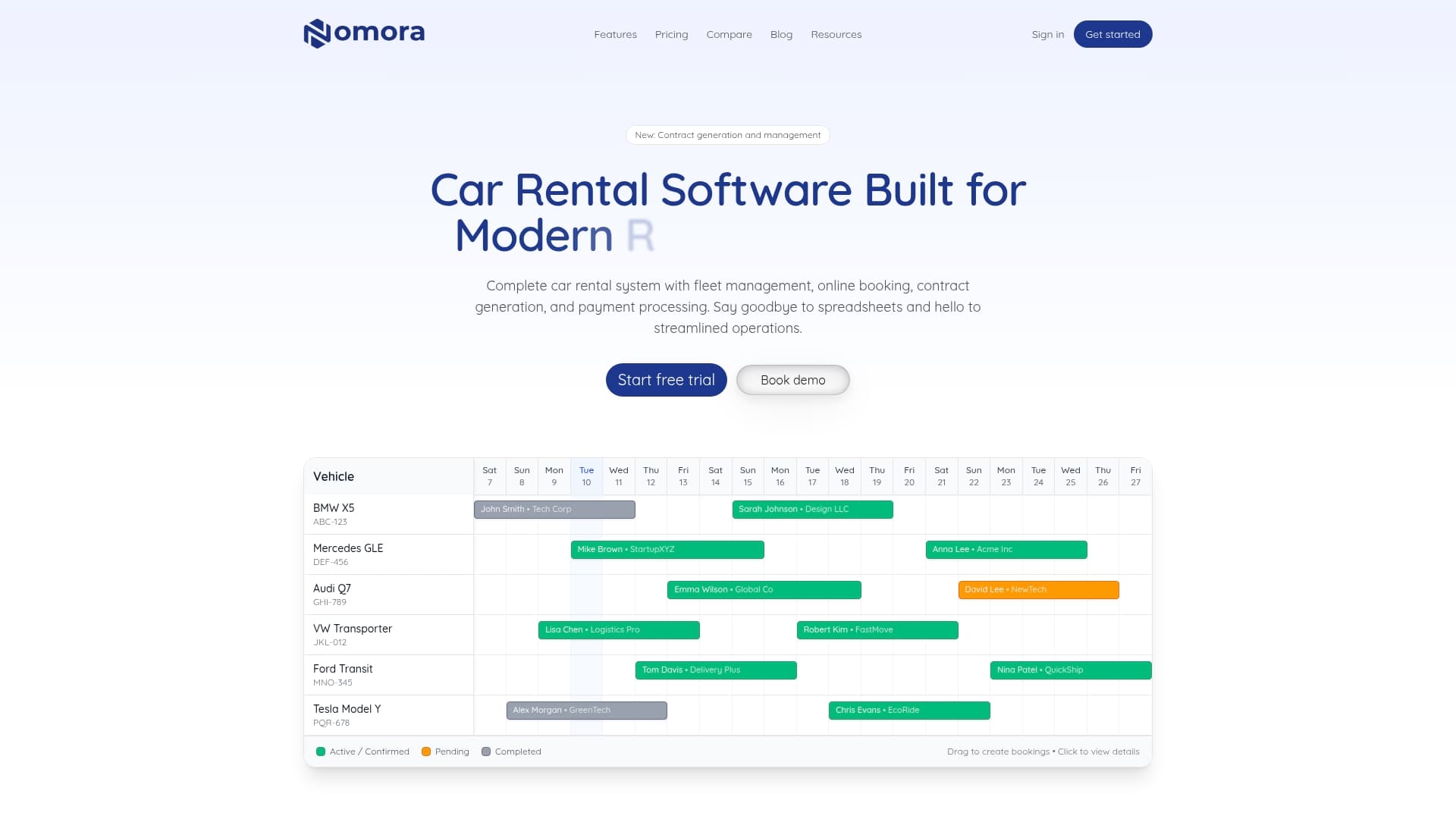
Every immobilization command is only as good as the authorization and evidence behind it, and Nomora's role-based access and contract history give you that record automatically. Review Nomora's pricing plans, starting with Starter at $45 per month or Business at $2.80 per vehicle per month, and check how the platform's use cases for different rental business types line up with your fleet before your next tracker integration.
Sources
For operators who want vendor-level or regulatory detail beyond this playbook:
FAQ
What Does a Remote Immobilizer Do?
A remote immobilizer prevents a vehicle from restarting once it comes to a stop, typically by interrupting the starter circuit through a relay or an OEM API command. It does not cut power to a moving vehicle under any credible implementation.
Can You Turn Off a Car Engine Remotely While It's Driving?
No. Legitimate systems queue the disable command until the vehicle is already stationary and the ignition has cycled off, which is the safety design behind Carchain's remote immobilization approach. Any product claiming to cut a moving engine is a serious safety and liability risk.
Is It Possible to Rent a Stick Shift Car With Remote Immobilization Installed?
Yes, manual transmission vehicles can carry the same starter-relay immobilization hardware as automatics, since the disable command targets the starter circuit rather than the transmission. Compatibility depends more on whether the vehicle is keyless or older key-and-ignition style than on transmission type.
How Much Does It Cost to Add Remote Immobilization Rentals to a Fleet?
Costs vary by device, installation complexity, and whether you need professional wiring versus a pre-installed kit, with published vendor documentation not listing a flat rate. On the software side, Nomora's fleet management pricing starts at $2.20 per vehicle per month on the Fleet plan for the platform layer that syncs reservation and contract data feeding those immobilization decisions.
What's a Realistic Budget for a 2,500-Mile Rental?
Total cost depends heavily on the vehicle class, daily rate, mileage fees, and fuel, none of which is standardized across the rental industry. A fleet operator setting rates should base this on their own contract terms rather than a generic industry figure, since mileage caps and per-mile overage charges differ significantly by provider.
Recommended