TL;DR:
- Effective rental dispute resolution requires thorough documentation, a step-by-step escalation process, and specific communication referencing lease clauses.
- Most conflicts are settled before legal action when parties maintain records, communicate clearly, and follow procedural steps rigorously.
Rental disputes are defined as formal or informal disagreements between tenants and landlords over lease terms, repairs, deposits, rent payments, or property conditions. Knowing how to handle rental disputes effectively means following a clear sequence: review your lease, communicate in writing, escalate to mediation, and pursue legal action only when necessary. Most conflicts never reach a courtroom. Resolving landlord tenant issues without litigation is achievable when both parties document issues clearly and respond to each other in good faith. This guide gives you a practical, step-by-step framework for every stage of the process, whether you are a tenant protecting your rights or a landlord managing your obligations.
How to handle rental disputes step by step
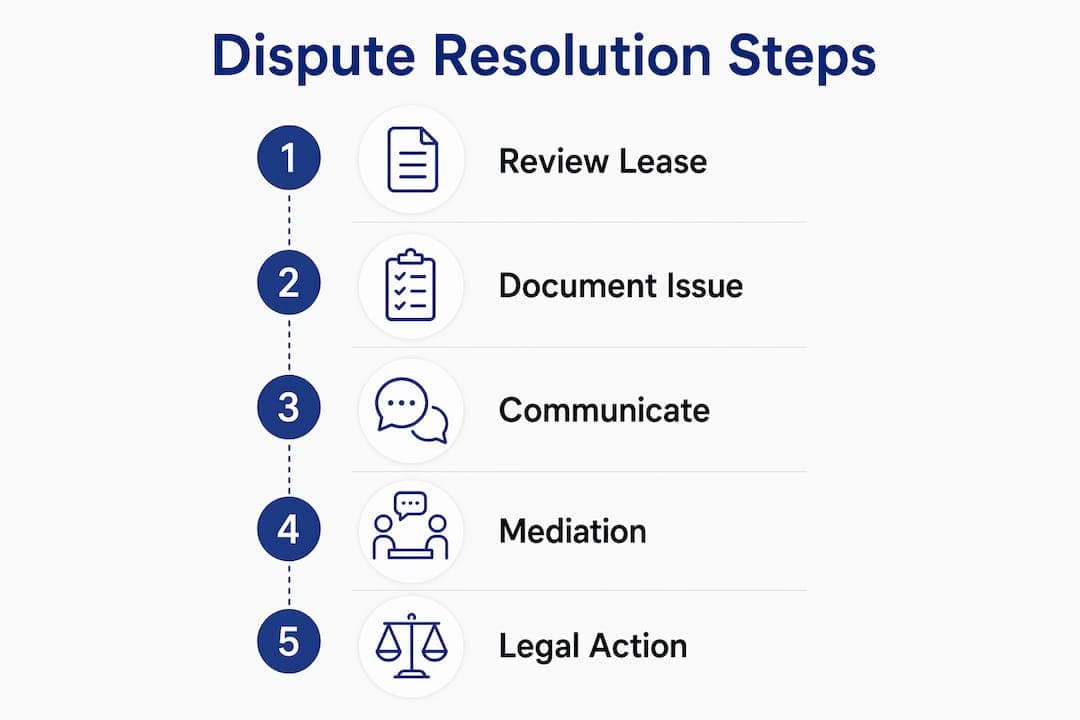
The most reliable method for resolving rental conflicts is sequential escalation. Skipping steps, such as going straight to a tribunal before attempting direct communication, weakens your position and wastes time. Follow this numbered process to give every dispute the best chance of resolution before it becomes costly.
-
Review your lease agreement. Your lease is the legal foundation of the relationship. Read every clause related to the issue at hand, whether that is a repair obligation, a deposit deduction policy, or a late fee schedule. Written requests and direct negotiation reduce disputes significantly when both parties understand their obligations from the start.
-
Raise the issue in writing. Send an email or letter describing the problem, referencing the relevant lease clause, and stating what outcome you are requesting. Writing creates a paper trail that becomes critical evidence if the dispute escalates. A text message counts, but a dated email is stronger.
-
Communicate calmly and directly. Request a conversation or meeting to discuss the issue. Keep the tone factual and solution-focused. Emotional language tends to put the other party on the defensive and makes resolution harder.
-
Send a formal demand letter. If direct communication fails, send a written demand. Demand letters should state the specific dates, the lease provisions involved, the remedy you are requesting, and a firm but reasonable deadline, typically 7 to 14 days. This document carries significant weight in any later proceeding.
-
Consider mediation. If the demand letter goes unanswered or is rejected, mediation through a neutral third party is the next logical step. It is faster and less expensive than court, and it keeps both parties in control of the outcome.
-
File a formal complaint or legal claim. If mediation fails or is refused, you can file with a housing tribunal, small claims court, or relevant government agency. Dispute applications to tribunals must typically be lodged within 28 days of the issue arising, so do not delay once you decide to escalate. Missing that window can forfeit your right to a hearing entirely.
Pro Tip: Before filing any formal complaint, check with your state or local tenant rights agency. Resources like USAGov's tenant rights guidance can point you toward free legal aid and help you identify the correct complaint pathway before you spend money on an attorney.
How written documentation protects both parties
Documentation is the single most powerful tool in any rental dispute. Without it, the dispute becomes one person's word against another's, and outcomes become unpredictable. Building a paper trail with written requests, specific dates, and lease references is what transforms a complaint into a credible legal position.

The difference between a vague complaint and a concrete one is significant. The table below illustrates how specificity changes the strength of a communication.
| Vague request | Concrete request |
|---|
| "The heat isn't working, please fix it." | "Per Section 4.2 of our lease, the heating unit has been non-functional since January 8, 2026. Please repair it by January 22, 2026." |
| "I want my deposit back." | "Per state law and Section 9 of our lease, I request the return of my $1,500 deposit within 21 days of my January 31 move-out date." |
| "You owe me for the repairs I made." | "I completed repairs to the kitchen faucet on February 3, 2026, per my written notice dated January 28. Receipts are attached. I request reimbursement of $185 by February 17." |
Concrete requests referencing specific lease clauses and deadlines are taken more seriously by the other party, by mediators, and by judges. Vague complaints leave room for denial and delay. Beyond written communication, you should keep photos of the property at move-in and move-out, save all receipts for repairs or payments, and store copies of every email and letter exchanged.
Pro Tip: Create a dedicated folder, either digital using Google Drive or physical, labeled with the property address and tenancy dates. Organize documents by category: lease, communications, payments, repairs, and photos. This structure takes minutes to set up and saves hours if you ever need to present evidence.
Mediation is the most underused tool in dispute resolution for tenants and landlords. Mediation is voluntary, confidential, and typically resolves disputes in a single 2 to 3 hour session. That is a fraction of the time and cost of a court proceeding. A trained mediator facilitates the conversation but does not impose a decision. Both parties retain control over the outcome.
When mediation succeeds, the result is a written binding agreement. That agreement must be specific to be enforceable. Vague commitments such as "landlord will make repairs soon" are difficult to enforce. Every term should include exact responsibilities, deadlines, and consequences for non-compliance. A well-drafted mediation agreement is as enforceable as a court order in most jurisdictions.
When mediation fails or the dispute involves significant money or legal rights, legal escalation becomes necessary. Your options include:
- Small claims court: Handles disputes up to a set dollar threshold, typically between $5,000 and $10,000 depending on the state. No attorney is required, and the process is designed for self-represented parties.
- Housing tribunals: Specialized bodies that handle residential tenancy disputes, including repairs, evictions, and bond claims. Identify the dispute type before applying, since repair disputes, rent disputes, and bond disputes each follow different procedural pathways.
- Arbitration: A more formal private process where a neutral arbitrator issues a binding decision. Less common in residential tenancy disputes but used in some commercial rental agreements.
For high-stakes disputes, use a dual-track approach: negotiate and mediate while simultaneously organizing all your evidence for court. This keeps pressure on the other party to settle while protecting your legal position if they do not.
How to handle common rental dispute scenarios
Different dispute types require slightly different tactics. Here are the four most frequent conflict situations and how to approach each one.
-
Repair and maintenance delays. Report the issue in writing immediately, referencing the lease clause that assigns repair responsibility. State a reasonable deadline for the repair, typically 7 to 14 days for non-emergency issues. If the landlord does not respond, send a second written notice and document the ongoing condition with dated photos. Do not withhold rent without legal advice, as this can expose you to eviction proceedings even when you are in the right.
-
Rent nonpayment or late fee disputes. If you are a tenant facing financial difficulty, contact your landlord in writing before the due date and propose a payment plan. Proactive communication is far more effective than silence. If you are a landlord, respond to payment issues with a written notice that references the lease terms and offers a structured resolution before filing for eviction. Direct negotiation preserves the tenancy relationship and avoids the cost and delay of eviction proceedings.
-
Security deposit disputes. Conduct a written move-in inspection with photos and have both parties sign it. Repeat this process at move-out. Landlords must provide itemized deductions in writing within the legally required timeframe, which varies by state but is commonly 14 to 30 days. Tenants who dispute deductions should send a written demand referencing the move-in inspection record and applicable state law. A rental vehicle inspection guide approach, documenting condition at every handover point, applies equally well to residential properties.
-
Lease violation claims and eviction threats. If you receive a notice of lease violation or an eviction threat, respond in writing within the timeframe specified in the notice. Do not ignore it. State your position factually, attach supporting documentation, and request clarification of the specific clause being cited. Consult a tenant rights organization or legal aid service before taking further action. Responding calmly and in writing demonstrates good faith and creates a record that protects you.
Key takeaways
Handling rental disputes effectively requires written documentation, sequential escalation, and specific communication at every stage.
| Point | Details |
|---|
| Start with your lease | Review every relevant clause before raising a dispute to ground your position in the written agreement. |
| Write everything down | Emails, letters, photos, and receipts form the evidence base for mediation or court proceedings. |
| Escalate in order | Move from direct communication to demand letters, then mediation, then legal action. Skipping steps weakens your case. |
| Be specific in all requests | Reference lease clauses, dates, and deadlines in every written communication to make your position enforceable. |
| Know your time limits | Tribunal applications often must be filed within 28 days of the issue arising. Missing this window can forfeit your claim. |
Why I think most disputes are won or lost before anyone calls a lawyer
After years of working with rental operators and property managers, the pattern is consistent. The disputes that escalate to court almost always share one trait: neither party wrote anything down early enough. By the time a lawyer gets involved, the facts are contested, the timeline is murky, and the cost of resolution has multiplied.
The cases that resolve quickly share a different trait. One party, sometimes both, kept records from day one. They sent emails instead of making phone calls. They referenced the lease in their first complaint. They proposed solutions instead of issuing ultimatums. Preserving amicable relationships through direct negotiation consistently produces better outcomes than litigation, not just financially, but in terms of time and stress.
The uncomfortable truth is that most landlords and tenants want the same thing: a fair resolution that lets them move forward. The problem is that without a structured process and a written record, emotions take over and positions harden. My advice is simple. Treat every rental communication like it might be read by a judge someday. Not because you expect conflict, but because that discipline forces clarity, and clarity prevents most conflicts from becoming disputes in the first place.
— Dizzy
How Nomora helps you stay ahead of rental disputes
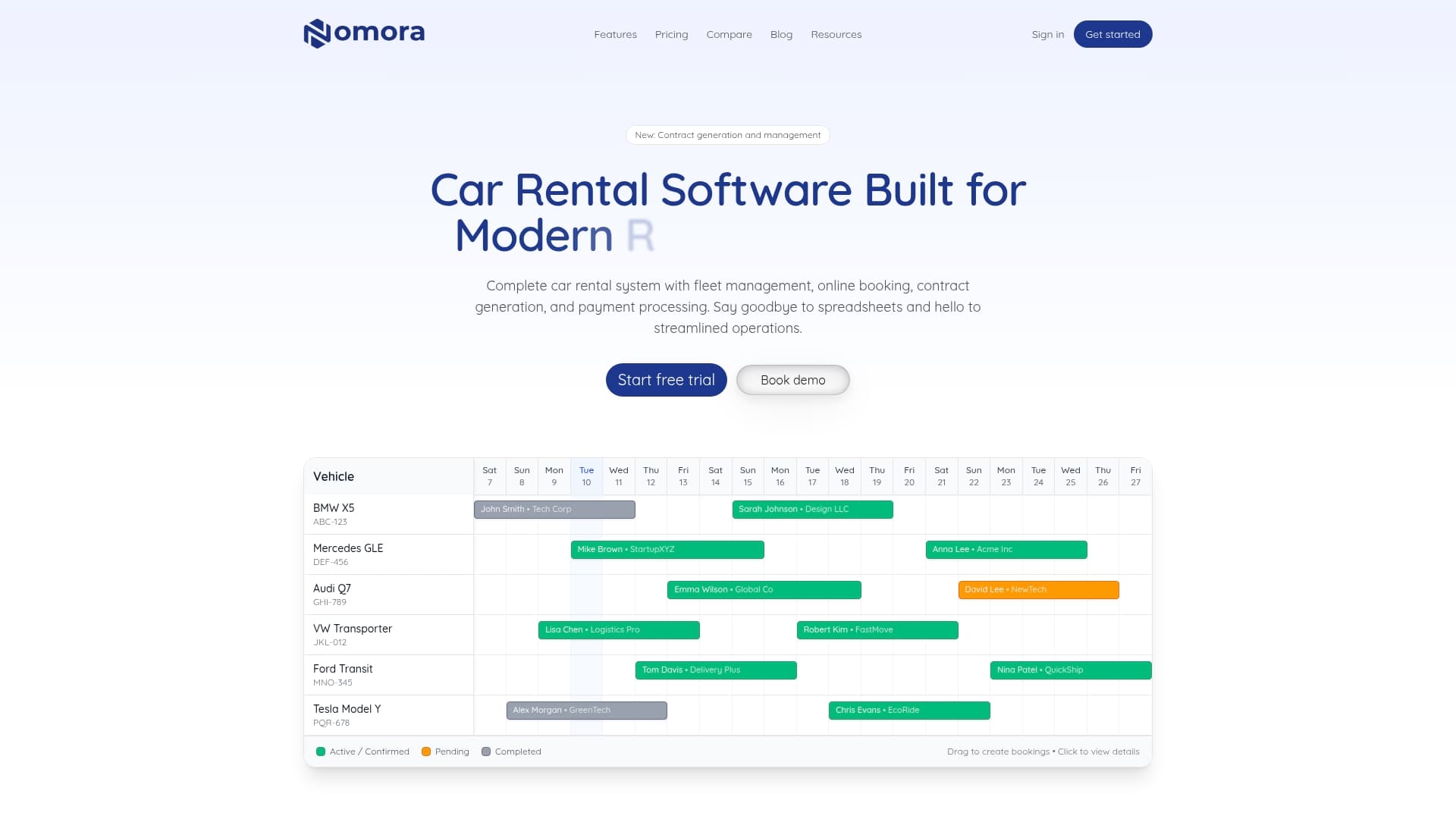
Nomora's cloud-based rental management platform acts as the central nervous system of your rental operation, giving you a single place to generate contracts, track payments, and store all rental records. Digital rental agreements created through Nomora eliminate ambiguity by standardizing terms and making every clause visible to both parties at signing. Automated payment tracking reduces the most common source of disputes, missed or disputed payments, by creating a timestamped record of every transaction. For rental businesses managing multiple vehicles or locations, Nomora's use cases by business type show exactly how the platform adapts to your operation and reduces the administrative gaps where disputes tend to start.
FAQ
What is the first step in resolving a rental dispute?
The first step is reviewing your lease agreement to understand your rights and obligations, then raising the issue in writing directly with the other party. Written communication creates the paper trail that supports every later stage of resolution.
Consider mediation after a formal demand letter has gone unanswered or been rejected. Mediation typically resolves disputes in a single 2 to 3 hour session and produces a binding written agreement without the cost of court.
How long do I have to file a complaint with a housing tribunal?
Tribunal applications must typically be filed within 28 days of the issue arising. Missing this deadline can forfeit your right to a hearing, so act promptly once direct resolution attempts have failed.
Do I need a lawyer to handle a rental dispute?
Not always. State tenant rights agencies and legal aid organizations offer free guidance, and small claims court is designed for self-represented parties. Consult tenant rights resources before hiring an attorney to understand your options at no cost.
A mediation agreement is enforceable when it specifies exact responsibilities, deadlines, and consequences for each party. Vague commitments are difficult to enforce in court, so every term must be written with precision.
Recommended
Ready to streamline your car rental business?
Book 30 minutes with the founder. We set up everything in this guide on your own vehicles, and migrate you out of Excel for free.